
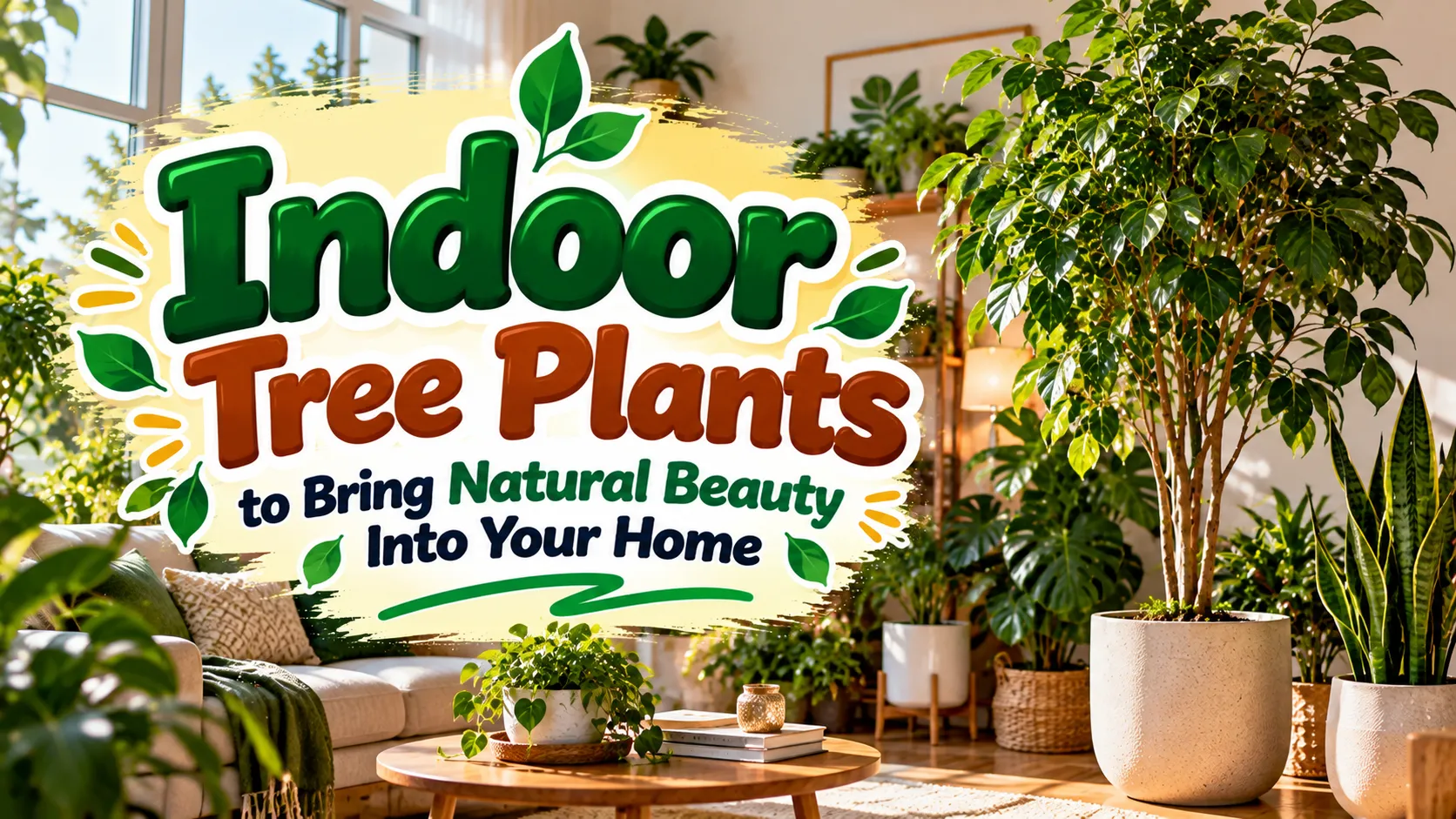
Indoor tree plants are a beautiful way to add height, greenery, and natural charm to your living space. From the elegant fiddle leaf fig to the graceful areca palm, these plants can turn an ordinary room into a relaxing indoor garden. Their upright trunks, leafy canopies, and sculptural shapes make them perfect for living rooms, bedrooms, offices, and entryways.
Whether you want a tall indoor tree for an empty corner, a small tree for your desk, or a low-maintenance plant that thrives indoors, there are plenty of options to explore. Some indoor trees prefer bright, indirect light, while others tolerate moderate light and occasional missed watering. Choosing the right variety can help you enjoy beautiful foliage without making plant care feel overwhelming.
In this guide, you will discover more than 50 indoor tree plants, including tropical trees, flowering varieties, small indoor trees, low-maintenance options, and plants that work well in different rooms. You will also learn how to care for indoor trees, choose the right location, and avoid common growing problems.
🌳 Best Indoor Tree Plants for Your Home
The best indoor tree plants combine attractive foliage with a growth habit that suits your available space. Some grow tall and upright, while others spread their branches to create a fuller canopy.
Here are some popular indoor tree plants to consider:
- Fiddle Leaf Fig: A stylish indoor tree with large, violin-shaped leaves.
- Rubber Plant: Features thick, glossy leaves and an attractive upright form.
- Money Tree: Known for its braided trunk and clusters of green leaves.
- Weeping Fig: A classic indoor tree with arching branches and delicate foliage.
- Areca Palm: Produces feathery fronds for a tropical appearance.
- Bird of Paradise: Grows large, paddle-shaped leaves on tall stems.
- Parlor Palm: A compact palm suitable for smaller indoor spaces.
- Kentia Palm: An elegant palm with arching leaves and a graceful shape.
- Dracaena Marginata: Has a slender trunk and narrow, spiky leaves.
- Ponytail Palm: Features a swollen trunk base and long, cascading leaves.
- Olive Tree: An attractive option for very bright indoor locations.
- Norfolk Island Pine: A symmetrical evergreen with layered branches.
- Umbrella Tree: Produces clusters of glossy leaves on upright stems.
- Dwarf Umbrella Tree: A smaller version of the popular umbrella plant.
- Yucca Cane: Has a sturdy trunk and pointed, sword-like leaves.
- Corn Plant: A dracaena with a cane-like trunk and long, arching foliage.
- Black Olive Tree: A tropical ornamental tree sometimes grown indoors in bright conditions.
- Bay Laurel: A fragrant evergreen that can be shaped into a small potted tree.
- Calamondin Orange: A compact citrus tree that can produce small orange fruits.
- Meyer Lemon Tree: A fruiting citrus tree suited to very sunny indoor locations.
Before buying an indoor tree, consider its mature height, light requirements, and root space. A small nursery plant may eventually grow too large for a narrow corner or low ceiling.
🪴 Tall Indoor Tree Plants for Living Rooms
Tall indoor trees create a strong focal point and help fill empty spaces beside sofas, windows, and furniture. They are particularly useful in rooms with high ceilings or large windows.
Consider these taller varieties:
- Fiddle Leaf Fig: Its broad leaves make it a striking living room centerpiece.
- Rubber Plant: Adds height with thick, dark green or burgundy foliage.
- Bird of Paradise: Creates a tropical look with oversized leaves.
- Kentia Palm: Offers graceful, arching fronds without a heavy appearance.
- Areca Palm: Forms a lush cluster of feathery leaves.
- Weeping Fig: Develops a leafy canopy when growing conditions are suitable.
- Dracaena Marginata: Adds vertical interest with a narrow trunk and fine leaves.
- Yucca Cane: Works well in bright rooms with a modern or minimalist style.
- Corn Plant: Has a thick stem and a crown of arching leaves.
- Umbrella Tree: Produces a broad canopy of glossy foliage.
- Norfolk Island Pine: Creates a tree-like silhouette with layered branches.
- Monstera Deliciosa: Can develop a large, upright form when supported.
- Giant Bird of Paradise: Suits spacious rooms with high ceilings and strong natural light.
- Ponytail Palm: Provides an unusual sculptural shape.
- Large Dracaena Fragrans: Offers broad foliage on a cane-like trunk.
Tall plants need enough room for their leaves and branches to spread. Place them where they will not block walkways, rub against walls, or become crowded by furniture.
🌿 Low-Maintenance Indoor Tree Plants
If you want greenery without a demanding care routine, choose a plant that tolerates your indoor conditions. Several tree-like houseplants can handle occasional missed watering or moderate variations in light.
- Rubber Plant: Generally manageable when given suitable light and well-draining soil.
- Dracaena Marginata: Tolerates some variation in indoor conditions.
- Yucca Cane: Prefers bright light and allows the soil to dry between waterings.
- Ponytail Palm: Stores water in its swollen trunk base and tolerates dry periods.
- Money Tree: Can grow well indoors when watering and lighting are consistent.
- Corn Plant: Adaptable to many indoor environments with indirect light.
- Cast Iron Plant: A hardy foliage plant that tolerates shade, although it is usually not tree-shaped.
- Parlor Palm: A relatively forgiving palm for moderate indoor light.
- ZZ Plant: Not technically a tree, but its upright stems create a tree-like appearance.
- Lady Palm: A slow-growing palm that can adapt to suitable indoor conditions.
Low-maintenance does not mean maintenance-free. Every indoor plant needs appropriate light, watering, and drainage. Checking the soil before watering is especially important because overwatering can damage roots.
🌴 Indoor Palm Tree Plants for a Tropical Feel
Indoor palm trees are popular for their graceful leaves and relaxed tropical appearance. Some remain relatively compact, while others develop large fronds that need considerable space.
These palms are worth considering:
- Areca Palm: A feathery palm that creates a lush display.
- Kentia Palm: Known for its elegant, arching fronds.
- Parlor Palm: A compact palm suitable for apartments and offices.
- Lady Palm: Features fan-shaped leaves and multiple stems.
- Bamboo Palm: Produces clusters of slender stems and green fronds.
- Pygmy Date Palm: A small date palm with fine, arching leaves.
- Cat Palm: Forms a dense cluster of green palm fronds.
- Majesty Palm: Has a dramatic tropical appearance but needs careful attention to light, moisture, and humidity.
- Sago Palm: A cycad rather than a true palm, with stiff, feather-like leaves.
- Chinese Fan Palm: Has broad, fan-shaped leaves and can be grown indoors while young.
Palm species differ considerably in their care requirements. Areca and parlor palms are generally more practical indoor options than palms that need intense sunlight or very high humidity.
Pet safety: Sago palm is highly toxic to cats and dogs, particularly its seeds. Keep it away from pets and choose a safer alternative if animals can reach your plants.
🍃 Small Indoor Tree Plants for Apartments
Small indoor trees are ideal for apartments, compact living rooms, and rooms with limited floor space. They provide a tree-like appearance without overwhelming the entire room.
- Dwarf Umbrella Tree: Offers compact growth and glossy leaves.
- Money Tree: Often available in manageable tabletop or floor-plant sizes.
- Ponytail Palm: Its unusual trunk base makes it a decorative statement plant.
- Dwarf Citrus Tree: Can grow in a container near a very sunny window.
- Bay Laurel: Can be pruned into a small, tidy tree.
- Olive Tree: A compact specimen can work in a very bright indoor spot.
- Ficus Microcarpa: Often trained as a small ornamental tree.
- Ginseng Ficus: A popular bonsai-style plant with a thick, exposed root base.
- Chinese Elm Bonsai: A small tree with delicate foliage and an attractive trunk.
- Norfolk Island Pine: Can serve as a small living tree while young.
- Parlor Palm: A compact palm for shelves or floor stands.
- Dracaena Marginata: Can remain relatively narrow in a suitable location.
For small spaces, choose slow-growing plants or varieties that respond well to pruning. Remember that container-grown trees can still become tall, and regular trimming may be necessary.
🌱 Indoor Tree Plants That Tolerate Low Light
Some indoor trees and tree-like plants tolerate moderate light, which makes them suitable for rooms that do not receive strong direct sunlight. However, no plant can grow well indefinitely in complete darkness.
Consider these options:
- Corn Plant: Often grows well in moderate, indirect light.
- Dracaena Marginata: Tolerates some lower-light conditions.
- Money Tree: Prefers bright, indirect light but may adapt to moderate light.
- Rubber Plant: Can tolerate moderate light, though brighter indirect light often supports better growth.
- Parlor Palm: A useful option for spaces with moderate light.
- Lady Palm: Adapts to some indoor shade.
- Bamboo Palm: Can grow in bright, indirect light and some moderate-light locations.
- Weeping Fig: Generally prefers brighter conditions but may adapt to suitable indoor light.
- Cast Iron Plant: A hardy, shade-tolerant foliage plant with a lower growth habit.
- ZZ Plant: A tough, upright houseplant that tolerates lower light, although it is not a true tree.
If a tree loses leaves, grows weakly, or develops long, thin stems, insufficient light may be a factor. Moving it closer to a window or providing a grow light can help.
🌸 Flowering Indoor Tree Plants
Some indoor trees can produce flowers when they receive enough light and the right growing conditions. Flowering is often more difficult indoors than growing attractive foliage, particularly for plants that need several hours of direct sunlight.
Popular flowering or fruiting choices include:
- Hibiscus: Produces large, colorful flowers and needs strong light.
- Calamondin Orange: Can produce fragrant blossoms followed by small orange fruits.
- Meyer Lemon Tree: Offers fragrant white flowers and edible fruit under suitable conditions.
- Gardenia: A fragrant flowering shrub that can be trained into a small tree form.
- Jasmine: Certain varieties can be trained as small indoor trees or standards.
- Bougainvillea: Can be trained into a tree-like form, but needs strong sunlight.
- Desert Rose: Develops a thick base and colorful flowers in bright, warm conditions.
- Fuchsia: Some varieties can be trained as standards, although they are not naturally trees.
- Crown of Thorns: A flowering succulent shrub that can develop a woody structure.
- Dwarf Pomegranate: A compact fruiting plant that can produce flowers and small fruits with adequate light.
Most flowering trees need more light than foliage plants. A bright south-facing or west-facing window may help, depending on your climate and the species. Supplemental grow lighting may be useful when natural light is insufficient.
Safety note: Desert rose and crown of thorns have toxic sap. Keep them away from children and pets, and wear gloves when pruning.
🌳 Indoor Trees With Large Leaves
If your main goal is dramatic foliage, choose an indoor tree or tree-like plant with broad leaves. These plants can make a room feel lush and add visual interest even when they are not flowering.
- Fiddle Leaf Fig: Has large, violin-shaped leaves.
- Rubber Plant: Produces thick, glossy leaves.
- Bird of Paradise: Develops large, paddle-shaped foliage.
- Giant Bird of Paradise: Can produce very large leaves when mature.
- Monstera Deliciosa: Features broad leaves that develop characteristic splits.
- Dumb Cane: Has large, patterned leaves.
- Philodendron Selloum: Grows deeply divided foliage.
- Alocasia Macrorrhizos: Produces enormous, heart-shaped leaves in suitable conditions.
- Banana Plant: Has long, broad leaves that create a tropical appearance.
- Peace Lily Sensation: Offers broad, glossy foliage.
Large-leaf plants often need more room around them than their pots suggest. Leave enough space for leaves to spread without hitting walls or obstructing paths.
🌵 Unusual Indoor Tree Plants for Modern Homes
If you want something different from the usual houseplants, consider a tree with an unusual trunk, sculptural branches, or distinctive foliage.
- Ponytail Palm: Has a swollen trunk base and long, cascading leaves.
- Ginseng Ficus: Features thick exposed roots and a compact canopy.
- Ficus Microcarpa Bonsai: Can be trained into a sculptural miniature tree.
- Braided Money Tree: Has a distinctive woven trunk.
- Norfolk Island Pine: Produces symmetrical, layered branches.
- Yucca Cane: Offers an architectural shape with upright leaves.
- Dragon Tree: Develops a narrow trunk and spiky foliage.
- Desert Rose: Has a thick, sculptural base and flowers under suitable conditions.
- Madagascar Palm: A succulent-like plant with a thick trunk and spiny surface.
- Australian Umbrella Tree: Produces clusters of glossy leaflets.
- Bottle Palm: Has a distinctive swollen trunk but generally needs warm, bright conditions.
- Jade Plant: Can develop a woody, tree-like form as it matures.
Unusual plants may have specific requirements or safety concerns. Research the exact species before purchasing, especially if it has thorns, irritating sap, or toxic parts.
🪴 How to Choose the Right Indoor Tree Plant
Choosing an indoor tree becomes easier when you consider your home environment first. A plant that thrives in a sunny conservatory may struggle in a dim hallway.
Keep these factors in mind:
- Available light: Check whether the location receives direct sun, bright indirect light, or moderate light.
- Ceiling height: Avoid varieties that will quickly outgrow the room.
- Mature width: Some trees spread outward and need more room than expected.
- Watering routine: Select a plant that suits the amount of time you can devote to care.
- Humidity: Tropical plants may need more humidity than ordinary indoor air provides.
- Temperature: Many indoor trees prefer stable warmth and protection from cold drafts.
- Pet safety: Verify whether the plant is toxic to cats, dogs, or other household animals.
- Growth rate: Slow-growing plants may be easier to manage in small rooms.
- Container size: Choose a pot with drainage holes and enough room for healthy roots.
- Budget: Consider the cost of the plant, container, soil, fertilizer, and any grow lights.
If you are new to indoor gardening, a rubber plant, corn plant, ponytail palm, or parlor palm may be a practical starting point, depending on your light conditions.
💧 How to Care for Indoor Tree Plants
Indoor trees need the right balance of light, water, nutrients, and root space. A consistent routine based on the plant’s actual needs is more effective than watering every plant on a fixed schedule.
- Check soil moisture: Feel the soil before watering.
- Use proper drainage: Make sure excess water can escape from the pot.
- Provide suitable light: Match the plant to its preferred conditions.
- Clean the leaves: Remove dust with a soft, damp cloth when needed.
- Rotate the pot: Turn it periodically to encourage balanced growth.
- Prune carefully: Remove dead branches and shape the plant when appropriate.
- Feed during active growth: Use a suitable fertilizer according to the label.
- Inspect for pests: Look for spider mites, scale insects, mealybugs, and aphids.
- Repot when necessary: Move the tree to a slightly larger pot when roots become crowded.
- Avoid sudden changes: Gradually adjust the plant when changing its location or light exposure.
Overwatering is a common reason indoor trees develop yellow leaves and root problems. If the soil stays wet for several days, check the drainage and review how often you water.
☀️ Where Should You Place an Indoor Tree?
The right location helps an indoor tree grow well and makes it a natural part of your home decor.
- Living room: Place larger trees near a bright window, leaving enough room for the canopy.
- Bedroom: Choose a manageable variety that suits the light and available floor space.
- Home office: A money tree, corn plant, or compact rubber plant can add greenery.
- Entryway: Use a tree that tolerates the light available away from windows.
- Sunroom: Bright conditions may suit citrus trees, olive trees, and bird of paradise.
- Bathroom: Humidity may benefit certain tropical plants, but sufficient light is still essential.
- Dining area: Choose a plant that does not obstruct walkways or interfere with seating.
Avoid placing plants directly beside heating vents, air conditioners, or drafty doors. Sudden temperature changes can stress many indoor trees.
⚠️ Common Problems With Indoor Tree Plants
Indoor trees may develop problems when their growing conditions do not match their needs. Learning to recognize common signs can help you correct issues before they become severe.
- Yellow leaves: May indicate overwatering, underwatering, low light, nutrient problems, or natural aging.
- Brown leaf tips: Can result from dry air, irregular watering, fertilizer buildup, or mineral-rich water.
- Leaf drop: May follow sudden changes in light, temperature, watering, or location.
- Slow growth: Could indicate insufficient light, seasonal dormancy, root problems, or inadequate nutrients.
- Leggy stems: Often occur when a plant does not receive enough light.
- Pest damage: Tiny spots, webbing, sticky residue, or distorted leaves may signal an infestation.
- Root rot: Can develop when roots remain in soggy soil for too long.
- Scorched leaves: May result from sudden exposure to intense direct sunlight.
Inspect the whole plant before making changes. Check soil moisture, look under leaves, and consider recent changes in its environment.
🐾 Are Indoor Tree Plants Safe for Pets?
Some indoor trees are toxic to cats and dogs, so pet safety should be part of your plant selection process.
Examples of plants that require caution include:
- Fiddle Leaf Fig: Can cause irritation if chewed.
- Rubber Plant: Some varieties contain irritating sap.
- Dracaena: Toxic to cats and dogs if ingested.
- Money Tree: Often considered relatively low risk, but verify the exact species and keep pets from chewing it.
- Sago Palm: Highly toxic, especially its seeds.
- Bird of Paradise: Can cause digestive upset if ingested.
- Yucca Cane: Can cause illness if eaten.
- Ponytail Palm: Generally considered nontoxic to cats and dogs.
- Parlor Palm: Generally considered nontoxic to cats and dogs.
- Areca Palm: Generally considered nontoxic to cats and dogs.
Plant names can be confusing, so verify the botanical name rather than relying only on a common name. If your pet eats a potentially toxic plant, contact a veterinarian promptly.
❓ Frequently Asked Questions About Indoor Tree Plants
What is the best indoor tree plant for beginners?
Rubber plants, corn plants, ponytail palms, and some money trees are popular options for beginners. The best choice depends on the light available and how often you can water the plant.
Which indoor tree grows the tallest?
Bird of paradise, rubber plant, fiddle leaf fig, and weeping fig can grow tall indoors when their conditions are suitable. Their eventual size depends on the species, age, container, pruning, and growing environment.
Can indoor trees survive without direct sunlight?
Yes. Many indoor trees grow well in bright, indirect light, and some tolerate moderate light. However, most cannot grow successfully in complete darkness, and fruiting or flowering varieties usually need stronger light.
What is the easiest indoor tree to maintain?
Ponytail palms, rubber plants, and some dracaena varieties are popular low-maintenance choices. They still need suitable light, drainage, and watering.
Can I grow a fruit tree indoors?
Yes, certain dwarf citrus varieties, including calamondin and Meyer lemon, can be grown indoors. They generally need strong sunlight, good drainage, and sometimes supplemental lighting to flower and produce fruit.
How often should I water an indoor tree?
There is no universal watering schedule. Check the soil and water when the plant’s requirements indicate it is time. Some species prefer slightly moist soil, while others need the soil to dry more thoroughly between waterings.
Do indoor tree plants need fertilizer?
Many indoor trees benefit from fertilizer during active growth. Use a suitable product at the recommended rate, and avoid fertilizing heavily when the plant is stressed or growing slowly.
How do I keep an indoor tree small?
Choose a naturally compact variety, prune appropriately, and provide a container suited to its root system. Pruning can control shape and size, but it cannot permanently prevent a naturally large species from growing.
Are indoor tree plants good for bedrooms?
Indoor trees can be attractive bedroom decorations when there is enough light and room for their mature size. Choose a plant that suits the environment and check its safety if pets or young children can reach it.
🌳 Conclusion
Indoor tree plants can bring height, greenery, and natural beauty into almost any home. From the bold leaves of the fiddle leaf fig to the graceful fronds of the kentia palm and the sculptural shape of the ponytail palm, there are many varieties to match different interiors and lifestyles.
Before selecting a tree, consider its mature size, light requirements, watering needs, and safety around pets. Start with a variety that suits your home rather than choosing a plant simply because it looks impressive in a store. With suitable care and the right location, an indoor tree can become a beautiful long-term feature in your living space.

Ethan Carter is a nature enthusiast and content writer with a passion for flowers and botanical knowledge. He is the author behind FlowerNamez, where he shares simple and informative content about flower names, types, and meanings.
With a focus on clarity and accuracy, Ethan aims to help readers explore the beauty of flowers and understand their significance in everyday life.