
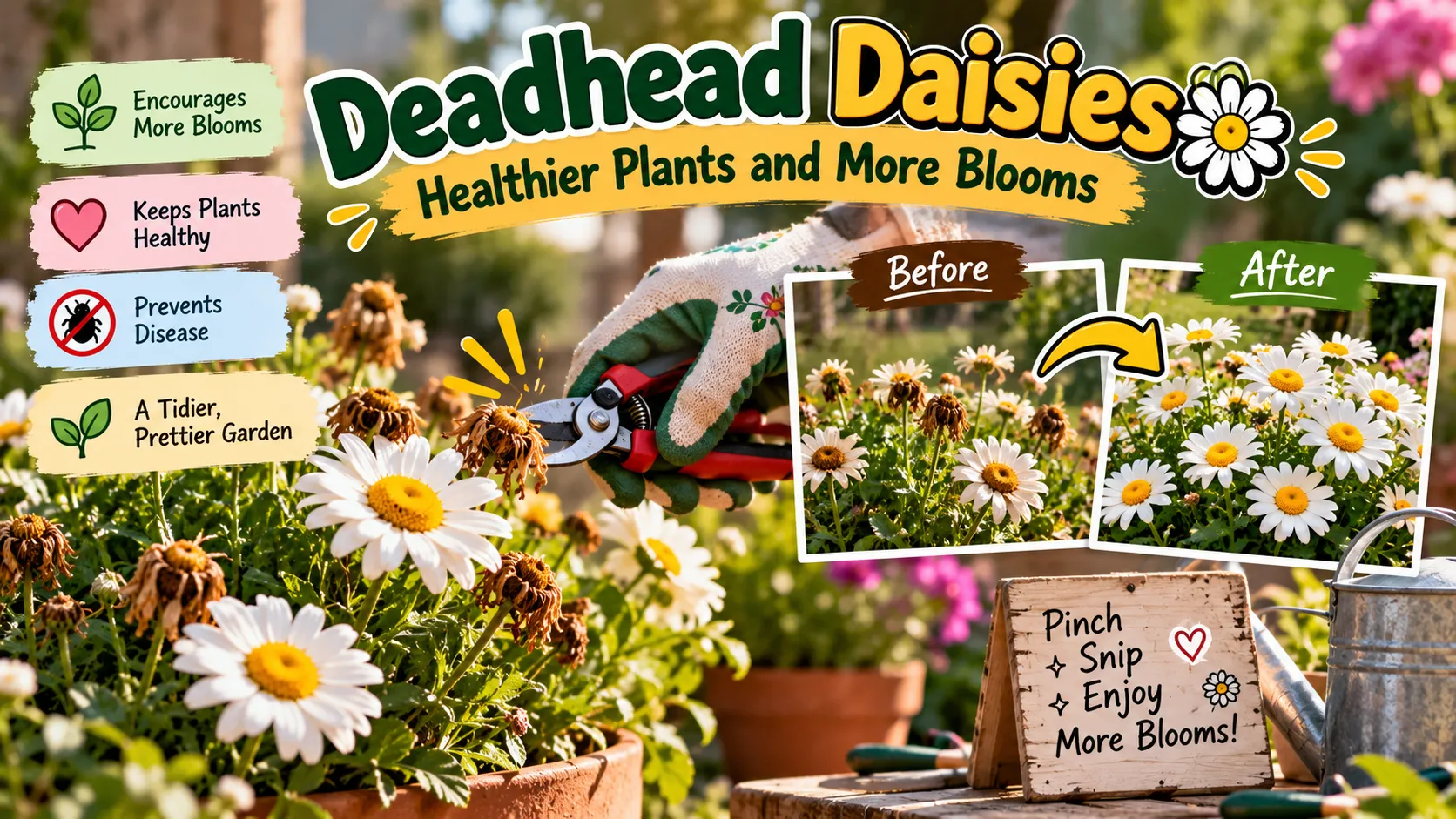
Daisies bring timeless charm to gardens with their bright centers, delicate petals, and cheerful appearance. However, as flowers age, their petals fade, their centers turn brown, and the plant begins to look less vibrant. Deadheading daisies helps you maintain a neat garden while encouraging continued flowering in varieties that respond well to this practice.
The process is simple, but knowing where to cut, when to remove spent blooms, and how to care for different daisy varieties can make a noticeable difference. Whether you grow Shasta daisies in a perennial border or African daisies in containers, the right approach helps you maintain attractive plants throughout the flowering season.
🌼 What Is Deadheading, and Why Do Daisies Benefit From It?
Deadheading involves removing flowers after they finish blooming. Once a daisy begins to fade, the plant may direct energy toward developing seeds. By removing the spent flower before its seeds mature, you can reduce unwanted self-seeding and encourage additional blooms in certain varieties.
Deadheading also improves the appearance of your garden. Faded petals, brown flower heads, and drooping stems can distract from healthy foliage and fresh blooms. Removing these flowers creates a cleaner display and makes it easier to monitor the plant’s condition.
However, deadheading does not guarantee continuous flowering. Each daisy variety follows its own growth cycle, and sunlight, temperature, soil conditions, and general plant health also influence how long it blooms.
✂️ How to Deadhead Daisies for the Best Results
A careful technique helps you remove spent flowers without damaging healthy stems or developing buds. You can complete the task with clean scissors or sharp garden snips.
Step 1: Identify spent blooms. Look for flowers with wilted petals, brown centers, or drooping heads. Fresh flowers and unopened buds should remain on the plant.
Step 2: Trace the flower stem. Follow the stalk downward until you reach a healthy leaf, a side shoot, or a suitable branching point. This helps you determine how much stem to remove.
Step 3: Make a clean cut. Use clean scissors to cut just above a healthy leaf or side shoot. If the flower stalk has no useful growth below the bloom, you can remove the entire stalk near its base. Avoid cutting into the plant’s crown.
Step 4: Remove the clippings. Collect faded flower heads and loose petals to keep the planting area tidy. Compost healthy material when appropriate, but discard diseased plant material rather than adding it to a home compost pile that may not destroy pathogens.
Step 5: Inspect the plant again. Check for additional spent blooms, healthy new buds, and signs of pests or disease. Regular inspections make deadheading easier and help you spot problems early.
Small, soft flowers may come away with your fingers, but scissors generally provide better control, especially when stems grow close together.
📅 When Is the Best Time to Deadhead Daisies?
The best time to deadhead daisies is when individual flowers begin to fade. During active flowering, inspect your plants every few days and remove spent blooms as needed.
You do not need to follow a strict daily schedule. Some plants produce flowers continuously, while others bloom in a more concentrated flush. Adjust your routine to the variety and the number of flowers on the plant.
| Flower condition | Recommended action |
|---|---|
| Fresh petals and bright center | Leave the flower alone |
| Wilted or discolored petals | Remove the spent bloom |
| Brown flower head | Deadhead it if you want to limit seed production |
| Unopened buds | Protect them from accidental cuts |
| Multiple faded flowers | Remove them during one inspection |
| End of the flowering season | Follow the variety’s seasonal care needs |
If you want to collect seeds or encourage daisies to spread naturally, leave a few suitable flower heads until their seeds mature. Otherwise, remove them before they release seeds.
🌸 How to Deadhead Different Daisy Varieties
Although the basic technique remains similar, different daisies have different growth habits and flowering patterns. Identifying your plant helps you choose the most appropriate approach.
Shasta Daisies
Shasta daisies produce large white flowers with yellow centers and often grow in perennial garden beds. During the flowering season, remove faded blooms by following each flower stalk down to healthy foliage or a side shoot.
Regular deadheading can encourage some Shasta daisy varieties to produce additional flowers. Once flowering finishes, follow the care recommendations for your specific variety before cutting back larger sections of the plant.
African Daisies
African daisies, including many Osteospermum varieties, produce colorful blooms in shades of purple, pink, orange, white, and yellow. Remove wilted flowers and their stalks to maintain a tidy appearance and support continued flowering when conditions suit the plant.
Temperature and sunlight can strongly influence African daisy flowering. If your plant stops producing blooms during very hot weather, deadheading alone may not solve the problem.
English Daisies
English daisies produce small flowers close to the ground. Deadheading helps remove faded blooms and can reduce unwanted seedlings.
If you want your English daisies to spread naturally, leave selected flower heads until their seeds mature. For a more controlled garden, remove the spent blooms before seed dispersal.
🌱 Does Deadheading Daisies Encourage More Flowers?
Deadheading can encourage more blooms, but the results depend on the daisy variety. Some plants respond by producing new flower buds, while others follow a limited flowering period regardless of how often you remove spent blooms.
When a variety responds well to deadheading, removing old flowers can help it focus on new growth instead of developing seeds. Regular maintenance also prevents faded flower heads from dominating the display.
For the best results, combine deadheading with appropriate growing conditions:
- Sunlight: Give your daisies the amount of sunlight their variety needs.
- Water: Maintain suitable soil moisture without leaving the roots in waterlogged conditions.
- Soil drainage: Use soil that drains well for varieties that dislike excessive moisture.
- Nutrition: Avoid excessive fertilizer, especially nitrogen, which can encourage leafy growth at the expense of flowers in some plants.
- Seasonal care: Respect the plant’s natural flowering cycle instead of expecting deadheading to produce blooms all year.
Healthy growth and suitable conditions matter just as much as the cutting technique.
💧 Common Deadheading Mistakes to Avoid
Even though deadheading is straightforward, a few mistakes can reduce its benefits or damage the plant.
Cutting too close to new growth: Before making a cut, identify nearby leaves, side shoots, and unopened buds. Protecting these parts helps preserve future growth.
Removing only the petals: Pulling off the petals while leaving the entire spent flower head can reduce the effectiveness of deadheading. Remove the flower head and the appropriate portion of its stalk.
Using dirty tools: Soil and plant residue can collect on scissors and pruning snips. Clean your tools regularly, particularly when you move between plants with signs of disease.
Deadheading healthy blooms: Fresh flowers still contribute to the garden’s appearance and may attract pollinators. Remove only the flowers you intend to discard.
Expecting every daisy to rebloom: Different varieties respond differently. Check the plant’s growth habits and provide suitable care rather than relying on deadheading alone.
Removing every seed head automatically: Some gardeners prefer to collect seeds or allow natural reseeding. Leave selected flower heads when you want to support those goals.
🍃 What Should You Do With Spent Daisy Flowers?
After deadheading, collect the old flower heads and stems from around the plant. This keeps the garden tidy and prevents loose plant material from accumulating around the foliage.
Healthy spent blooms can often go into a suitable compost system. However, flowers or stems with obvious disease or serious pest problems should go into an appropriate waste stream rather than a home compost pile that may not reach temperatures high enough to destroy harmful organisms.
You can also leave selected seed heads on healthy plants when you want to collect seeds or encourage natural reseeding. Choose this approach intentionally, especially if your daisies spread readily in your garden.
❓ Frequently Asked Questions About Deadhead Daisies
Should you deadhead daisies regularly?
Yes. Check your daisies regularly during active flowering and remove blooms as they fade. This keeps the plants tidy and may encourage additional flowers in responsive varieties.
Where should you cut a dead daisy flower?
Follow the flower stalk downward and cut just above a healthy leaf or side shoot. If no useful growth remains below the bloom, remove the stalk near its base without damaging the plant’s crown.
Will deadheading make daisies bloom again?
Some varieties produce additional flowers after deadheading, but others have a more limited flowering period. Sunlight, temperature, water, soil, and plant health also affect the results.
Can you deadhead daisies without scissors?
Yes. You can pinch off small, soft flower heads by hand. Clean scissors or pruning snips provide better control when stems are thick or crowded.
Should you remove all the dead daisy flowers?
You can remove most faded flowers to maintain a neat appearance, but you do not need to remove every flower head. Leave selected blooms if you want to collect seeds or encourage natural reseeding.
Is deadheading the same as cutting daisies back?
No. Deadheading removes individual spent flowers, while cutting back involves removing larger sections of stems or foliage. Choose the appropriate method for your daisy variety and the time of year.
Can deadheading save a dying daisy plant?
No. Deadheading removes spent flowers, but it does not address serious problems such as root rot, severe pest infestations, or unsuitable growing conditions. Examine the leaves, stems, roots, and soil to identify the underlying issue.
🌼 Final Thoughts on Deadheading Daisies
Deadheading daisies is a simple but valuable part of routine garden maintenance. By removing faded flowers, making clean cuts, and protecting healthy buds, you can improve the plant’s appearance and encourage additional blooms in varieties that respond well.
For the best results, match your technique to the type of daisy you grow and combine regular deadheading with suitable sunlight, watering, and soil care. With a consistent approach, you can enjoy a tidier garden and give your daisies the care they need throughout their flowering season.

Ethan Carter is a nature enthusiast and content writer with a passion for flowers and botanical knowledge. He is the author behind FlowerNamez, where he shares simple and informative content about flower names, types, and meanings.
With a focus on clarity and accuracy, Ethan aims to help readers explore the beauty of flowers and understand their significance in everyday life.