
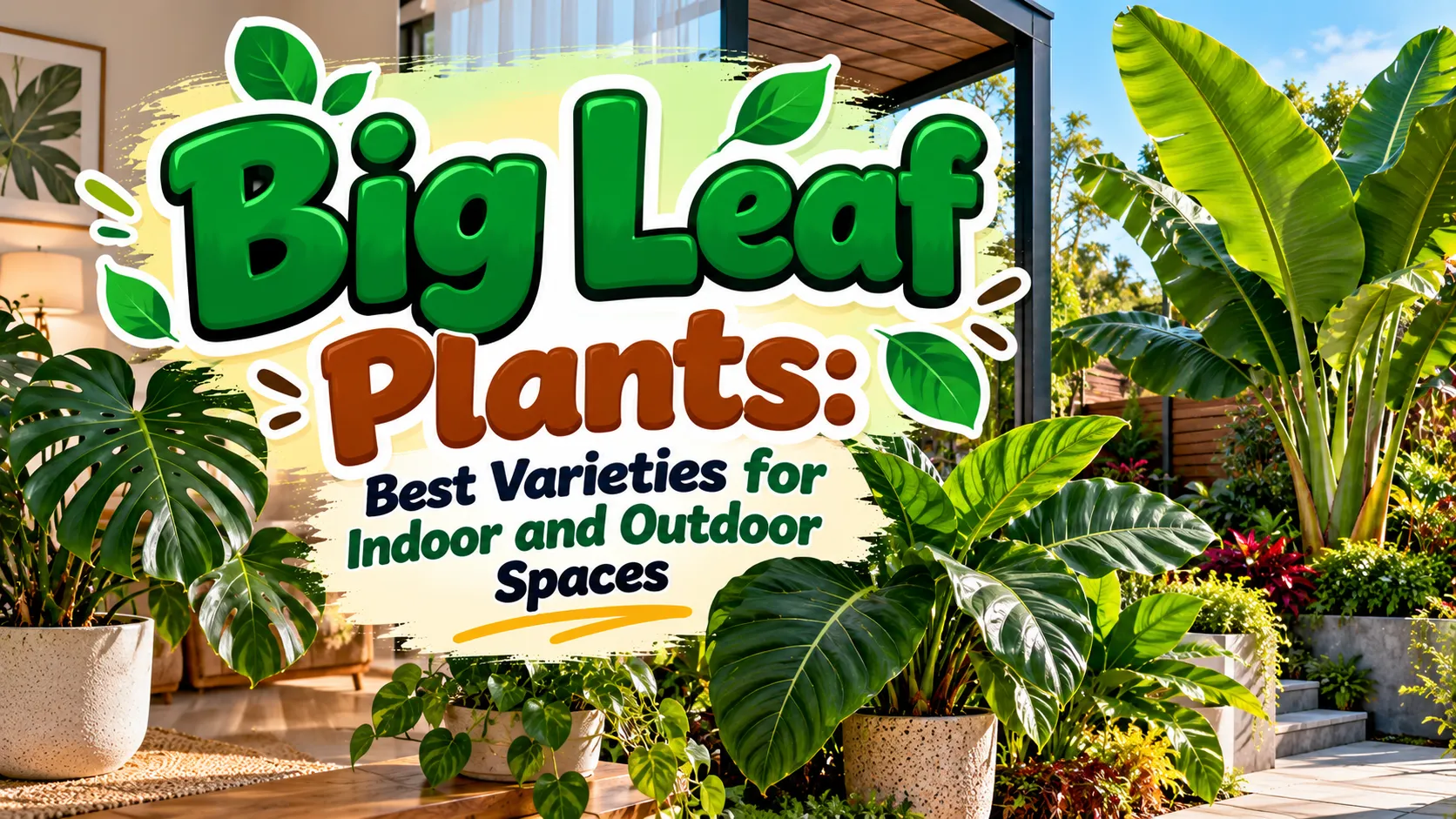
Big leaf plants can transform an ordinary room, garden, or patio into a lush green space. With their oversized leaves, bold shapes, and tropical appearance, these plants make a statement without requiring dozens of small decorations. From the famous Monstera deliciosa to the impressive elephant ear plant, there are plenty of varieties to suit different spaces and growing conditions.
Whether you want large indoor plants for your living room, dramatic foliage for your backyard, or easy-care plants that make a small space feel more natural, choosing the right variety is important. Some big leaf plants thrive in bright, indirect light, while others prefer outdoor shade, warm temperatures, and plenty of moisture.
In this guide, you will discover more than 50 big leaf plants, including indoor favorites, tropical outdoor varieties, low-maintenance options, flowering plants, and plants with exceptionally large leaves. You will also learn how to care for them and choose the best varieties for your home or garden.
🌿 Best Big Leaf Plants for a Stunning Green Space
Big leaf plants come in many shapes and sizes. Some develop broad, glossy leaves, while others produce enormous foliage with dramatic splits, veins, or unusual textures. These plants are excellent choices when you want a strong visual focal point.
Here are some of the most popular large-leaf plants to consider:
- Monstera Deliciosa: Famous for its large, split leaves and tropical appearance.
- Elephant Ear: Produces enormous, heart-shaped leaves that create a dramatic display.
- Bird of Paradise: Features large, paddle-shaped leaves on tall stems.
- Rubber Plant: Has thick, glossy leaves in deep green, burgundy, and variegated shades.
- Fiddle Leaf Fig: Known for its oversized, violin-shaped leaves.
- Philodendron Gloriosum: Grows broad, velvety leaves with prominent pale veins.
- Alocasia Polly: Features arrow-shaped leaves with contrasting veins.
- Banana Plant: Produces long, broad leaves that create a tropical atmosphere.
- Calathea Orbifolia: Has large, rounded leaves with attractive silver-green stripes.
- Rex Begonia: Offers colorful foliage with bold patterns and textures.
- Giant Bird of Paradise: Develops exceptionally large leaves in warm conditions.
- Dumb Cane: Features broad leaves with cream and green patterns.
- Cast Iron Plant: Has long, dark green leaves and tolerates shade.
- Peace Lily: Produces broad, glossy leaves and elegant white spathes.
- Philodendron Xanadu: Forms a dense cluster of deeply divided leaves.
When choosing a big leaf plant, consider its mature size rather than its appearance at the garden center. A young plant may fit comfortably on a table but eventually need floor space and room for its leaves to spread.
🪴 Indoor Big Leaf Plants for Your Home
Large-leaf houseplants can make living rooms, bedrooms, and offices feel more inviting. Many varieties grow well indoors when they receive appropriate light, warmth, and watering.
These indoor plants are especially popular for their striking foliage:
- Monstera Deliciosa: A classic choice for bright rooms with indirect light.
- Fiddle Leaf Fig: Works well as a tall statement plant near a bright window.
- Rubber Plant: Provides glossy foliage and an upright growth habit.
- Bird of Paradise: Adds a tropical look to spacious interiors.
- Philodendron Gloriosum: Offers broad, velvety leaves that spread horizontally.
- Alocasia Zebrina: Has arrow-shaped leaves and distinctive striped stems.
- Calathea Orbifolia: Features large, rounded leaves with silvery stripes.
- Dieffenbachia: Produces broad, patterned foliage in shades of green and cream.
- Anthurium Clarinervium: Has thick, heart-shaped leaves with striking pale veins.
- Philodendron Dean McDowell: A large-leaf hybrid grown for its dramatic foliage.
- Alocasia Macrorrhizos: Can develop very large leaves when given enough space and suitable conditions.
- Hom alomena Rubescens: A tropical foliage plant with broad leaves, depending on the variety.
- Peace Lily Sensation: A large peace lily cultivar with substantial, glossy leaves.
- Monstera Peru: Has thick, textured leaves and a climbing growth habit.
- Philodendron Selloum: Commonly known as tree philodendron, with large, deeply lobed leaves.
Most indoor big leaf plants prefer bright, indirect light. Strong midday sunlight can scorch delicate foliage, while very dim conditions may lead to slow growth and smaller leaves.
🌴 Tropical Big Leaf Plants for a Jungle-Like Look
Tropical plants are known for their lush foliage and dramatic appearance. Many originate in warm, humid regions, where they grow beneath forest canopies or in open tropical environments.
If you want a garden or indoor space with a tropical feel, consider these options:
- Giant Bird of Paradise: Produces huge paddle-shaped leaves on tall stems.
- Banana Plant: Creates a lush display with long, broad foliage.
- Elephant Ear: Includes several species with oversized, decorative leaves.
- Giant Taro: Known for enormous heart-shaped leaves in warm climates.
- Ravenala Madagascariensis: Also called the traveler’s tree, with large paddle-shaped leaves arranged in a fan.
- Heliconia: Produces broad tropical leaves and colorful flower structures.
- Canna Lily: Has large green, bronze, or striped leaves and vibrant flowers.
- Gunnera Manicata: Develops enormous rough leaves in suitable cool, moist garden conditions.
- Colocasia Esculenta: Often called taro, it has large, soft-looking leaves and thrives in warm conditions.
- Alocasia Odora: Produces broad, upright leaves and is commonly grown as a tropical ornamental.
- Strelitzia Nicolai: A giant bird of paradise that can become a substantial outdoor plant.
- Philodendron Giganteum: Grows large, green leaves in warm, humid environments.
- Cyrtosperma Johnstonii: A tropical aroid grown for its striking foliage by specialist plant enthusiasts.
Many tropical plants need protection from cold temperatures. If you live in a region with cool winters, check whether a variety can remain outdoors year-round or should be grown in a container and moved to shelter.
🌱 Big Leaf Plants That Are Easy to Grow
You do not need to be an expert gardener to enjoy large foliage. Several big leaf plants are relatively forgiving and can grow well with a straightforward care routine.
These varieties are worth considering for beginners:
- Rubber Plant: Tolerates a range of indoor conditions when watering and light are suitable.
- Monstera Deliciosa: Grows readily in bright, indirect light with support for climbing.
- Cast Iron Plant: Handles shade and occasional neglect better than many foliage plants.
- Peace Lily: Adapts to indoor conditions and signals thirst through drooping leaves.
- Dumb Cane: Grows broad, patterned leaves in warm indoor spaces.
- Heartleaf Philodendron: Easy to maintain, although its leaves are smaller than those of many giant-leaf varieties.
- Pothos: An adaptable trailing plant with a range of leaf patterns.
- Chinese Evergreen: Offers decorative foliage and tolerates moderate indoor light.
- Bird of Paradise: Can be manageable in a bright room with enough space.
- Alocasia Macrorrhizos: Can grow vigorously in warm, humid conditions with adequate light and moisture.
Even easy-care plants need appropriate drainage. Overwatering and poorly drained soil can cause root problems, so check the soil before watering rather than following a rigid daily schedule.
🍃 Big Leaf Plants for Low-Light Rooms
Some big leaf plants can tolerate moderate or lower indoor light, making them suitable for rooms that do not receive direct sunlight. However, low-light tolerance does not mean a plant can thrive in complete darkness.
Consider these plants for less sunny locations:
- Cast Iron Plant: A hardy foliage plant that tolerates shade.
- Peace Lily: Grows in lower light, although flowering may decrease.
- Chinese Evergreen: Many varieties adapt to moderate or lower indirect light.
- Dumb Cane: Can grow in moderate indoor light.
- Monstera Deliciosa: Tolerates moderate light but generally grows best in brighter indirect light.
- Rubber Plant: Prefers bright indirect light but can adapt to some moderate-light conditions.
- Parlor Palm: A smaller palm that tolerates moderate indoor light.
- Philodendron Congo: Produces broad leaves and can grow in suitable indirect light.
- Anthurium: Many varieties prefer bright, filtered light but can tolerate moderate conditions.
- Dracaena: Several varieties adapt well to indoor spaces with moderate light.
If your plant becomes leggy or produces smaller leaves, it may need more light. Moving it closer to a window or adding a suitable grow light can help support healthier growth.
🌳 Big Leaf Outdoor Plants for Gardens
Outdoor big leaf plants can turn an ordinary garden into a lush retreat. Depending on your climate, you can choose from tropical foliage plants, hardy perennials, and large-leaf shrubs.
Here are some outdoor options:
- Gunnera Manicata: A dramatic plant with enormous leaves that needs plenty of moisture and space.
- Banana Plant: Creates a tropical appearance in warm gardens.
- Elephant Ear: Grows large foliage in sunny or partially shaded locations, depending on the species.
- Hosta: Produces broad leaves in many colors and patterns and is popular in shaded gardens.
- Rhubarb: Has large, textured leaves and grows well in suitable garden conditions.
- Japanese Butterbur: Features enormous rounded leaves and prefers moist soil.
- Canna Lily: Combines bold foliage with colorful flowers.
- Giant Reed: Produces tall stems and long leaves; it can spread aggressively in suitable conditions.
- Tetrapanax Papyrifer: Known for large, tropical-looking leaves.
- Paulownia: A fast-growing tree that can produce very large leaves, especially when grown for foliage.
- Castor Bean Plant: Develops large, star-shaped leaves and grows quickly in warm conditions.
- Rogersia: A shade-loving perennial with large, textured leaves.
- Darmera Peltata: Has large, rounded leaves and thrives in moist garden settings.
- Fatsia Japonica: Produces large, glossy, hand-shaped leaves.
- Bergenia: A hardy perennial with thick, broad leaves and seasonal flowers.
Before planting outdoors, check the mature size and growth habits of each variety. Some large-leaf plants spread rapidly or may be unsuitable for small gardens.
💚 Big Leaf Plants With Beautiful Patterns
Large leaves become even more striking when they have contrasting colors, unusual veins, or decorative patterns. These plants can add visual interest even when they are not flowering.
Popular patterned varieties include:
- Calathea Orbifolia: Rounded leaves with silver-green stripes.
- Calathea Zebrina: Broad leaves with distinctive green striping.
- Rex Begonia: Colorful foliage with silver, purple, red, or green patterns.
- Dieffenbachia Camille: Creamy centers surrounded by green leaf margins.
- Aglaonema Pictum Tricolor: Camouflage-like patterns in shades of green.
- Anthurium Clarinervium: Dark, heart-shaped leaves with bold white veins.
- Philodendron Gloriosum: Velvety leaves with prominent pale veins.
- Alocasia Polly: Dark arrow-shaped leaves with contrasting veins.
- Caladium: Thin, decorative leaves that may display pink, red, white, and green patterns.
- Monstera Thai Constellation: A variegated Monstera with cream-colored markings.
- Philodendron White Knight: A climbing philodendron with white variegation.
- Alocasia Frydek Variegata: Velvety green leaves with pale variegated sections.
Variegated plants may require brighter indirect light than fully green varieties because the lighter areas contain less chlorophyll. Avoid sudden exposure to intense sunlight.
🌸 Big Leaf Plants With Flowers
Some large-leaf plants also produce beautiful flowers or colorful floral structures. They can provide both attractive foliage and seasonal blooms.
- Peace Lily: Produces white spathes above glossy green foliage.
- Anthurium Andraeanum: Has decorative heart-shaped flower structures in several colors.
- Bird of Paradise: Produces distinctive bird-shaped flowers in suitable conditions.
- Canna Lily: Offers colorful blooms above broad, often dramatic leaves.
- Heliconia: Produces vivid, unusual flower clusters in tropical climates.
- Hibiscus: Combines large green leaves with prominent flowers.
- Angel’s Trumpet: Develops large leaves and hanging trumpet-shaped flowers.
- Hoya Carnosa: Has thick leaves and clusters of star-shaped flowers.
- Begonia Maculata: Features spotted foliage and delicate flower clusters.
- Caladium: Primarily grown for foliage, but may produce small flowers under suitable conditions.
Flowering success depends on light, temperature, plant maturity, and care. Some varieties are grown mainly for their leaves and may flower infrequently indoors.
Safety note: Angel’s trumpet is highly toxic if ingested. Some other plants listed above, including peace lilies, anthuriums, and many begonias, also require caution around children and pets. Verify the safety of each species before bringing it into your home.
🪴 Big Leaf Plants for Small Spaces
You can enjoy large foliage even if you do not have a spacious home. Compact plants with broad leaves can fit on shelves, desks, side tables, and small plant stands.
Good choices include:
- Anthurium Clarinervium: A compact plant with broad, heart-shaped leaves.
- Alocasia Polly: Offers dramatic arrow-shaped leaves without needing the floor space of a giant plant.
- Calathea Orbifolia: Has rounded leaves and works well in a suitable corner.
- Rubber Plant: A young plant can fit in a small space before it grows taller.
- Monstera Deliciosa: Can be maintained in a container with regular pruning and support.
- Philodendron Gloriosum: Spreads horizontally, making a wider shelf or plant stand useful.
- Peace Lily: Smaller varieties can suit desks and side tables.
- Dieffenbachia: Some cultivars remain manageable in size.
- Peperomia Obtusifolia: Has thick, rounded leaves and a compact growth habit.
- Begonia Maculata: Produces attractive spotted leaves on upright stems.
Choose a plant according to its mature dimensions, not only the size of the nursery pot. Pruning and container size can help manage growth, but they cannot make every large species suitable for a tiny room.
💧 How to Care for Big Leaf Plants
Large foliage looks its best when plants receive the right balance of light, water, humidity, and nutrients. Because big leaves can collect dust and lose moisture, regular observation is especially helpful.
- Provide suitable light: Most tropical indoor foliage plants prefer bright, indirect light.
- Check the soil before watering: Different species need different amounts of moisture.
- Use well-draining soil: A suitable potting mix helps prevent waterlogged roots.
- Choose a pot with drainage holes: Excess water should be able to escape.
- Clean the leaves gently: Use a soft, damp cloth to remove dust from broad leaves.
- Maintain suitable humidity: Some tropical species benefit from moderate to high humidity.
- Feed during active growth: Use an appropriate houseplant fertilizer according to its label.
- Support climbing plants: Monstera and many philodendrons grow larger leaves when given suitable support.
- Remove damaged leaves: Trim dead or severely damaged foliage with clean tools.
- Inspect for pests: Check leaf undersides and stems for spider mites, scale, and mealybugs.
Avoid applying oily leaf-shine products unless they are specifically suitable for the plant. A gentle wipe with water is usually sufficient to remove ordinary dust.
☀️ How Much Light Do Big Leaf Plants Need?
Light is one of the most important factors in growing large, healthy foliage. A plant receiving too little light may produce smaller leaves, grow slowly, or develop long, weak stems.
- Bright indirect light: Ideal for many Monstera plants, rubber plants, and philodendrons.
- Moderate indirect light: Suitable for many Chinese evergreens, peace lilies, and some dracaenas.
- Filtered outdoor light: Helpful for tropical plants that naturally grow beneath a forest canopy.
- Direct sunlight: Suitable for certain outdoor plants and some indoor varieties after gradual acclimation.
- Very low light: Limits growth for most plants and is not a substitute for adequate lighting.
If a plant has been growing indoors, do not suddenly move it into strong outdoor sunlight. Gradually increase its exposure to avoid leaf scorch.
🌿 Why Are My Big Leaf Plant’s Leaves Turning Yellow?
Yellow leaves can result from several issues, and the correct solution depends on the plant and its growing conditions.
Common causes include:
- Overwatering: Soil remains wet for too long, reducing oxygen around the roots.
- Underwatering: Soil becomes excessively dry, causing leaves to wilt or discolor.
- Insufficient light: The plant cannot support healthy growth in a dim location.
- Excessive sunlight: Strong direct sun may scorch or discolor foliage.
- Nutrient problems: Poor nutrition or an unsuitable fertilizer routine can affect leaf color.
- Natural aging: Older leaves may yellow and die as part of normal growth.
- Pests: Spider mites, scale insects, and other pests can damage leaves.
- Temperature stress: Cold drafts or sudden temperature changes may harm tropical species.
Check the soil moisture, light exposure, drainage, and leaf undersides before making several changes at once. Adjust one or two conditions and monitor the plant’s response.
⚠️ Are Big Leaf Plants Safe for Pets and Children?
Some big leaf plants are toxic if chewed or swallowed. This matters especially when a plant has large, accessible leaves that may attract curious pets or young children.
Examples that require caution include:
- Monstera Deliciosa: Contains insoluble calcium oxalate crystals.
- Dieffenbachia: Can cause significant mouth irritation.
- Philodendron: Many species contain insoluble calcium oxalates.
- Alocasia: Contains compounds that can irritate the mouth and digestive tract.
- Peace Lily: Can cause oral irritation and digestive upset.
- Rubber Plant: Its sap may irritate the skin, and ingestion can be harmful.
- Castor Bean Plant: Its seeds contain ricin, a highly toxic substance.
- Angel’s Trumpet: All parts are considered highly toxic.
- Elephant Ear: Many ornamental species contain irritating calcium oxalates.
If you have pets or children, research the exact species before buying it and place potentially toxic plants out of reach. If someone eats a suspected toxic plant, contact a local medical professional or veterinary service promptly.
❓ Frequently Asked Questions About Big Leaf Plants
Here are answers to common questions about choosing, growing, and caring for large-leaf plants.
What is the best big leaf plant for indoors?
Monstera deliciosa, rubber plant, fiddle leaf fig, and bird of paradise are popular indoor choices. The best option depends on your available space, light, and willingness to care for the plant.
Which plant has the biggest leaves?
Several plants produce enormous leaves, including giant taro, some elephant ear species, giant bird of paradise, and Gunnera manicata. Leaf size depends on the species, growing conditions, maturity, and climate.
Which big leaf plants are easiest to grow?
Rubber plants, Monstera deliciosa, cast iron plants, and some philodendrons are popular options. Their care needs differ, so choose a plant that matches your light and watering routine.
Can big leaf plants grow in low light?
Some varieties tolerate moderate or lower light, including cast iron plants, Chinese evergreens, and peace lilies. However, most plants grow more vigorously when they receive enough suitable light.
Why do big leaf plants need humidity?
Many tropical species evolved in humid environments. Suitable humidity can help reduce excessive moisture loss from their leaves, although the exact requirements depend on the plant.
How do I make indoor plant leaves grow bigger?
Provide appropriate light, healthy roots, suitable watering, adequate nutrition, and enough room to grow. Climbing plants such as Monstera may also develop larger leaves as they mature and receive proper support.
Are big leaf plants good for bedrooms?
Yes, many can be attractive bedroom decorations. Consider mature size, available light, watering needs, and pet safety before selecting one.
Do big leaf plants need large pots?
Not necessarily. The pot should be appropriate for the plant’s root system, with drainage holes. Moving a plant into an excessively large pot can leave too much wet soil around its roots.
🌿 Conclusion
Big leaf plants are an excellent way to bring bold greenery and a tropical feel into your home or garden. From Monstera deliciosa and rubber plants to elephant ears, giant bird of paradise, and decorative calatheas, there are options for almost every style and growing environment.
Before choosing a plant, consider how much light you have, the mature size of the variety, its watering requirements, and whether it is safe around children and pets. With the right selection and consistent care, big leaf plants can become beautiful focal points that make your space feel more vibrant and inviting.

Ethan Carter is a nature enthusiast and content writer with a passion for flowers and botanical knowledge. He is the author behind FlowerNamez, where he shares simple and informative content about flower names, types, and meanings.
With a focus on clarity and accuracy, Ethan aims to help readers explore the beauty of flowers and understand their significance in everyday life.