
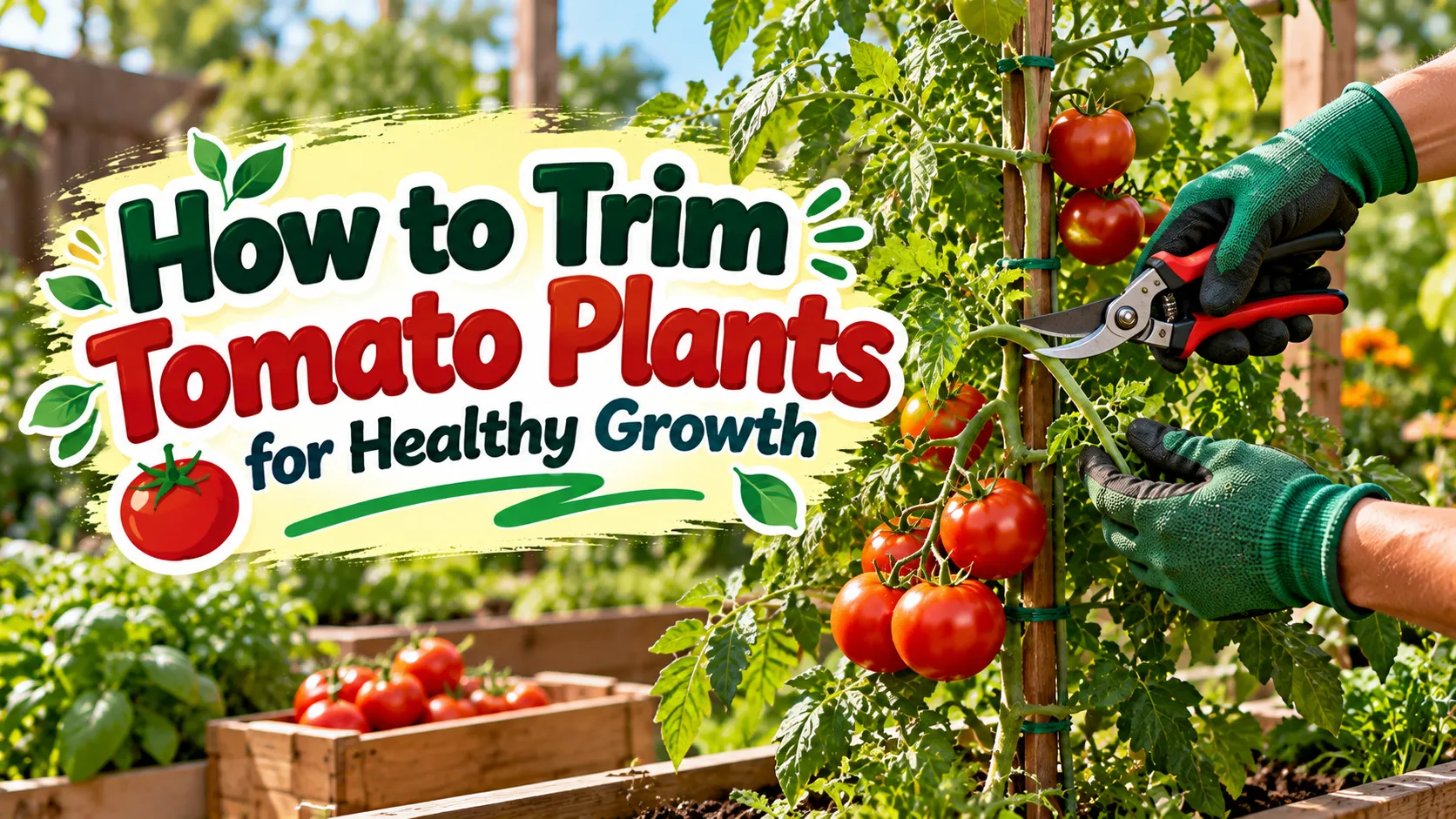
Learning how to trim tomato plants can help you manage excessive foliage, improve airflow, and keep your garden organized. When done correctly, pruning allows you to remove unwanted shoots, damaged leaves, and crowded growth so your tomato plants are easier to maintain throughout the growing season.
However, not every tomato plant needs the same amount of trimming. Indeterminate tomato varieties continue growing and producing fruit throughout the season, so they often benefit from selective pruning. Determinate varieties grow to a more limited size and produce much of their crop over a shorter period, so heavy pruning can reduce your harvest.
Whether you grow tomatoes in containers, raised beds, or a backyard garden, this guide explains when to trim tomato plants, which branches to remove, how to prune suckers, and which mistakes to avoid.
🍅 Why Should You Trim Tomato Plants?
Trimming tomato plants helps you control their shape and remove growth that is damaged, crowded, or unnecessary. The goal is not to remove as many leaves as possible but to maintain a healthy balance between foliage and fruit production.
Here are the main reasons gardeners prune tomato plants:
- Improve airflow: Removing some crowded lower foliage can help air circulate around the plant.
- Manage plant size: Selective pruning keeps indeterminate tomatoes easier to support.
- Remove damaged leaves: Cutting away dead or diseased foliage helps keep the plant tidy.
- Make harvesting easier: A manageable plant allows you to find ripe tomatoes more easily.
- Control unwanted shoots: Removing selected suckers can help direct growth along a stake or trellis.
- Reduce soil contact: Removing some lower leaves can help keep foliage away from damp soil.
- Support plant structure: Training selected stems makes tying and supporting the plant easier.
Pruning does not automatically produce larger tomatoes or a bigger harvest. The results depend on the tomato variety, growing conditions, and how much foliage you remove.
🌱 When Should You Trim Tomato Plants?
The best time to trim tomato plants is when they are actively growing and have developed enough healthy foliage to support their growth. Start with light, selective pruning rather than cutting back a young plant aggressively.
Follow these general guidelines:
- Young seedlings: Avoid heavy pruning. Let the plant establish a healthy root system and several sets of true leaves.
- After transplanting: Allow the plant to recover and begin growing before removing unnecessary shoots.
- During active growth: Check for unwanted suckers, damaged leaves, and crowded stems regularly.
- When flowering begins: Continue selective pruning if needed, especially on indeterminate varieties.
- As fruit develops: Remove damaged or diseased leaves, but retain enough healthy foliage to support ripening fruit.
- Late in the season: Remove only growth that serves a clear purpose, such as diseased foliage or excessive new shoots that are unlikely to produce mature fruit before the weather changes.
Choose a dry day when possible, especially when removing diseased leaves. Wet foliage can make some disease-management tasks more difficult.
✂️ How to Trim Tomato Plants Step by Step
You do not need complicated equipment to prune tomatoes. A clean pair of sharp garden snips is useful for thicker stems, while small, tender shoots can often be pinched off by hand.
Use these steps to trim your plants safely.
- Step 1: Identify your tomato variety. Determine whether it is indeterminate or determinate. Indeterminate varieties usually benefit more from selective training and sucker removal.
- Step 2: Inspect the plant. Look for yellow leaves, diseased foliage, damaged branches, and shoots growing in crowded areas.
- Step 3: Remove dead or damaged leaves. Cut them off near the main stem without damaging it.
- Step 4: Check for suckers. Suckers grow in the joint between a main stem and a leaf branch. Decide whether to remove them based on your variety and training method.
- Step 5: Improve the plant’s structure. If you are growing a single-stem tomato on a stake, remove selected suckers to maintain that form.
- Step 6: Keep healthy foliage. Avoid stripping the plant of too many leaves because foliage produces the energy the plant needs for growth and fruit development.
- Step 7: Secure the remaining stems. Tie the plant loosely to a stake or trellis using soft garden ties.
- Step 8: Check your work. Make sure cuts are clean and the main growing stems remain undamaged.
For a healthy plant, light, regular pruning is generally better than removing a large amount of foliage in one session.
🌿 What Are Tomato Suckers, and Should You Remove Them?
Tomato suckers are shoots that grow from the angle between a leaf stem and the main stem. They can develop into additional branches, producing more leaves, flowers, and fruit.
Whether you should remove them depends on the tomato variety and the way you support your plants.
For indeterminate tomatoes, removing some suckers can help keep the plant narrow and easier to train. For determinate tomatoes, removing many suckers can reduce the number of fruit-bearing branches and lower your harvest.
To identify a sucker, find a leaf branch attached to the main stem. Look at the small angle where the two meet. A new shoot emerging from that joint is usually a sucker.
How to handle tomato suckers:
- Pinch off small suckers with clean fingers when they are easy to remove.
- Use clean pruning snips for larger shoots.
- Remove only the suckers needed for your chosen training method.
- Leave some suckers if you want a fuller plant and have enough room and support.
- Avoid damaging the main stem or nearby flower clusters.
You can also root some healthy tomato suckers in water or moist potting mix to grow additional plants, although the success rate depends on their size and growing conditions.
🌳 How to Prune Indeterminate Tomato Plants
Indeterminate tomato plants continue growing and producing new flowers as long as conditions remain favorable. They can become tall and sprawling, so selective pruning is useful when you want to train them on a stake or vertical support.
A common method is to train an indeterminate tomato to one or two main stems.
- Choose one strong main stem, or select a second strong sucker if you prefer a two-stem system.
- Remove other suckers regularly if they make the plant too crowded.
- Tie the main stems loosely to a stake or trellis as they grow.
- Remove lower leaves that touch the soil or show signs of disease.
- Keep healthy leaves near developing fruit.
- Avoid removing large portions of the canopy at once.
A single-stem system can be useful in a crowded garden or greenhouse. A two-stem system can provide additional fruit-bearing growth when you have enough space and support.
Indeterminate tomatoes can produce a substantial amount of foliage, but more pruning is not always better. The right balance depends on your climate, disease pressure, spacing, and gardening goals.
🌱 How to Trim Determinate Tomato Plants
Determinate tomatoes, often called bush tomatoes, grow to a more limited size and tend to produce much of their fruit within a relatively concentrated period. Because their growth habit is naturally compact, they usually need less pruning than indeterminate varieties.
Examples of determinate varieties include Roma and many bush-type tomato cultivars, although you should check the description of your specific variety.
Follow these guidelines when trimming determinate plants:
- Remove yellow, dead, or diseased leaves.
- Cut away foliage that rests directly on damp soil.
- Remove damaged branches that could break or interfere with support.
- Avoid removing large numbers of healthy suckers.
- Provide a tomato cage or other support if the plant becomes heavy with fruit.
- Keep enough foliage to protect developing tomatoes from intense sunlight.
Heavy pruning can remove potential fruit-bearing branches from determinate plants. If you are unsure about a variety, limit pruning to damaged foliage and necessary maintenance.
🍃 Should You Remove the Bottom Leaves of Tomato Plants?
Removing some lower leaves can be helpful, particularly when they touch the soil or show signs of disease. Lower foliage may become crowded, making it harder for air to circulate around the base of the plant.
However, you should not automatically remove every lower leaf.
Consider removing leaves when they:
- Touch the ground or remain in contact with damp mulch.
- Turn yellow or brown and are no longer healthy.
- Show suspicious spots or other signs of disease.
- Block access to the plant’s base and interfere with maintenance.
- Create excessive crowding around the lower stems.
Use clean tools and remove affected foliage carefully. If you suspect a contagious disease, avoid handling healthy plants immediately afterward without cleaning your hands and tools.
Keep healthy leaves whenever possible. They contribute energy to the plant and help shade the fruit from intense sunlight.
☀️ How Much Should You Trim Tomato Plants?
The amount of trimming depends on the variety, plant health, and support system. There is no single percentage that works for every tomato plant.
A good rule is to remove only what is necessary to improve the plant’s structure, eliminate damaged foliage, or control unwanted growth.
- For young plants: Trim very little beyond damaged or unhealthy growth.
- For indeterminate plants: Remove selected suckers if you are training one or two main stems.
- For determinate plants: Focus mainly on damaged leaves and basic maintenance.
- For crowded plants: Remove selected shoots to improve access and airflow without exposing too much fruit.
- For diseased plants: Remove affected foliage carefully and follow appropriate disease-management practices.
- For plants carrying fruit: Preserve healthy foliage that helps support fruit development and provides shade.
Over-pruning can reduce photosynthesis and expose tomatoes to sunscald. If you have already removed too many leaves, stop pruning and allow the plant to recover.
🪴 How to Trim Tomato Plants in Pots
Tomato plants grown in containers often have less room than those planted in garden beds. Selective pruning can help keep them manageable, but the best approach depends on whether the variety is compact or indeterminate.
For container tomatoes:
- Choose a variety suitable for the container size.
- Remove damaged leaves and stems.
- Train indeterminate varieties to a stake or small trellis.
- Remove selected suckers if the plant becomes too crowded.
- Avoid stripping foliage from determinate or dwarf varieties.
- Make sure the container has drainage holes.
- Water consistently because pots can dry out faster than garden soil.
- Use a sturdy support system before the plant becomes heavy with fruit.
Compact and dwarf varieties often need very little pruning. Check the seed packet or plant label to understand the variety’s growth habit.
🧰 Tools You Need to Trim Tomato Plants
The right tools make pruning easier and reduce the risk of damaging stems.
- Pruning snips: Useful for thicker suckers and branches.
- Garden gloves: Help keep your hands clean and protect them from irritating plant residues.
- Soft plant ties: Secure stems to stakes without cutting into them.
- Plant support stakes: Keep tall plants upright.
- Tomato cages: Support bushier plants and help prevent branches from breaking.
- Disinfectant for tools: Useful when moving between plants with suspected disease.
Small, tender suckers can often be removed by hand, but clean snips are helpful for larger shoots. Clean tools between plants when disease is suspected, and follow the disinfectant label for appropriate use.
⚠️ Common Mistakes to Avoid When Trimming Tomato Plants
Pruning can help manage tomato plants, but mistakes may damage growth or reduce the harvest. Avoid these common problems.
- Removing too many leaves: Excessive pruning reduces the plant’s ability to produce energy and can expose fruit to sunscald.
- Pruning determinate tomatoes heavily: This can remove branches that would otherwise produce fruit.
- Cutting the main growing tip accidentally: This can alter the plant’s growth pattern.
- Leaving diseased foliage in place: Infected leaves may contribute to ongoing disease problems.
- Using dirty tools: Contaminated tools can spread certain plant diseases.
- Pruning when foliage is wet: Wet conditions can complicate disease management.
- Ignoring plant support: Heavy stems and fruit may bend or break without adequate support.
- Pruning stressed plants aggressively: Plants suffering from drought, heat, or root problems need attention to their growing conditions first.
- Exposing fruit suddenly: Removing too much foliage can leave tomatoes vulnerable to intense sunlight.
- Using the same pruning method for every variety: Determinate and indeterminate plants have different growth habits.
A little restraint goes a long way. Trim with a clear purpose rather than removing shoots simply because they appear unnecessary.
🍅 Should You Trim Tomato Plants While They Are Fruiting?
Yes, you can continue light maintenance while tomato plants are producing fruit. Removing damaged leaves, diseased foliage, and selected unwanted suckers can help keep plants manageable.
However, fruiting plants still need healthy foliage. Leaves produce the carbohydrates that support fruit growth, and they help protect tomatoes from excessive direct sunlight.
During fruit production:
- Remove dead or diseased leaves.
- Cut away branches that are broken or badly damaged.
- Continue selective sucker removal on indeterminate plants if needed.
- Avoid removing large amounts of healthy foliage.
- Keep developing tomatoes shaded by some leaves.
- Maintain consistent watering to reduce stress and help prevent fruit problems.
Late in the season, some gardeners remove the growing tips of indeterminate tomatoes to limit new growth and encourage the plant to focus on existing fruit. This technique is optional and is most useful when the end of the growing season is approaching.
❓ Frequently Asked Questions About Trimming Tomato Plants
When should I start trimming my tomato plants?
Begin with light maintenance after plants have established themselves and are actively growing. Remove damaged leaves as needed, and start managing suckers when the plant is large enough to train. Avoid aggressive pruning immediately after transplanting.
Should I cut all the suckers off tomato plants?
No. Removing all suckers is not necessary for every tomato plant. Selective sucker removal can help train indeterminate varieties, while determinate tomatoes generally benefit from retaining more of their natural growth.
Does trimming tomato plants produce bigger tomatoes?
Not necessarily. Pruning can help manage growth and improve access to the plant, but removing too much foliage can reduce fruit production. Tomato size also depends on the variety, growing conditions, water, nutrients, and fruit load.
Can I trim tomato plants with scissors?
Yes, provided the scissors are sharp and clean. Garden pruning snips are often easier to use on thicker stems. Avoid tearing or crushing stems when removing shoots.
Should I trim tomato plants in hot weather?
Avoid aggressive pruning during extreme heat because removing foliage can expose fruit to intense sunlight and increase stress. If you need to remove a damaged or diseased leaf, do so carefully and preserve as much healthy foliage as possible.
Should I remove yellow leaves from tomato plants?
Yes, yellow leaves can be removed when they are dead, badly damaged, or diseased. However, investigate the cause of widespread yellowing, as it may indicate overwatering, nutrient problems, disease, or other stress.
Can I prune tomato plants too much?
Yes. Heavy pruning reduces the leaf area available for photosynthesis and can expose tomatoes to sunscald. Remove only the foliage and shoots needed for plant health and your chosen training method.
How often should I trim tomato plants?
Inspect plants regularly during active growth, perhaps once or twice a week. Remove unwanted growth when necessary rather than trimming on a strict schedule. The frequency depends on the variety and growing conditions.
Should I top my tomato plants?
Topping means cutting off the growing tip. It is sometimes used late in the season to limit further growth on indeterminate plants, but it is not necessary for every plant. Avoid topping determinate varieties unless you have a specific reason.
Can I use tomato suckers to grow new plants?
Yes. Some healthy suckers can develop roots when placed in water or moist potting mix. Once they form a good root system, they can be transplanted carefully. Success depends on the shoot’s health and growing conditions.
🍅 Conclusion
Knowing how to trim tomato plants helps you maintain healthy growth, manage crowded branches, and make harvesting easier. The most important step is to understand your tomato variety: indeterminate plants often benefit from selective sucker removal, while determinate plants generally need less pruning.
Remove dead and diseased foliage, keep healthy leaves that support fruit development, and use clean tools when necessary. With a balanced approach to pruning, watering, and plant support, you can keep your tomato plants organized and give them a good chance to produce a healthy crop.

Ethan Carter is a nature enthusiast and content writer with a passion for flowers and botanical knowledge. He is the author behind FlowerNamez, where he shares simple and informative content about flower names, types, and meanings.
With a focus on clarity and accuracy, Ethan aims to help readers explore the beauty of flowers and understand their significance in everyday life.