Flowers add beauty to our lives, but they can also express feelings, celebrate relationships, and represent special moments. Every month has traditional birth flowers with unique colors, shapes, and symbolic meanings. Some flowers represent love and friendship, while others symbolize hope, courage, happiness, or new beginnings.
A birth flower chart helps you discover the flowers connected with your birth month and understand their traditional meanings. You can use this chart to choose thoughtful birthday gifts, create personalized floral designs, plan a garden, or find inspiration for jewelry and tattoos.
In this guide, you will discover the birth flowers for all 12 months, explore their symbolism, and learn how to use them in meaningful ways.
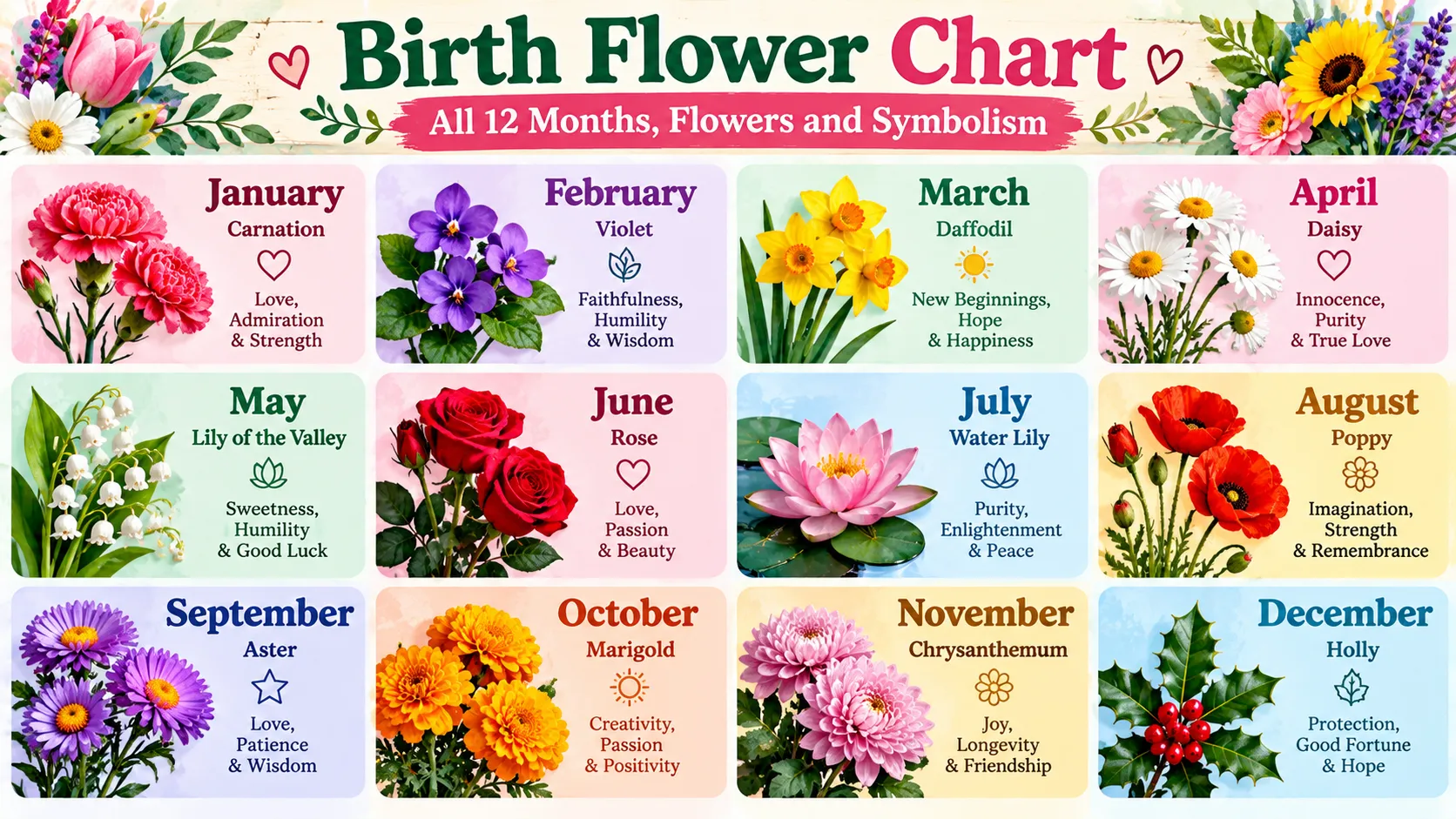
🌷 Birth Flower Chart for All 12 Months
The following chart lists the traditional birth flowers for each month, along with their commonly recognized meanings. Some months have two flowers because different traditions and reference sources use different lists.
| Month | Primary Birth Flower | Secondary Flower | Traditional Meaning |
|---|---|---|---|
| January | Carnation | Snowdrop | Love, devotion, hope |
| February | Violet | Primrose | Loyalty, modesty, young love |
| March | Daffodil | Jonquil | Renewal, happiness, new beginnings |
| April | Daisy | Sweet Pea | Innocence, gratitude, joy |
| May | Lily of the Valley | Hawthorn | Happiness, sweetness, hope |
| June | Rose | Honeysuckle | Love, passion, affection |
| July | Larkspur | Water Lily | Positivity, openness, purity |
| August | Gladiolus | Poppy | Strength, courage, remembrance |
| September | Aster | Morning Glory | Wisdom, patience, affection |
| October | Marigold | Cosmos | Creativity, warmth, harmony |
| November | Chrysanthemum | Varies by tradition | Friendship, loyalty, happiness |
| December | Narcissus | Holly | Hope, renewal, protection |
Flower symbolism can differ across cultures and traditions. Use these meanings as a helpful guide rather than a universal set of rules.
🌸 What Is a Birth Flower?
A birth flower is a flower that people traditionally connect with a particular month of the year. Like birthstones, birth flowers give each month a distinctive symbol that people can use to celebrate birthdays and create personalized gifts.
The tradition draws inspiration from the language of flowers, also known as floriography. In this practice, people used flowers to communicate emotions, express affection, and share messages without speaking directly.
Each flower carries its own symbolic associations. For example, roses often represent love, daisies suggest innocence and happiness, and daffodils symbolize renewal. These meanings can help you choose a flower that reflects someone’s personality or expresses a particular feeling.
Birth flowers also connect with the changing seasons. Spring flowers often suggest fresh beginnings, summer blooms can express happiness and affection, and winter flowers frequently represent hope and endurance.
However, no single birth flower chart applies to every culture. Some sources list one flower per month, while others include two or more. This guide focuses on commonly recognized birth flowers and their traditional symbolism.
🌺 January Birth Flower: Carnation and Snowdrop
January begins the year with two flowers that represent devotion, affection, and hope. The carnation serves as the primary birth flower in many charts, while the snowdrop offers another meaningful choice.
Carnation: Love, Devotion, and Admiration
Carnations feature ruffled petals and come in a wide variety of colors. Their attractive appearance and long-lasting blooms make them popular choices for bouquets, celebrations, and thoughtful gifts.
People often associate carnations with love, admiration, devotion, and gratitude. Different colors can communicate different emotions. Red carnations often express admiration and affection, pink carnations suggest gratitude and remembrance, and white carnations can symbolize purity or good wishes.
You can choose a carnation bouquet for a January birthday, create a floral card featuring the flower, or use its design in personalized jewelry.
Snowdrop: Hope and New Beginnings
Snowdrops produce delicate, bell-shaped white flowers. In suitable climates, they often emerge near the end of winter, bringing a welcome sign of spring.
Their seasonal appearance makes snowdrops powerful symbols of hope, perseverance, and fresh beginnings. They remind us that difficult periods do not last forever and that new opportunities can follow challenging times.
A snowdrop-themed gift can encourage someone who plans to start a new chapter or pursue an important goal.
January birth flower meaning: Devotion, affection, perseverance, and hope.
💜 February Birth Flower: Violet and Primrose
February’s birth flowers offer a lovely combination of loyalty, modesty, affection, and renewal. Violets bring a sense of quiet beauty, while primroses represent youthful energy and fresh beginnings.
Violet: Loyalty and Modesty
Violets produce small, delicate flowers in shades of purple, blue, and white. Their understated appearance makes them symbols of modesty, faithfulness, loyalty, and sincere affection.
A violet can represent a strong relationship that grows through trust and understanding. It suits someone who values meaningful friendships, thoughtful gestures, and lasting connections.
You can incorporate violets into botanical artwork, birthday cards, or floral arrangements for someone born in February.
Primrose: Young Love and Renewal
Primroses bloom early in the growing season and often bring bright colors to gardens after winter. Their cheerful appearance connects them with youth, new beginnings, and young love.
These flowers can symbolize the excitement of starting something new or the happiness that comes with discovering fresh opportunities.
Primroses also work beautifully in garden-inspired gifts and spring decorations.
February birth flower meaning: Loyalty, modesty, affection, and renewal.
🌼 March Birth Flower: Daffodil and Jonquil
March brings the daffodil and jonquil, two flowers that reflect the arrival of spring. Their bright blooms symbolize happiness, hope, and the promise of new beginnings.
Daffodil: Renewal and Happiness
Daffodils feature trumpet-shaped centers and bright petals, often in cheerful shades of yellow or white. Their familiar appearance makes them popular spring flowers.
People commonly associate daffodils with renewal, optimism, rebirth, and fresh starts. Their seasonal arrival represents the transition from winter toward warmer days.
A daffodil bouquet can celebrate a birthday, congratulate someone on a new job, or encourage a friend who has begun an exciting project.
Jonquil: Affection and Cheerfulness
Jonquils belong to the daffodil family and often produce clusters of fragrant flowers. Their delicate appearance and pleasant scent make them attractive additions to spring gardens.
Jonquils commonly symbolize affection, warmth, and cheerfulness. They can express appreciation for a friend or represent the happiness that comes from spending time with loved ones.
March birth flower meaning: Renewal, optimism, happiness, and fresh beginnings.
🌷 April Birth Flower: Daisy and Sweet Pea
April’s birth flowers celebrate the freshness of spring. Daisies symbolize innocence and happiness, while sweet peas represent gratitude and pleasure.
Daisy: Innocence and Joy
Daisies have simple, open blooms with central disks surrounded by delicate petals. Their cheerful appearance often brings to mind innocence, purity, simplicity, and joy.
Daisies suit people who appreciate natural beauty and uncomplicated pleasures. Their familiar shape also makes them popular choices for birthday decorations, casual bouquets, and floral illustrations.
Although white daisies remain especially recognizable, you can find many varieties in pink, yellow, and other colors.
Sweet Pea: Gratitude and Pleasure
Sweet peas produce delicate, ruffled flowers in colors such as pink, purple, red, and white. Many varieties also offer a lovely fragrance.
These flowers traditionally symbolize gratitude, pleasure, appreciation, and fond memories. A sweet pea bouquet can express thanks to someone who has offered support or friendship.
You can also use sweet pea illustrations on greeting cards or personalized birthday gifts.
April birth flower meaning: Innocence, joy, gratitude, and appreciation.
🌿 May Birth Flower: Lily of the Valley and Hawthorn
May brings flowers that symbolize sweetness, happiness, and hope. And Lily of the valley serves as a popular May birth flower, while hawthorn appears in some traditional charts.
Lily of the Valley: Happiness and Sweetness
Lily of the valley produces tiny, bell-shaped white flowers along slender stems. Its delicate appearance and distinctive fragrance make it a favorite for spring bouquets and wedding arrangements.
People commonly associate this flower with happiness, humility, sweetness, and renewed joy. It can express a wish for someone to experience peace and contentment.
Despite its delicate beauty, lily of the valley contains toxic compounds. Keep the plant away from children and pets, and never eat any part of it.
Hawthorn: Hope and Renewal
Hawthorn grows as a flowering shrub or small tree and produces clusters of blossoms in spring. Different traditions connect its flowers with hope, renewal, and protection.
Its springtime blooms make hawthorn a natural symbol of growth and seasonal change. You can use hawthorn-inspired designs in botanical artwork, personalized cards, and garden-themed gifts.
May birth flower meaning: Happiness, sweetness, hope, and renewal.
🌹 June Birth Flower: Rose and Honeysuckle
June is often associated with romance, celebrations, and early summer beauty. The rose and honeysuckle reflect these themes through their traditional connections with love and affection.
Rose: Love and Passion
Roses remain among the world’s most recognizable flowers. Their wide range of colors and varieties makes them suitable for birthdays, anniversaries, and many other occasions.
Red roses often express romantic love and passion. Pink roses can communicate admiration and gratitude, while yellow roses frequently represent friendship and happiness. White roses may symbolize purity, sincerity, or remembrance, depending on the context.
You can personalize a June birthday bouquet by selecting a rose color that reflects your relationship with the recipient.
Honeysuckle: Affection and Devotion
Honeysuckle produces fragrant flowers that attract attention in gardens and outdoor spaces. Its sweet scent contributes to its traditional associations with affection, devotion, and lasting connections.
Honeysuckle can symbolize a relationship that continues to grow stronger over time. It also represents the warmth and happiness that close friendships bring into our lives.
June birth flower meaning: Love, passion, affection, gratitude, and devotion.
🌺 July Birth Flower: Larkspur and Water Lily
July’s birth flowers combine the bright appearance of larkspur with the calm beauty of the water lily. Both flowers offer distinctive meanings that suit summer celebrations.
Larkspur: Positivity and an Open Heart
Larkspur produces tall spikes of flowers in shades such as blue, purple, pink, and white. Its colorful blooms make it an attractive choice for summer gardens and floral arrangements.
Larkspur traditionally symbolizes positivity, openness, affection, and a cheerful spirit. It can represent someone who brings happiness to others or approaches life with optimism.
You can use larkspur in a birthday bouquet or choose its design for a personalized floral illustration.
Water Lily: Peace and Purity
Water lilies grow on the surface of ponds and other bodies of water. Their elegant flowers and floating leaves create a peaceful appearance.
Different traditions associate water lilies with purity, tranquility, renewal, and spiritual growth. They can represent the ability to find calm during difficult moments.
Water lily designs also suit nature-inspired artwork, garden decorations, and personalized gifts for July birthdays.
July birth flower meaning: Positivity, openness, peace, and purity.
🌻 August Birth Flower: Gladiolus and Poppy
August’s birth flowers combine the strength of gladiolus with the distinctive beauty of poppies. Their traditional meanings reflect courage, remembrance, and resilience.
Gladiolus: Strength and Courage
Gladiolus features tall stems and striking flowers. Its sword-shaped leaves inspired its name, which comes from the Latin word gladius, meaning sword.
People commonly associate gladiolus with strength, courage, integrity, and determination. The flower can represent someone who overcomes obstacles or continues working toward important goals.
Its wide range of colors makes gladiolus suitable for bold bouquets and summer birthday arrangements.
Poppy: Remembrance and Imagination
Poppies have delicate petals and distinctive central structures. Their meanings vary across cultures, with some traditions connecting them to remembrance, peace, imagination, or the temporary nature of life.
Red poppies hold particular significance in remembrance traditions in several countries. Other varieties may carry different cultural or personal meanings.
When choosing poppies for a gift, consider the occasion and the recipient’s cultural background.
August birth flower meaning: Strength, courage, remembrance, and determination.
💜 September Birth Flower: Aster and Morning Glory
September brings the aster and morning glory, two flowers that symbolize affection, patience, and the beauty of seasonal change.
Aster: Wisdom and Patience
Asters produce star-shaped blooms in shades such as purple, pink, blue, and white. Their name comes from a word associated with stars, which reflects the shape of their flowers.
Asters commonly symbolize wisdom, patience, faith, and affection. They can represent the value of experience and the importance of nurturing meaningful relationships.
Their late-season blooms also make asters attractive choices for autumn bouquets and garden displays.
Morning Glory: Affection and New Beginnings
Morning glories produce trumpet-shaped flowers and often climb along trellises, fences, and other supports. Many varieties open their flowers in the morning, connecting them with the beginning of a new day.
These flowers can symbolize affection, renewal, and appreciation for life’s everyday moments. Their climbing growth habit also makes them popular among gardeners.
September birth flower meaning: Wisdom, patience, affection, and renewal.
🍂 October Birth Flower: Marigold and Cosmos
October’s birth flowers reflect the warmth and changing colors of autumn. Marigolds bring bold orange and golden shades, while cosmos flowers offer a softer, more delicate appearance.
Marigold: Warmth and Creativity
Marigolds produce vivid blooms in shades of yellow, orange, and gold. Gardeners often grow them for their bright colors, and many cultures include them in celebrations and important traditions.
Marigolds can symbolize warmth, creativity, passion, and celebration. In some cultures, people also use them during ceremonies that honor loved ones who have passed away.
Their bold appearance makes them suitable for autumn arrangements, festive decorations, and October birthday gifts.
Cosmos: Harmony and Joy
Cosmos flowers feature delicate petals surrounding a central disk. They often appear in pink, white, purple, and other attractive shades.
People associate cosmos with harmony, balance, order, and joy. Their graceful appearance makes them a lovely choice for anyone who appreciates natural beauty and simple floral designs.
Together, marigolds and cosmos offer a balance of bold color and gentle elegance.
October birth flower meaning: Creativity, warmth, harmony, and joy.
🌼 November Birth Flower: Chrysanthemum
Chrysanthemums, often called mums, are the flowers most commonly associated with November. They come in many colors and forms, from small button blooms to large decorative flowers.
Chrysanthemum: Friendship and Happiness
Chrysanthemums traditionally symbolize friendship, loyalty, happiness, and longevity. Their rich colors and varied shapes make them popular choices for autumn bouquets and seasonal decorations.
Their meanings can vary across cultures. Some traditions associate chrysanthemums with celebration and long life, while others use particular colors or arrangements for memorials and funerals. Consider local customs when choosing chrysanthemums for a meaningful occasion.
Many gardeners also appreciate chrysanthemums because numerous varieties bloom during autumn, when some other garden flowers begin to fade.
Although some birth flower charts list alternative blooms for November, chrysanthemum remains the most widely recognized choice in many modern references.
November birth flower meaning: Friendship, loyalty, happiness, and longevity.
❄️ December Birth Flower: Narcissus and Holly
December’s birth flowers reflect hope, renewal, and the enduring beauty of winter. So Narcissus commonly appears as the primary birth flower, while holly adds a familiar seasonal symbol.
Narcissus: Hope and Renewal
Narcissus includes several flowering plants, including paperwhite varieties. These flowers often feature delicate petals and a distinctive fragrance.
People commonly associate narcissus with hope, renewal, self-reflection, and fresh beginnings. Winter-blooming varieties can remind us that growth continues even during colder seasons.
The flower also has connections with Greek mythology, which influences some interpretations of its symbolism. Depending on the context, narcissus can represent reflection, beauty, or the promise of a new beginning.
Holly: Protection and Endurance
Holly is an evergreen plant with glossy leaves and bright berries. Its appearance in winter decorations has made it a familiar symbol in many seasonal traditions.
Holly can represent protection, endurance, and the persistence of life through winter. Its evergreen foliage offers a reminder of strength and hope during colder months.
Keep holly berries away from children and pets because eating them can cause illness.
December birth flower meaning: Hope, renewal, protection, and endurance.
🎁 How to Use a Birth Flower Chart for Meaningful Gifts
A birth flower chart can help you create gifts that feel personal and thoughtful. You do not need an elaborate arrangement or an expensive present to make someone’s birthday special. A small floral detail can carry a meaningful message.
Create a Personalized Birthday Bouquet
Choose the flower associated with the recipient’s birth month and build a bouquet around it. You can use the main flower on its own or combine it with complementary blooms and greenery.
If you cannot find the exact flower, select a similar bloom or use the flower’s colors in your arrangement. A thoughtful choice matters more than following a chart perfectly.
Choose Birth Flower Jewelry
Birth flower designs work beautifully in necklaces, bracelets, rings, and earrings. A small floral pendant can represent someone’s birth month without creating an overly decorative look.
You can also combine several flowers to represent family members. For example, a necklace featuring different birth flowers can celebrate children, parents, siblings, or grandparents.
Design Personalized Cards and Prints
A birth flower illustration can transform a simple birthday card, journal cover, or framed print into a personal keepsake. Add the flower’s name and a short explanation of its traditional meaning to make the design more special.
Botanical prints also provide a lasting alternative to fresh flowers, especially for people who enjoy home decorations and nature-inspired artwork.
Grow a Birth Month Flower
For someone who enjoys gardening, seeds or a small flowering plant can make a thoughtful present. Before purchasing a plant, check its sunlight requirements, soil preferences, climate suitability, and maintenance needs.
Not every traditional birth flower grows easily in every region. Choose a plant that suits the recipient’s garden and local climate rather than relying on symbolism alone.
Add Birth Flowers to Birthday Decorations
You can use birth flower designs on invitations, party banners, table settings, greeting cards, and personalized gifts. A consistent floral theme can make a birthday celebration feel coordinated without requiring expensive decorations.
If you decorate with real flowers, keep potentially toxic plants away from food, children, and pets.
🌱 How to Choose the Right Birth Flower
Start by finding the recipient’s birth month in the chart. Then consider the flower’s traditional meaning, appearance, and suitability for the gift you have in mind.
If a month has two birth flowers, choose the one that best reflects the recipient’s personality or the message you want to express. Someone who values loyalty may appreciate violets, while a person who loves bright spring colors may prefer daffodils.
Color can also influence your choice. Red flowers often communicate passion, yellow blooms suggest cheerfulness, and white flowers can express sincerity or simplicity. However, cultural traditions and personal preferences may give colors different meanings.
Finally, think about the gift itself. Fresh flowers work well for birthdays and celebrations, while jewelry, prints, and personalized illustrations can serve as lasting keepsakes. For gardening gifts, choose a plant that the recipient can realistically grow and maintain.
The best birth flower is the one that feels meaningful to the person receiving it.
🌿 Why Birth Flowers Have Special Meaning
Flowers have long helped people express emotions, celebrate milestones, and connect with nature. Birth flowers continue this tradition by linking each month with a bloom that carries its own appearance and symbolism.
They also encourage people to explore gardening, seasonal changes, cultural traditions, and the natural world. A flower can become a reminder of a birthday, a friendship, a family connection, or an important stage of life.
Keep in mind that flower meanings are not universal. Different cultures may interpret the same flower in different ways, and birth flower charts sometimes disagree about which blooms belong to particular months. These variations offer more ways to appreciate flowers rather than making the tradition less meaningful.
❓ Frequently Asked Questions About Birth Flowers
What is the birth flower for each month?
January commonly features carnation, February violet, March daffodil, April daisy, May lily of the valley, June rose, July larkspur, August gladiolus, September aster, October marigold, November chrysanthemum, and December narcissus. Some charts include a secondary flower for each month.
Can a month have two birth flowers?
Yes. Many birth flower charts list two flowers for the same month. Different traditions and reference sources use different combinations, so the exact pairings may vary.
Are birth flowers the same as birthstones?
No. Birthstones are gemstones associated with particular months, while birth flowers are plants or blooms connected with those months. Both traditions help people personalize gifts and celebrate birthdays.
Do birth flowers have specific meanings?
Yes. Traditional flower symbolism connects different blooms with feelings and ideas such as love, friendship, hope, courage, and renewal. However, these meanings can change across cultures and historical periods.
What is the best way to give someone their birth flower?
You can give a bouquet, flowering plant, birth flower necklace, personalized card, or botanical print. Choose something that reflects the recipient’s preferences and suits the occasion.
Can I use a birth flower chart for a tattoo?
Yes. A birth flower chart can help you choose a flower for a tattoo that represents your birth month or someone important to you. You can also combine several family birth flowers or add names and dates to create a personal design.
Are birth flower charts universal?
No. Birth flower charts vary by region, culture, and reference source. Some months have different secondary flowers, and cultural traditions can influence the meaning of each bloom.
How can I find my birth flower?
Find your birth month in the chart near the beginning of this article. Read the traditional meaning of its flower, then explore any secondary flower listed for that month. Choose the bloom that best reflects your taste or the message you want to express.
🌷 Celebrate Your Birth Month with Flowers
Every month offers flowers that help us express emotions, celebrate relationships, and appreciate the beauty of nature. From January’s devoted carnation to December’s hopeful narcissus, birth flowers give each month a distinctive floral identity.
Use this birth flower chart to discover your traditional flower, explore its symbolism, and find inspiration for thoughtful gifts, garden projects, birthday decorations, and personal keepsakes. Whether you choose a fresh bouquet or a simple floral illustration, the meaning behind your choice can make the gesture truly special.

Ethan Carter is a nature enthusiast and content writer with a passion for flowers and botanical knowledge. He is the author behind FlowerNamez, where he shares simple and informative content about flower names, types, and meanings.
With a focus on clarity and accuracy, Ethan aims to help readers explore the beauty of flowers and understand their significance in everyday life.