
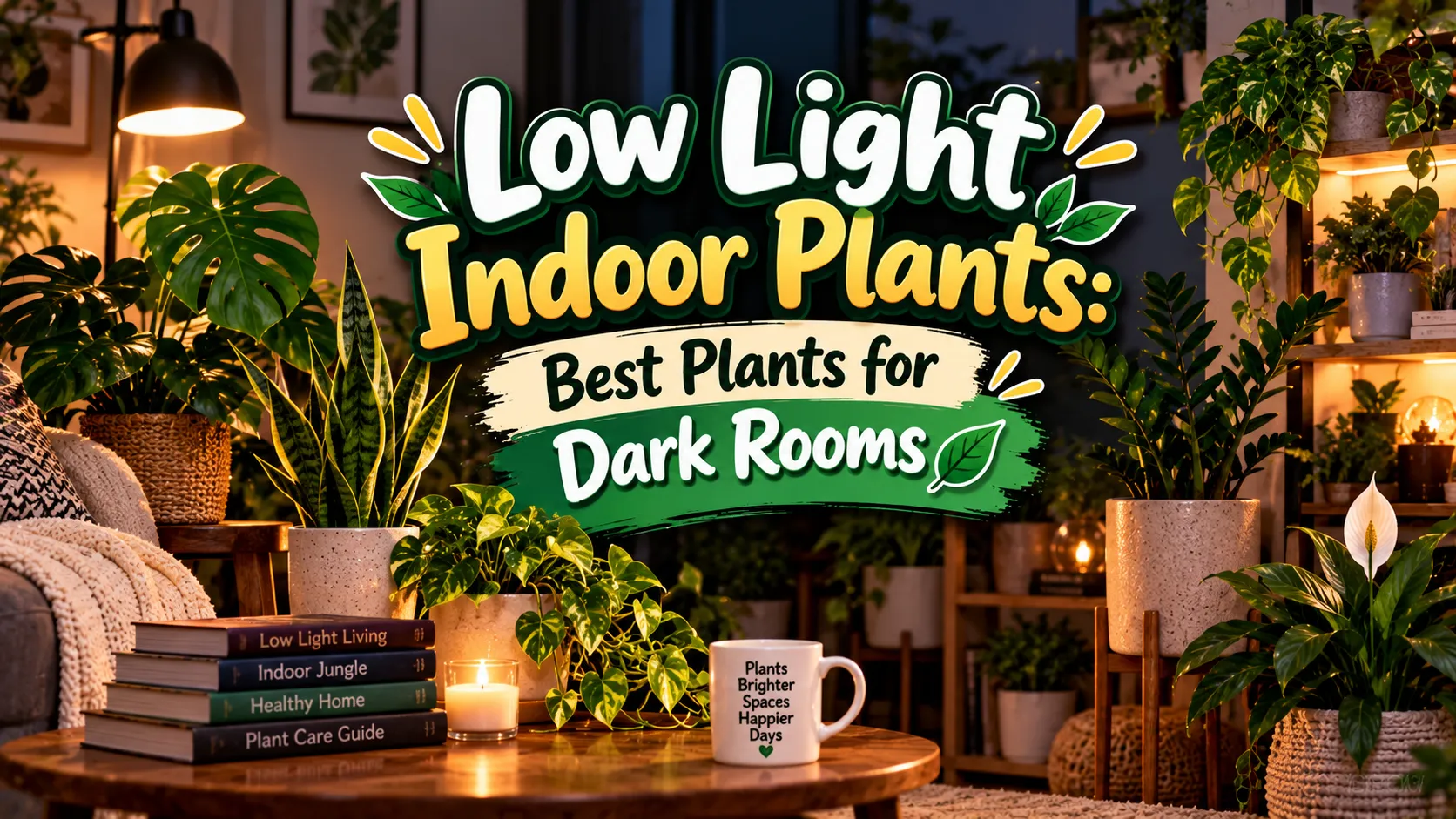
Low light indoor plants are a great way to bring natural beauty into homes, offices, and apartments that receive limited sunlight. Not every room has large windows or bright natural light, but that doesn’t mean you have to give up on indoor gardening. Many houseplants can adapt to indirect light and thrive in spaces where direct sunshine is limited.
From elegant snake plants to trailing pothos, several indoor plants can add greenery to bedrooms, bathrooms, offices, and shaded corners. Some have striking leaves, while others grow upright or cascade beautifully from shelves and hanging baskets.
However, low light does not mean no light. All plants need some light to grow, and even shade-tolerant varieties may struggle in a completely dark room. Choosing the right plant and adjusting your watering routine can help you maintain healthy indoor greenery.
In this guide, you’ll discover the best low light indoor plants, their care requirements, and practical tips for growing them successfully.
🌱 What Are Low Light Indoor Plants?
Low light indoor plants are houseplants that can tolerate lower levels of natural light than many other varieties. They are suitable for rooms with indirect sunlight, north-facing windows, or locations where buildings and trees block some daylight.
These plants often grow naturally beneath forest canopies, where taller trees filter sunlight. Their ability to tolerate shade makes them useful for indoor spaces that don’t receive strong direct sun.
However, low light and no light are different. A room with a window may provide enough daylight for certain plants, while a windowless room usually requires a suitable grow light. Plants in dim conditions also tend to grow more slowly, so they generally need less frequent watering than plants growing in bright light.
🪴 Best Low Light Indoor Plants for Your Home
The best low light indoor plants combine attractive foliage with manageable care requirements. These popular choices offer different shapes, sizes, and growth habits for a variety of indoor spaces.
1. Snake Plant
The snake plant (Dracaena trifasciata) has upright, sword-shaped leaves with green patterns and yellow edges on some varieties. Its architectural appearance makes it a popular choice for bedrooms, living rooms, and offices.
Snake plants tolerate low light and can handle occasional missed watering. Allow the soil to dry out thoroughly between waterings, and use a pot with drainage holes to reduce the risk of root rot.
2. ZZ Plant
The ZZ plant (Zamioculcas zamiifolia) features glossy, dark green leaves arranged along thick stems. It is especially popular with beginners because it tolerates low light and infrequent watering.
Its underground rhizomes store water, helping the plant withstand dry periods. Water only when the potting mix has dried substantially, and avoid keeping the roots constantly wet.
3. Pothos
Pothos (Epipremnum aureum) is a trailing houseplant with heart-shaped leaves. Depending on the variety, its foliage may be solid green, golden, or variegated.
It works well on bookshelves, plant stands, and hanging baskets. Green varieties generally tolerate lower light better than heavily variegated varieties. Let the upper portion of the soil dry before watering again.
4. Peace Lily
The peace lily (Spathiphyllum) has broad, dark green leaves and distinctive white flower-like structures called spathes. It can grow in indirect light and often suits offices, bedrooms, and living rooms.
Peace lilies prefer evenly moist soil without standing water. They may produce fewer flowers in low light, so don’t expect abundant blooms in a dim corner.
5. Cast Iron Plant
The cast iron plant (Aspidistra elatior) earns its name from its ability to tolerate challenging indoor conditions. Its long, deep green leaves add a lush appearance to shaded rooms.
It grows slowly and generally needs little attention once established. Water when the soil begins to dry, and protect the leaves from prolonged direct sunlight.
6. Heartleaf Philodendron
Heartleaf philodendron (Philodendron hederaceum) produces soft, heart-shaped leaves on long trailing stems. Its flexible growth makes it suitable for shelves, hanging planters, and compact apartments.
It tolerates indirect light and lower-light conditions, although growth may slow in darker spaces. Water when the top layer of soil begins to dry.
7. Chinese Evergreen
Chinese evergreen (Aglaonema) offers attractive foliage in shades of green, silver, pink, or red, depending on the cultivar. Green-leaved varieties are often better choices for dimmer locations than highly colorful types.
Keep it in indirect light and use a well-draining potting mix. Allow the soil to dry slightly between waterings, and avoid exposing the plant to cold drafts.
8. Parlor Palm
The parlor palm (Chamaedorea elegans) has delicate, arching fronds that bring a tropical look to indoor spaces. It generally prefers bright, indirect light but can tolerate lower-light conditions.
Water when the top layer of soil starts to dry. Avoid placing it in direct, harsh sunlight, which may scorch the foliage.
9. Spider Plant
The spider plant (Chlorophytum comosum) has arching green or striped leaves and can produce small plantlets on long stems. It works well on shelves, desks, and hanging baskets.
Although it grows best in bright, indirect light, it can adapt to moderate indoor light. Variegated forms may lose some of their striping in darker conditions.
10. Dracaena
Many dracaena varieties feature upright stems and narrow, decorative leaves. They can provide height and structure in living rooms, offices, and corners that receive indirect daylight.
Their light needs vary by variety, but many tolerate moderate or lower indoor light. Water according to the soil’s moisture level, and avoid leaving the roots in standing water.
🌑 Low Light Indoor Plants for Dark Rooms
Some rooms receive less natural light than others. If you want greenery for a dim hallway, a room with a small window, or a shaded office, choose plants known for tolerating lower light.
Good options include:
- Snake plant
- ZZ plant
- Cast iron plant
- Green pothos
- Chinese evergreen
- Heartleaf philodendron
Remember that these plants still need light for photosynthesis. If your room receives almost no daylight, use a suitable grow light for a portion of the day. Rotating a plant into a brighter location may also help, provided the change doesn’t expose it suddenly to intense direct sun.
🛏️ Best Low Light Indoor Plants for Bedrooms
Indoor plants can make a bedroom feel more inviting and relaxing. Compact varieties and plants with attractive foliage are especially useful when floor space is limited.
Consider these options:
- Snake plant: Its upright leaves suit narrow spaces and corners.
- ZZ plant: Its glossy foliage adds a neat, modern appearance.
- Heartleaf philodendron: Its trailing stems work well on shelves.
- Parlor palm: Its soft fronds create a gentle tropical look.
- Chinese evergreen: Its patterned leaves add visual interest.
Place plants where they receive suitable daylight and won’t obstruct walkways. Keep them away from areas where pets or small children might chew the leaves, particularly when the species is toxic if ingested.
🏢 Low Light Indoor Plants for Offices
Office plants can make desks, shelves, and shared workspaces feel more welcoming. Choose varieties that fit the available space and can tolerate the office’s lighting conditions.
The ZZ plant is useful for people who prefer infrequent watering. Snake plants suit floor corners, while pothos can trail from a shelf without taking up much desk space. Chinese evergreen offers colorful foliage when a more decorative option is desired.
If your office has fluorescent or LED lighting but receives no daylight, don’t assume ordinary room lighting will meet a plant’s needs. A plant grow light may be necessary, depending on the intensity and duration of the light available.
☀️ How Much Light Do Low Light Indoor Plants Need?
The term low light can mean different things in different rooms. A spot near a north-facing window may receive enough indirect daylight for a shade-tolerant plant, while a corner several feet away may be much darker.
| Light Condition | What It Means | Suitable Plant Choices |
|---|---|---|
| Low indirect light | Limited daylight, without strong direct sun | ZZ plant, cast iron plant |
| Moderate indirect light | Useful daylight for much of the day | Pothos, peace lily |
| Bright indirect light | Strong daylight filtered through a window or curtain | Spider plant, many dracaena varieties |
| Almost no natural light | Very little usable daylight | Grow light recommended |
Watch how your plant responds after placing it in a new location. Slow growth, pale foliage, or unusually long stems may indicate insufficient light. If leaves become scorched or faded, the plant may be receiving too much direct sun.
💧 How to Care for Low Light Indoor Plants
Plants growing in dim conditions often use water more slowly than those in bright light. Adjusting your care routine is therefore essential.
Water carefully. Check the soil before watering instead of following a strict weekly schedule. Many low-light plants develop root problems when their soil stays wet for too long.
Choose suitable pots. Use containers with drainage holes so excess water can escape. Empty saucers after watering when necessary.
Use the right potting mix. Select a mix suited to the species. A well-aerated mix helps prevent waterlogged roots.
Clean the leaves. Dust can accumulate on indoor foliage. Gently wipe broad leaves with a soft, damp cloth when needed.
Fertilize moderately. Many indoor plants grow slowly in low light, so they may need less fertilizer than plants in brighter locations. Follow the product label and the plant’s growth pattern.
Check for pests. Inspect leaves and stems occasionally for spider mites, mealybugs, and other common houseplant pests.
⚠️ Common Mistakes to Avoid
Even easy-care houseplants can struggle when their environment doesn’t meet their needs.
- Assuming low light means no light: Plants need usable light to remain healthy.
- Overwatering: Slow growth and reduced evaporation can leave soil wet for too long.
- Choosing heavily variegated plants for very dim corners: They may lose their patterns or grow poorly.
- Using pots without drainage: Excess water can accumulate around roots.
- Fertilizing too frequently: Too much fertilizer can damage roots and cause salt buildup.
- Ignoring plant toxicity: Some popular houseplants can harm pets or people if chewed or swallowed.
- Expecting fast growth: Many plants grow more slowly in low-light conditions.
A suitable location, careful watering, and patience will help most shade-tolerant houseplants perform better.
🐾 Are Low Light Indoor Plants Safe for Pets?
Not all low light indoor plants are pet-friendly. Snake plants, pothos, ZZ plants, peace lilies, and philodendrons can cause problems if cats or dogs chew or ingest them.
If you have pets, consider non-toxic alternatives such as a spider plant or parlor palm, while still checking the exact species and variety before buying. Place plants where pets cannot easily knock over pots or dig in the soil.
If an animal eats a potentially toxic plant, contact a veterinarian for advice. Plant safety should always take priority over decoration.
❓ Frequently Asked Questions About Low Light Indoor Plants
What is the easiest low light indoor plant to grow?
The ZZ plant and snake plant are popular beginner-friendly options because they tolerate low light and need relatively infrequent watering. Both still require some usable light and well-managed soil moisture.
Can indoor plants survive in a room without windows?
Plants generally cannot grow well indefinitely without a source of usable light. A suitable grow light can provide the light they need in a windowless room.
Which low light indoor plants need the least water?
Snake plants and ZZ plants can tolerate longer periods between waterings than many tropical houseplants. Always check the soil before watering, as conditions vary with pot size, temperature, and humidity.
Do low light indoor plants grow slowly?
Yes, growth often slows when light levels are low. This is normal, but extremely slow growth combined with yellowing or pale leaves may indicate that the plant needs more light or a change in care.
Can I keep low light plants in a bathroom?
Yes, if the bathroom receives enough usable light. Some plants tolerate humid conditions, but a windowless bathroom may need a grow light. Good airflow also helps reduce problems caused by persistently damp soil.
Which low light indoor plants are good for small apartments?
Snake plants, ZZ plants, pothos, and heartleaf philodendrons are useful options. Upright plants save floor space, while trailing varieties can grow from shelves or hanging planters.
🌿 Final Thoughts
Low light indoor plants make it easier to enjoy greenery even when your home doesn’t receive strong sunlight. From the upright leaves of snake plants to the glossy foliage of ZZ plants and the trailing stems of pothos, there are plenty of options for different rooms and decorating styles.
The most important step is choosing a plant that suits your actual light conditions. Remember that low light is not the same as darkness, and adjust watering to account for slower growth and reduced soil drying.
With the right plant, a suitable location, and simple care, you can create a greener, more welcoming indoor space throughout the year.

Ethan Carter is a nature enthusiast and content writer with a passion for flowers and botanical knowledge. He is the author behind FlowerNamez, where he shares simple and informative content about flower names, types, and meanings.
With a focus on clarity and accuracy, Ethan aims to help readers explore the beauty of flowers and understand their significance in everyday life.