
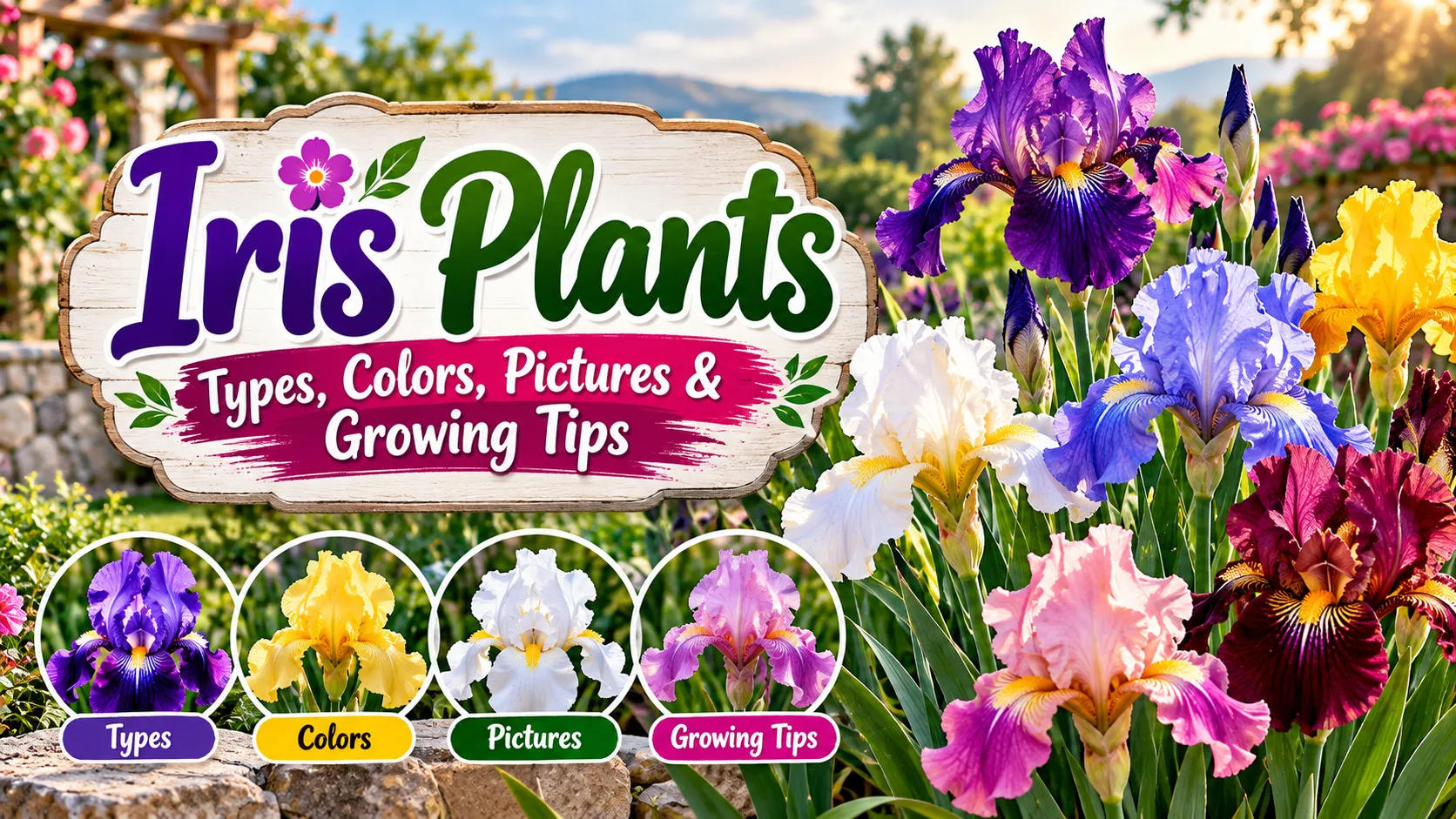
Iris plants are among the most beautiful flowering perennials for gardens, borders, and landscape designs. Their elegant petals, striking colors, and upright foliage make them a favorite among gardeners who want flowers that stand out. From deep purple and royal blue blooms to sunny yellow and delicate white varieties, irises offer plenty of options for creating a colorful outdoor space.
These flowers belong to the genus Iris, which includes hundreds of species and many cultivated varieties. Some grow from rhizomes, while others develop from bulbs. Depending on the variety, iris plants can thrive in garden beds, containers, water gardens, or naturalized landscapes.
Whether you are choosing flowers for a new garden or learning how to care for an existing plant, understanding iris varieties, sunlight requirements, watering needs, and planting methods can help you enjoy healthier growth and more beautiful blooms.
🌿 What Are Iris Plants?
Iris plants are flowering perennials known for their distinctive blooms and sword-shaped leaves. Their flowers often have three upright petals called standards and three downward or outward-facing segments called falls. Many varieties feature contrasting colors, delicate markings, or attractive patterns.
The name Iris comes from the Greek word associated with the rainbow, which suits the wide range of colors found throughout the genus. Depending on the species and cultivar, flowers may appear in purple, blue, white, yellow, pink, burgundy, or combinations of several shades.
Most garden irises return year after year when grown in suitable conditions. Some varieties prefer sunny, well-drained garden beds, while others tolerate consistently moist soil or grow well near ponds.
Irises also attract attention because they can bloom at different times, depending on their variety and local climate. By selecting several types, gardeners can enjoy an extended flowering season.
🌸 Popular Types of Iris Plants
Different iris varieties offer distinct flower shapes, heights, colors, and growing requirements. Choosing the right type for your garden begins with understanding how each group grows and which conditions it prefers.
1. Bearded Iris
Bearded irises are among the most recognizable garden varieties. Their flowers feature fuzzy, beard-like structures on the falls, creating a distinctive appearance.
They come in many colors, including purple, blue, white, yellow, peach, and burgundy. Most bearded irises grow from thick underground rhizomes and prefer full sun with well-drained soil.
These flowers work especially well in perennial borders, cottage gardens, and decorative flower beds.
2. Siberian Iris
Siberian irises are valued for their slender leaves, graceful flowers, and relatively tidy growth. Their blooms commonly appear in blue, violet, white, or purple shades.
Compared with many bearded varieties, Siberian irises generally tolerate more moisture. They can grow beautifully in perennial borders and gardens with consistently moist but well-drained soil.
Their narrow foliage also adds attractive texture after the flowers have faded.
3. Japanese Iris
Japanese irises produce large, elegant flowers that often have broad, flat petals. Purple, white, blue, and pink varieties are popular choices.
These plants prefer rich soil and plenty of moisture during the growing season. They are often grown near ponds or in garden areas where the soil stays evenly moist.
Japanese irises can be especially striking when planted in groups, allowing their large flowers to create a dramatic display.
4. Dutch Iris
Dutch irises grow from bulbs and are popular for their slender stems and elegant flowers. Their blooms often feature combinations of blue, violet, white, and yellow.
They are frequently grown in flower beds and cutting gardens because their long stems work well in bouquets.
Planting Dutch iris bulbs in suitable soil with good drainage helps support healthy growth and flowering.
5. Louisiana Iris
Louisiana irises are known for their colorful flowers and preference for moist growing conditions. Their blooms may appear in red, purple, blue, yellow, pink, and white.
These irises are especially useful in rain gardens, pond edges, and other landscapes where the soil remains moist.
Their growing requirements differ from those of many bearded irises, so choose a planting location that matches the variety.
6. Dwarf Iris
Dwarf irises are compact plants that produce delicate flowers close to the ground. Some varieties bloom early in the year, bringing color to the garden before many larger perennials begin flowering.
They are useful for rock gardens, small borders, and containers. Their smaller size also makes them suitable for gardeners who have limited planting space.
🎨 Iris Flower Colors and Their Beauty
One of the biggest attractions of iris plants is their remarkable range of flower colors. Some blooms have a single dominant shade, while others feature contrasting petals, veins, or patches of color.
- Purple iris: A classic choice for dramatic borders and elegant flower arrangements.
- Blue iris: Creates a cool, calming appearance in spring and summer gardens.
- White iris: Adds a clean, bright look and pairs beautifully with other flowering plants.
- Yellow iris: Brings cheerful color to garden beds and suitable moist landscapes.
- Pink iris: Offers a softer appearance that complements roses and other pastel flowers.
- Burgundy iris: Provides rich, deep color that stands out against green foliage.
- Bi-color iris: Combines two or more shades for a striking, patterned bloom.
- Lavender iris: Creates a gentle purple display that works well in cottage-style gardens.
When planning a colorful garden, consider the flowering times and mature heights of your selected varieties. Combining early-, mid-, and late-season bloomers can help extend the period when your garden contains flowers.
🪴 How to Grow Iris Plants Successfully
Growing irises is relatively straightforward when you match the plant to the right location. Before planting, identify whether your variety grows from a rhizome or a bulb because planting depth and timing can differ.
Choose the Right Location
Many popular garden irises perform best in a location that receives at least six hours of direct sunlight daily. Adequate light supports strong growth and better flowering.
Some types tolerate partial shade, particularly in warmer climates. However, too much shade can reduce flowering and encourage weak growth.
Choose a site with suitable soil and enough space for the plants to spread. Avoid placing varieties that prefer dry soil in areas where water collects after rainfall.
Prepare the Soil
Soil conditions should match the iris variety you are growing. Bearded irises generally prefer well-drained soil, while Japanese and Louisiana irises usually need more consistent moisture.
Loosen compacted soil before planting and incorporate suitable organic matter when needed. Improving drainage is particularly important for rhizome varieties that are vulnerable to rot in persistently wet soil.
For containers, choose a pot with drainage holes and a growing mix appropriate for the selected species.
Plant at the Correct Depth
Planting depth depends on the type of iris.
Bearded iris rhizomes are usually placed near the soil surface, with the upper portion exposed or only lightly covered, depending on the local climate and growing conditions. Burying them too deeply can encourage poor flowering or rot.
Bulb-forming irises, such as Dutch irises, generally need to be planted deeper according to the instructions supplied with the bulbs.
Follow the guidance for your particular variety rather than using one planting depth for every iris.
💧 Watering and Fertilizing Iris Plants
Watering requirements vary considerably among iris groups. Newly planted irises need enough moisture to establish their roots, but established plants may need less frequent watering once they are growing well.
For many bearded irises, allow the soil to dry somewhat between watering sessions. Avoid keeping their rhizomes constantly wet. Moisture-loving types, including Japanese and Louisiana irises, generally need more consistent soil moisture.
During hot, dry weather, check the soil regularly instead of relying on a fixed watering schedule. Water near the base of the plant when possible to reduce unnecessary wetting of the foliage.
Fertilizer can support healthy growth, but excessive feeding may encourage leaves at the expense of flowers. Use a suitable garden fertilizer according to the product label and the needs of your soil. Avoid applying concentrated fertilizer directly against rhizomes.
If flowering becomes weak, check sunlight, planting depth, overcrowding, and soil conditions before assuming the plant needs more fertilizer.
✂️ Pruning and Maintaining Iris Flowers
Regular maintenance helps iris plants remain attractive and may reduce some common garden problems.
After a flower fades, remove the spent flower stalk to improve the plant’s appearance and prevent unnecessary seed development when seeds are not needed. Keep healthy leaves in place because they help the plant store energy for future growth.
Remove dead or damaged foliage when necessary, using clean garden tools. Avoid cutting away healthy leaves immediately after flowering, since the plant may still need them to replenish its energy reserves.
Some iris varieties become crowded over time. Dividing established clumps can improve airflow, create new plants, and encourage better flowering.
The best division time depends on the variety and local climate. Bearded irises are commonly divided after flowering, often in late summer, while other groups may have different preferred schedules.
🌱 How to Propagate Iris Plants
Iris plants can be propagated in different ways, depending on the species. Division is one of the easiest methods for many garden varieties.
For rhizome-forming irises, carefully lift an established clump and separate healthy sections with roots and growing points. Remove damaged or rotten portions and replant the healthy divisions at the appropriate depth.
Bulb-forming irises may produce offsets that can be separated when suitable for the variety. Seed propagation is also possible, but plants grown from seed may take longer to flower and might not retain the exact characteristics of a named cultivar.
Use clean tools when dividing plants, and avoid moving diseased material into healthy garden beds.
🐛 Common Iris Plant Problems
Although many irises grow reliably, they can experience problems related to moisture, pests, diseases, or unsuitable growing conditions.
Rhizome Rot
Rhizome rot can occur when susceptible irises remain in poorly drained or excessively wet soil. Affected rhizomes may become soft, discolored, or unpleasant-smelling.
Improve drainage, remove badly affected material, and avoid burying bearded iris rhizomes too deeply.
Iris Borers
Iris borers are caterpillars that can damage iris leaves and rhizomes in regions where these pests occur. Early signs may include streaked foliage, holes, or damaged plant tissue.
Remove affected leaves and plant debris when appropriate, and consult your local extension service for region-specific management advice.
Poor Flowering
An iris that produces leaves but few flowers may receive too little sunlight, grow too deeply, or have become overcrowded.
Check the variety’s light requirements and planting depth. Dividing congested clumps at the recommended time can also help restore healthy growth.
Leaf Spots
Leaf spots may result from fungal or other plant diseases, particularly when foliage stays wet for long periods.
Provide suitable spacing, remove heavily affected leaves, and water near the soil rather than over the foliage when practical. Seek local horticultural advice if symptoms spread or persist.
🏡 Best Ways to Use Iris Plants in Garden Design
Irises can fit many garden styles because they offer different heights, colors, and growth habits.
Flower borders: Combine taller irises with other perennials to create layers of color and texture.
Cottage gardens: Mix purple, pink, white, and blue flowers with complementary flowering plants for a relaxed, colorful appearance.
Pond edges: Choose moisture-loving species, such as suitable Japanese or Louisiana irises, for consistently moist locations.
Cutting gardens: Dutch irises and other varieties with long stems can provide attractive flowers for indoor arrangements.
Small gardens: Compact varieties can add seasonal color to rock gardens, containers, and narrow planting spaces.
When combining irises with other plants, consider mature height, sunlight needs, and water requirements. Plants that prefer very different soil conditions may not thrive when planted together.
❓ Frequently Asked Questions About Iris Plants
Are iris plants perennials?
Yes. Many commonly grown irises are perennial plants that return year after year under suitable growing conditions. Their performance depends on the species, climate, soil, and care.
Do iris plants need full sun?
Many irises flower best with at least six hours of direct sunlight daily. Some varieties tolerate partial shade, so check the requirements of the specific plant you choose.
When do iris plants bloom?
Blooming time varies by variety and climate. Some dwarf irises flower early in the year, while many bearded irises bloom in spring and some varieties rebloom later under suitable conditions.
How often should I water irises?
There is no single schedule for every iris. Bearded irises generally prefer well-drained soil and should not remain waterlogged, while moisture-loving types need more consistent moisture.
Can iris plants grow in pots?
Yes. Compact irises and some bulb-forming varieties can grow in containers. Choose a pot with suitable drainage, provide the required sunlight, and use a growing medium appropriate for the variety.
Why are my iris plants not flowering?
Common reasons include insufficient sunlight, overcrowding, planting rhizomes too deeply, unsuitable soil conditions, or immature plants. Review the growing requirements before making changes.
Are iris plants suitable for beginners?
Many common iris varieties are manageable for beginner gardeners. Success becomes easier when you choose a variety suited to your climate and provide the right soil, light, and watering conditions.
Can iris plants be divided?
Yes. Many established irises benefit from division when clumps become crowded. The best time and method depend on whether the plant grows from rhizomes or bulbs.
🌼 Conclusion
Iris plants bring elegant flowers, attractive foliage, and beautiful colors to gardens of many sizes. With varieties ranging from classic bearded irises to moisture-loving Japanese irises and compact dwarf types, there is an option for many planting styles.
For the best results, choose a variety that suits your climate, provide the right amount of sunlight, and match the soil moisture to the plant’s needs. Regular maintenance, careful watering, and timely division can help established plants remain healthy and flower well.
Whether you want a colorful border, a pond-side display, or flowers for cutting, irises can become a rewarding part of your garden. Start with a suitable variety, follow its growing requirements, and enjoy its distinctive blooms season after season.

Ethan Carter is a nature enthusiast and content writer with a passion for flowers and botanical knowledge. He is the author behind FlowerNamez, where he shares simple and informative content about flower names, types, and meanings.
With a focus on clarity and accuracy, Ethan aims to help readers explore the beauty of flowers and understand their significance in everyday life.