
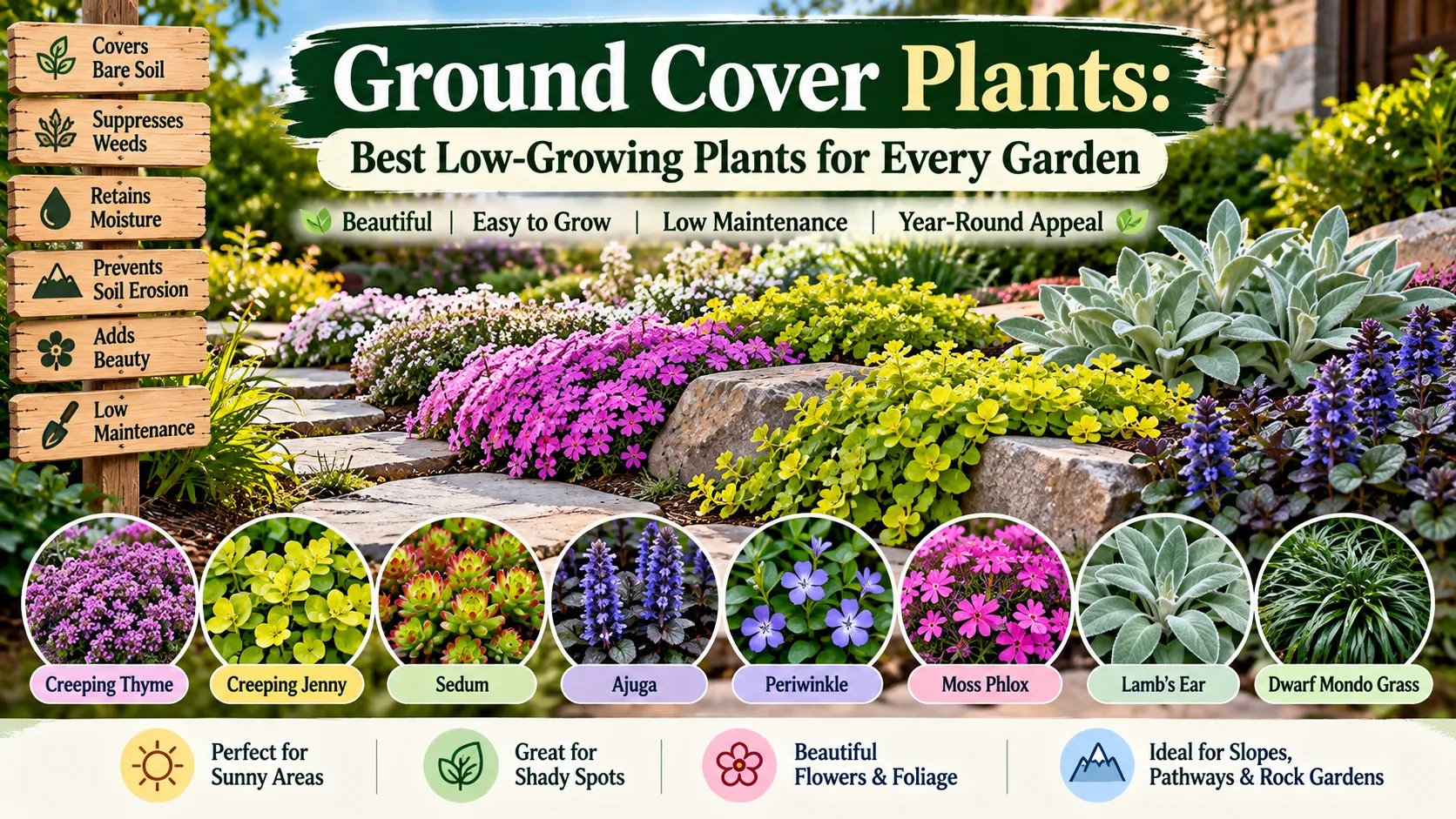
Ground cover plants are an excellent way to make a garden look lush, colorful, and well-maintained without relying entirely on grass. These low-growing plants spread across the soil, fill empty spaces, soften garden edges, and add natural beauty to outdoor areas. Some varieties produce delicate flowers, while others offer attractive foliage throughout the year.
Whether you want to cover a sunny slope, decorate a walkway, fill spaces beneath trees, or reduce the amount of bare soil in your garden, the right ground cover plants can make a noticeable difference. Many varieties also help suppress weeds, retain soil moisture, and reduce erosion when they grow densely.
However, not every plant suits every garden. Sunlight, soil drainage, climate, foot traffic, and maintenance needs all influence which variety will perform best.
In this guide, you’ll discover popular ground cover plants, how to choose the right ones, and practical tips for creating a beautiful, healthy garden.
🌱 What Are Ground Cover Plants?
Ground cover plants are low-growing plants that spread horizontally across the ground rather than growing tall like shrubs or trees. Gardeners use them to cover bare soil, create green spaces, define borders, and add texture to landscapes.
Some ground covers spread through creeping stems, while others grow into compact clumps that gradually fill nearby spaces. Depending on the species, they may produce colorful flowers, evergreen leaves, fragrant foliage, or attractive seasonal growth.
Ground covers can work particularly well in areas where traditional lawns struggle, such as sloped ground, narrow borders, and spaces beneath suitable trees. However, you should always select a plant that matches your local growing conditions.
🌸 Best Ground Cover Plants for Your Garden
The best ground cover plants depend on your climate, soil, and the appearance you want to achieve. These popular options offer different colors, growth habits, and maintenance requirements.
1. Creeping Thyme
Creeping thyme forms a low, aromatic carpet of tiny leaves and small flowers. It grows well in sunny areas with well-drained soil and can tolerate dry conditions once established.
This plant works beautifully between stepping stones, along pathways, and in rock gardens. Bees and other pollinators may also visit its flowers.
2. Creeping Jenny
Creeping Jenny is known for its trailing stems and bright green or golden foliage. It can brighten damp garden corners and create a flowing appearance around containers and borders.
It generally prefers moist soil and performs well in sun or partial shade, depending on the variety and local conditions. Because it can spread aggressively, check its suitability before planting it near natural areas.
3. Sedum
Sedum, also called stonecrop, includes many low-growing succulents with fleshy leaves. These plants often thrive in sunny locations with excellent drainage.
Sedum is a useful choice for rock gardens, dry slopes, and areas where frequent watering is inconvenient. Different varieties offer green, blue-green, reddish, or golden foliage.
4. Ajuga
Ajuga, commonly called bugleweed, creates a dense carpet of foliage and produces attractive flower spikes in spring. Some varieties feature bronze, purple, or variegated leaves.
It usually grows well in partial shade and can tolerate a range of soil conditions when drainage is suitable. Ajuga spreads quickly, so give it enough room and monitor its growth.
5. Periwinkle
Periwinkle, also known as Vinca minor, has glossy green leaves and delicate blue-purple flowers. It is often used in shaded borders and beneath trees where growing conditions suit it.
Once established, it can form a dense covering that helps reduce bare soil. However, periwinkle may become invasive in some regions, so check local recommendations before planting.
6. Moss Phlox
Moss phlox, or creeping phlox, produces a colorful display of flowers in spring. Its low-growing foliage can spread across sunny slopes, rock gardens, and raised borders.
This plant prefers well-drained soil and good sunlight for abundant flowering. It is especially useful when you want seasonal color rather than a plain green ground cover.
7. Irish Moss
Irish moss forms a soft-looking, moss-like mat of tiny green leaves. In suitable conditions, it produces small white flowers and creates a neat appearance between paving stones.
It generally prefers moist, well-drained soil and cooler growing conditions. It may struggle in intense heat or prolonged drought, so consider your climate before choosing it.
8. Lamb’s Ear
Lamb’s ear is valued for its soft, silvery leaves and distinctive texture. Although it grows in low clumps rather than forming a perfectly flat carpet, it can work beautifully along sunny garden borders.
It prefers good drainage and usually performs best in full sun. Avoid constantly wet soil, which can cause problems for its foliage and roots.
9. Sweet Woodruff
Sweet woodruff is a shade-loving perennial with delicate green leaves and small white flowers. It can form an attractive ground cover beneath suitable trees and in woodland-style gardens.
It generally prefers moist soil rich in organic matter. In favorable conditions, it spreads over time and helps fill spaces that receive limited direct sunlight.
10. Dwarf Mondo Grass
Dwarf mondo grass forms compact clumps of narrow, grass-like leaves. It is often used along pathways, around stepping stones, and in decorative borders.
It typically prefers well-drained soil and partial shade, although suitable varieties can tolerate more sunlight in favorable climates. Its tidy appearance makes it useful for structured landscape designs.
☀️ Best Ground Cover Plants for Full Sun
Sunny gardens need plants that can tolerate direct sunlight and, in many locations, periods of dry soil. Choosing sun-loving varieties can reduce the need for constant care.
Consider these options:
- Creeping thyme
- Sedum
- Moss phlox
- Lamb’s ear
- Ice plant, where climate conditions are suitable
- Blue star creeper, in suitable growing conditions
- Some low-growing ornamental grasses
Before planting, check the specific variety’s sunlight and water requirements. A plant that thrives in a mild climate may need extra care in regions with intense summer heat.
For hot, dry gardens, prioritize varieties that tolerate drought once established. Improve drainage where necessary, and avoid watering on a fixed schedule without checking soil moisture.
🌳 Ground Cover Plants for Shade
Shady areas beneath trees, along fences, or beside buildings can be challenging to landscape. Shade-tolerant ground covers offer a practical way to add greenery without depending on a traditional lawn.
Suitable options may include:
- Sweet woodruff
- Periwinkle
- Ajuga
- Dwarf mondo grass
- Pachysandra, where appropriate
- Certain ferns for a woodland-style garden
- Some varieties of wild ginger
Remember that shade does not always mean moist soil. Mature trees can absorb considerable amounts of water, leaving the ground dry even when little sunlight reaches it.
Choose plants according to both light and moisture levels. When planting beneath trees, avoid damaging large roots or piling soil against tree trunks.
🌼 Flowering Ground Cover Plants for Colorful Gardens
Flowering ground covers can turn plain garden spaces into colorful displays. They are especially useful along pathways, around rock gardens, and on slopes where a spreading plant can soften the landscape.
| Plant | Flower Color | Best Growing Conditions |
|---|---|---|
| Creeping thyme | Pink or purple | Sunny, well-drained soil |
| Moss phlox | Pink, white, purple, or blue | Full sun, good drainage |
| Creeping Jenny | Usually yellow flowers | Moist soil, sun or partial shade |
| Ajuga | Blue or purple | Partial shade to suitable sun |
| Periwinkle | Blue or purple | Partial to full shade, depending on conditions |
| Ice plant | Pink, purple, yellow, or other colors | Sunny, well-drained sites |
| Candytuft | Usually white | Sunny locations with good drainage |
Flower color and blooming time vary by species and cultivar. If you want flowers throughout the growing season, combine plants with different blooming periods rather than expecting one variety to flower continuously.
🌿 Evergreen Ground Cover Plants for Year-Round Beauty
Evergreen ground covers retain much of their foliage throughout the year, although appearance may change with cold weather or local conditions. They are useful for keeping borders and garden beds attractive during seasons when many other plants lose their leaves.
Popular choices include creeping juniper, some varieties of sedum, periwinkle, and suitable evergreen ornamental ground covers.
Creeping juniper works particularly well on sunny slopes and in well-drained soil. Periwinkle offers glossy foliage in shaded locations but can spread aggressively in some regions.
When choosing an evergreen ground cover, consider its mature width. A variety that looks small in a nursery pot may eventually cover a much larger area than expected.
🪨 Ground Cover Plants for Rock Gardens and Slopes
Rock gardens and sloping landscapes benefit from plants that fit naturally between stones and tolerate the site’s drainage conditions. Low-growing varieties can soften hard edges and create a more natural appearance.
Creeping thyme, sedum, moss phlox, and suitable ice plants are popular options for sunny rock gardens. For shaded rock features, consider plants that tolerate lower light and the moisture levels available at the site.
On slopes, select plants with spreading roots and growth habits suited to the soil. Establishing vegetation can help reduce erosion, but steep or unstable slopes may require additional erosion-control measures.
Water new plants carefully until their roots establish. On steep ground, slow watering or drip irrigation can reduce runoff and help moisture reach the root zone.
🪴 How to Plant Ground Cover Plants
Proper preparation helps ground covers establish more quickly and reduces maintenance later.
1. Prepare the area. Remove unwanted weeds and debris before planting. Perennial weeds can return through a new ground cover if you leave their roots in the soil.
2. Check the soil. Assess drainage, texture, and moisture. Add suitable organic matter when needed, but avoid making major changes that could harm existing trees or established plants.
3. Choose suitable spacing. Follow the plant label for recommended spacing. Closer spacing can fill an area more quickly but requires more plants and may increase costs.
4. Plant at the correct depth. Set each plant at the same depth it grew in its container. Firm the soil gently around the roots.
5. Water thoroughly. Give newly planted ground covers enough water to settle the soil around their roots. Continue watering according to weather, soil moisture, and the plant’s needs.
6. Add suitable mulch. A thin layer of organic mulch between young plants can help retain moisture and limit weeds. Keep mulch away from plant crowns and stems.
7. Monitor early growth. Check the area regularly for weeds, dry patches, and signs of disease. Early attention can help the ground cover establish a dense, healthy growth pattern.
💧 How to Care for Ground Cover Plants
Most ground covers need less attention after establishment, but their maintenance requirements vary considerably.
Watering: Keep the root zone consistently moist during establishment when the species requires it. Drought-tolerant plants need less frequent watering once established, while moisture-loving varieties need closer monitoring.
Weed control: Remove weeds before they become established. Avoid aggressive digging around spreading ground covers, as it may damage shallow roots and stems.
Pruning: Trim plants that grow beyond their intended boundaries. Remove damaged foliage and spent flowers when appropriate for the species.
Fertilizing: Do not assume every ground cover needs regular fertilizer. Excessive feeding can encourage weak or overly vigorous growth. Follow the plant’s specific recommendations.
Seasonal care: Protect sensitive varieties from unsuitable winter conditions and watch for heat stress during summer. Local climate plays a major role in how much care each plant needs.
🌱 Benefits of Growing Ground Cover Plants
Ground covers provide more than visual appeal. When you choose suitable varieties and establish them properly, they can improve the function and appearance of your garden.
- Weed suppression: Dense growth can reduce the space available for many weeds.
- Soil protection: Plant cover can shield bare soil from rainfall and wind.
- Erosion reduction: Suitable spreading plants can help stabilize soil on gentle slopes.
- Moisture retention: Foliage can reduce direct sunlight on the soil and help limit moisture loss.
- Garden design: Different leaf shapes, textures, and colors add variety to landscape beds.
- Pollinator support: Flowering varieties can provide nectar or pollen for bees and other insects.
- Reduced lawn maintenance: Some ground covers can replace grass in areas where they suit the conditions and foot traffic remains limited.
These benefits depend on the plant species, local environment, and how well the ground cover establishes.
⚠️ Common Mistakes to Avoid
Ground covers can become difficult to manage when gardeners choose plants without considering their growth habits.
- Ignoring mature size: Check the expected spread before planting near paths, lawns, or neighboring gardens.
- Choosing the wrong sunlight level: A sun-loving plant may struggle in deep shade, while a shade plant may scorch in intense sunlight.
- Overwatering: Poor drainage and excessive moisture can damage roots, especially in succulent varieties.
- Planting invasive species: Research local guidance before introducing fast-spreading plants.
- Expecting instant coverage: Most ground covers need time to spread and establish.
- Ignoring foot traffic: Many attractive ground covers cannot tolerate regular walking.
- Planting without soil preparation: Persistent weeds and unsuitable drainage can undermine the planting.
- Using too much fertilizer: Excessive growth can increase maintenance and make plants less compact.
A little planning before planting can save time and money in the long run.
❓ Frequently Asked Questions About Ground Cover Plants
What are the best ground cover plants for beginners?
Creeping thyme and suitable sedum varieties are good options for sunny areas with well-drained soil. For shaded gardens, consider locally suitable shade-tolerant varieties such as sweet woodruff or dwarf mondo grass.
Which ground cover plants grow quickly?
Creeping Jenny, ajuga, and periwinkle can spread relatively quickly under favorable conditions. However, some fast-spreading varieties can become invasive, so check local guidance before planting.
Do ground cover plants prevent weeds?
Dense ground covers can suppress many weeds by covering bare soil and limiting available space. They do not eliminate every weed, particularly during the establishment period.
Can ground cover plants replace a lawn?
Some ground covers can replace grass in areas with limited foot traffic. Choose a species suited to the local climate and intended use, and remember that many ground covers do not tolerate frequent walking.
Are ground cover plants easy to maintain?
Many varieties require relatively little care after establishment. However, watering, pruning, weed control, and boundary management depend on the plant and growing conditions.
Which ground cover plants are suitable for hot climates?
Heat-tolerant sedums, suitable creeping thyme varieties, and certain ice plants may work in hot, sunny locations when drainage is appropriate. Always check the specific variety’s climate requirements.
🌻 Final Thoughts
Ground cover plants offer a practical and attractive way to transform bare soil into a greener, more inviting landscape. From flowering varieties that brighten sunny borders to shade-loving plants that fill difficult corners, there are options for many garden styles and growing conditions.
The key is to match each plant to the available sunlight, soil drainage, climate, and amount of maintenance you can provide. Consider mature spread and local invasive-plant guidance before making your final choice.
With thoughtful selection and proper planting, ground covers can help create a garden that looks beautiful, protects the soil, and requires less routine maintenance over time.

Ethan Carter is a nature enthusiast and content writer with a passion for flowers and botanical knowledge. He is the author behind FlowerNamez, where he shares simple and informative content about flower names, types, and meanings.
With a focus on clarity and accuracy, Ethan aims to help readers explore the beauty of flowers and understand their significance in everyday life.