
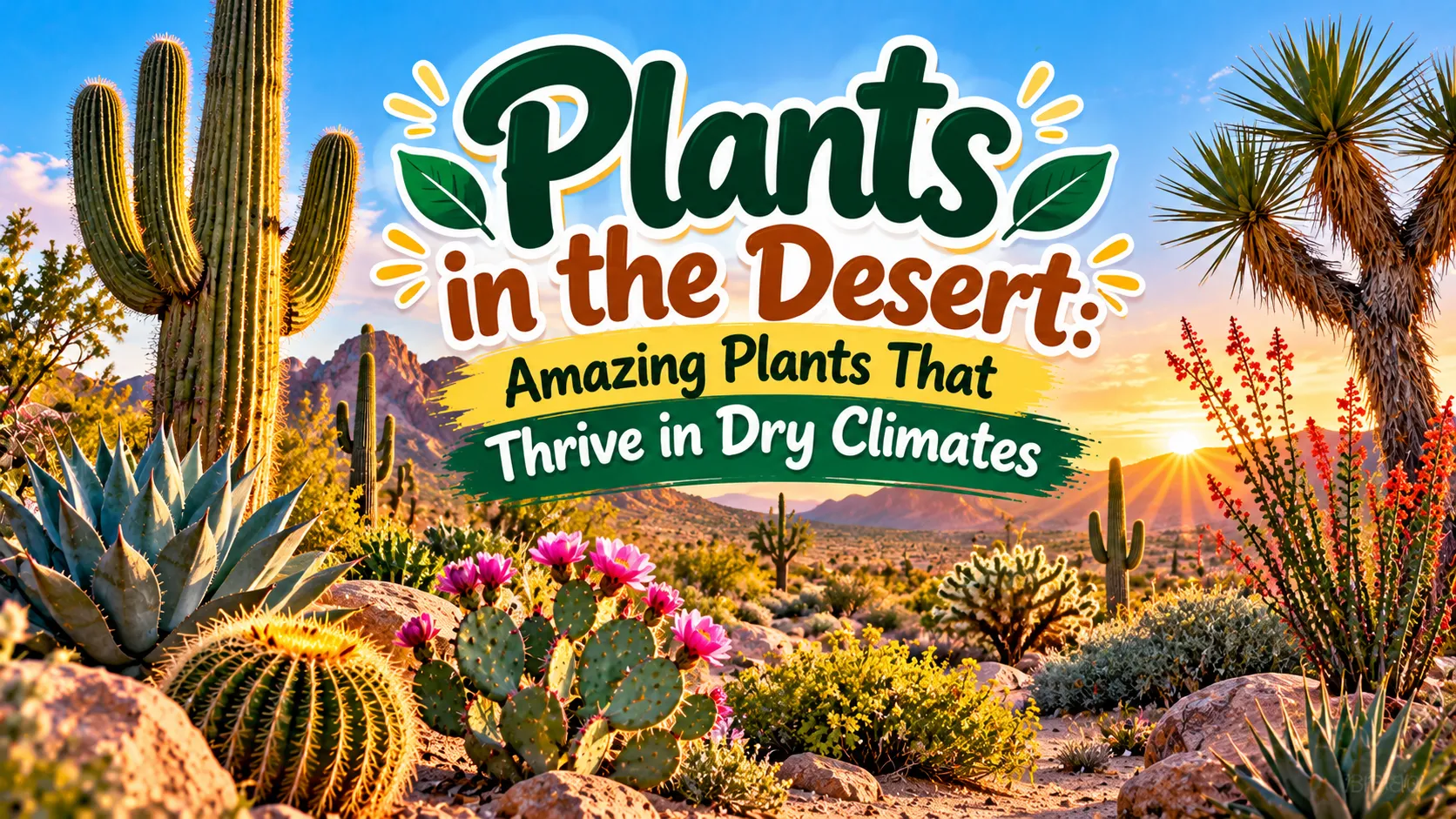
Plants in the desert survive in some of the harshest environments on Earth. With scorching temperatures, limited rainfall, intense sunlight, and dry soil, deserts create difficult conditions for plant growth. Yet many remarkable plants have developed special adaptations that allow them to conserve water, tolerate heat, and survive long periods without rain.
From towering saguaro cacti to colorful desert wildflowers, these plants demonstrate how life can flourish even where water is scarce. Some store moisture in thick stems and leaves, while others grow deep roots to reach underground water. Certain desert plants remain dormant during dry periods and bloom quickly when rain arrives.
Understanding desert plants is useful for nature lovers, students, gardeners, and anyone interested in drought-tolerant landscaping. These plants also play important roles in desert ecosystems by providing food, shelter, and shade for wildlife.
In this guide, you’ll discover popular plants in the desert, their survival adaptations, and how to grow suitable desert species in your own garden.
🌵 What Are Plants in the Desert?
Plants in the desert are species adapted to environments that receive very little rainfall or experience long periods of drought. They grow in deserts around the world, including the Sahara, Mojave, Sonoran, Arabian, and Gobi deserts.
Desert plants vary widely in appearance. Some have thick, water-storing stems, while others feature narrow leaves, protective spines, waxy surfaces, or extensive root systems. These characteristics help them manage water loss and survive changing temperatures.
Not every desert plant is a cactus or succulent. Desert environments also support drought-tolerant trees, shrubs, grasses, and seasonal wildflowers. The types of plants found in a particular desert depend on its climate, soil, elevation, and seasonal rainfall.
🌿 Best-Known Plants in the Desert
Deserts contain a surprising variety of plant life. The following examples show how different species survive in dry conditions.
1. Saguaro Cactus
The saguaro cactus is one of the most recognizable plants of the Sonoran Desert in the southwestern United States and northwestern Mexico. It can grow into a tall, column-shaped cactus with distinctive upward-reaching arms.
Its pleated stem expands to store water after rainfall. The saguaro also produces white flowers and red fruits that provide food for desert wildlife.
2. Prickly Pear Cactus
Prickly pear cacti have flat, fleshy pads covered with spines or tiny barbed structures called glochids. These pads store water and help the plant survive dry conditions.
Depending on the species, prickly pears produce bright flowers and edible fruits. They grow in various arid and semiarid regions and can be used in suitable drought-tolerant gardens.
3. Barrel Cactus
Barrel cacti have rounded or cylindrical stems, prominent ribs, and protective spines. Their compact shape helps them store water and withstand dry weather.
Some species produce colorful flowers near the top of the stem. They generally prefer sunny locations and well-drained soil, making them suitable for many desert-style rock gardens.
4. Joshua Tree
The Joshua tree is a distinctive plant of the Mojave Desert. Despite its tree-like appearance, it belongs to the yucca group.
Its branching structure and stiff, pointed leaves give it a striking silhouette. Joshua trees grow slowly and depend on specific desert conditions, so they are best appreciated in their natural habitat or grown only where local regulations and conditions allow.
5. Creosote Bush
Creosote bush is a common shrub in parts of the southwestern United States and northern Mexico. Its small leaves help limit water loss, and its root system allows it to compete for limited soil moisture.
The shrub can produce small yellow flowers after favorable rainfall. Its ability to tolerate arid conditions makes it an important part of many desert plant communities.
6. Aloe
Aloe plants have thick, fleshy leaves that store water. Many varieties grow in arid or semiarid environments, although their native habitats differ.
Some aloe species produce tall flower stalks with bright blooms that attract pollinators. They generally need good drainage and careful watering when grown in containers.
7. Agave
Agaves form rosettes of thick, pointed leaves. Many species grow in dry regions of Mexico and the southwestern United States.
Their fleshy leaves store water, and their protective leaf margins help discourage animals from eating them. Many agaves flower only once after reaching maturity, then produce seeds or offsets depending on the species.
8. Desert Marigold
Desert marigold is a drought-tolerant wildflower known for its bright yellow blooms. It grows naturally in parts of the southwestern United States and northern Mexico.
The plant can flower for extended periods when conditions are favorable. Its cheerful color makes it a popular choice for suitable dry-climate gardens.
9. Ocotillo
Ocotillo has long, thorny canes that rise from the base of the plant. Following rainfall, it can produce small leaves along its stems and later develop clusters of red flowers.
During dry periods, it may drop its leaves to conserve moisture. This ability to respond to changing water availability helps it survive in desert environments.
10. Desert Willow
Desert willow is a small tree native to parts of the southwestern United States and northern Mexico. It produces narrow leaves and attractive trumpet-shaped flowers, often in shades of pink, purple, or white.
Despite its name, it is not a true willow. Once established, it can tolerate dry conditions and is sometimes used in drought-tolerant landscaping.
☀️ How Do Desert Plants Survive Extreme Heat?
Desert plants survive through a combination of physical features and growth strategies that reduce water loss or help them access moisture.
Water storage: Cacti, agaves, and many succulents store water in thick stems or leaves. This reserve helps them endure dry periods.
Reduced leaf area: Some species have tiny leaves, narrow leaves, or spines that reduce the surface area exposed to the sun and dry air.
Waxy surfaces: A waxy coating on leaves or stems can help limit moisture loss.
Extensive roots: Certain desert plants develop deep roots or wide, shallow root systems that collect water from different soil layers.
Dormancy: Some plants slow their growth or lose their leaves during extreme drought. Annual wildflowers may remain dormant as seeds until rainfall creates suitable growing conditions.
Specialized photosynthesis: Many cacti and succulents use a process called crassulacean acid metabolism, or CAM. They typically open their stomata at night to take in carbon dioxide, which can reduce water loss compared with opening them during hot daytime conditions.
These adaptations vary by species. No single feature explains how every desert plant survives.
🌸 Flowering Plants Found in the Desert
Deserts are not always barren or colorless. After favorable rainfall, some areas produce impressive displays of wildflowers.
| Desert Plant | Typical Flower Color | Notable Feature |
|---|---|---|
| Desert marigold | Yellow | Bright, daisy-like flowers |
| Desert lupine | Blue or purple | Flower spikes |
| Desert sand verbena | Pink, purple, or white | Spreading growth |
| Beavertail prickly pear | Pink, purple, or yellow, depending on species | Fleshy cactus pads |
| Ocotillo | Red or orange-red | Flowers near cane tips |
| Desert willow | Pink, purple, or white | Trumpet-shaped flowers |
Flowering depends on rainfall, temperature, soil conditions, and species. In some deserts, wildflower displays are brief and unpredictable, making them especially dependent on seasonal weather.
🌳 Desert Trees and Shrubs
Although deserts receive limited rainfall, they support woody plants that provide shade and habitat for animals.
Mesquite trees grow in several arid and semiarid regions of the Americas. Their roots can access moisture below the surface, and their seed pods provide food for wildlife.
Acacia species grow in many dry regions, particularly in Africa, the Middle East, and Australia. Their forms and adaptations vary, but many tolerate heat and seasonal water shortages.
Creosote bush is a familiar shrub in North American deserts, while desert willow adds seasonal flowers and a small-tree shape to suitable landscapes.
These plants help support desert ecosystems. Their roots stabilize soil, their branches offer shelter, and their flowers or seeds can provide resources for insects, birds, and mammals.
🌾 Desert Grasses and Wildflowers
Grasses and seasonal wildflowers also contribute to desert biodiversity. Some grasses grow in dry, rocky soil, while others thrive in sandy areas or regions that receive seasonal rainfall.
Desert wildflowers often have short life cycles. Seeds can remain dormant through unfavorable periods and germinate when moisture and temperature conditions become suitable. The plants then grow, flower, and produce seeds before the soil dries again.
This strategy allows some species to complete their life cycle without remaining active throughout the hottest part of the year.
If you visit a desert during a wildflower season, avoid picking plants or trampling vegetation. Some species grow slowly, and certain habitats are easily damaged by repeated disturbance.
🪴 Best Desert Plants for Home Gardens
Many desert-adapted plants can grow in home gardens when their light, temperature, and drainage needs are met. They are especially useful for gardeners who want to reduce routine watering.
Good choices for suitable climates include:
- Prickly pear cactus: Adds distinctive pads and seasonal flowers.
- Agave: Creates bold architectural shapes in sunny landscapes.
- Aloe: Offers sculptural leaves and, in some varieties, colorful blooms.
- Sedum: Provides low-growing foliage for suitable rock gardens and containers.
- Desert marigold: Adds bright flowers to dry-climate garden beds.
- Desert willow: Provides shade and seasonal flowers where there is enough room.
- Barrel cactus: Works well in sunny, well-drained desert-style gardens.
Always check whether a plant is suitable for your region. A species that thrives in a hot, dry desert may struggle in a humid climate or during a cold winter.
Some cacti and agaves also have sharp spines or leaf tips, so place them away from narrow paths and play areas.
💧 How to Care for Desert Plants
Desert plants are often described as low-maintenance, but they still need suitable growing conditions.
Provide adequate sunlight. Many desert species prefer full sun, although indoor-grown succulents and some aloe varieties may need protection from intense afternoon sunlight.
Use well-drained soil. Waterlogged roots can damage cacti and other drought-adapted plants. Choose a suitable potting mix or improve drainage where appropriate.
Water according to the species. During active growth, some plants need occasional deep watering followed by a period in which the soil dries. Others have different moisture requirements, so avoid using one watering schedule for every plant.
Choose suitable containers. Pots should have drainage holes. Terracotta containers can help the soil dry more quickly, which may suit some succulents.
Avoid excessive fertilizer. Many desert plants grow slowly and do not need frequent feeding. Use fertilizer only when appropriate for the species and follow the label directions.
Protect plants from unsuitable weather. Some desert species tolerate intense heat but cannot survive freezing temperatures or prolonged humidity. Check their climate requirements before planting outdoors.
🌍 Why Are Desert Plants Important?
Desert plants play a vital role in ecosystems where water and other resources are limited.
Their roots help hold soil in place and can reduce erosion. Their leaves, flowers, fruits, and seeds provide food for insects, birds, reptiles, and mammals. Larger plants create shade and shelter that help small organisms survive extreme temperatures.
Desert vegetation also contributes to nutrient cycling. When leaves, roots, and other plant material break down, they return organic matter to the soil.
Some desert plants have cultural and economic importance as well. People use particular species for food, landscaping, traditional crafts, and other purposes, depending on local customs and regulations.
Protecting native desert vegetation helps preserve the habitats and ecological relationships that make these environments unique.
⚠️ Common Mistakes When Growing Desert Plants
Even drought-tolerant plants can struggle if their growing conditions are unsuitable.
- Overwatering: Many desert plants are vulnerable to root rot in constantly wet soil.
- Poor drainage: Heavy soil or containers without drainage holes can trap excess moisture.
- Insufficient sunlight: Many desert species need strong light to maintain healthy growth.
- Sudden sun exposure: Indoor plants may develop sunburn if moved directly into intense sunlight without gradual adjustment.
- Ignoring cold tolerance: Not every cactus or succulent can survive freezing temperatures.
- Planting invasive species: Some plants spread beyond their intended areas. Check local guidance before introducing them.
- Overlooking spines: Cacti and certain agaves can injure people and pets when placed in high-traffic areas.
Matching the plant to the climate and soil is more effective than relying on drought tolerance alone.
❓ Frequently Asked Questions About Plants in the Desert
What plants grow in the desert?
Deserts support cacti, succulents, shrubs, trees, grasses, and wildflowers. Common examples include saguaro cactus, prickly pear, creosote bush, agave, Joshua tree, and desert marigold.
How do desert plants survive without much water?
Many store water in their stems or leaves, reduce moisture loss through specialized leaf structures, develop extensive roots, or become dormant during dry periods.
Do all desert plants have spines?
No. Cacti often have spines, but many desert plants have ordinary leaves or other adaptations. Mesquite trees, desert willows, and many wildflowers do not have cactus-like spines.
Can desert plants grow indoors?
Yes. Some succulents, aloes, and cacti can grow indoors if they receive enough light and have suitable drainage. A sunny window or an appropriate grow light may be necessary.
What is the most famous desert plant?
The saguaro cactus is one of the best-known desert plants, particularly in the Sonoran Desert. Its tall, branching form is widely associated with the American Southwest.
Do desert plants need fertilizer?
Some benefit from occasional, species-appropriate feeding during active growth, but many need little fertilizer. Excessive feeding can cause weak growth or damage roots.
🌵 Final Thoughts
Plants in the desert show how life can adapt to extreme heat, limited rainfall, and challenging soil conditions. From water-storing cacti and agaves to flowering wildflowers and drought-tolerant trees, desert vegetation includes a remarkable range of forms and survival strategies.
Learning about these plants helps us understand the balance of desert ecosystems and choose better species for drought-tolerant gardens. Whether you are studying desert habitats or planning a water-wise landscape, the key is to understand each plant’s needs rather than assuming every desert species grows in the same way.
With the right growing conditions and respect for native habitats, these remarkable plants can continue to thrive in some of the world’s driest environments.

Ethan Carter is a nature enthusiast and content writer with a passion for flowers and botanical knowledge. He is the author behind FlowerNamez, where he shares simple and informative content about flower names, types, and meanings.
With a focus on clarity and accuracy, Ethan aims to help readers explore the beauty of flowers and understand their significance in everyday life.