
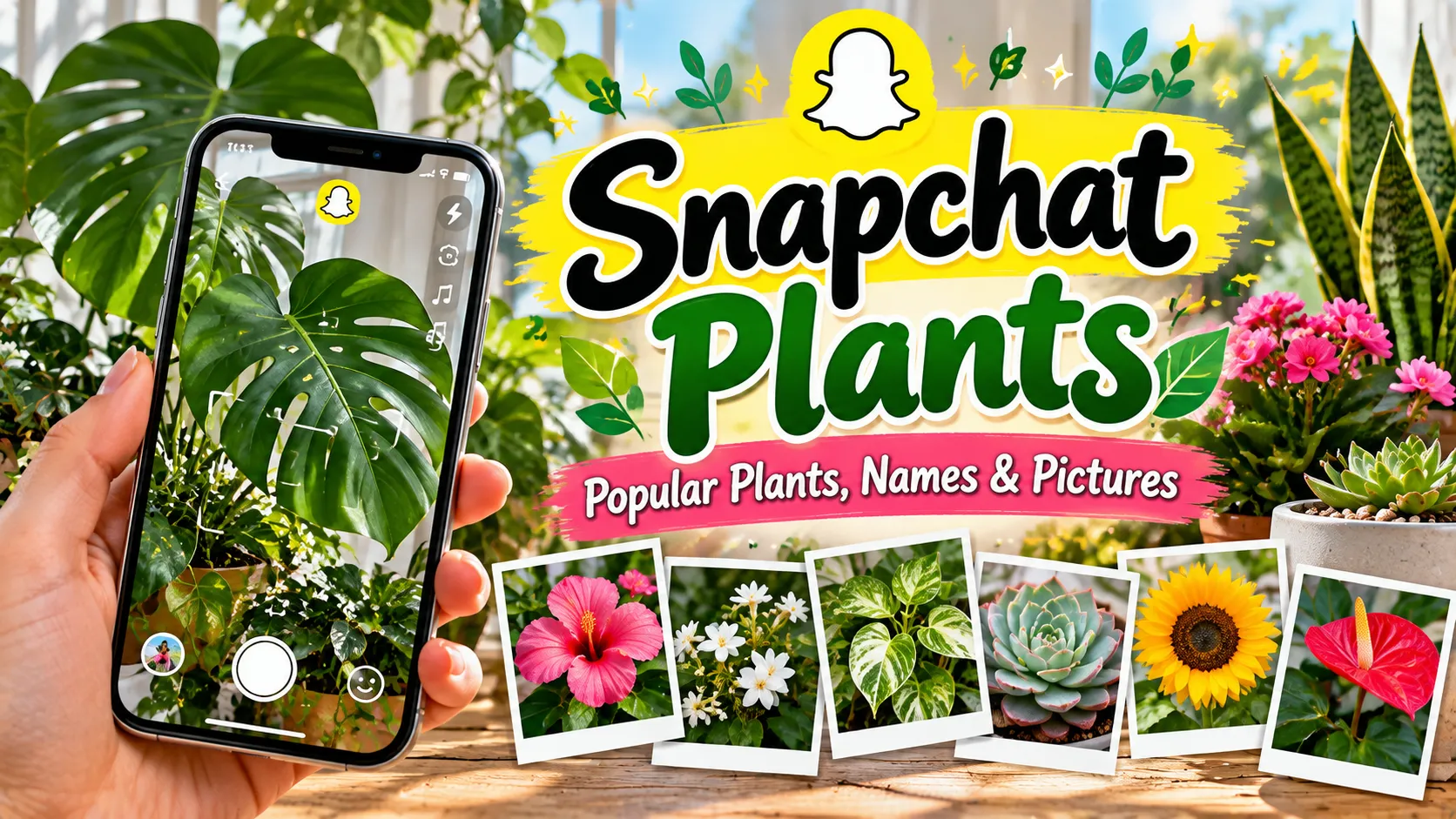
Have you ever spotted a beautiful plant on Snapchat and wondered what it was called? From leafy indoor plants to colorful flowers and unusual succulents, Snapchat can be a fun place to discover new plants, explore gardening ideas, and find inspiration for your home or garden.
Whether you enjoy collecting houseplants, photographing flowers, or learning about nature, plant-related Snapchat content can introduce you to a wide variety of greenery. You may discover a plant through a friend’s photo, a creator’s video, or a camera lens designed to recognize plants.
In this guide, you’ll explore popular plants to look for on Snapchat, learn how to identify unfamiliar greenery, discover photography tips, and find basic plant-care advice. You’ll also learn why a picture alone may not always be enough to identify a plant correctly.
🌱 What Does Snapchat Plants Mean?
The phrase “Snapchat plants” can refer to plant-related photos and videos shared on Snapchat, plant-themed content created by gardening enthusiasts, or tools that help users explore plants through the camera.
People use social platforms to share houseplant collections, garden transformations, flower photography, propagation experiments, and plant-care tips. Snapchat’s camera and augmented-reality features have also offered plant-related experiences, although specific tools and lenses can change over time.
If you want to discover plants on the platform, you can explore plant-themed public content, search for relevant creators, or look for available plant-scanning lenses. Remember that not every plant-related feature will be available on every device or account.
🪴 Popular Indoor Plants to Discover
Indoor plants are popular because they bring natural color and texture into living rooms, bedrooms, offices, and other spaces. Their different leaf shapes and growth patterns also make them interesting subjects for photos and short videos.
Here are some well-known houseplants worth exploring.
- Monstera: Recognized for its large green leaves, which often develop distinctive splits and holes as the plant matures.
- Golden Pothos: A trailing plant with green leaves and yellow markings that can look beautiful on shelves or in hanging baskets.
- Snake Plant: Known for its upright, sword-shaped leaves and tolerance of relatively low-light conditions.
- Spider Plant: Produces narrow, arching leaves and small plantlets that can grow from long stems.
- Peace Lily: Features glossy green foliage and elegant white flower-like structures called spathes.
- Rubber Plant: Has thick, shiny leaves and can grow into an attractive indoor tree.
- ZZ Plant: Features firm, glossy leaflets and is often chosen by people who prefer a low-maintenance houseplant.
- Philodendron: Includes many varieties with heart-shaped, climbing, or trailing leaves.
When photographing these plants, focus on their leaf patterns and overall shape. Close-up pictures can help you appreciate details that might be difficult to notice from a distance.
🌸 Beautiful Flowering Plants for Pictures
Flowers are among the most visually appealing subjects for plant photography. Bright petals, contrasting centers, and interesting shapes can make garden pictures stand out on social media.
Consider these flowering plants for your next photo collection.
- Rose: A classic garden flower available in many colors and petal arrangements.
- Sunflower: Known for its large flower head and bright yellow petals.
- Lavender: Produces fragrant purple flower spikes and narrow leaves.
- Orchid: A diverse group of flowering plants with distinctive, often intricate blooms.
- Hibiscus: Features large, colorful flowers that stand out against green foliage.
- Marigold: Produces cheerful orange or yellow blooms and is commonly grown in gardens.
- Jasmine: Includes species with delicate flowers, some of which have a strong fragrance.
- Bougainvillea: Creates a colorful display through its papery bracts, which surround small flowers.
For better pictures, photograph flowers in soft natural light. Early morning and late afternoon often provide gentler lighting than the harsh midday sun.
🍃 Plants With Unique and Colorful Leaves
Not every plant needs flowers to look impressive. Many houseplants are grown for their striking foliage, unusual textures, and dramatic color combinations.
These varieties can be especially interesting for close-up photography.
- Calathea: Many varieties have decorative leaf patterns with contrasting stripes or markings.
- Coleus: Known for leaves that may combine green, red, pink, purple, and yellow.
- Croton: Produces colorful foliage with bold veins and contrasting shades.
- Aglaonema: Also called Chinese evergreen, it includes varieties with green, silver, pink, or red markings.
- Prayer Plant: Has patterned leaves that can fold upward at night in response to changing light conditions.
- Alocasia: Often features large, dramatic leaves with prominent veins.
- Fittonia: A compact plant recognized for colorful veins running through its leaves.
- Tradescantia: Includes varieties with striped or purple-toned foliage and trailing growth.
Leaf color can change with light, age, and growing conditions. If you are trying to identify a plant from a photograph, compare several features instead of relying on color alone.
🌵 Popular Succulents and Cacti
Succulents and cacti are popular among plant enthusiasts because they come in many shapes, sizes, and colors. Their compact growth and unusual forms also make them excellent photography subjects.
Here are some varieties you may encounter in plant-related posts.
- Echeveria: Often grows in a symmetrical rosette of fleshy leaves.
- Aloe Vera: Has thick, pointed leaves and is widely grown as a houseplant.
- Jade Plant: Develops fleshy, oval leaves and can form a small, woody-looking shrub over time.
- Haworthia: Usually stays compact and may have white stripes or textured leaf surfaces.
- String of Pearls: Produces trailing stems with small, rounded leaves resembling beads.
- Burro’s Tail: Features trailing stems covered in plump, overlapping leaves.
- Prickly Pear Cactus: Has flattened pads and may produce flowers and edible fruit.
- Moon Cactus: Often sold with a brightly colored rounded top grafted onto another cactus.
Most succulents need well-draining soil and careful watering. Their needs vary by species, so research the specific variety before choosing a watering schedule.
📸 How to Identify a Plant From a Snapchat Picture
Seeing an unfamiliar plant in a photo can make you curious about its name and care requirements. Snapchat-related plant lenses and camera experiences have existed, but their availability and capabilities can change.
If you want to identify a plant, try the following approach.
1. Take a clear picture. Capture the leaves, stems, and overall shape. Avoid blurry images or heavy filters that change the plant’s natural colors.
2. Look for an available scanning lens. Check Snapchat’s lens options for a plant scanner or plant-identification experience. A lens may not be available in every region or version of the app.
3. Compare the results. If the tool suggests a name, compare that suggestion with reliable plant references or another identification service.
4. Check multiple features. Examine leaf arrangement, leaf edges, stem structure, flowers, and growth habits. These details can help distinguish similar-looking species.
5. Ask for another opinion when necessary. A gardening group, nursery professional, or botanical reference may help when an identification remains uncertain.
Plant-identification tools can make useful suggestions, but they do not always produce accurate results. Avoid eating an unknown plant or using it medicinally based only on a social-media identification.
🔎 How to Find Plant-Related Content on Snapchat
Finding useful plant content becomes easier when you search for specific topics instead of using only a broad term.
Try searching for phrases such as:
- Indoor plant ideas
- Houseplant care
- Flower photography
- Succulent collection
- Garden inspiration
- Plant propagation
- Rare houseplants
- Tropical foliage
- Gardening for beginners
- Plant identification
You can also explore public Stories, Spotlight videos, and available lenses related to gardening and nature. Snapchat’s official plant-tag page may provide another starting point for discovering relevant content.
Remember that search results and public content can change. If a particular creator or lens is no longer available, try a related search phrase or another reliable plant resource.
🌿 How to Take Better Plant Pictures
A good plant photograph shows more than its color. It captures the details that make a leaf, flower, or growing habit distinctive.
Use these simple tips to improve your pictures.
- Choose natural light: Soft daylight helps show the plant’s true colors without creating harsh shadows.
- Clean the background: Remove distracting objects so the plant remains the main subject.
- Try different angles: Photograph the whole plant, then take close-ups of leaves, flowers, or interesting stems.
- Keep the lens clean: A clean camera lens helps produce sharper images.
- Avoid excessive filters: Strong filters can change leaf colors and make identification harder.
- Include scale: A hand or familiar object can help viewers understand the plant’s size.
- Capture natural details: Water droplets, new leaves, and flower buds can make a picture more engaging.
- Take several shots: Different angles may reveal details that are hidden in the first photograph.
If you plan to share plant pictures on your website as well as Snapchat, use original photographs whenever possible and make sure you have permission to use any images taken by someone else.
🧤 Basic Plant Care Tips for Beginners
Discovering an attractive plant is only the first step. Understanding its growing requirements helps you keep it healthy after bringing it home.
Check its light requirements. Some plants prefer bright, indirect light, while others tolerate lower-light conditions. Cacti and many succulents generally need more light than shade-tolerant foliage plants.
Water according to the plant’s needs. Avoid watering every plant on the same schedule. Check the soil and learn whether your particular plant prefers to dry out between waterings or remain more consistently moist.
Use suitable soil and drainage. Many houseplants grow better in a pot with drainage holes and a growing mix suited to their roots. Cacti and succulents usually need a faster-draining mix.
Inspect leaves regularly. Yellowing, spots, webbing, or sticky residue may indicate pests, watering problems, or environmental stress. Examine the plant carefully before treating it.
Research before fertilizing. Different plants have different nutrient needs. Follow product instructions and avoid applying more fertilizer than recommended.
Keep new plants separate when necessary. Inspect new additions for pests before placing them near an established collection.
The best care routine depends on the plant species, season, indoor temperature, humidity, and light. Confirm the plant’s identity before making major changes to its growing conditions.
❓ Frequently Asked Questions
Can Snapchat identify plants?
Snapchat has offered plant-related camera and scanning experiences, including a plant scanner lens. Availability and functionality can change, so check the current lens options in your app. For important identifications, confirm the result with a reliable plant reference.
How can I find plant pictures on Snapchat?
Search for terms such as “houseplants,” “flowers,” “succulents,” or “gardening.” You can also explore relevant public content, Spotlight videos, and plant-themed lenses when available.
Which plants look best in social media pictures?
Monstera, pothos, orchids, sunflowers, succulents, and colorful foliage plants are all interesting subjects. The best choice depends on your preferred style, lighting, and the details you want to capture.
Can I use Snapchat to learn how to care for plants?
Plant-related creators may share helpful growing tips, propagation demonstrations, and gardening ideas. However, check important care advice against reliable horticultural sources because social-media posts may leave out essential details.
Are plant-identification apps always accurate?
No. Identification tools can confuse similar species, especially when the image is blurry or shows only one leaf. Compare several plant features and consult a reliable source when the identification matters.
What should I do if a plant looks unhealthy?
Check its light, soil moisture, drainage, and leaves for signs of pests. Research the plant’s specific requirements before changing its care routine. If the problem persists, ask a qualified nursery professional or horticultural expert for help.
🌼 Conclusion
Snapchat can be an enjoyable starting point for discovering indoor plants, colorful flowers, succulents, and creative gardening ideas. Photos, public videos, and available camera lenses may introduce you to plants you have never seen before.
If you want to identify an unfamiliar variety, capture clear pictures, compare several plant features, and verify the result with a trustworthy reference. Once you know the plant’s name, learning about its light, watering, and soil requirements becomes much easier.
Whether you are building a houseplant collection or simply enjoy beautiful greenery, exploring plant-related content can inspire your next gardening project. Keep learning, take original pictures, and remember that accurate identification is the first step toward responsible plant care.

Ethan Carter is a nature enthusiast and content writer with a passion for flowers and botanical knowledge. He is the author behind FlowerNamez, where he shares simple and informative content about flower names, types, and meanings.
With a focus on clarity and accuracy, Ethan aims to help readers explore the beauty of flowers and understand their significance in everyday life.