
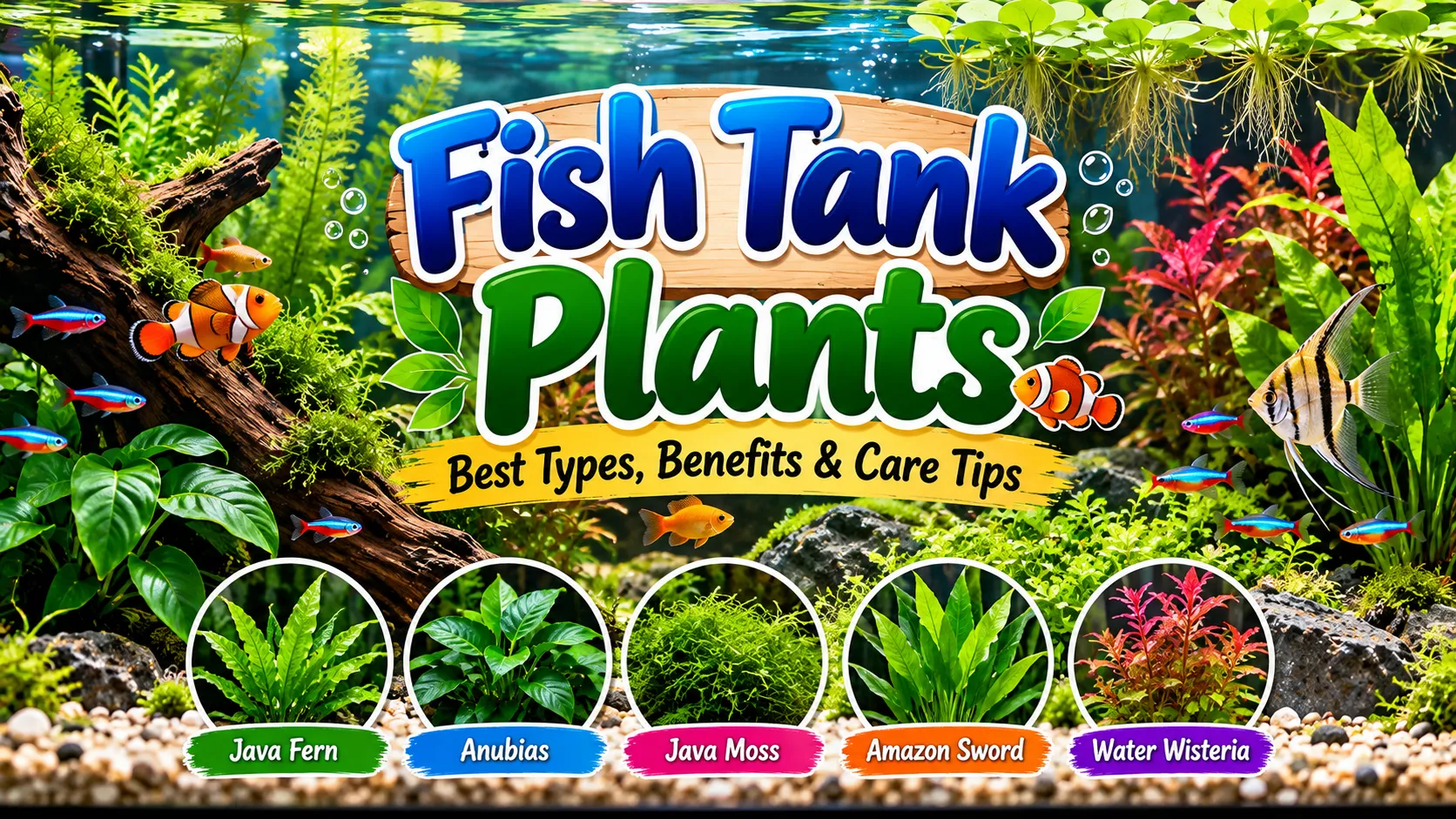
Fish tank plants can transform an ordinary aquarium into a beautiful underwater landscape. Their green leaves, colorful stems, and natural growth patterns create a more attractive environment for fish while giving the aquarium a lively, natural appearance. From easy-care Java fern to lush Amazon sword plants, there are options for beginners and experienced aquarium keepers alike.
Live aquarium plants can also absorb some nutrients from the water, provide shelter for small fish, and create surfaces where beneficial microorganisms can grow. However, not every plant sold for decorative purposes can survive fully underwater, and different species have different requirements for light, nutrients, and water conditions.
Whether you are setting up your first freshwater aquarium or improving an established fish tank, choosing suitable aquatic plants is an important step. This guide covers popular plant varieties, their benefits, planting methods, lighting needs, and common problems so you can create a healthy and attractive underwater garden.
🌱 What Are Fish Tank Plants?
Fish tank plants are aquatic or aquarium-suitable plants grown inside freshwater aquariums. Some live completely underwater, while others can grow with their roots submerged and their leaves above the waterline.
Aquarium plants are commonly divided into three groups: foreground plants, midground plants, and background plants. Foreground varieties stay relatively short, midground plants fill the center of the aquarium, and taller species create a green backdrop.
Live plants differ from artificial decorations because they grow and respond to their environment. They need appropriate light, nutrients, and water conditions, and some species also benefit from additional carbon dioxide.
Before purchasing a plant, check whether it is a true aquatic species. Some stores sell terrestrial plants that look attractive in aquariums but eventually deteriorate when kept completely underwater.
🪴 Best Fish Tank Plants for Beginners
If you are new to aquarium gardening, start with plants that tolerate a range of conditions and do not require complicated equipment. The following varieties are popular choices for many freshwater setups.
1. Java Fern
Java fern is a hardy aquarium plant known for its long, textured green leaves. It can grow in low to moderate lighting and generally does not require a nutrient-rich substrate.
Instead of burying its rhizome in gravel, attach it to driftwood or aquarium rocks. Burying the rhizome can cause it to rot.
Java fern grows relatively slowly, making it a useful option for aquariums where frequent trimming is not desirable.
2. Anubias
Anubias is another beginner-friendly plant with thick leaves and a sturdy rhizome. Several species are available, including compact varieties that work well in smaller aquariums.
Attach Anubias to rocks or driftwood rather than burying its rhizome. It usually tolerates lower lighting, although excessive light combined with nutrient-rich water may encourage algae growth on its leaves.
Its slow growth and durable foliage make it a popular choice for many freshwater community tanks.
3. Java Moss
Java moss forms soft, green growth that can cover rocks, driftwood, and other aquarium surfaces. It can also provide hiding places for small fish and shrimp.
The plant grows under a range of lighting conditions and does not need to be planted in substrate. You can attach it to decorations with aquarium-safe thread or suitable plant-safe methods.
Trim it occasionally to prevent dense growth from trapping debris.
4. Amazon Sword
Amazon sword plants are known for their broad, bright green leaves. They can become quite large, so they are generally better suited to medium or large aquariums.
Unlike Java fern and Anubias, Amazon sword usually grows best when its roots are planted in a suitable substrate. Root-feeding nutrients may help it grow well, especially in aquariums with nutrient-poor gravel.
Leave enough room for its mature size to avoid crowding smaller plants.
5. Water Wisteria
Water wisteria produces attractive green foliage and can grow quickly under suitable conditions. It is often used in the middle or background of freshwater aquariums.
Its growth rate makes it useful for filling empty spaces, although regular trimming may be necessary. Lighting, nutrients, and carbon availability affect how quickly it grows.
Confirm the species and its growth requirements before planting it in a small aquarium.
6. Hornwort
Hornwort is a fast-growing aquatic plant that can float freely or be loosely anchored. Its fine, branching foliage creates a natural appearance and provides cover for small fish.
Because it can grow quickly, it may need regular trimming. It can also shed some needles when conditions change, so remove loose plant material before it collects in the aquarium.
Hornwort is a useful option for many freshwater tanks, but its growth should be monitored.
🌿 Floating Plants for Fish Tanks
Floating aquarium plants grow at the water’s surface rather than being rooted in the substrate. They can provide shade, absorb nutrients, and create cover for fish that prefer calmer or dimmer areas.
Popular options include:
- Amazon Frogbit: Produces rounded floating leaves and long roots that hang into the water.
- Salvinia: A floating fern with small leaves that can form a surface covering.
- Red Root Floater: Can develop reddish roots and leaf undersides under suitable conditions.
- Water Lettuce: Forms attractive rosettes and hanging roots but may grow large and requires space.
- Duckweed: A tiny floating plant that multiplies rapidly and can cover the water surface.
Floating plants can be useful, but avoid allowing them to cover the entire surface. Fish and beneficial bacteria still depend on appropriate gas exchange, and submerged plants may suffer when floating foliage blocks too much light.
Check local regulations before buying or disposing of floating plants because some species can become invasive outside aquariums.
🌾 Best Foreground and Carpet Aquarium Plants
Foreground plants create a low-growing layer across the front of an aquarium. Some varieties can form a carpet-like appearance when they receive suitable light, nutrients, and, in certain cases, additional carbon dioxide.
Dwarf Hairgrass: This grass-like aquatic plant can create a meadow effect when planted densely. Its growth depends on lighting, substrate, and available nutrients.
Monte Carlo: A popular carpeting plant with small, rounded leaves. It often grows more successfully with adequate lighting and a stable supply of nutrients.
Marsilea: Several species produce clover-like foliage and may be suitable for lower carpets or foreground planting.
Cryptocoryne Parva: A small, slow-growing plant that can work in the foreground, although it may take time to spread.
Dwarf Sagittaria: Can produce narrow, grass-like leaves and spread through runners under suitable conditions.
Not every carpet plant thrives in a low-tech aquarium. If you are a beginner, choose a species that matches your available light and equipment rather than selecting a demanding plant solely for its appearance.
💚 Benefits of Live Plants in an Aquarium
Live plants offer more than decoration. When they grow well, they can contribute to a healthier and more natural aquarium environment.
They Use Some Excess Nutrients
Aquatic plants absorb nutrients such as nitrogen compounds and other minerals as they grow. This can help compete with algae for available nutrients, although plants alone cannot maintain safe water conditions.
Regular water testing, suitable filtration, and routine maintenance remain essential.
They Provide Shelter for Fish
Dense leaves and floating roots create hiding spaces where small fish, fry, and shrimp can seek cover. Some fish also feel more secure in aquariums with natural vegetation.
Choose plant arrangements that leave enough open swimming space for the species you keep.
They Support Aquarium Microorganisms
Plant leaves, roots, substrate, and decorations provide surfaces for beneficial microorganisms. These organisms help process waste as part of the aquarium’s biological filtration system.
Live plants support this environment, but they do not replace an established filter or proper aquarium cycling.
They Create a Natural Appearance
Different leaf shapes, textures, and shades of green make aquariums more visually interesting. Combining foreground, midground, and background plants can create depth and a balanced underwater landscape.
💡 Lighting Requirements for Aquarium Plants
Lighting affects plant growth, leaf color, and the development of algae. Most aquarium plants need an appropriate period of light each day, but the ideal intensity and duration depend on the species and tank conditions.
For many beginner aquariums, starting with around six to eight hours of light daily is a reasonable approach. Adjust the schedule based on plant growth, algae development, and the type of lighting you use.
Low-light plants such as Java fern and Anubias are often suitable for simple setups. Carpeting plants and some colorful stem plants may require stronger lighting and more careful nutrient management.
Avoid leaving aquarium lights on all day or overnight. Excessive lighting can encourage algae growth without necessarily improving plant health.
If algae begins spreading across the glass, decorations, or plant leaves, review your lighting duration, nutrient levels, and maintenance routine before making several changes at once.
💧 Water Conditions and Aquarium Substrate
Healthy aquatic plants depend on stable water conditions. Temperature, pH, hardness, and nutrient availability should suit both the plants and the fish in your aquarium.
Many common tropical freshwater plants grow well within the temperature ranges used for tropical community fish, but some species have different preferences. Research the needs of your particular plants and fish before setting the heater.
Substrate also matters. Rooted plants such as Amazon sword and many Cryptocoryne species benefit from a suitable planting substrate and access to root nutrients. Plants such as Anubias and Java fern can grow without being rooted in the substrate because they are commonly attached to decorations.
If you use ordinary aquarium gravel, you may need root tabs or another suitable nutrient source for heavy root feeders. Avoid adding garden soil or fertilizers not designed for aquarium use, as they may introduce unwanted substances or cause water-quality problems.
✂️ How to Maintain and Trim Fish Tank Plants
Regular maintenance helps aquarium plants remain healthy and prevents fast-growing varieties from overwhelming the tank.
- Remove damaged leaves: Trim yellow, decaying, or heavily damaged foliage with clean scissors.
- Control fast growth: Shorten stem plants and remove excess floating plants when necessary.
- Keep the filter intake clear: Prevent loose leaves and dense plant growth from blocking water circulation.
- Remove dead plant material: Decaying leaves can contribute to organic waste in the aquarium.
- Check for algae: Inspect slow-growing leaves, especially those of Anubias and Java fern.
- Replant healthy cuttings: Some stem plants can be propagated by planting suitable cuttings.
- Monitor water quality: Test the water and maintain the aquarium’s regular cleaning schedule.
Avoid removing too much healthy plant growth at once. Sudden changes to plant mass, lighting, or nutrient availability can affect the aquarium’s balance.
🐠 How to Choose Plants for Different Fish
The best aquarium plants depend partly on the fish species you keep. Some fish are gentle around vegetation, while others dig in the substrate, nibble leaves, or uproot newly planted stems.
Betta fish: Plants with broad leaves and gentle growth can provide cover. Keep the water surface accessible so bettas can breathe atmospheric air.
Guppies: Dense plant growth offers shelter for fry and creates a natural environment for active community fish.
Goldfish: Many goldfish nibble or uproot plants. Choose sturdy, suitable species and secure plants carefully, while ensuring they meet the needs of your fish.
Cichlids: Some cichlids dig or rearrange substrate. Hardy plants attached to rocks or driftwood may work better than delicate rooted varieties, depending on the species.
Shrimp: Java moss and fine-leaved plants provide useful surfaces for grazing and hiding.
Always consider the adult size, behavior, and water requirements of your fish. A plant that works well in one aquarium may not be suitable for another.
⚠️ Common Problems With Aquarium Plants
Even easy-care plants can struggle when their growing conditions are unsuitable. Identifying the likely cause helps you make useful adjustments.
Yellowing Leaves
Yellow leaves can result from nutrient deficiencies, changing water conditions, old foliage, or unsuitable lighting. Check whether the problem affects older leaves, new growth, or the whole plant before adding fertilizer.
Melting After Planting
Some aquatic plants lose leaves or appear to melt after being moved into a new aquarium. Plants grown above water by commercial growers may need time to adapt to submerged growth.
Remove severely decaying material and monitor new growth. If the rhizome or roots are rotting, investigate planting depth, water conditions, and the plant’s specific requirements.
Algae on Leaves
Algae may develop when lighting, nutrients, and plant growth are out of balance. Review your lighting schedule, maintain suitable water conditions, and remove affected material where practical.
Slow-growing plants can accumulate algae because their leaves remain in place for longer periods.
Plants Floating Away
New plants may float because they are not anchored securely. Use aquarium-safe weights or suitable attachment methods, depending on the species.
Do not bury rhizomes that need to remain exposed. Correct planting technique is often more effective than adding extra weight.
❓ Frequently Asked Questions About Fish Tank Plants
What are the easiest plants for a fish tank?
Java fern, Anubias, and Java moss are popular beginner options because they can grow in relatively simple setups. Their success still depends on suitable water conditions, lighting, and care.
Do fish tank plants need soil?
No. Some aquarium plants grow attached to rocks or driftwood, while others prefer a suitable substrate. Amazon sword and many Cryptocoryne species generally benefit from rooted planting and access to nutrients.
Can live plants replace an aquarium filter?
No. Live plants can absorb some nutrients, but they do not reliably replace filtration, biological cycling, water testing, or regular maintenance.
How many plants should I put in my fish tank?
The right number depends on tank size, plant species, fish behavior, and your preferred appearance. Start with a manageable selection and leave enough room for plants to grow without blocking swimming areas or equipment.
Do aquarium plants need carbon dioxide?
Not all aquarium plants require added carbon dioxide. Many beginner-friendly species grow without a dedicated CO₂ system, while some demanding carpeting plants benefit from additional carbon dioxide and stronger lighting.
Why are my aquarium plants turning brown?
Brown foliage can result from old leaves, poor growing conditions, nutrient issues, algae, or adaptation after planting. Check the species’ needs and observe whether new growth appears healthy before changing the care routine.
Are floating plants good for fish tanks?
Floating plants can provide shade, shelter, and nutrient uptake. However, manage their growth so they do not block all light from submerged plants or cover the entire water surface.
Can aquarium plants grow with artificial decorations?
Yes. Live plants can grow alongside artificial decorations as long as the decorations are aquarium-safe and do not prevent suitable lighting, water movement, or planting space.
🌿 Conclusion
Fish tank plants can make a freshwater aquarium more attractive while providing shelter, supporting beneficial microorganisms, and using some available nutrients. From easy-care Java fern and Anubias to colorful floating plants and carpet-forming varieties, there are options for many aquarium sizes and experience levels.
The key is to choose species that match your lighting, substrate, water conditions, and fish. Begin with a few manageable plants, learn their growing requirements, and make changes gradually as your aquarium develops.
With suitable plant selection and regular maintenance, you can create a beautiful underwater garden that complements your fish and supports a balanced aquarium environment.

Ethan Carter is a nature enthusiast and content writer with a passion for flowers and botanical knowledge. He is the author behind FlowerNamez, where he shares simple and informative content about flower names, types, and meanings.
With a focus on clarity and accuracy, Ethan aims to help readers explore the beauty of flowers and understand their significance in everyday life.