
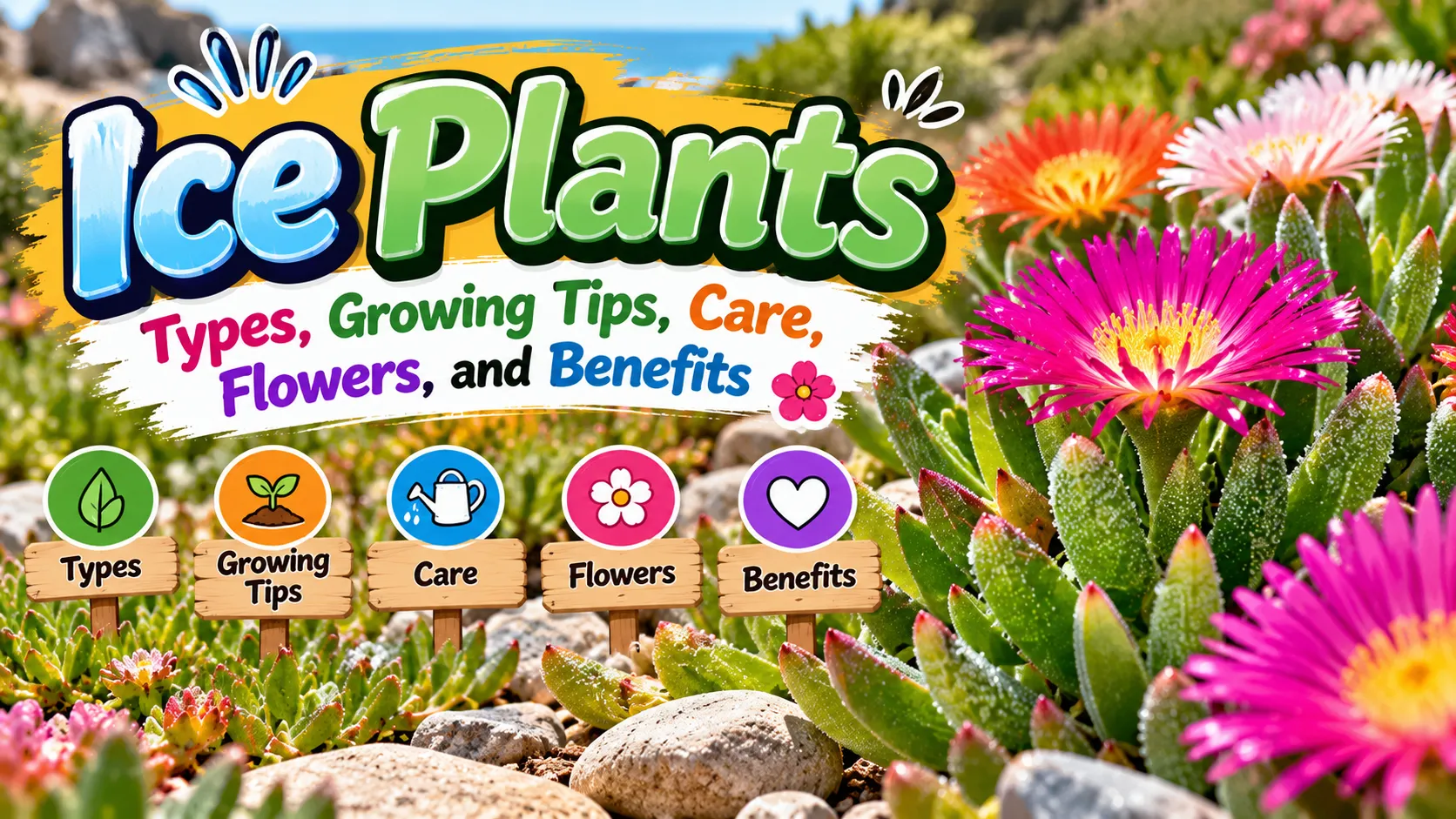
Ice plants are colorful, low-growing plants known for their vibrant flowers, fleshy leaves, and excellent tolerance for dry conditions. Many varieties produce daisy-like blooms in shades of pink, purple, yellow, orange, red, and white, making them attractive choices for rock gardens, sunny borders, containers, and ground cover. Their succulent foliage often has a sparkling appearance because of tiny water-storage cells or reflective structures on the leaves, depending on the species.
Whether you want to cover a sunny patch of ground, add color to a drought-tolerant landscape, or grow an unusual flowering succulent, ice plants offer plenty of possibilities. However, the name refers to several different species, and not all ice plants have identical growing requirements. Some spread quickly across the ground, while others form compact clumps. Choosing the right variety, providing well-drained soil, and avoiding excessive watering are important steps toward healthy growth. In this guide, you will discover the best types of ice plants, how to grow them, how to care for their flowers, and what to know before planting them in your garden.
🌿 What Are Ice Plants?
Ice plants are common names used for several plants in the ice plant family, Aizoaceae. Many are succulent plants adapted to dry or seasonally dry environments. The name is particularly associated with plants in the genera Delosperma and Lampranthus, although other related plants may also be called ice plants.
These plants are popular in landscaping because many varieties combine colorful flowers with foliage that requires relatively little water once established. Some grow close to the ground and spread into dense mats, while others form small shrubs or upright clumps.
Ice plants commonly have these characteristics:
- Fleshy leaves that store water.
- Bright, daisy-like flowers in many colors.
- A preference for sunny locations.
- Good tolerance for dry conditions in suitable climates.
- Low-growing or spreading growth habits in many varieties.
- A need for well-drained soil.
- Potential use in rock gardens, borders, and containers.
Not every ice plant is equally cold-hardy, drought-tolerant, or suitable for the same landscape. Before buying one, check the plant’s botanical name and growing requirements.
🌸 Why Are Ice Plants Popular in Gardens?
Ice plants appeal to gardeners who want colorful flowers without the maintenance requirements of some thirsty ornamental plants. Many varieties grow well in sunny locations and can tolerate periods of dry weather after their roots become established.
Their spreading growth also makes them useful for covering bare soil in suitable landscapes. Some types grow between rocks, along paths, or over the edges of containers, creating a soft, colorful appearance.
Gardeners choose ice plants for several reasons:
- Bright flowers: Many varieties produce abundant blooms in vivid colors.
- Drought tolerance: Succulent leaves help many species conserve water.
- Ground cover: Spreading varieties can cover open spaces.
- Low maintenance: Established plants often require relatively little routine care.
- Rock garden suitability: Many thrive in sunny, well-drained conditions.
- Container appeal: Compact varieties can grow in pots and planters.
- Pollinator value: Flowers may attract bees and other pollinating insects.
- Foliage interest: Their fleshy leaves provide texture even when flowers are absent.
The most important consideration is matching the species to your climate. A variety suited to a mild coastal garden may not survive a cold, wet winter elsewhere.
🌺 Best Types of Ice Plants to Grow
Ice plants include several genera and numerous species and cultivars. Some are particularly suitable for cold-winter gardens, while others thrive in warm, dry climates.
💗 Delosperma Ice Plants
Delosperma species are often called hardy ice plants. Many form low-growing mats with succulent leaves and bright, daisy-like flowers.
One well-known example is Delosperma cooperi, which can produce vivid magenta-purple flowers under favorable conditions. Other cultivars offer pink, yellow, orange, or mixed shades.
Delosperma varieties are popular for:
- Sunny rock gardens.
- Sloping garden beds with good drainage.
- Low-growing flower borders.
- Gravel gardens.
- Drought-tolerant landscapes.
- Containers with drainage holes.
Some varieties tolerate cold winters better than others, particularly when the soil drains freely. Persistent winter moisture can be more damaging than cold temperatures for certain types.
🌼 Lampranthus Ice Plants
Lampranthus species are known for their colorful flowers and succulent foliage. Many form spreading or mounding plants that produce abundant blooms during favorable seasons.
They are often grown in warm, sunny climates where frost is limited. Depending on the species, they may be suitable for borders, dry slopes, rock gardens, and containers.
Common characteristics include:
- Bright, daisy-like flowers.
- Fleshy, narrow or cylindrical leaves.
- A preference for direct sunlight.
- Good performance in well-drained soil.
- Relatively low watering needs once established.
Some Lampranthus plants are sensitive to frost, so check their hardiness before planting them outdoors in colder regions.
🌿 Carpobrotus Ice Plants
Plants in the genus Carpobrotus are often called ice plants or sea figs. They have thick, succulent leaves and large, colorful flowers.
Some species spread vigorously along sandy coastal areas and can tolerate salty conditions. However, certain Carpobrotus species are invasive in parts of the world, where they can displace native vegetation.
Before planting one, confirm whether the species is appropriate for your region. In areas where it is invasive or restricted, choose a locally recommended alternative instead.
🌱 Aptenia Ice Plants
Aptenia cordifolia, commonly known as baby sun rose or heartleaf ice plant, is a low-growing succulent with small, fleshy, heart-shaped leaves and bright pink or reddish flowers.
It can work well as ground cover in suitable warm climates and may also be grown in containers.
Aptenia generally prefers:
- Bright sunlight.
- Well-drained soil.
- Moderate watering during active growth.
- Protection from hard frost.
- Occasional trimming to control spreading.
Like other spreading succulents, it should be checked for invasive potential before being introduced into a new landscape.
💛 Hardy Yellow Ice Plants
Some ice plant varieties produce yellow flowers rather than the more familiar pink or purple blooms. Their bright colors can create a striking contrast with green succulent foliage and gray stones.
Yellow-flowering cultivars of hardy Delosperma are often used in rock gardens and sunny borders.
They are especially attractive when planted alongside purple-flowering or pink-flowering varieties, provided the plants have similar growing requirements.
🌷 Popular Ice Plant Flower Colors
One of the best features of ice plants is their range of flower colors. Selecting complementary shades can help create an attractive garden design.
- Pink ice plants: Soft pink flowers create a gentle, romantic appearance in rock gardens and borders.
- Purple ice plants: Deep purple or magenta flowers provide strong color against gray stones and green foliage.
- Yellow ice plants: Bright yellow blooms add warmth to sunny garden spaces.
- Orange ice plants: Orange flowers bring a vivid, energetic look to dry landscapes.
- Red ice plants: Red or reddish-pink flowers create bold accents in containers and borders.
- White ice plants: White flowers provide a clean contrast with dark stones or other colorful plants.
Flower color alone is not enough to identify an ice plant. Different species can produce similar-looking flowers, so check the botanical name and growth habit when selecting a variety.
☀️ How Much Sunlight Do Ice Plants Need?
Most commonly grown flowering ice plants prefer full sun. A sunny location encourages healthy growth and abundant flowering.
In many gardens, aim for a spot that receives around six hours or more of direct sunlight each day, although exact requirements vary by species.
Suitable locations include:
- Open garden beds.
- Sunny rock gardens.
- South- or west-facing areas in climates where the plants tolerate the heat.
- Gravel borders.
- Sloping areas that receive plenty of sunlight.
- Containers placed in bright outdoor locations.
Some ice plants can tolerate partial shade, but too little sunlight may lead to fewer flowers, slower growth, or stretched stems.
In extremely hot climates, afternoon shade may help prevent stress for certain varieties, particularly when plants are newly established. However, avoid moving a sun-loving ice plant into deep shade and expecting it to flower well.
🌱 What Is the Best Soil for Ice Plants?
Well-drained soil is one of the most important requirements for growing ice plants successfully. Their succulent roots and stems can suffer when the soil remains wet for extended periods.
Many varieties grow well in sandy or gravelly soil that allows excess water to drain away quickly.
Ideal soil characteristics include:
- Excellent drainage.
- A loose, open texture.
- Moderate fertility rather than excessive richness.
- Enough organic matter to support healthy roots without retaining too much moisture.
- A pH suitable for the particular species.
If your garden has heavy clay soil, consider growing ice plants in a raised bed or a carefully prepared area with improved drainage. Simply adding a small amount of sand to heavy clay may not improve its structure and can sometimes make the problem worse.
For container growing, use a well-draining succulent mix in a pot with drainage holes.
Avoid planting ice plants in low areas where rainwater collects. Even a drought-tolerant plant can develop root problems when its roots remain saturated.
🪴 How to Plant Ice Plants Step by Step
Planting ice plants correctly helps them establish strong roots and produce healthy flowers.
🌿 Choose a Suitable Location
Select a sunny site with good drainage. Check the expected mature width of the variety so you can give it enough room to spread without crowding nearby plants.
If you are planting a potentially vigorous species, check local guidance about its invasive status first.
🌱 Prepare the Soil
Remove weeds and loosen the soil. If drainage is poor, consider using a raised bed or another planting location rather than relying on frequent soil amendments.
A gravelly planting medium can be suitable for many succulent ice plants, but it should still support healthy root development.
🌸 Dig the Planting Hole
Dig a hole slightly wider than the root ball. The plant should sit at approximately the same depth as it did in its original container.
Avoid burying the stems or crown too deeply, as this may increase the risk of rot.
🌿 Position the Plant
Carefully remove the plant from its pot and loosen any tightly packed roots if needed. Place it in the hole and gently fill the surrounding area with soil.
Do not press the soil so firmly that it becomes compacted.
💧 Water After Planting
Water the plant to settle the soil around its roots. Afterward, allow the soil to dry appropriately between waterings rather than keeping it constantly wet.
Newly planted ice plants need attention while their roots establish, but they should never be left sitting in standing water.
🍂 Add Suitable Mulch if Needed
A thin layer of gravel or small stones may help keep the crown dry and complement the appearance of a rock garden.
Avoid piling moisture-retentive mulch directly around the stems. Good airflow and drainage are especially important for succulent plants.
📅 When Is the Best Time to Plant Ice Plants?
The best planting time depends on the species and local climate. Spring is often a good choice because plants have time to establish before the main flowering season or the stress of winter.
In mild climates, some varieties can also be planted in early fall, provided they have enough time to establish roots before cold weather arrives.
Consider these general guidelines:
- Plant frost-sensitive types after the danger of cold weather has passed.
- Choose mild weather rather than extreme heat.
- Ensure the soil drains well before planting.
- Water carefully while new roots establish.
- Avoid planting immediately before prolonged freezing conditions.
- Follow local recommendations for cold-hardy varieties.
If you live in a hot region, planting during a milder part of the season can reduce transplant stress. In cold regions, choose a hardy variety and ensure it does not sit in wet winter soil.
💧 How Often Should You Water Ice Plants?
Ice plants are succulents, so many varieties need less water than conventional garden flowers once established. Their fleshy leaves help them store moisture, allowing them to tolerate periods of dry weather.
However, watering requirements vary by species, climate, soil type, and whether the plant grows in a container or in the ground.
Use these watering tips:
- Water newly planted ice plants while their roots establish.
- Allow the soil to dry between waterings.
- Water more often during prolonged hot, dry weather if the plant shows signs of stress.
- Reduce watering during cool or rainy periods.
- Avoid keeping the soil constantly wet.
- Check container drainage regularly.
- Water near the soil rather than repeatedly soaking the plant’s crown.
- Watch for soft stems, yellowing leaves, or other signs of excessive moisture.
Established plants in suitable garden soil may need little supplemental watering during periods of regular rainfall.
Do not use a fixed watering schedule without checking conditions. A plant in a small pot may dry out much faster than one growing in the ground.
🌼 How to Fertilize Ice Plants for Healthy Flowers
Many ice plants grow well in relatively poor or moderately fertile soil. Excessive fertilizer can encourage soft, leafy growth at the expense of compact growth and flowering.
If your soil is reasonably fertile, you may not need to fertilize frequently.
For healthy plants:
- Start with suitable, well-drained soil.
- Use a light application of balanced fertilizer only when needed.
- Follow the label instructions for the chosen product.
- Avoid applying excessive nitrogen.
- Do not fertilize plants that are already stressed by root problems.
- Reassess soil conditions if growth remains weak.
A healthy ice plant does not need to be pushed into rapid growth. Adequate sunlight, drainage, and appropriate watering are usually more important than heavy feeding.
✂️ How to Prune and Maintain Ice Plants
Most ice plants require relatively little pruning. However, occasional trimming can help control their spread, remove damaged stems, and encourage a tidy appearance.
Useful maintenance tasks include:
- Remove dead or damaged stems.
- Trim spreading growth when it moves beyond the intended area.
- Clear away plant debris around the crown.
- Inspect leaves and stems for signs of rot.
- Remove weeds before they become established.
- Avoid heavy pruning during periods of extreme heat or cold.
- Use clean tools when cutting diseased material.
Some ice plants may benefit from light trimming after flowering, but the best timing depends on the species and climate.
Avoid cutting too deeply into old, woody stems unless the variety is known to recover well from such pruning. If you are uncertain, remove only a small amount of growth and observe how the plant responds.
🌸 Why Is My Ice Plant Not Flowering?
Ice plants are often grown for their colorful flowers, so a lack of blooms can be disappointing. Several environmental conditions can prevent them from flowering well.
☀️ Not Enough Sunlight
Many ice plants need full sun to produce abundant blooms. Plants growing in deep shade may develop foliage without producing many flowers.
If the location is too shady, consider moving the plant to a brighter site during a suitable planting season.
💧 Too Much Water
Overwatering can weaken roots and reduce overall plant health. If the soil remains wet, the plant may develop soft growth or root rot.
Improve drainage and allow the soil to dry appropriately between waterings.
🌱 Excessive Fertilizer
Too much nitrogen can encourage leafy growth instead of flowers. Reduce unnecessary feeding and focus on sunlight and suitable growing conditions.
❄️ Unsuitable Climate
Some ice plants need warmer conditions, while others tolerate cold winters. A variety that is poorly matched to your climate may struggle to grow or flower.
Check the hardiness and temperature requirements of the specific species.
🌿 Immature Plants
Recently planted ice plants may need time to establish roots before producing their best display of flowers.
Give the plant suitable growing conditions and avoid disturbing its roots unnecessarily.
🐛 Common Ice Plant Problems and Solutions
Ice plants are often low-maintenance, but they can still develop problems when their environment is unsuitable.
🍂 Yellowing Leaves
Yellow leaves may indicate excessive moisture, poor drainage, nutrient problems, or natural aging.
Check the soil before adding water or fertilizer. If the soil is saturated, improve drainage and examine the plant for signs of root damage.
🪴 Soft or Rotting Stems
Soft stems and collapsing growth often suggest that the plant is receiving too much moisture or growing in poorly drained soil.
Reduce watering, remove severely damaged sections where appropriate, and correct the drainage problem.
If the rot has spread into the crown or roots, the plant may be difficult to save.
🐜 Aphids and Other Insects
Aphids and other sap-feeding insects may occasionally attack ice plants, especially when growing conditions are stressful.
Inspect new growth regularly. If pests are present, use an appropriate treatment suitable for the plant and follow the product instructions.
Avoid applying insecticides indiscriminately, especially when flowers are attracting pollinators.
🌿 Weak or Stretched Growth
Ice plants growing in insufficient sunlight may develop elongated stems and fewer flowers.
Move container plants to a sunnier location gradually to reduce the risk of stress. For plants in the ground, consider whether nearby vegetation or structures are creating too much shade.
❄️ Winter Damage
Cold-sensitive ice plants may suffer damage from frost, especially in regions with freezing temperatures.
Choose varieties suited to your climate, improve winter drainage, and protect vulnerable container plants when necessary.
🌱 Poor Growth After Planting
Recently planted ice plants may struggle because of damaged roots, unsuitable soil, excessive watering, or transplant stress.
Check the plant’s growing conditions and avoid adding extra fertilizer until you understand the cause.
🌾 Are Ice Plants Good Ground Cover?
Yes, many ice plant varieties are effective ground covers in suitable climates. Their spreading growth can help cover bare soil, soften the edges of garden beds, and add color to dry landscapes.
They are particularly useful in sunny areas where drainage is excellent.
Potential benefits include:
- Covering open areas between rocks.
- Adding flowers to dry garden beds.
- Reducing the appearance of bare soil.
- Softening the edges of paths and retaining walls.
- Creating colorful borders.
- Providing habitat and floral resources for pollinators.
However, not every ice plant is suitable for every landscape. Some species spread aggressively and may become invasive outside their native range.
Before using ice plants as ground cover, confirm that the selected species is appropriate for your area. In regions where certain ice plants are invasive, choose a locally recommended alternative.
🪴 Can Ice Plants Grow in Pots?
Yes. Many ice plants grow well in containers, especially compact varieties that prefer sunny conditions and well-drained soil.
Containers also make it easier to control soil conditions and move frost-sensitive varieties to a sheltered location.
For successful container growing:
- Choose a pot with drainage holes.
- Use a well-draining succulent potting mix.
- Select a container large enough for the expected spread.
- Place the pot in a sunny location.
- Allow excess water to drain freely.
- Check soil moisture regularly during hot weather.
- Avoid leaving water in the saucer.
- Protect cold-sensitive varieties from frost when necessary.
Container-grown plants may dry out more quickly than those growing in garden beds. However, frequent watering is not always beneficial because soggy soil can damage succulent roots.
A shallow, wide container can be attractive for spreading varieties, provided it has adequate drainage and enough room for root development.
🌱 How to Propagate Ice Plants
Many ice plants can be propagated through stem cuttings. Some species can also be grown from seeds, although the easiest method depends on the plant.
🌿 Propagating From Cuttings
Stem cuttings are a convenient way to create new plants from healthy parent material.
Follow these general steps:
- Choose a healthy, non-flowering stem.
- Use clean, sharp scissors or pruning shears.
- Take a suitable cutting according to the species.
- Allow the cut surface to dry briefly if recommended for that plant.
- Place the cutting in a well-draining growing medium.
- Keep it in bright light without exposing it immediately to extreme heat.
- Water sparingly while roots develop.
- Transplant the rooted cutting when it is established.
Different species root at different rates, so avoid disturbing the cutting repeatedly to check its progress.
🌸 Growing Ice Plants From Seeds
Some ice plants can be grown from seed, but germination requirements vary.
Use a seed-starting mix suitable for the species and follow the supplier’s instructions for sowing depth, temperature, and moisture.
Seed-grown plants may differ from named cultivars, especially when the parent plant is a hybrid. If you want to preserve the characteristics of a particular cultivar, vegetative propagation may be more reliable.
🐝 Do Ice Plants Attract Bees and Butterflies?
Many flowering ice plants attract bees and other pollinating insects. Their open flowers can provide nectar or pollen, depending on the species and flower structure.
A sunny garden with a variety of flowering plants can support pollinators throughout the growing season.
To make your garden more pollinator-friendly:
- Choose ice plant varieties suited to your climate.
- Avoid unnecessary insecticide use.
- Provide a range of flowering plants.
- Select species with different flowering periods.
- Leave suitable nearby habitat for beneficial insects.
- Check whether a particular ice plant is invasive before planting it widely.
Ice plants should be one part of a diverse garden rather than the only flowering species. A variety of locally appropriate plants can support a broader range of pollinators and other wildlife.
🌍 Are Ice Plants Invasive?
Some ice plants are invasive in certain regions, but the risk depends on the species and location.
Certain Carpobrotus species, for example, have spread beyond their native ranges and formed dense mats that compete with native vegetation. Their ability to spread rapidly can alter coastal and other sensitive habitats.
Not all plants called ice plants behave the same way. Some cultivated Delosperma varieties are used successfully in gardens without posing the same level of ecological concern.
Before planting:
- Identify the species by its botanical name.
- Check local invasive-plant lists.
- Consult a regional botanical garden or extension service.
- Avoid planting known invasive species near natural habitats.
- Dispose of unwanted plant material responsibly.
- Choose non-invasive alternatives when recommended.
This is especially important when planting a spreading ground cover over a large area.
🌿 Ice Plants vs. Other Succulents
Ice plants share several characteristics with other succulents, but their flowers and growth habits can make them particularly useful in ornamental landscapes.
Ice plants are often grown for their colorful, daisy-like flowers and spreading growth.
Aloe plants are recognized for their rosettes of fleshy leaves, and some species produce tall flower spikes.
Sedums include a wide range of succulent plants, from low-growing ground covers to upright flowering varieties.
Echeverias are popular for their symmetrical leaf rosettes and are frequently grown in containers.
The main differences include:
- Flower display: Many ice plants produce colorful, daisy-like blooms.
- Growth habit: Some ice plants spread into mats, while other succulents form rosettes or upright clumps.
- Climate tolerance: Cold hardiness varies considerably across all these groups.
- Water needs: All require attention to drainage, but their watering requirements differ by species.
- Landscape use: Ice plants are often used as flowering ground cover, while other succulents may be selected for their leaf shapes or architectural appearance.
Choose plants according to the conditions in your garden rather than assuming that every succulent has identical needs.
🌸 Interesting Facts About Ice Plants
Ice plants have several characteristics that make them interesting to gardeners and plant enthusiasts.
- Many ice plants have fleshy leaves that store water.
- Some species produce flowers in vivid pink, purple, yellow, orange, red, or white.
- Certain varieties form dense mats that cover the ground.
- The name “ice plant” is associated with a sparkling or icy appearance on some foliage.
- Many flowering ice plants prefer full sun.
- Well-drained soil is important for healthy roots.
- Some hardy varieties can survive cold winters in suitable conditions.
- Other species are sensitive to frost and need warmer climates.
- Many ice plant flowers attract bees and other pollinating insects.
- Some species can be propagated through stem cuttings.
- Certain ice plants are popular in rock gardens and gravel landscapes.
- Some members of the group are invasive in particular regions.
- Ice plants are not all members of a single botanical genus.
- Watering requirements depend on the species, soil, and climate.
- Many ice plants provide colorful flowers without needing frequent fertilizer.
These characteristics explain why ice plants are popular in drought-tolerant gardens while also highlighting the importance of choosing the right species.
❓ Frequently Asked Questions About Ice Plants
🌸 What is an ice plant?
An ice plant is a common name for several succulent plants, especially those in the family Aizoaceae. Many are known for fleshy leaves, colorful flowers, and tolerance for dry conditions.
☀️ Do ice plants need full sun?
Most commonly grown flowering ice plants prefer full sun. Some tolerate partial shade, but insufficient light may reduce flowering. Check the requirements of the specific species.
💧 How often should I water an ice plant?
Water according to soil moisture, weather, and plant establishment. Allow the soil to dry appropriately between waterings and avoid keeping the roots constantly wet.
🌺 Do ice plants come back every year?
Some ice plants are hardy perennials that return each year, while others are sensitive to frost and may not survive cold winters. Their longevity depends on the species and local climate.
🌱 Are ice plants easy to grow?
Many varieties are easy to grow when provided with sufficient sunlight and well-drained soil. The most common mistakes are overwatering and choosing a species unsuited to the local climate.
🌿 Can ice plants grow indoors?
Some compact ice plants can grow in bright indoor spaces, but most flowering varieties perform better outdoors with abundant sunlight and good airflow. Indoor plants need especially careful watering and drainage.
🐝 Do ice plants attract pollinators?
Many flowering ice plants attract bees and other pollinating insects. The value to pollinators depends on the species and the conditions in which it grows.
❄️ Can ice plants survive winter?
Some varieties tolerate freezing temperatures, while others are frost-sensitive. Select a species suited to your local hardiness zone and protect vulnerable plants from cold and winter moisture.
🌼 Why is my ice plant not flowering?
Common causes include insufficient sunlight, excessive watering, unsuitable temperatures, excessive fertilizer, or a plant that has not yet established itself.
🌍 Are ice plants invasive?
Some species, especially certain Carpobrotus plants, are invasive in particular regions. Check the botanical name and local recommendations before planting a spreading variety.
🪴 Can I grow ice plants in containers?
Yes. Use a container with drainage holes and a well-draining succulent mix. Place it in suitable sunlight and avoid leaving the roots in standing water.
✂️ Should I prune ice plants?
Light pruning can remove dead growth and control spreading. The ideal timing depends on the species, so avoid cutting deeply into old stems unless the plant is known to tolerate it.
🌸 Conclusion: Are Ice Plants Right for Your Garden?
Ice plants are attractive choices for gardeners who want colorful flowers, succulent foliage, and relatively low-maintenance plants. Their ability to thrive in sunny, well-drained locations makes many varieties useful for rock gardens, containers, borders, and drought-tolerant landscapes.
The best results come from choosing the right species for your climate, providing sufficient sunlight, and avoiding excessive moisture around the roots. Some ice plants are hardy enough for cold-winter gardens, while others need warm conditions. It is also important to check whether a spreading variety is considered invasive in your region.
With thoughtful selection and proper care, ice plants can add beautiful color and texture to your outdoor space while providing flowers that may attract pollinators. Whether you prefer pink, purple, yellow, orange, or white blooms, there is an ice plant worth considering for the right garden setting.

Ethan Carter is a nature enthusiast and content writer with a passion for flowers and botanical knowledge. He is the author behind FlowerNamez, where he shares simple and informative content about flower names, types, and meanings.
With a focus on clarity and accuracy, Ethan aims to help readers explore the beauty of flowers and understand their significance in everyday life.