
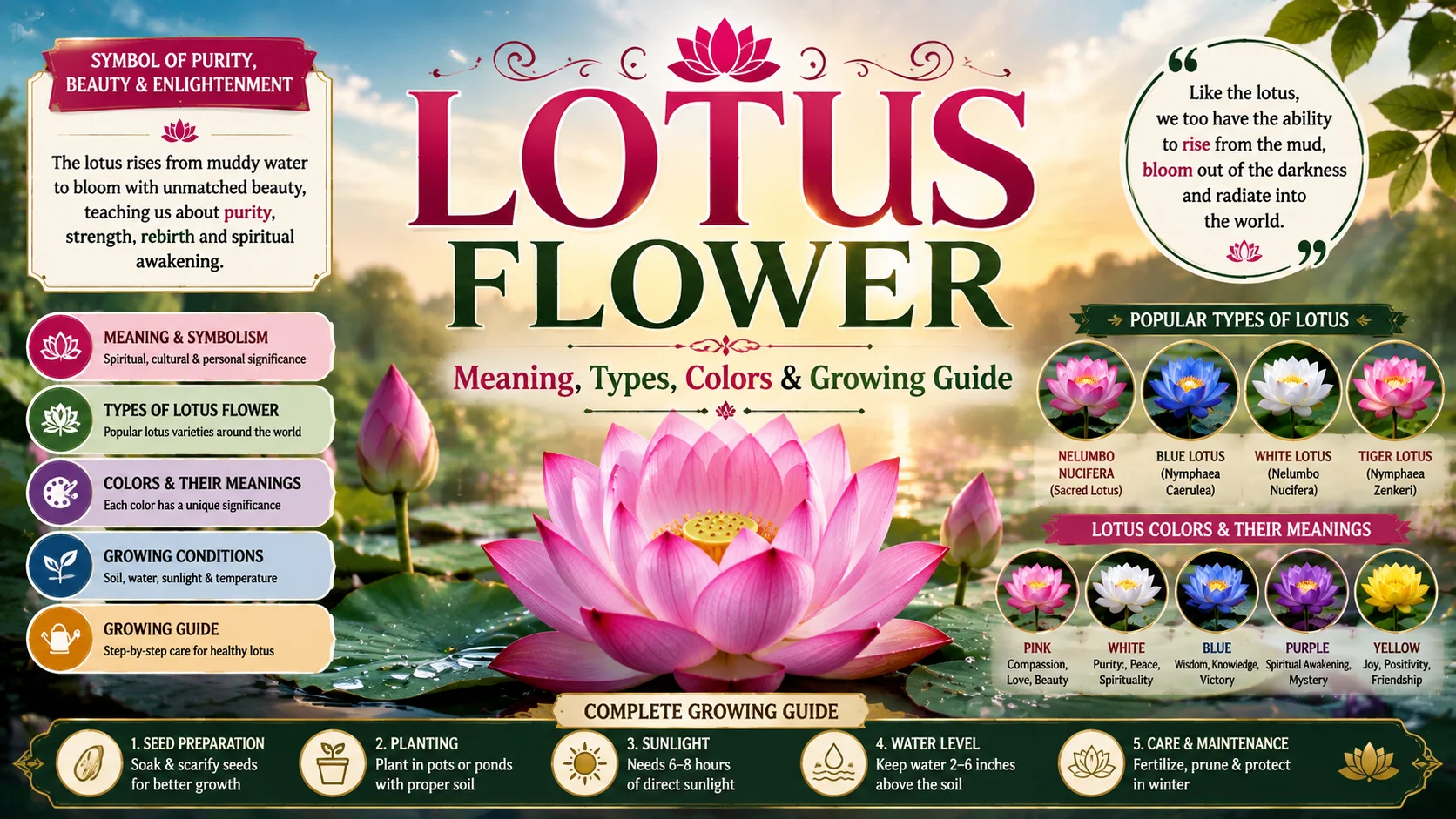
The lotus flower is one of the world’s most recognizable aquatic flowers, admired for its beautiful petals, round leaves, and ability to rise above muddy water and bloom in remarkable beauty. Beyond its appearance, the lotus has deep cultural, spiritual, and symbolic significance in many parts of the world.
Lotus flowers are commonly associate with purity, rebirth, resilience, enlightenment, beauty, peace, and spiritual growth. Their fascinating life cycle is part of what makes them so meaningful: the plant grows in muddy water, rises toward the surface, and opens its flower above the water.
Whether you’re researching the lotus flower meaning, different lotus colors, types of lotus, symbolism, or how to grow one, this guide covers the most important things to know.
What Is a Lotus Flower?
A lotus is an aquatic flowering plant belonging primarily to the genus Nelumbo. The two widely recognized living species are the sacred lotus (Nelumbo nucifera) and the American lotus (Nelumbo lutea).
Lotus plants grow in shallow water and produce large, round leaves that may float on the surface or rise above it. Their flowers can also stand above the water, creating the iconic appearance associated with lotus ponds.
The lotus is different from a water lily, even though the two are often confused. Lotus leaves commonly rise above the water, while many water-lily leaves float directly on its surface.
Lotus Flower Meaning
The lotus flower has several important meanings depending on culture and context.
Common symbolic meanings include:
- Purity
- Rebirth
- Renewal
- Enlightenment
- Resilience
- Inner strength
- Spiritual growth
- Beauty
- Peace
- Transformation
- Hope
- Wisdom
- Grace
One of the most powerful ideas associated with the lotus is rising above difficult circumstances. Because the plant emerges from muddy water and produces a beautiful flower, it is often used as a metaphor for overcoming challenges.
Lotus Flower Symbolism
The lotus has been used as a symbol for thousands of years across different cultures and traditions.
Its life cycle naturally lends itself to symbolism. The roots remain in mud, the stem travels through water, and the flower emerges into the sunlight.
This journey can represent moving from difficulty or uncertainty toward clarity and growth.
The lotus may symbolize:
- Growth through adversity
- A fresh beginning
- Spiritual awakening
- Transformation
- Purity despite difficult surroundings
- The connection between earth and water
- The journey toward enlightenment
Lotus Flower Colors and Their Meanings
Lotus flowers come in several colors, and each can carry different symbolic associations.
White Lotus Flower
The white lotus is commonly associated with purity, peace, innocence, clarity, and spiritual perfection.
It is often chosen when the desired symbolism is calmness and inner peace.
Pink Lotus Flower
The pink lotus is strongly associated with spiritual traditions and can symbolize purity, devotion, compassion, and spiritual awakening.
Pink lotus flowers are among the most iconic representations of the sacred lotus.
Red Lotus Flower
A red lotus is often connected with love, compassion, passion, courage, and the heart.
It can represent deep emotional connection and affectionate relationships.
Blue Lotus Flower
The blue lotus is often associate with wisdom, knowledge, calmness, and spiritual understanding.
In symbolic artwork, blue lotus imagery can represent the pursuit of knowledge and self-development.
Purple Lotus Flower
The purple lotus is often connect with spirituality, mystery, meditation, and deeper awareness.
Its unusual color can give it a particularly mystical appearance.
Yellow Lotus Flower
Yellow lotus flowers can symbolize happiness, optimism, friendship, warmth, and positive energy.
Sacred Lotus
The sacred lotus (Nelumbo nucifera) is one of the most culturally significant lotus species.
It is native to large parts of Asia and has been cultivated and admired for centuries. The plant has a strong presence in religious artwork, traditional gardens, literature, and cultural symbolism.
The sacred lotus is particularly associated with ideas of:
- Purity
- Enlightenment
- Rebirth
- Spiritual awakening
- Beauty
- Wisdom
Its flowers are usually pink or white, although cultivated varieties can display considerable variation.
American Lotus
The American lotus (Nelumbo lutea) is native to North America.
It is also known as the yellow lotus because of its characteristic yellow flowers. Like other lotus plants, it is an aquatic perennial with large circular leaves.
American lotus is commonly found in wetlands, ponds, lakes, and slow-moving waterways.
Its large leaves and yellow flowers make it an important native aquatic plant in suitable habitats.
Lotus Flower vs. Water Lily
Lotus flowers and water lilies look similar, but they belong to different plant groups.
| Feature | Lotus | Water Lily |
|---|---|---|
| Family | Nelumbonaceae | Nymphaeaceae |
| Leaves | Often rise above water | Commonly float |
| Flowers | Usually rise above water | Often rest on water |
| Seed pod | Distinctive round seed head | Different structure |
| Growth | Aquatic | Aquatic |
| Symbolism | Strong spiritual symbolism | Also culturally significant |
The easiest visual clue is often the position of the leaves and flowers. Lotus leaves and flowers commonly stand above the water rather than simply floating on it.
Lotus Flower Life Cycle
The lotus has a fascinating growth cycle.
Seed
Lotus plants begin from seeds or can be propagated from rhizomes.
Root and Rhizome Growth
The plant develops underground rhizomes that anchor it in muddy aquatic soil.
Leaves Emerge
Large circular leaves rise toward or above the surface.
Flower Bud Forms
A flower bud develops on a stalk and gradually rises above the water.
Flower Opens
The lotus flower opens in sunlight, revealing layers of petals.
Seed Pod Develops
After flowering, the distinctive lotus seed head develops and eventually produces seeds.
This cycle is one reason the lotus has become such a powerful symbol of renewal and transformation.
Lotus Flower Anatomy
A lotus flower contains several recognizable structures.
Petals
The petals form the main visible portion of the flower and can vary in color and shape.
Stamens
The stamens surround the central reproductive structure and produce pollen.
Seed Head
The distinctive circular seed head is one of the easiest ways to identify a lotus.
Leaves
Lotus leaves are large, round, and often have a water-repellent surface.
Rhizomes
The plant spreads through underground rhizomes that store energy and produce new growth.
Lotus Flower Habitat
Lotuses naturally grow in aquatic environments such as:
- Ponds
- Lakes
- Marshes
- Wetlands
- Slow-moving waterways
- Shallow freshwater areas
They generally prefer warm conditions, plenty of sunlight, and relatively shallow water.
In the right environment, lotus plants can spread extensively through their rhizomes.
How to Grow Lotus Flowers
Growing lotus can be rewarding, but they need specific conditions.
Choose a Suitable Container
A wide, sturdy container without drainage holes is commonly used for growing lotus in controlled settings.
The plant needs enough room for its rhizomes to spread.
Use Aquatic Soil
Lotuses generally perform best in heavy aquatic soil rather than loose potting mixes that can float or cloud the water excessively.
Provide Plenty of Sunlight
Lotus plants are sun-loving plants. Several hours of direct sunlight each day can encourage strong growth and flowering.
Add Water Gradually
Water should cover the soil while allowing the plant to grow upward toward the surface.
Keep the Plant Warm
Lotuses grow best in warm conditions. Cold temperatures can slow growth or cause dormancy.
Allow Enough Space
A mature lotus can become surprisingly large, so consider its eventual size before planting.
Lotus Flower Care
Once established, lotus plants need regular attention.
Sunlight
Provide plenty of direct sunlight for healthy growth and flowering.
Water
Maintain an appropriate water level and avoid allowing the growing medium to dry out completely.
Fertilizer
Aquatic fertilizer designed for lotus or water plants can support growth when used according to product instructions.
Temperature
Warm weather generally encourages active growth.
Winter Care
In colder climates, lotus plants may become dormant. Container-grown plants may require special protection depending on the variety and local conditions.
Lotus Flower Benefits
The lotus is valued for more than its ornamental beauty.
Depending on the species and cultural tradition, different parts of the plant have been used as food or in traditional practices.
Commonly utilized parts include:
- Seeds
- Rhizomes
- Leaves
- Flowers
However, culinary or traditional uses depend on the species, preparation, and local practices, so plants should always be correctly identified before consumption.
Lotus Seeds
Lotus seeds have been used as food in several Asian cuisines.
They can be eaten fresh, dried, roasted, or incorporated into traditional dishes and desserts.
So Lotus seeds are also culturally significant and have been used in traditional food preparations for generations.
Lotus Root
Lotus rhizomes are commonly known as lotus root when used as food.
Sliced lotus root has a distinctive appearance, with a pattern of holes running through each slice. It is commonly used in various Asian dishes.
The crisp texture makes lotus root particularly popular in stir-fries, soups, salads, and other preparations.
Lotus Flower in Different Cultures
The lotus has deep cultural significance, particularly across Asia.
Hinduism
The lotus is an important symbol in Hindu traditions and is associated with several deities and spiritual concepts.
It can represent purity, beauty, spiritual growth, and divine consciousness.
Buddhism
The lotus is strongly associated with Buddhist symbolism.
Its growth from muddy water into a beautiful flower is often interpreted as a metaphor for the journey from suffering and ignorance toward wisdom and enlightenment.
Ancient Egypt
Lotus imagery also played an important role in ancient Egyptian culture.
The blue lotus, commonly associated with Nymphaea caerulea, appeared in Egyptian art and symbolism. It was associated with themes such as creation, rebirth, and renewal.
It is important to distinguish this plant from the true lotus genus Nelumbo.
Asian Art and Culture
Lotus flowers appear extensively in Asian architecture, painting, sculpture, textiles, gardens, poetry, and decorative arts.
Their recognizable form makes them especially useful as symbols of beauty and spiritual development.
Lotus Flower in Buddhism
The lotus is one of the most recognizable Buddhist symbols.
Different stages and colors of lotus flowers can carry different interpretations, but the central metaphor is often the same: spiritual growth can emerge from difficult circumstances.
The flower rises from muddy water yet appears clean and beautiful above the surface.
This makes it a powerful representation of enlightenment.
Lotus Flower in Hinduism
In Hindu symbolism, the lotus is connected with beauty, purity, prosperity, knowledge, and spiritual consciousness.
Lotus imagery appears in representations of deities and in traditional religious art.
The flower’s ability to remain above muddy water contributes strongly to its association with purity.
Lotus Flower Tattoo Meaning
Lotus tattoos are popular because the flower combines visual beauty with meaningful symbolism.
A lotus tattoo may represent:
- Personal transformation
- Rebirth
- Overcoming hardship
- Inner peace
- Spiritual growth
- Strength
- Enlightenment
- New beginnings
- Resilience
- Self-discovery
The color can also influence the intended meaning.
A white lotus tattoo may emphasize peace and purity, while a red lotus can represent love and compassion.
Lotus Flower in Gardens
Lotuses can create a dramatic focal point in water gardens.
They work especially well in:
- Backyard ponds
- Water gardens
- Large containers
- Botanical gardens
- Courtyard ponds
- Naturalistic landscapes
- Meditation gardens
Their large leaves provide structure while their flowers create a strong seasonal display.
Lotus Flower vs. Lily
The terms lotus and lily are sometimes used interchangeably in casual conversation, but botanically they refer to different plants.
True lotus plants belong to Nelumbo, while water lilies belong to Nymphaeaceae.
A few visual differences can help:
- Lotus leaves often rise above the water.
- Lotus flowers typically stand above the surface.
- Lotus seed heads are distinctive.
- Water-lily leaves commonly float directly on the water.
- Water lilies have a different flower and leaf structure.
Interesting Facts About Lotus Flowers
Here are some fascinating facts about lotus plants:
- Lotus plants are aquatic perennials.
- The sacred lotus is scientifically known as Nelumbo nucifera.
- The American lotus is Nelumbo lutea.
- Lotus leaves have highly water-repellent surfaces.
- Lotus flowers commonly rise above the water.
- Lotus plants grow from underground rhizomes.
- Their distinctive seed heads are highly recognizable.
- Lotus seeds can remain viable for remarkably long periods under suitable conditions.
- Lotus roots are widely used as food in parts of Asia.
- The lotus has major symbolic importance in Buddhism and Hinduism.
- Lotus imagery appears throughout Asian art and architecture.
- The American lotus is native to North America.
- Lotus flowers generally prefer warm, sunny conditions.
- Lotus plants can spread rapidly in favorable environments.
Lotus Flower Names and Nicknames
If you’re looking for names inspired by the flower, consider:
- Lotus
- Lottie
- Rosa
- Lily
- Petal
- Bloom
- Blossom
- Lotus Belle
- Lotus Rose
- Pink Lotus
- White Lotus
- Lotus Pearl
- Lotus Grace
- Lotus Moon
- Lotus Dawn
- Lotus Dream
- Lotus Sky
- Lotus Blossom
- Lotus Bloom
- Lotus Star
How Long Do Lotus Flowers Bloom?
Individual lotus flowers generally have a relatively short bloom period, but a healthy plant can produce flowers repeatedly during its flowering season.
Blooming depends on factors such as:
- Variety
- Temperature
- Sunlight
- Water conditions
- Plant maturity
- Nutrient availability
Warm, sunny conditions generally encourage better flowering.
Do Lotus Flowers Come Back Every Year?
Many lotus varieties are perennial and can return year after year when grown in suitable conditions.
In warm climates, they can remain actively growing for much of the year. In colder climates, the plant may enter dormancy during winter.
Whether a lotus survives winter outdoors depends heavily on the variety and local conditions.
Frequently Asked Questions
What does the lotus flower symbolize?
The lotus commonly symbolizes purity, rebirth, resilience, spiritual growth, enlightenment, transformation, and inner strength.
What does a pink lotus flower mean?
A pink lotus is often associat with spirituality, devotion, compassion, purity, and spiritual awakening, particularly in Buddhist and Hindu symbolism.
What does a white lotus flower mean?
A white lotus commonly represents purity, peace, clarity, innocence, and spiritual perfection.
What does a red lotus flower mean?
A red lotus is often connected with love, compassion, passion, courage, and the heart.
What does a blue lotus flower mean?
Blue lotus symbolism is commonly associat with wisdom, knowledge, calmness, and spiritual understanding.
Is a lotus a water lily?
No. Lotus plants belong primarily to the genus Nelumbo, while water lilies belong to the family Nymphaeaceae. They are different plants even though they look similar.
Where does the lotus flower grow?
Lotuses grow in shallow freshwater environments such as ponds, lakes, wetlands, marshes, and slow-moving waterways.
Can you grow lotus flowers at home?
Yes. You can grow lotus plants in suitable containers or ponds if you provide them with enough sunlight, warm temperatures, appropriate aquatic soil, and adequate water.
Does lotus grow every year?
Many lotus species are perennial and can return each year when growing conditions are suitable. In colder climates, they may become dormant during winter.
What is the difference between sacred lotus and American lotus?
The sacred lotus, Nelumbo nucifera, is native to large parts of Asia and commonly produces pink or white flowers. The American lotus, Nelumbo lutea, is native to North America and typically has yellow flowers.
Why is the lotus associated with rebirth?
The lotus grows from muddy underwater environments, rises through the water, and opens its flower above the surface. This natural cycle has made it a powerful metaphor for renewal, transformation, and spiritual awakening.
Conclusion
The lotus flower is much more than a beautiful aquatic plant. Its unusual growth habit, striking flowers, distinctive leaves, and powerful cultural symbolism have made it one of the world’s most meaningful flowers.
From the sacred lotus of Asia to the American lotus of North America, lotus plants can thrive in suitable freshwater environments and create an impressive display in ponds and water gardens. Their flowers come in colors such as pink, white, yellow, and other cultivated shades, with each color carrying its own associations.
People particularly admire the lotus for its symbolism. Because the flower rises from muddy water and blooms above the surface, it has become a lasting symbol of purity, resilience, rebirth, transformation, spiritual growth, and enlightenment.
Whether you choose lotus flowers for gardening, cultural symbolism, tattoos, photography, or simply their natural beauty, few flowers combine visual appeal and meaningful symbolism as effectively as the lotus.

Ethan Carter is a nature enthusiast and content writer with a passion for flowers and botanical knowledge. He is the author behind FlowerNamez, where he shares simple and informative content about flower names, types, and meanings.
With a focus on clarity and accuracy, Ethan aims to help readers explore the beauty of flowers and understand their significance in everyday life.