
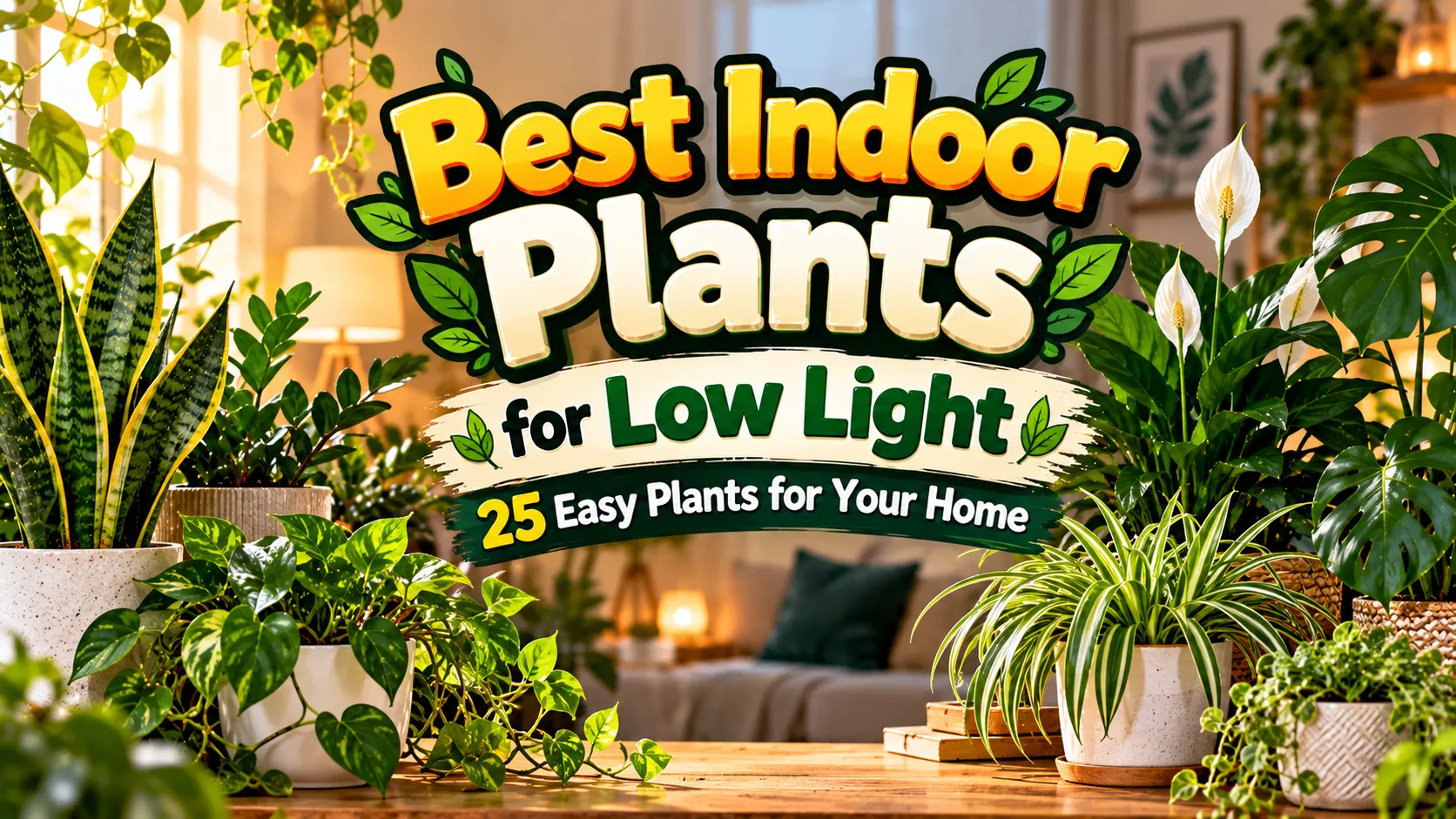
The best indoor plants for low light can bring natural beauty, greenery, and a relaxing atmosphere to rooms that do not receive much sunlight. Whether you live in an apartment, work in an office, or have a room with small windows, there are several houseplants that can grow in indirect light and adapt to indoor conditions. Popular choices include snake plants, ZZ plants, pothos, peace lilies, and cast iron plants.
However, low light does not mean no light. Most indoor plants need at least some natural or suitable artificial light to survive, even if they do not require direct sunshine. Choosing the right plant also depends on your watering habits, available space, humidity, and whether you have pets or children at home.
In this guide, you will discover 25 of the best indoor plants for low-light rooms, along with their care requirements, watering tips, and placement ideas. You will also learn which plants are easiest for beginners, which varieties work well in offices and bedrooms, and how to keep your plants healthy when sunlight is limited.
🌿 What Are the Best Indoor Plants for Low Light?
Low-light houseplants are plants that can tolerate relatively dim indoor conditions better than many sun-loving varieties. They often grow naturally beneath forest canopies or in environments where direct sunlight is limited.
Although these plants can tolerate lower light levels, their growth may slow down in dim rooms. They generally perform best near a window with indirect light or under suitable grow lights.
Some of the best choices include:
- Snake plant for upright, architectural leaves.
- ZZ plant for low-maintenance care.
- Pothos for trailing vines and shelves.
- Peace lily for attractive foliage and occasional flowers.
- Cast iron plant for durability.
- Heartleaf philodendron for easy indoor growing.
- Chinese evergreen for colorful foliage.
- Parlor palm for a tropical appearance.
- Spider plant for arching leaves.
- Dracaena for tall, decorative greenery.
The best plant for your home is one that matches your actual light conditions and the amount of care you can provide.
🪴 1. Snake Plant
The snake plant (Dracaena trifasciata, formerly Sansevieria trifasciata) is one of the most popular choices for dim indoor spaces. Its stiff, upright leaves often feature dark green patterns, yellow edges, or silvery markings.
<PRIVATE_PERSON> plant enthusiasts appreciate snake plants because they tolerate a range of indoor lighting conditions and generally need little water. They work well in bedrooms, living rooms, offices, and corners where other houseplants may struggle.
Care tips:
- Light: Low to bright indirect light.
- Water: Allow the soil to dry thoroughly between waterings.
- Soil: Use a well-draining potting mix.
- Size: Choose compact or tall varieties depending on available space.
- Best placement: Floor planters, corners, and office desks.
Snake plants grow slowly in dim light, so do not expect rapid growth. Overwatering is a more common problem than underwatering.
Important: Snake plants are toxic to cats and dogs if chewed, so place them where pets cannot reach them.
🌱 2. ZZ Plant
The ZZ plant (Zamioculcas zamiifolia) is an excellent option for people who want attractive greenery with minimal maintenance. It has thick, upright stems covered with glossy, oval leaflets.
Its underground rhizomes store water, allowing the plant to tolerate periods of dryness. This feature makes it particularly suitable for people who occasionally forget to water their houseplants.
Care tips:
- Light: Low to bright indirect light.
- Water: Water when the potting mix has dried substantially.
- Soil: Well-draining indoor potting mix.
- Growth: Slow to moderate, depending on light.
- Best placement: Offices, hallways with natural light, and living rooms.
Avoid keeping the soil constantly damp. In low light, the plant uses water more slowly, so excessive watering can cause root rot.
Important: ZZ plants are considered toxic or irritating if chewed. Keep them away from pets and young children.
🌿 3. Pothos
Pothos (Epipremnum aureum) is a favorite among beginners because it grows into long, trailing vines and adapts to a variety of indoor environments.
Its heart-shaped leaves may be solid green, golden, or variegated with cream-colored markings. Green varieties usually tolerate lower light better than heavily variegated cultivars.
Pothos looks attractive in hanging baskets, on shelves, or climbing a moss pole.
Care tips:
- Light: Low to bright indirect light.
- Water: Let the upper portion of the soil dry before watering again.
- Soil: Loose, well-draining potting mix.
- Pruning: Trim long vines to encourage a fuller appearance.
- Best placement: Shelves, hanging planters, and bookcases.
Pothos may grow more slowly and lose some leaf variegation in dim conditions. Move it closer to indirect light if the vines become thin or the leaves become unusually small.
Important: Pothos is toxic to cats and dogs if chewed.
🌸 4. Peace Lily
The peace lily (Spathiphyllum species and hybrids) is valued for its deep green leaves and white flower-like structures called spathes. It can grow in bright indirect light and tolerate some lower-light conditions.
Although peace lilies are often recommended for dim rooms, very low light may prevent them from flowering. They also tend to need more regular watering than snake plants or ZZ plants.
Care tips:
- Light: Low to medium indirect light; brighter indirect light often supports better flowering.
- Water: Water when the upper soil begins to dry.
- Humidity: Average to moderately humid indoor conditions.
- Soil: Moisture-retentive but well-draining mix.
- Best placement: Living rooms, bedrooms with suitable light, and offices.
Peace lilies may droop when thirsty, but repeated severe wilting can stress them. Check the soil rather than waiting for the plant to collapse before watering.
Important: Peace lilies contain insoluble calcium oxalate crystals and can irritate the mouth if chewed. They are not true lilies, but they are still unsafe for cats and dogs to chew.
🍃 5. Cast Iron Plant
The cast iron plant (Aspidistra elatior) earns its name from its ability to tolerate less-than-ideal indoor conditions. It has long, dark green leaves that emerge from the base and create a full, leafy appearance.
This plant is particularly useful for rooms with modest natural light, provided there is enough ambient light for continued growth.
Care tips:
- Light: Low to medium indirect light.
- Water: Allow the top layer of soil to dry between waterings.
- Temperature: Typical comfortable indoor temperatures.
- Soil: Well-draining potting mix.
- Best placement: Living room corners, entryways with windows, and shaded indoor areas.
Cast iron plants grow slowly, so patience is important. Avoid placing them in direct, intense sunshine, which may scorch the leaves.
They are generally considered non-toxic to cats and dogs, making them a useful choice for pet-friendly homes.
🌿 6. Heartleaf Philodendron
The heartleaf philodendron (Philodendron hederaceum) is an easy-growing tropical houseplant with glossy, heart-shaped leaves and flexible trailing stems.
It resembles pothos in its growth habit, but the leaves and stems have different identifying characteristics. Green varieties generally adapt better to low-light conditions than many colorful cultivars.
Care tips:
- Light: Low to bright indirect light.
- Water: Water after the upper soil begins to dry.
- Soil: Airy, well-draining potting mix.
- Pruning: Trim vines to maintain the desired shape.
- Best placement: Hanging baskets, shelves, and plant stands.
In low light, growth becomes slower, so avoid frequent fertilizing to compensate. Extra fertilizer cannot replace the energy plants receive from light.
Important: Philodendrons are toxic to cats and dogs if chewed.
🌱 7. Chinese Evergreen
Chinese evergreen (Aglaonema species and cultivars) is a decorative foliage plant known for its broad leaves and attractive patterns. Depending on the variety, its foliage may include shades of green, silver, cream, pink, or red.
Green and silver varieties are generally better suited to lower-light conditions than cultivars with extensive pink or red coloring, which often benefit from brighter indirect light.
Care tips:
- Light: Low to medium indirect light, depending on the cultivar.
- Water: Let the upper soil dry slightly between waterings.
- Humidity: Average household humidity is often acceptable.
- Soil: Well-draining indoor mix.
- Best placement: Side tables, office corners, and living rooms.
Keep the plant away from cold drafts and avoid overwatering. If the leaves lose color or growth becomes weak, try providing more indirect light.
Important: Chinese evergreen plants can irritate the mouth if chewed and should be kept away from pets and children.
🌴 8. Parlor Palm
The parlor palm (Chamaedorea elegans) is a compact palm that adds a soft, tropical appearance to indoor spaces. Its thin stems and delicate, feather-like leaves make it a popular choice for living rooms and offices.
Unlike many tropical palms, it can tolerate lower indoor light, although it grows best with moderate indirect light.
Care tips:
- Light: Low to medium indirect light.
- Water: Water when the upper soil begins to dry.
- Humidity: Average indoor humidity is generally suitable.
- Soil: Well-draining mix that retains some moisture.
- Best placement: Living rooms, bedrooms, and office corners.
Parlor palms grow slowly and should not be watered on a rigid schedule. Excessive moisture can damage their roots.
They are generally considered non-toxic to cats and dogs.
🌿 9. Spider Plant
The spider plant (Chlorophytum comosum) has long, arching leaves that may be green or striped with white. Mature plants often produce small plantlets on long stems, giving them an attractive cascading appearance.
Spider plants can tolerate some lower-light conditions, but bright indirect light usually supports stronger growth and more plantlets.
Care tips:
- Light: Low to bright indirect light.
- Water: Water when the upper soil begins to dry.
- Soil: Well-draining potting mix.
- Propagation: Root the small plantlets to create new plants.
- Best placement: Hanging baskets, shelves, and desks.
If the leaves develop brown tips, check watering consistency, fertilizer use, and water quality before assuming the plant needs more light.
Spider plants are generally considered non-toxic to cats and dogs.
🌱 10. Dracaena
Dracaena includes several popular houseplants with upright stems and long, decorative leaves. Depending on the species, the foliage may be green, striped, or edged in yellow.
Some dracaenas tolerate low to medium indirect light, making them useful for offices and living rooms. However, a plant placed in a very dim corner may grow slowly and lose some of its decorative appearance.
Care tips:
- Light: Low to bright indirect light, depending on the species.
- Water: Allow the upper soil to dry before watering again.
- Soil: Well-draining indoor potting mix.
- Pruning: Remove damaged leaves and manage height as appropriate.
- Best placement: Beside furniture, in offices, and near windows with filtered light.
Dracaena plants should not be kept in waterlogged soil. Check the species before buying because different varieties have different size and light requirements.
Important: Dracaenas are toxic to cats and dogs if chewed.
🌿 11. English Ivy
English ivy (Hedera helix) is a climbing and trailing plant with lobed leaves. It can be grown in hanging baskets or trained to climb a support.
It tolerates some lower-light conditions, although variegated forms often need brighter indirect light to maintain their markings.
Care tips:
- Light: Low to bright indirect light, depending on the cultivar.
- Water: Keep the soil lightly moist but not saturated.
- Pruning: Trim vines to manage growth.
- Airflow: Provide good ventilation to discourage pests.
- Best placement: Hanging baskets and indoor plant displays.
English ivy can attract spider mites, particularly in warm, dry indoor conditions. Inspect the undersides of leaves regularly.
Important: English ivy is toxic to cats and dogs if eaten. It can also become invasive outdoors in some regions, so avoid allowing discarded cuttings to establish in natural areas.
🌿 12. Bird’s Nest Fern
The bird’s nest fern (Asplenium nidus) has broad, wavy green fronds that emerge from a central rosette. It adds a lush, tropical appearance to a room.
Unlike many succulents, this fern prefers consistent moisture and generally appreciates higher humidity. It can tolerate lower indirect light, provided it receives enough ambient light for healthy growth.
Care tips:
- Light: Low to medium indirect light.
- Water: Keep the soil evenly moist without waterlogging it.
- Humidity: Moderate to high humidity is beneficial.
- Soil: Moisture-retentive but well-draining mix.
- Best placement: Bathrooms with windows or rooms with higher humidity.
Avoid pouring water directly into the central crown repeatedly, as trapped moisture may encourage rot.
Bird’s nest ferns are generally considered non-toxic to cats and dogs.
🌿 13. Maidenhair Fern
Maidenhair ferns (Adiantum species) have delicate, fan-shaped leaflets on thin, dark stems. Their soft texture makes them attractive, but they are more demanding than many other low-light houseplants.
They prefer indirect light, consistent moisture, and relatively high humidity. They may struggle in rooms with dry air or inconsistent watering.
Care tips:
- Light: Indirect light, away from harsh sunshine.
- Water: Keep the potting mix consistently moist without making it soggy.
- Humidity: High humidity is helpful.
- Soil: Moisture-retentive, well-draining mix.
- Best placement: Humid rooms with suitable natural light.
Choose a maidenhair fern if you enjoy regular plant care. If you need a plant that can tolerate missed waterings, a ZZ plant or snake plant is a better option.
Maidenhair ferns are generally considered non-toxic to cats and dogs.
🌿 14. Rubber Plant
The rubber plant (Ficus elastica) has thick, glossy leaves and can become a striking indoor specimen. It is often recommended for bright indirect light but may tolerate somewhat lower light after gradual acclimation.
However, it is not the best choice for extremely dim rooms. Growth can slow substantially, and the plant may become less full.
Care tips:
- Light: Medium to bright indirect light is preferable.
- Water: Let the upper soil dry between waterings.
- Soil: Well-draining potting mix.
- Maintenance: Wipe leaves to remove dust.
- Best placement: Near a bright window with filtered light.
If you have a room that receives very little natural light, choose a ZZ plant or cast iron plant instead.
Important: Rubber plants are toxic to cats and dogs if chewed. Their milky sap can also irritate skin.
🌿 15. Monstera
Monstera plants are known for their large, dramatic leaves, which may develop characteristic holes or splits as they mature. Monstera deliciosa is especially popular in modern interior design.
Monsteras can tolerate medium indirect light, but they generally perform better in brighter indirect light than in genuinely dim rooms.
Care tips:
- Light: Medium to bright indirect light.
- Water: Allow the upper soil to dry before watering.
- Support: Provide a moss pole or other support as the plant grows.
- Soil: Airy, well-draining potting mix.
- Best placement: Living rooms near bright windows.
If your room is very dark, a Monstera may survive for a while but is unlikely to thrive. Consider a more shade-tolerant plant or use a grow light.
Important: Monstera plants contain calcium oxalate crystals and are unsafe for pets and children to chew.
🌱 16. Bamboo Palm
The bamboo palm (Chamaedorea seifrizii) is a tropical palm with slender stems and graceful green foliage. It is often used to create a soft, leafy appearance in homes and offices.
It tolerates lower light better than many sun-loving palms, but moderate indirect light generally supports healthier growth.
Care tips:
- Light: Low to medium indirect light.
- Water: Keep the soil moderately moist while avoiding waterlogging.
- Humidity: Average to higher humidity is helpful.
- Soil: Well-draining potting mix.
- Best placement: Living rooms and offices with indirect light.
Bamboo palms should not be confused with lucky bamboo, which is a different plant with different care requirements.
They are generally considered non-toxic to cats and dogs.
🌿 17. Lucky Bamboo
Lucky bamboo (Dracaena sanderiana) is a popular decorative plant often sold in water-filled containers or small pots. Despite its common name, it is not a true bamboo.
Its simple stems make it a good choice for desks and compact spaces. It can tolerate lower indirect light, but it still needs enough light to maintain healthy growth.
Care tips:
- Light: Low to bright indirect light.
- Water: If grown in water, keep roots submerged and refresh the water regularly.
- Container: Use a clean container and suitable water.
- Placement: Desks, shelves, and office tables.
- Maintenance: Remove yellowing leaves and inspect stems for damage.
When growing lucky bamboo in water, keep the water clean and avoid allowing the roots to dry out. If grown in soil, use a well-draining mix and water according to soil moisture.
Important: Lucky bamboo is toxic to cats and dogs if chewed.
🌿 18. Arrowhead Plant
The arrowhead plant (Syngonium podophyllum) has attractive arrow-shaped leaves that may be green, cream, pink, or variegated.
Young plants often grow in compact clumps, while mature plants may climb or trail. Green varieties generally tolerate lower light better than many pink or heavily variegated cultivars.
Care tips:
- Light: Low to bright indirect light, depending on the variety.
- Water: Allow the upper soil to dry slightly between waterings.
- Soil: Well-draining indoor mix.
- Pruning: Trim vines to control shape.
- Best placement: Shelves, desks, and plant stands.
Avoid prolonged soggy soil and protect the plant from cold drafts.
Important: Arrowhead plants are toxic to cats and dogs if chewed.
🌿 19. Prayer Plant
Prayer plants, especially Maranta leuconeura, are known for patterned leaves and a distinctive habit of folding their leaves upward at night.
They prefer indirect light and usually appreciate moderate to high humidity. Strong direct sunlight can fade or scorch their leaves.
Care tips:
- Light: Low to medium indirect light.
- Water: Keep the soil lightly moist without waterlogging it.
- Humidity: Moderate to high humidity is helpful.
- Soil: Moisture-retentive, well-draining mix.
- Best placement: Shelves, side tables, and humid rooms.
Prayer plants are more sensitive to dry air and inconsistent watering than ZZ plants or snake plants. If you are a beginner, be prepared to check the soil regularly.
Maranta prayer plants are generally considered non-toxic to cats and dogs.
🌿 20. Peperomia
Peperomia includes many compact houseplants with different leaf shapes, colors, and textures. Some have thick, succulent-like leaves, while others feature rippled, patterned, or trailing foliage.
Many peperomias prefer medium indirect light, although some tolerate lower light better than others.
Care tips:
- Light: Low to bright indirect light, depending on the species.
- Water: Allow the upper soil to dry between waterings.
- Soil: Airy, well-draining mix.
- Size: Many varieties remain compact.
- Best placement: Desks, shelves, and small side tables.
Because peperomia varieties differ, check the specific plant’s care requirements before buying. In general, avoid overwatering and provide enough light to maintain healthy leaves.
Many commonly grown peperomias, such as Peperomia obtusifolia, are considered non-toxic to cats and dogs.
🌿 21. Boston Fern
Boston fern (Nephrolepis exaltata cultivars) produces long, arching fronds that look attractive in hanging baskets.
It can grow in indirect light but generally prefers bright indirect conditions and consistent moisture. Dry indoor air can cause its fronds to become brown or brittle.
Care tips:
- Light: Low to medium indirect light, with brighter indirect light preferred.
- Water: Keep the soil evenly moist.
- Humidity: Higher humidity supports healthy foliage.
- Soil: Moisture-retentive but well-draining.
- Best placement: Bathrooms with windows or humid rooms.
Boston ferns are generally considered non-toxic to cats and dogs. They are a good option for pet owners who can provide the moisture and humidity the plant needs.
🌿 22. Philodendron Brasil
Philodendron Brasil is a cultivar of Philodendron hederaceum with green leaves marked by bright yellow or lime-colored stripes.
Its trailing growth makes it popular for hanging planters and shelves. It can tolerate some lower light, but the variegated markings may become less pronounced in very dim conditions.
Care tips:
- Light: Low to bright indirect light.
- Water: Allow the upper soil to dry slightly between waterings.
- Pruning: Trim vines to encourage fuller growth.
- Soil: Well-draining potting mix.
- Best placement: Shelves and hanging baskets.
If you want stronger leaf coloration, provide brighter indirect light rather than direct afternoon sun.
Important: Philodendron Brasil is toxic to cats and dogs if chewed.
🌿 23. Hoya
Hoyas are tropical plants known for thick leaves and clusters of star-shaped flowers. Some varieties trail beautifully from hanging baskets, while others grow more upright.
Although hoyas are sometimes described as low-light houseplants, most grow and flower more reliably in bright indirect light. Some may tolerate moderate light, but very dim rooms are not ideal.
Care tips:
- Light: Medium to bright indirect light is generally best.
- Water: Allow the potting mix to dry partly between waterings.
- Soil: Very well-draining, airy mix.
- Support: Provide a trellis for climbing varieties.
- Best placement: Near a bright window with filtered light.
Choose a hoya if your room has moderate light and you want a plant with unusual foliage and potential flowers. For a genuinely dark room, consider a ZZ plant instead.
Many commonly grown hoyas are considered non-toxic to cats and dogs, but verify the exact species before purchasing.
🌿 24. Dieffenbachia
Dieffenbachia, commonly called dumb cane, has broad leaves often patterned with green, cream, or pale yellow markings.
It prefers bright indirect light but can tolerate medium light. Deep shade may cause slower growth and less attractive foliage.
Care tips:
- Light: Medium to bright indirect light.
- Water: Allow the upper soil to dry slightly between waterings.
- Soil: Well-draining potting mix.
- Maintenance: Remove damaged leaves with appropriate care.
- Best placement: Bright living rooms and indoor plant displays.
This plant is not an ideal choice for every household because its sap and tissues can cause significant irritation if chewed or swallowed.
Important: Dieffenbachia is toxic to people and pets if chewed. Keep it out of reach of children and animals.
🌿 25. Fittonia
Fittonia, often called the nerve plant, is a compact tropical plant with leaves marked by contrasting veins. Depending on the variety, the veins may be white, pink, or red.
It tolerates lower indirect light and stays relatively small, making it suitable for desks, shelves, and terrariums.
Care tips:
- Light: Low to medium indirect light.
- Water: Keep the soil lightly moist without waterlogging it.
- Humidity: Moderate to high humidity is beneficial.
- Soil: Moisture-retentive, well-draining mix.
- Best placement: Terrariums and humid indoor spaces.
Fittonia may wilt noticeably when it becomes too dry. Although it can sometimes recover after watering, repeated wilting is stressful, so maintain more consistent moisture.
Fittonia is generally considered non-toxic to cats and dogs.
🏆 Which Low-Light Indoor Plant Is Best for Beginners?
If you are new to houseplants, start with a variety that tolerates lower light and does not need frequent watering.
Here are some practical choices:
- Best overall: ZZ plant, because it tolerates low light and infrequent watering.
- Best upright plant: Snake plant, for its tall, architectural leaves.
- Best trailing plant: Pothos, for its adaptable growth and attractive vines.
- Best pet-friendly option: Cast iron plant, if you want a durable foliage plant.
- Best compact plant: Some peperomia varieties, depending on the available light.
- Best tropical appearance: Parlor palm, which has graceful, delicate foliage.
- Best flowering option: Peace lily, provided it receives enough indirect light.
- Best hanging plant: Spider plant, especially in a room with moderate indirect light.
For a low-maintenance collection, choose two or three plants with similar care needs rather than buying many varieties at once.
🏠 Best Low-Light Plants for Bedrooms
Bedrooms often have less light than living rooms, particularly when the windows are small or covered by heavy curtains.
A bedroom plant should suit the room’s actual light levels and the amount of space available. Avoid choosing a plant solely because it is advertised as an air purifier or a plant that improves sleep; ordinary houseplants should not be expected to replace ventilation or other healthy indoor-air practices.
Good bedroom choices include:
- Snake plant: A compact, upright option for a bedside corner with some natural light.
- ZZ plant: Useful for a low-maintenance display.
- Cast iron plant: Suitable for a floor planter in indirect light.
- Parlor palm: Adds a soft, tropical appearance.
- Pothos: Works well on a shelf or hanging planter.
- Peace lily: Attractive if the room has sufficient indirect light and watering can be managed.
If your bedroom has no windows, a plant will need suitable artificial lighting to remain healthy over time.
🖥️ Best Low-Light Plants for Offices
Office environments may have small windows, shaded desks, or artificial lighting that is insufficient for plant growth.
Choose plants according to how much natural light reaches the desk rather than assuming that ordinary ceiling lights will always be enough.
Suitable options include:
- ZZ plant: Ideal for people who want minimal maintenance.
- Snake plant: Offers an upright shape without taking up much horizontal space.
- Pothos: Can trail from a shelf or cabinet.
- Lucky bamboo: Fits small desks and decorative containers.
- Chinese evergreen: Provides attractive foliage in suitable light.
- Cast iron plant: Useful for floor planters in shaded office areas.
- Parlor palm: Adds a soft, tropical appearance.
If an office receives almost no natural light, rotate plants between suitable locations or use a grow light. A plant that remains in darkness throughout the workweek may gradually weaken.
🐾 Best Low-Light Indoor Plants for Homes With Pets
If you have cats or dogs, plant safety should be part of your buying decision. Several popular low-light plants are toxic if chewed, even when they are otherwise easy to care for.
Commonly considered pet-friendlier choices include:
- Parlor palm.
- Cast iron plant.
- Spider plant.
- Boston fern.
- Bird’s nest fern.
- Maidenhair fern.
- Maranta prayer plant.
- Fittonia.
- Certain peperomia varieties, including Peperomia obtusifolia.
Always confirm the botanical identity of a plant before bringing it into a home with pets. Common names can refer to different species, and plant toxicity information can vary by species.
Even non-toxic plants can cause mild stomach upset if an animal eats a large amount of foliage. Keep plants in suitable locations and contact a veterinarian if your pet develops concerning symptoms after chewing a plant.
💡 Can Indoor Plants Grow in Rooms Without Sunlight?
Indoor plants can grow without direct sunlight, but most cannot survive indefinitely without an adequate source of light.
A room with a small window may provide enough indirect light for a ZZ plant, snake plant, or cast iron plant. A completely windowless room is different because ordinary indoor lighting may not provide enough intensity or the right spectrum for sustained plant growth.
If you want greenery in a windowless room, consider these options:
- Use a grow light designed for plants.
- Choose a suitable LED grow-light fixture.
- Follow the manufacturer’s recommended distance and duration.
- Provide a regular lighting schedule.
- Avoid overheating foliage with a light placed too close.
- Move plants occasionally to a brighter location when practical.
A grow light can make a substantial difference, especially for plants that remain in a room with no natural light.
💧 How to Care for Indoor Plants in Low Light
Low-light plants often use water more slowly than plants growing in bright conditions. This means that a watering routine suitable for a sunny windowsill may cause problems in a dim room.
Follow these basic care principles:
- Check the soil: Feel the soil before watering rather than following a fixed weekly schedule.
- Use drainage holes: Excess water should be able to leave the pot.
- Match the plant to the room: Choose a species that tolerates your light conditions.
- Avoid overfertilizing: Slow growth in low light does not necessarily indicate a nutrient deficiency.
- Remove dust: Wipe broad leaves gently so they can receive available light.
- Inspect regularly: Look for pests, yellowing leaves, and soft stems.
- Rotate plants: Turn pots occasionally for more balanced growth.
- Avoid cold drafts: Keep tropical houseplants away from chilly windows and air-conditioning vents.
The most important rule is to balance water with light. When a plant receives less light, it often grows more slowly and needs less frequent watering.
🌱 Signs Your Indoor Plant Is Not Getting Enough Light
Even plants that tolerate low light need enough energy to maintain healthy growth. If a plant’s environment is too dim, it may gradually show signs of stress.
Watch for these changes:
- Long, stretched stems: The plant may be reaching toward a light source.
- Smaller new leaves: Growth may become weaker in insufficient light.
- Loss of variegation: Variegated foliage may become greener.
- Slow growth: Some slowing is normal in low light, but sudden decline deserves attention.
- Fewer flowers: Flowering plants may stop producing blooms.
- Pale or yellowing leaves: This can have several causes, including poor light, overwatering, or nutrient issues.
If you notice these signs, move the plant closer to indirect light or provide a grow light. Make changes gradually, especially if the plant has been kept in a dim area for a long time.
🌿 Common Mistakes When Growing Low-Light Houseplants
Low-light plants are often easy to care for, but they are not indestructible. Many problems result from giving them too much water or placing them in conditions that are darker than they can tolerate.
Avoid these common mistakes:
- Assuming low light means darkness: Plants still need light for photosynthesis.
- Watering too frequently: Soil dries more slowly in dim rooms.
- Using pots without drainage: Standing water can damage roots.
- Choosing highly variegated varieties for very dim rooms: Some need brighter light to maintain their patterns.
- Fertilizing excessively: Extra fertilizer cannot compensate for insufficient light.
- Ignoring plant toxicity: Some common houseplants are unsafe for pets.
- Placing plants in cold drafts: Tropical plants may suffer from sudden temperature changes.
- Expecting fast growth: Many low-light plants grow slowly under dim conditions.
A simple care routine based on light, soil moisture, and the plant’s individual requirements is usually more effective than frequent watering or feeding.
❓ Frequently Asked Questions About Low-Light Indoor Plants
🌿 What is the best indoor plant for low light?
The ZZ plant, snake plant, and cast iron plant are among the best options because they tolerate lower indoor light and generally need relatively little maintenance. They still require some natural or artificial light.
🪴 Which indoor plant needs the least sunlight?
ZZ plants, snake plants, and cast iron plants are popular choices for dimmer indoor areas. However, none should be expected to grow indefinitely in complete darkness.
💧 What low-light plant needs the least water?
ZZ plants and snake plants are excellent choices because they store water and generally prefer their soil to dry between waterings. Watering frequency depends on the pot, soil, temperature, and light conditions.
🐾 What is the best low-light plant for homes with cats?
Cast iron plants, parlor palms, spider plants, and some peperomia varieties are commonly considered pet-friendlier options. Verify the exact species before purchasing.
🛏️ Which plant is best for a bedroom with little light?
A ZZ plant, snake plant, cast iron plant, or parlor palm may work well, provided the bedroom receives enough natural or artificial light.
🖥️ Are low-light plants good for offices?
Yes. ZZ plants, snake plants, pothos, and Chinese evergreens are popular office plants. They are especially useful when the office receives indirect light and the plants can be watered appropriately.
🌱 Can pothos survive in low light?
Pothos can tolerate low indirect light, although growth may slow and leaf variegation may become less noticeable. Bright indirect light generally supports fuller growth.
🌸 Can peace lilies flower in low light?
Peace lilies can survive in lower indirect light, but they usually flower more reliably when they receive brighter indirect light.
💡 Can LED lights replace sunlight for indoor plants?
Suitable LED grow lights can provide the light plants need when natural light is limited. Ordinary room lighting may not provide sufficient intensity for long-term growth.
🌿 How often should I water low-light indoor plants?
There is no universal schedule. Check the soil and the plant’s requirements before watering. Low light often slows soil drying, so watering too frequently can cause root rot.
🍃 Do indoor plants clean the air?
Plants can absorb certain compounds under controlled conditions, but typical houseplant collections have not been shown to meaningfully clean indoor air in ordinary homes. Ventilation and appropriate air filtration are more dependable ways to improve indoor air quality.
🪴 Can I keep a plant in a windowless bathroom?
You can keep a plant in a windowless bathroom if it receives suitable artificial light. Humidity alone is not enough to support healthy growth.
🌿 Conclusion: Choose the Right Low-Light Plant for Your Home
The best indoor plants for low light make it easier to enjoy greenery in apartments, bedrooms, offices, and other spaces with limited sunshine. ZZ plants, snake plants, pothos, cast iron plants, peace lilies, and parlor palms are among the most useful choices, although each has different watering, light, and safety requirements.
Before buying a plant, consider how much light the room receives, how often you can water it, and whether pets or children might chew its leaves. Remember that low-light tolerance does not mean a plant can live without light. If a room has no windows, a suitable grow light may be necessary.
Start with one or two plants that match your conditions, learn their care requirements, and expand your collection as you gain confidence. With the right choices, even a relatively dim room can become a more inviting, green indoor space.

Ethan Carter is a nature enthusiast and content writer with a passion for flowers and botanical knowledge. He is the author behind FlowerNamez, where he shares simple and informative content about flower names, types, and meanings.
With a focus on clarity and accuracy, Ethan aims to help readers explore the beauty of flowers and understand their significance in everyday life.