
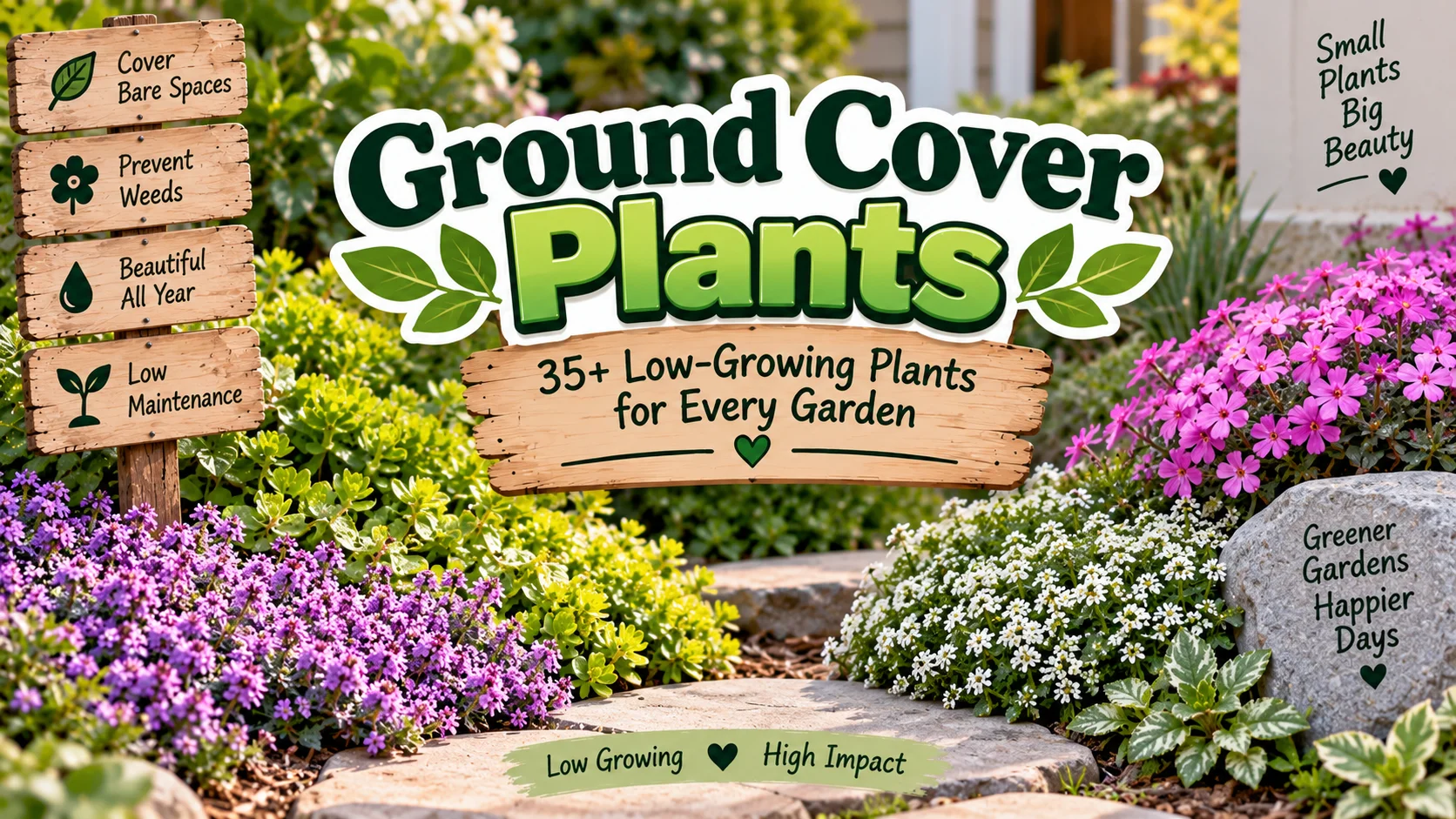
Ground cover plants are low-growing plants that spread across the soil to create a living carpet of foliage and flowers. They can fill empty spaces, soften garden borders, cover bare ground, reduce the visual impact of slopes, and add texture without requiring the constant mowing associated with traditional lawns.
From colorful flowering ground covers to evergreen varieties and low-maintenance plants for shady areas, there is a ground cover for almost every type of landscape. Some thrive in full sun, while others are better suited to woodland gardens, beneath trees, or other low-light locations.
The right choice depends on your climate, soil, sunlight, drainage, moisture, and how quickly you want the planting to spread. This guide covers ground cover plants for sun and shade, flowering ground covers, evergreen varieties, drought-tolerant options, low-maintenance plants, and useful choices for slopes and garden borders.
🌿 What Are Ground Cover Plants?
Ground cover plants are generally short plants that grow horizontally or form dense clusters close to the soil. Instead of growing primarily upward, many spread through runners, stems, rhizomes, or naturally widening clumps.
They are commonly used as a living alternative to bare soil or mulch. Some ground covers remain green throughout the year, while others bloom seasonally or die back during colder weather.
Popular uses include:
- Filling bare areas between larger plants
- Covering garden beds
- Softening pathways and borders
- Helping stabilize some slopes
- Creating woodland-style landscapes
- Adding flowers beneath trees
- Replacing portions of lawn
- Covering difficult planting areas
- Reducing exposed soil
- Adding low-growing texture to rock gardens
A ground cover should not automatically be considered maintenance-free. Fast-spreading varieties can require trimming or containment, while slower plants may take several seasons to fill an area.
🌸 Best Ground Cover Plants for Gardens
The best ground cover depends on the conditions in your garden. There is no single variety that works perfectly everywhere, so consider sunlight, soil, moisture, temperature, and the amount of maintenance you are willing to provide.
Some widely used options include:
- Creeping thyme
- Creeping phlox
- Sedum
- Ajuga
- Sweet woodruff
- Pachysandra
- Vinca
- Lily of the valley
- Dead nettle
- Irish moss
- Scotch moss
- Corsican mint
- Blue star creeper
- Creeping Jenny
- Candytuft
- Ice plant
- Bearberry
- Creeping juniper
- Wild ginger
- Bunchberry
When choosing from this list, verify that the plant is appropriate for your local growing conditions. A ground cover that behaves well in one climate may spread aggressively or struggle in another.
☀️ Ground Cover Plants for Full Sun
Sunny locations can become hot and dry, particularly when the soil drains quickly. Ground covers for full sun are often selected for their tolerance of bright light and, in some cases, drought.
Creeping Thyme
Creeping thyme is a popular low-growing herbaceous ground cover with tiny leaves and small flowers. It creates a soft, textured carpet and can work well around stepping stones and garden edges.
It generally prefers well-drained soil and plenty of sunlight.
Creeping Phlox
Creeping phlox produces masses of flowers during its blooming period and can spread across sunny beds, rock gardens, and slopes.
Its colorful flowers make it particularly useful when you want your ground cover to provide seasonal interest.
Sedum
Low-growing sedums are valued for their succulent foliage and tolerance of relatively dry conditions. They can be useful in rock gardens, containers, borders, and other sunny locations.
Ice Plant
Ice plant has fleshy foliage and bright flowers and is often considered for sunny, well-drained landscapes.
Candytuft
Candytuft forms low mounds and produces clusters of flowers. It works nicely along borders, rock gardens, and sunny beds.
🌳 Ground Cover Plants for Shade
Shady gardens can be challenging because many traditional lawn grasses perform poorly without sufficient light. Shade-tolerant ground covers can provide an alternative.
Pachysandra
Pachysandra is a classic shade-loving ground cover with attractive evergreen foliage in suitable climates. It is often planted beneath trees or in woodland-style landscapes.
Sweet Woodruff
Sweet woodruff has delicate foliage and small white flowers. It can create a soft, woodland-inspired appearance in shaded gardens with suitable moisture.
Wild Ginger
Wild ginger is valued primarily for its attractive foliage. It can work well in woodland gardens and other shaded locations.
Dead Nettle
Dead nettle, or Lamium, can provide decorative foliage and flowers in shady areas. Some cultivars have striking silver-patterned leaves.
Bunchberry
Bunchberry is a low-growing woodland plant that can provide seasonal flowers and berries where growing conditions are suitable.
🌼 Flowering Ground Cover Plants
Flowering ground covers are an excellent option when you want low-growing foliage and seasonal color in the same planting.
Popular flowering options include:
- Creeping phlox
- Creeping thyme
- Candytuft
- Ice plant
- Ajuga
- Dead nettle
- Blue star creeper
- Snow-in-summer
- Periwinkle
- Moss phlox
- Creeping speedwell
- Basket-of-gold
- Rock cress
- Hardy geranium
Flowering ground covers can be especially effective along pathways, rock gardens, retaining walls, borders, and slopes.
🌱 Evergreen Ground Cover Plants
Evergreen ground covers can maintain foliage during much of the year, although appearance can vary considerably depending on climate.
Some commonly used evergreen or semi-evergreen choices include:
- Creeping juniper
- Pachysandra
- Bearberry
- Vinca
- Wintergreen
- Japanese spurge
- Some sedum varieties
- Certain low-growing conifers
- Evergreen candytuft
- Some varieties of creeping euonymus
Evergreen does not necessarily mean the plant will look exactly the same throughout winter. Cold, snow, drought, and other environmental conditions can change foliage color and density.
💧 Drought-Tolerant Ground Cover Plants
If your garden receives limited supplemental water, drought-tolerant ground covers can help create a landscape that requires less irrigation once established.
Good candidates can include:
- Creeping thyme
- Sedum
- Ice plant
- Creeping juniper
- Bearberry
- Blue fescue used as a low mass planting
- Some drought-tolerant ornamental grasses
- Low-growing native plants suited to your region
Drought tolerance depends on the plant and its growing environment. Newly planted ground covers generally need more consistent watering while establishing roots.
🌵 Ground Cover Plants for Dry Areas
Dry garden beds often benefit from plants that prefer excellent drainage rather than constantly moist soil.
Consider:
- Sedum
- Creeping thyme
- Ice plant
- Creeping juniper
- Bearberry
- Rock cress
- Basket-of-gold
- Blue star creeper in suitable conditions
- Low-growing native wildflowers
Adding organic matter can improve some soils, but plants that naturally prefer dry, well-drained conditions should not be placed in areas where water remains stagnant.
💦 Ground Cover Plants for Moist Soil
Some landscapes have the opposite problem: water tends to remain in the soil longer than desired.
Rather than simply planting any ground cover, choose plants specifically suited to consistently moist conditions.
Potential options vary by region and include:
- Bunchberry
- Sweet woodruff
- Wild ginger
- Some sedges
- Certain native woodland plants
- Moisture-loving native ground covers
Before planting, determine whether the area is merely moist or actually waterlogged. Persistent standing water can eliminate many otherwise shade-tolerant plants.
🪨 Ground Cover Plants for Rock Gardens
Rock gardens need plants that can handle exposed conditions, excellent drainage, and sometimes intense sunlight.
Popular choices include:
- Creeping thyme
- Sedum
- Creeping phlox
- Rock cress
- Candytuft
- Basket-of-gold
- Ice plant
- Creeping speedwell
- Low-growing dianthus
- Bearberry
These plants can soften hardscape features and allow flowers to spill naturally between stones.
🏔️ Ground Cover Plants for Slopes
Ground covers are frequently considered for slopes because their roots can help hold soil in place. However, plant roots alone should not be treated as a universal erosion-control solution, particularly on steep or unstable slopes.
For moderate garden slopes, options may include:
- Creeping juniper
- Creeping phlox
- Creeping thyme
- Sedum
- Bearberry
- Vinca
- Low-growing native grasses
- Regionally appropriate native ground covers
For significant erosion or steep terrain, drainage, grading, erosion-control fabric, retaining structures, and professional landscape advice may also be necessary.
🌲 Ground Cover Plants Under Trees
Planting beneath trees can be difficult because the soil may be shaded, dry, and filled with competing roots.
Instead of digging aggressively around established tree roots, choose shallow-rooted plants that tolerate the conditions and install them carefully.
Potential choices include:
- Sweet woodruff
- Wild ginger
- Bunchberry
- Pachysandra
- Dead nettle
- Some native woodland ground covers
- Certain ferns
Avoid creating deep soil layers over exposed tree roots. Changing the soil grade around established trees can affect their health.
🌸 Ground Cover Plants for Borders
Low-growing plants can create a neat transition between lawn, paths, flower beds, and taller plants.
Some attractive border choices include:
- Creeping thyme
- Creeping phlox
- Candytuft
- Irish moss
- Scotch moss
- Blue star creeper
- Hardy geranium
- Sedum
- Creeping Jenny
- Ajuga
For a formal-looking border, select plants with predictable growth. For a cottage garden, spreading flowers can create a softer and more informal appearance.
🌿 Low-Maintenance Ground Cover Plants
Ground covers are sometimes marketed as low-maintenance alternatives to lawns, but maintenance varies greatly.
A relatively low-maintenance planting can be created by matching the plant to the site from the beginning.
Look for plants that:
- Naturally tolerate your sunlight conditions
- Match your soil moisture
- Suit your climate
- Do not require frequent pruning
- Have manageable growth habits
- Need little supplemental irrigation after establishment
- Are appropriate for the intended planting area
Good possibilities include certain sedums, creeping thyme, low-growing native plants, and some evergreen ground covers.
🌱 Fast-Growing Ground Cover Plants
Fast-growing ground covers can fill empty areas more quickly, but speed comes with an important consideration: a plant that spreads quickly can also move beyond the area where you intended to keep it.
Examples often associated with vigorous spreading include:
- Vinca
- Ajuga
- Creeping Jenny
- Some types of ivy
- Lily of the valley
- Certain ornamental grasses
Always check local invasive-species guidance before planting aggressive spreaders. In some regions, plants that are useful ground covers elsewhere may become invasive.
🐝 Ground Cover Plants for Pollinators
Ground covers can also contribute to pollinator-friendly gardens when they provide accessible flowers and habitat.
Flowering options can include:
- Creeping thyme
- Creeping phlox
- Sedum
- Candytuft
- Ajuga
- Wild strawberry
- Native violets
- Native woodland ground covers
- Regionally appropriate flowering plants
Native species can be particularly valuable because local pollinators may have established relationships with plants from their region.
Avoid treating every flowering plant as automatically beneficial to every pollinator. Plant diversity and regional suitability matter.
🌸 Ground Cover Plants With Colorful Foliage
Flowers aren’t the only way to add visual interest. Some ground covers are valued for foliage colors and textures.
Look for:
- Silver-leaved dead nettle
- Purple-leaved ajuga
- Golden creeping Jenny
- Variegated ground covers
- Blue-green creeping juniper
- Dark-leaved heuchera cultivars used as low plantings
- Moss-like green ground covers
Combining foliage colors can make a garden interesting even when flowers are not blooming.
🍃 Ground Cover Plants That Look Like Moss
If you love the appearance of a soft green carpet, several low-growing plants can create a moss-like effect.
Irish Moss
Irish moss forms a dense, low mat and can produce tiny white flowers. It is often used between stepping stones and in rock gardens where conditions suit it.
Scotch Moss
Scotch moss has a similar growth habit but is often recognized for its brighter yellow-green appearance.
Corsican Mint
Corsican mint is a tiny, spreading plant with miniature leaves and a fresh appearance. It can work between stones in suitable locations.
These plants should not automatically be substituted for true moss. Their moisture and light requirements can differ significantly.
🌺 Ground Cover Plants That Bloom All Summer
No single ground cover blooms continuously in every climate, but selecting plants with different flowering periods can extend seasonal color.
You might combine:
- Early-season creeping phlox
- Spring-flowering candytuft
- Summer-flowering sedum
- Long-blooming creeping thyme
- Seasonal native wildflowers
- Other regionally suitable flowering ground covers
Instead of relying on one plant for constant color, use several species with complementary bloom periods.
🌿 Native Ground Cover Plants
Native ground covers can be an excellent choice because they are adapted to the environmental conditions of their region.
Benefits can include:
- Better adaptation to local conditions
- Support for native insects and wildlife
- Reduced need for supplemental water after establishment
- Integration with local ecosystems
- A more natural landscape appearance
The best native ground cover depends entirely on your location. A plant native to one part of the United States may not be native to another.
For ecological landscaping, local extension services, native plant societies, and regional botanical resources can help identify suitable species.
🪴 Ground Cover Plants for Containers
Ground covers aren’t limited to large garden beds. Some low-growing plants can spill over the edges of containers and create attractive arrangements.
Try combining a ground-covering plant with:
- Upright flowers
- Ornamental grasses
- Small shrubs
- Succulents
- Herbs
- Seasonal annuals
Trailing or spreading plants can soften the edge of a planter and create a fuller appearance.
Make sure every plant in the container has compatible water, light, and temperature requirements.
🌳 Ground Cover Plants Instead of Grass
Replacing some lawn with ground cover can reduce mowing in certain landscape designs, but it isn’t automatically easier or cheaper.
Ground covers may work well in:
- Narrow side yards
- Under trees
- Sloped garden areas
- Decorative pathways
- Small lawn alternatives
- Difficult planting beds
For areas that receive regular foot traffic, choose a plant specifically known to tolerate it. Many attractive ground covers do not handle repeated walking.
⚠️ Ground Covers That Can Become Invasive
One of the most important considerations when choosing a spreading plant is whether it is invasive where you live.
Plants commonly discussed for aggressive or invasive behavior in some regions include:
- English ivy
- Vinca
- Japanese pachysandra
- Creeping Jenny
- Lily of the valley
- Some forms of euonymus
This does not mean every plant on this list is invasive everywhere. Invasive status is location-specific.
Before buying a vigorous ground cover, search your state’s invasive plant resources or ask a local extension service whether it is recommended for your area.
🌱 How to Plant Ground Cover
Proper establishment gives ground covers a much better chance of forming a healthy planting.
1. Prepare the Site
Remove unwanted weeds and identify any drainage problems before planting.
2. Improve the Soil When Appropriate
Test the soil if necessary and amend it according to the needs of the chosen plant rather than adding materials indiscriminately.
3. Space Plants Correctly
Follow the recommended spacing for the specific species. Planting too close together increases the initial cost and can create unnecessary competition.
4. Water During Establishment
New plants typically need more attention than established plants. Keep the soil appropriately moist according to the species.
5. Add Suitable Mulch
A thin layer of mulch can help conserve moisture and suppress weeds while plants establish. Keep mulch away from plant crowns and woody stems.
6. Monitor Growth
Watch how quickly the plants spread and trim or divide them when necessary.
🌿 How Fast Do Ground Cover Plants Spread?
The answer varies dramatically by species and growing conditions.
Factors affecting growth include:
- Plant variety
- Sunlight
- Soil quality
- Temperature
- Water availability
- Plant spacing
- Fertility
- Competition from weeds
- Length of growing season
Some plants can spread relatively quickly, while others may take several years to create a dense carpet.
Instead of choosing solely based on speed, choose a plant that will remain manageable in the space.
💧 How Much Water Do Ground Cover Plants Need?
Water requirements depend on the species and the environment.
A drought-tolerant sedum may need very different watering from a woodland ground cover growing beneath trees.
During establishment, monitor the soil regularly. Once established, plants should receive water according to their natural preferences and local weather.
Overwatering can be just as problematic as drought, especially for plants that require excellent drainage.
✂️ How to Maintain Ground Cover Plants
Maintenance usually becomes easier when the right plant has been selected for the site.
Basic care may include:
- Removing weeds
- Watering during establishment
- Pruning overly vigorous growth
- Dividing crowded plants
- Removing dead foliage
- Controlling plants that cross boundaries
- Applying fertilizer only when appropriate
- Checking for pests and disease
Some ground covers need very little intervention, while others require regular containment.
🌼 Ground Cover Plants by Growing Condition
Here’s a quick way to narrow down your choices:
| Garden Condition | Ground Cover Ideas |
|---|---|
| Full sun | Creeping thyme, sedum, creeping phlox |
| Partial shade | Ajuga, dead nettle, sweet woodruff |
| Shade | Pachysandra, wild ginger, bunchberry |
| Dry soil | Sedum, thyme, ice plant |
| Rock garden | Sedum, phlox, rock cress |
| Slopes | Creeping juniper, phlox, thyme |
| Woodland | Sweet woodruff, wild ginger, bunchberry |
| Flowering display | Phlox, candytuft, thyme |
| Evergreen interest | Pachysandra, juniper, bearberry |
| Moss-like appearance | Irish moss, Scotch moss |
The table is a starting point rather than a universal planting guide. Always verify the specific cultivar and local growing requirements.
🌿 How to Choose the Right Ground Cover Plant
Before purchasing plants, ask yourself a few simple questions.
How much sunlight does the area receive?
Observe the location throughout the day rather than guessing based on one moment.
Is the soil dry, moist, or wet?
Drainage is especially important for ground covers.
Do you want flowers or foliage?
Flowering varieties provide seasonal color, while evergreen or decorative foliage can provide longer-lasting structure.
How quickly should it spread?
Fast coverage sounds attractive, but aggressive growth can create additional maintenance.
Will people walk over it?
Choose a traffic-tolerant species if the area is regularly used as a walkway.
Is the plant invasive in your region?
Always check local recommendations before planting vigorous spreaders.
🌸 Frequently Asked Questions About Ground Cover Plants
What are the best ground cover plants?
Popular ground covers include creeping thyme, creeping phlox, sedum, ajuga, pachysandra, sweet woodruff, dead nettle, creeping juniper, Irish moss, and bearberry. The best option depends on your sunlight, soil, moisture, climate, and maintenance needs.
What is the fastest-growing ground cover?
Growth rates vary by species and climate. Plants such as vinca, ajuga, and creeping Jenny can spread relatively quickly in suitable conditions, but fast growth can also make them difficult to contain. Check local invasive-plant recommendations before planting.
What ground cover grows well in full sun?
Creeping thyme, creeping phlox, sedum, ice plant, and candytuft are commonly considered for sunny locations. Choose according to your soil type and local climate.
What ground cover grows best in shade?
Pachysandra, sweet woodruff, wild ginger, dead nettle, and some native woodland plants can work in shaded conditions. The amount of moisture and the type of shade also matter.
What is the best low-maintenance ground cover?
There is no universal winner because maintenance depends on the site. A well-matched plant such as creeping thyme, sedum, or a suitable native ground cover can be relatively easy to maintain once established.
Can ground cover replace grass?
Some ground covers can replace grass in selected areas, particularly decorative beds, slopes, and spaces beneath trees. However, not every ground cover tolerates foot traffic, and establishing a ground-cover lawn alternative can require significant preparation.
Do ground cover plants prevent weeds?
Dense ground covers can reduce available space and light for some weeds once established. However, they do not eliminate weeds completely. Weed control is especially important while the ground cover is still spreading.
Do ground cover plants stop erosion?
Plants can help stabilize soil through their roots, but ground cover alone may not solve serious erosion. Steep slopes or areas with significant runoff may require additional drainage and erosion-control measures.
Can ground cover plants grow under trees?
Yes, some ground covers are suited to growing beneath trees. Sweet woodruff, wild ginger, bunchberry, and certain shade-tolerant plants can work in suitable environments. Be careful not to damage tree roots while preparing the soil.
Which ground cover plants are evergreen?
Examples include creeping juniper, pachysandra, bearberry, and some vinca varieties. Evergreen behavior depends on the species, cultivar, and climate.
What are good flowering ground cover plants?
Popular flowering choices include creeping phlox, creeping thyme, candytuft, sedum, ice plant, ajuga, dead nettle, and blue star creeper.
What ground cover is best for a sunny slope?
Options can include creeping juniper, creeping thyme, creeping phlox, sedum, and bearberry, depending on the slope’s soil, drainage, climate, and erosion conditions.
What ground cover is best for dry soil?
Sedum, creeping thyme, ice plant, creeping juniper, and bearberry are possibilities for dry, well-drained areas. Newly planted specimens still need appropriate watering while they establish.
Are ground cover plants difficult to maintain?
Some are very manageable, while others can spread aggressively. Choosing a plant suited to the site is the most important step in keeping maintenance under control.
How far apart should ground cover plants be planted?
Spacing varies by species and the desired speed of coverage. Follow the planting recommendations for the specific variety rather than using one spacing rule for every ground cover.
Can I walk on ground cover plants?
Only some ground covers tolerate regular foot traffic. Creeping thyme and certain moss-like plants may tolerate occasional stepping in appropriate conditions, but most ground covers should not be treated like a conventional lawn.
When should I plant ground cover?
The ideal planting time depends on the plant and climate. Many perennials establish well when planted during a period of moderate temperatures and adequate soil moisture. Check the recommended planting window for your specific region.
Should I mulch around ground cover plants?
A suitable layer of mulch can help control weeds and conserve moisture while plants establish. Avoid burying the plant crown or piling mulch directly against stems.
Can ground cover plants grow in poor soil?
Some ground covers tolerate challenging soils, but “poor soil” can mean many things. Improving drainage, correcting pH problems, or adding organic matter may help depending on the species.
How do I stop ground cover from spreading too far?
Choose a variety with a manageable growth habit, install physical edging when appropriate, and regularly remove runners or plants that move beyond the intended area.
🌱 Final Thoughts
Ground cover plants can transform empty soil into a living landscape filled with foliage, flowers, texture, and seasonal interest. Whether you need plants for full sun, shade, slopes, rock gardens, woodland beds, or dry areas, there are many options to explore.
The key is not simply finding the fastest-growing or most attractive plant. Instead, match the ground cover to the conditions where it will actually grow. Consider sunlight, soil, moisture, climate, maintenance, foot traffic, and the plant’s spreading behavior.
For sunny spaces, options such as creeping thyme, creeping phlox, and sedum can provide attractive low-growing coverage. Shady gardens may benefit from pachysandra, sweet woodruff, wild ginger, or other suitable woodland plants. If flowers are your priority, flowering ground covers can turn slopes, borders, and rock gardens into colorful displays.
Most importantly, check local recommendations before planting vigorous spreaders. A ground cover that is useful in one region may behave very differently somewhere else.
With thoughtful plant selection and proper establishment, ground covers can become one of the most useful layers in a well-designed garden.

Ethan Carter is a nature enthusiast and content writer with a passion for flowers and botanical knowledge. He is the author behind FlowerNamez, where he shares simple and informative content about flower names, types, and meanings.
With a focus on clarity and accuracy, Ethan aims to help readers explore the beauty of flowers and understand their significance in everyday life.