
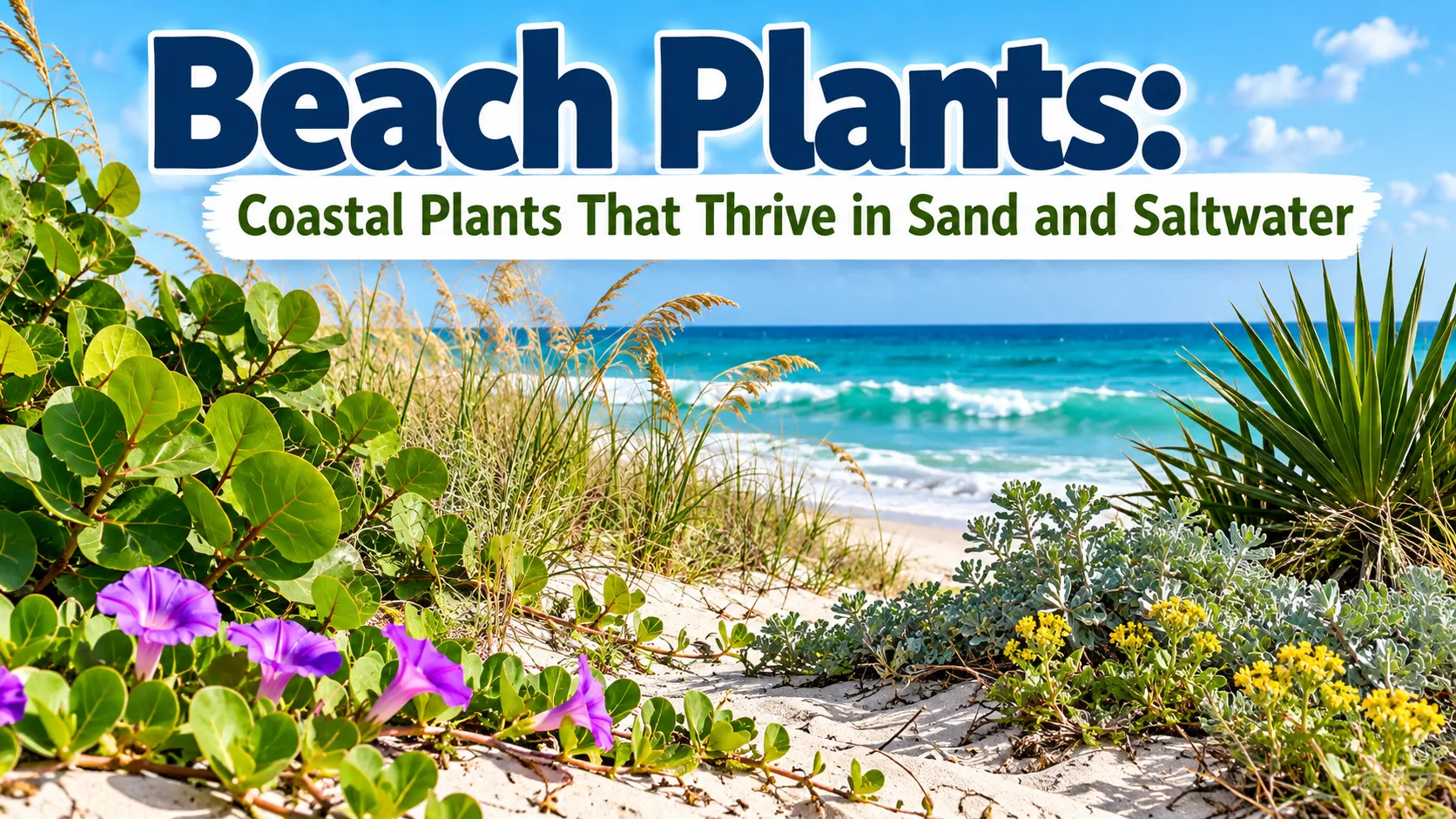
Beach plants are nature’s experts at surviving some of the toughest growing conditions on Earth. From swaying sea oats and tropical palm trees to colorful beach morning glories, these plants thrive in sandy soil, salty winds, intense sunlight, and changing coastal conditions. They also play an important role in protecting shorelines, stabilizing dunes, and providing shelter for coastal wildlife.
Whether you want to learn about plants that grow on beaches, discover coastal plant names, or choose suitable varieties for a seaside garden, understanding their unique adaptations is a great place to start. Some beach plants grow directly in dry sand, while others prefer damp shorelines, coastal wetlands, or sheltered dunes.
In this guide, you will discover more than 40 beach plants, explore their characteristics, and learn how they survive salty environments. You will also find coastal gardening tips, examples of flowering beach plants, and answers to common questions about plants that grow near the ocean.
🌊 What Are Beach Plants?
Beach plants are plants adapted to coastal environments, including sandy beaches, dunes, salt marshes, rocky shorelines, and areas near the ocean. These habitats can be challenging because of salty spray, strong winds, shifting sand, intense sunlight, and limited freshwater.
Many coastal plants have special features that help them survive. Some develop deep or spreading roots to anchor themselves in loose sand. Others have thick, waxy leaves that reduce water loss, while certain species tolerate salty soils better than ordinary garden plants.
Not every plant that grows near a beach is adapted to the same conditions. Plants found on dry dunes may struggle in waterlogged marshes, and species suited to tropical beaches may not survive cold coastal winters.
Common characteristics of beach plants
- Salt tolerance: Many coastal species tolerate salty air or salty soil.
- Strong root systems: Spreading roots and underground stems help anchor plants in sand.
- Drought resistance: Some species survive with limited freshwater.
- Wind tolerance: Flexible stems and low-growing forms help plants withstand coastal winds.
- Specialized leaves: Thick, waxy, or narrow leaves can reduce water loss.
- Sand stabilization: Many beach plants help hold dunes together and reduce erosion.
These adaptations make beach plants important to coastal ecosystems as well as useful choices for gardens in suitable locations.
🌾 Best Plants That Grow on Sandy Beaches
Sandy beaches are difficult places for plants because the ground shifts easily and drains quickly. Salt spray and strong sunlight can make growing conditions even more demanding.
Plants that thrive in these environments often have spreading roots, flexible stems, or leaves adapted to conserve moisture. Many are low-growing grasses, vines, or creeping ground covers that can survive where other plants struggle.
1. Sea Oats
Sea oats (Uniola paniculata) are tall coastal grasses recognized by their graceful stems and oat-like seed heads. They are especially common on dunes along parts of the southeastern United States.
Their extensive root systems help stabilize shifting sand, while their stems trap windblown sand and contribute to dune formation.
Sea oats are important to coastal protection, and some regions restrict their removal or disturbance. Always follow local rules when planting or managing dune vegetation.
2. American Beachgrass
American beachgrass (Ammophila breviligulata) is a dune-building grass found along parts of the Atlantic coast and Great Lakes region of North America.
It spreads through underground rhizomes that help anchor loose sand. When sand accumulates around its stems, the grass can continue growing upward, helping dunes build over time.
It is commonly used in coastal restoration projects where local conditions are suitable.
3. European Marram Grass
Marram grass (Ammophila arenaria) is a well-known dune grass native to parts of Europe and neighboring regions.
It has narrow leaves and a strong underground root system that allows it to survive in shifting sand. It is particularly important in the formation of coastal dunes.
Although useful in its native range, marram grass can be invasive in some regions where it has been introduced.
4. Beach Morning Glory
Beach morning glory commonly refers to coastal vines such as Ipomoea pes-caprae.
This creeping plant has thick leaves and attractive purple or pink funnel-shaped flowers. Its long stems spread across sandy beaches and help hold the surface together.
It is particularly associated with tropical and subtropical shorelines and can tolerate strong sunlight and salty coastal conditions.
5. Beach Pea
Beach pea (Lathyrus japonicus) is a coastal flowering plant found in cool and temperate regions of the Northern Hemisphere.
It produces purple, pink, or bluish flowers and grows in sandy coastal habitats. Its spreading stems and roots help it establish on dunes and beaches.
Beach pea is a useful example of a flowering plant adapted to exposed shorelines.
6. Beach Evening Primrose
Beach evening primrose is a common name used for coastal species of Oenothera, including varieties that grow on sandy shores.
Depending on the species, flowers may be yellow, white, or pinkish. These plants can grow in exposed conditions where soil moisture is limited.
Choose a species native to your region when using evening primrose in a coastal garden.
7. Beach Sunflower
Beach sunflower (Helianthus debilis) is a spreading coastal plant with bright yellow, daisy-like flowers.
It is well suited to sunny sandy locations in parts of the southeastern United States. Its low growth and spreading habit make it useful for ground cover in appropriate coastal landscapes.
It prefers good drainage and can tolerate challenging conditions once established.
8. Railroad Vine
Railroad vine is another name for Ipomoea pes-caprae, the same creeping coastal plant commonly called beach morning glory.
Its long runners can spread across large areas of sand, helping stabilize the surface. The plant produces attractive flowers and is common in tropical and subtropical beach environments.
Avoid confusing it with unrelated climbing vines when researching coastal species.
🌴 Tropical Beach Plants That Create a Paradise Look
Tropical beaches often feature palm trees, broad-leaved shrubs, flowering vines, and salt-tolerant ground covers. These plants create the familiar lush scenery associated with warm coastal destinations.
However, not every tropical plant can tolerate direct salt spray or strong ocean winds. Some need shelter, well-drained soil, and protection from storm damage.
9. Coconut Palm
The coconut palm (Cocos nucifera) is one of the most recognizable tropical coastal trees.
It thrives in warm climates and is often found near sandy shorelines. Its tall trunk and arching fronds create a classic tropical appearance.
Coconut palms tolerate coastal conditions better than many trees, but they still require suitable temperatures, adequate moisture, and space for mature growth.
10. Sea Grape
Sea grape (Coccoloba uvifera) is a tropical coastal shrub or small tree with large, rounded leaves.
It grows along beaches in parts of the Caribbean, Florida, and other tropical regions. Its clusters of fruit resemble grapes, and the plant can form a useful coastal windbreak.
Sea grape tolerates salt spray and sandy soil, making it a popular choice in suitable warm-climate landscapes.
11. Buttonwood
Buttonwood (Conocarpus erectus) is a coastal tree or shrub found in tropical and subtropical regions.
It can tolerate salty conditions and is often associated with coastal wetlands and shorelines. Its small, button-like fruit clusters give the plant its common name.
Buttonwood is used in some coastal landscapes, but its size and local ecological role should be considered before planting.
12. Tropical Almond
Tropical almond (Terminalia catappa) is a broad-canopied tree found in many tropical coastal regions.
Its large leaves turn reddish or yellow before falling, providing seasonal color in warm climates. It can tolerate coastal conditions, although performance depends on exposure and local growing conditions.
Allow enough room for its mature canopy and root system.
13. Beach Hibiscus
Beach hibiscus may refer to coastal hibiscus species such as Hibiscus tiliaceus, also known as sea hibiscus.
It produces large yellow flowers that often darken as they age. The plant can grow as a shrub or small tree and is common in tropical coastal habitats.
It generally prefers warm conditions and can tolerate salt spray better than many ornamental shrubs.
14. Pandanus
Pandanus species, often called screw pines, grow in many tropical coastal environments.
They have distinctive leaves arranged in spirals and may develop strong supporting roots. Some species tolerate salt spray and sandy soils.
Pandanus can become large and may have sharp leaf edges, so choose a suitable species and location.
15. Sea Purslane
Sea purslane refers to salt-tolerant coastal plants, including species in the genus Sesuvium.
These low-growing plants often have fleshy leaves and spreading stems. They are adapted to exposed shorelines and can tolerate salty conditions.
Their compact growth makes some varieties useful for coastal ground cover in appropriate climates.
16. Beach Naupaka
Beach naupaka (Scaevola taccada) is a tropical coastal shrub with fleshy leaves and distinctive white flowers.
It commonly grows along sandy shorelines and can tolerate salt spray and strong sunlight. In suitable tropical regions, it may form dense coastal vegetation.
Because it can spread beyond planted areas, check local guidance before introducing it.
🌸 Flowering Beach Plants for Colorful Coastal Gardens
Flowering beach plants can add color to landscapes while providing nectar or other resources for insects and coastal wildlife. Many grow close to the ground, where they can withstand exposure better than taller, more delicate plants.
When choosing flowering coastal species, look for varieties suited to your local climate and soil. Native plants are often a good starting point because they are adapted to regional conditions.
17. Sea Lavender
Sea lavender is a common name for plants in the genus Limonium.
Many species grow in coastal habitats and produce clusters of small purple, pink, blue, or white flowers. Some tolerate salty soils and dry conditions, making them suitable for coastal gardens.
Their flower clusters are also popular in dried floral arrangements.
18. Beach Aster
Beach asters are coastal flowering plants belonging to several groups, including species in the genus Symphyotrichum.
They may produce daisy-like flowers in purple, blue, pink, or white, depending on the species. Some grow in coastal dunes, while others prefer salt marshes or moist shorelines.
Choose a variety suited to the specific habitat in your region.
19. Coastal Goldenrod
Coastal goldenrod includes species such as Solidago sempervirens.
It produces bright yellow flower clusters and can grow in sandy coastal habitats. Its blooms provide a source of nectar for insects during its flowering season.
It is a useful native-plant option in appropriate parts of North America.
20. Beach Morning Glory
Beach morning glory is worth considering for its combination of attractive flowers and spreading growth.
Its purple-pink blooms add color to sandy areas, while its creeping stems can help stabilize the surface.
Because it spreads vigorously, give it enough room and use it only where it is appropriate for the local ecosystem.
21. Sea Rocket
Sea rocket refers to coastal plants in the genus Cakile.
These plants commonly grow on sandy beaches and upper shorelines. They have fleshy leaves and small flowers that may be white, pink, or purple.
Their ability to establish in shifting sand makes them characteristic plants of many coastal environments.
22. Coastal Rosemary
Coastal rosemary is a common name used for different salt-tolerant shrubs, depending on the region. In Australia, the name often refers to Westringia fruticosa.
This evergreen shrub has narrow leaves and small flowers. It is commonly used in coastal gardens because it tolerates wind and dry conditions once established.
Confirm the botanical name before purchasing a plant sold under this common name.
🌿 Beach Plants for Coastal Landscaping
Coastal landscaping requires plants that can handle wind, drainage, sunlight, and occasional salt exposure. The best choices depend on whether your garden is directly exposed to the sea or protected behind buildings and natural barriers.
A mixture of grasses, ground covers, shrubs, and small trees can create a layered landscape while improving soil stability.
23. Shore Juniper
Shore juniper (Juniperus conferta) is a low-growing evergreen conifer that can be used as ground cover in suitable coastal landscapes.
Its spreading branches and dense foliage help cover exposed soil. It generally prefers good drainage and plenty of sunlight.
Although it tolerates coastal conditions, it still needs a location appropriate for its mature spread.
24. Beach Plum
Beach plum (Prunus maritima) is a coastal shrub native to parts of the northeastern United States.
It produces white flowers in spring and edible purple fruit later in the growing season. The shrub is adapted to sandy coastal habitats and can tolerate challenging conditions once established.
It can be a useful choice for native coastal gardens in its suitable range.
25. Bayberry
Northern bayberry (Morella pensylvanica) is a shrub that grows in coastal and other well-drained habitats in parts of North America.
It tolerates sandy soils and can be used in naturalistic landscapes and windbreaks. Its waxy fruit provides food for some bird species.
Choose a locally suitable species and allow enough space for its mature size.
26. American Holly
American holly (Ilex opaca) is an evergreen tree native to eastern North America.
It can grow in some coastal landscapes, especially where it receives protection from the harshest exposure. Its glossy leaves and red berries provide ornamental interest.
It is not as universally salt-tolerant as specialized beach grasses, so avoid planting it in highly exposed locations without checking local suitability.
27. Wax Myrtle
Wax myrtle, often referring to Morella cerifera, is a shrub or small tree found in parts of the southeastern United States.
It grows in coastal landscapes and can tolerate sandy soils and some salt exposure. Its dense foliage makes it useful for privacy and wildlife gardens.
It may spread through seeds and root growth, so consider its mature size before planting.
28. Saltbush
Saltbush is a common name for several salt-tolerant plants, including species of Atriplex.
These shrubs and herbs often grow in dry coastal habitats and saline soils. Their foliage and growth forms vary by species.
Use a locally appropriate variety and check whether it is native or invasive in your area.
29. Coastal Panicgrass
Coastal panicgrass (Panicum amarum) is a dune grass native to parts of the eastern United States.
Its roots help stabilize sand, and its stems can trap windblown particles. It is used in some dune restoration and coastal landscaping projects.
Choose a suitable native source and avoid disturbing protected dune habitats.
30. Bitter Panicgrass
Bitter panicgrass (Panicum amarum var. amarulum) is a coastal grass associated with sandy beaches and dunes.
It tolerates exposed conditions and contributes to dune stabilization. Its growth helps reinforce the natural structure of coastal landscapes.
Local planting guidance is important because dune restoration is most effective when the correct species and planting methods are used.
🌾 Coastal Wetland Plants That Thrive Near the Sea
Not all beach plants grow in dry sand. Coastal wetlands contain plants adapted to salty water, tidal flooding, and muddy sediment.
These habitats include salt marshes, tidal flats, and mangrove forests. Their vegetation plays a major role in coastal food webs and shoreline stability.
31. Smooth Cordgrass
Smooth cordgrass (Sporobolus alterniflorus, formerly Spartina alterniflora) grows in salt marshes along parts of the Atlantic and Gulf coasts of North America.
It tolerates regular tidal flooding and helps trap sediment. Its stems and roots create habitat for fish, crabs, and other marsh organisms.
32. Saltmeadow Cordgrass
Saltmeadow cordgrass (Sporobolus pumilus, formerly Spartina patens) is found in coastal salt marshes and sandy habitats.
It often grows in areas that experience less frequent flooding than those occupied by smooth cordgrass. Its dense growth can help stabilize marsh soils.
33. Black Mangrove
Black mangrove (Avicennia germinans) is a tropical and subtropical coastal tree that grows in saline wetlands.
Its specialized aerial roots help it exchange gases in waterlogged sediment. The tree provides habitat and contributes to coastal ecosystem stability.
34. Red Mangrove
Red mangrove (Rhizophora mangle) is known for its arching prop roots.
It grows along tropical shorelines and sheltered coastal waters, where its roots provide nursery habitat for fish and invertebrates.
Mangroves are valuable coastal plants, but their survival depends on appropriate tidal conditions and a suitable climate.
35. White Mangrove
White mangrove (Laguncularia racemosa) is another species found in tropical and subtropical mangrove forests.
It grows in coastal wetlands and contributes to the structure of mangrove ecosystems. It is commonly found alongside other mangrove species.
These trees should be planted only where local conditions and regulations support their use.
🌱 How Beach Plants Survive Salt, Wind, and Sand
Beach plants have developed a range of adaptations that help them survive harsh coastal environments. Their ability to tolerate these conditions is one reason they are so important for shoreline protection.
Salt tolerance
Salt can interfere with a plant’s ability to absorb water. Some coastal species limit salt uptake, store salt in specialized tissues, or tolerate higher salt concentrations than ordinary garden plants.
These adaptations allow them to survive in areas where many other plants would suffer damage.
Deep and spreading roots
Loose sand can shift during storms and strong winds. Plants such as sea oats and beachgrass develop extensive root systems that help anchor them in place.
Their underground stems also allow them to spread and recover from some forms of disturbance.
Water conservation
Coastal plants may have thick leaves, waxy surfaces, narrow foliage, or other features that reduce water loss.
These traits are especially valuable on sunny beaches where sandy soil drains quickly and freshwater may be limited.
Flexible growth
Strong winds can damage plants with brittle stems or broad, delicate leaves. Many coastal species grow close to the ground or have flexible stems that help them withstand exposure.
Together, these adaptations allow beach plants to survive in environments that are challenging for ordinary garden vegetation.
🏖️ Benefits of Beach Plants for Coastal Ecosystems
Beach plants do more than decorate coastlines. They help maintain the natural structure of beaches and dunes while supporting wildlife.
They stabilize sand dunes
Dune grasses and creeping coastal plants trap moving sand and help hold it in place. Their roots reinforce the dune structure, reducing erosion in suitable conditions.
They provide wildlife habitat
Coastal vegetation offers nesting areas, shelter, and food for birds, insects, reptiles, and other animals.
Some flowering plants provide nectar for pollinators, while their seeds and fruits feed wildlife.
They support coastal biodiversity
Different plant communities create different habitats. Dune grasses, mangroves, salt marshes, and coastal shrubs each support distinctive groups of organisms.
Protecting a variety of native coastal plants helps preserve these ecological relationships.
They contribute to coastal resilience
Healthy dunes, marshes, and mangrove forests can help reduce wave energy and stabilize sediment. Their effectiveness varies with storm intensity, coastal shape, and ecosystem condition, but they are valuable components of natural coastal protection.
🌿 How to Grow Beach Plants in Your Garden
You can grow many beach plants in a coastal garden or a landscape that resembles their natural habitat. However, the best results come from choosing plants adapted to your climate and exposure.
A plant that thrives beside a tropical beach may struggle in a cold coastal garden, while a species native to temperate dunes may not tolerate tropical heat.
Choose the right location
Observe the amount of sunlight your garden receives and how exposed it is to wind and salt spray. Highly exposed areas require tougher species than sheltered spaces behind buildings or hedges.
Improve drainage when needed
Many dune plants prefer sandy, well-drained soil. Avoid planting them in heavy, waterlogged ground unless the species naturally grows in wet conditions.
Do not assume every coastal plant needs dry soil. Mangroves and salt marsh plants require very different conditions.
Water during establishment
Even drought-tolerant coastal plants may need regular watering while their roots become established.
Once established, follow the species’ natural moisture requirements rather than applying the same watering schedule to every plant.
Avoid excessive fertilizer
Beach plants adapted to nutrient-poor sand may not need frequent feeding. Excess fertilizer can cause weak growth or wash into nearby waterways.
Use fertilizer only when appropriate for the plant and soil conditions.
Choose native plants
Native coastal plants are often the best choice for supporting local wildlife and reducing the risk of introducing invasive species.
Check with local nurseries or environmental agencies for species suitable for your particular coastline.
⚠️ Common Mistakes When Choosing Beach Plants
Choosing the wrong plant can lead to poor growth, unnecessary maintenance, or environmental problems.
Ignoring local climate: Tropical plants may not tolerate cold winters, while temperate coastal species may struggle in extreme heat.
Assuming every beach plant likes saltwater: Some tolerate salty spray but cannot survive direct immersion in seawater. Check the plant’s actual requirements.
Planting invasive species: Certain coastal plants spread aggressively outside their native ranges. Confirm local restrictions before introducing them.
Overwatering dune plants: Many species from sandy dunes need good drainage and can suffer if their roots remain waterlogged.
Removing natural dune vegetation: Walking over or digging up protected dune plants can damage fragile ecosystems. Observe local beach conservation rules.
Planting without considering mature size: Some coastal shrubs and trees become much larger than expected. Allow enough room for their roots and canopy.
❓ Frequently Asked Questions About Beach Plants
What plants grow naturally on beaches?
Common examples include sea oats, beachgrass, beach morning glory, sea grape, sea rocket, and beach sunflower. The exact species depend on climate and location.
Which plants grow best in beach sand?
Sea oats, American beachgrass, beach morning glory, beach sunflower, and some coastal shrubs can thrive in sandy conditions when planted within their suitable geographic ranges.
Can plants survive in salty soil?
Yes. Many coastal plants tolerate salty soils or salt spray through specialized adaptations. However, salt tolerance varies widely between species.
What are the best tropical beach plants?
Coconut palm, sea grape, beach hibiscus, pandanus, and beach naupaka are examples of plants associated with tropical coastal environments.
Which beach plants help prevent erosion?
Dune grasses such as sea oats and American beachgrass help stabilize sand through their roots and spreading growth. Mangroves and salt marsh plants also help stabilize suitable coastal habitats.
Can I grow beach plants away from the ocean?
Yes. Many coastal plants can grow inland if their sunlight, soil, moisture, and temperature needs are met. However, not every species adapts well to inland conditions.
Do beach plants need fertilizer?
Not necessarily. Many are adapted to sandy, relatively nutrient-poor soils. Fertilizer requirements depend on the species and the conditions in which it is grown.
Are beach plants suitable for landscaping?
Many are excellent landscaping choices, especially in exposed gardens with sandy soil. Choose species suited to your climate and avoid plants that are invasive in your region.
What is the difference between beach plants and dune plants?
Beach plants is a broad term for vegetation found along coastlines. Dune plants are a more specific group that grows on sand dunes, where shifting sand, wind, and limited freshwater are major challenges.
Why are native beach plants important?
Native coastal plants support local wildlife, contribute to natural habitat structure, and are adapted to regional environmental conditions. Using them can help reduce the risks associated with invasive species.
🌎 Conclusion
Beach plants are remarkable examples of nature’s ability to adapt to difficult growing conditions. From sea oats that stabilize shifting dunes to sea grapes and coconut palms that create tropical coastal scenery, these plants contribute to the beauty and resilience of shorelines around the world.
Choosing the right coastal plants means understanding their natural habitat, sunlight needs, soil preferences, and tolerance for salt and wind. Native species are often an excellent starting point for gardens and restoration projects.
By protecting natural beach vegetation and planting suitable species responsibly, we can help preserve coastal biodiversity and maintain healthier shorelines for the future.

Ethan Carter is a nature enthusiast and content writer with a passion for flowers and botanical knowledge. He is the author behind FlowerNamez, where he shares simple and informative content about flower names, types, and meanings.
With a focus on clarity and accuracy, Ethan aims to help readers explore the beauty of flowers and understand their significance in everyday life.