
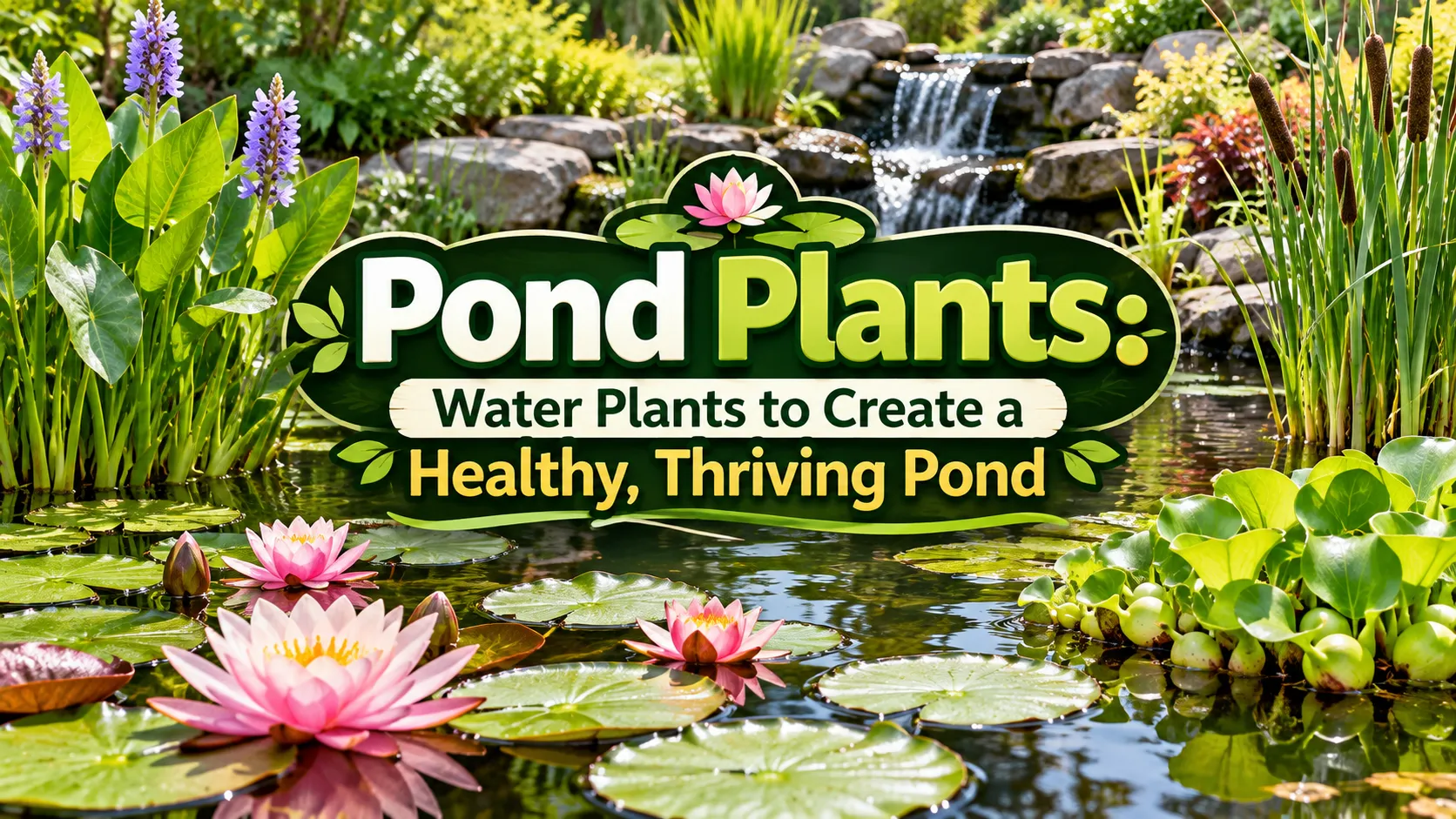
Pond plants can transform an ordinary backyard pond into a beautiful, peaceful water garden filled with color, texture, and natural life. From floating water lilies to graceful underwater grasses, these plants add beauty while helping create a healthier environment for fish, frogs, dragonflies, and other aquatic creatures.
Whether you have a small container pond, a decorative garden pond, or a large natural water feature, choosing the right pond plants can make a noticeable difference. Some plants float freely on the water’s surface, while others grow with their roots submerged and their leaves above the water. Certain varieties produce colorful flowers, and others help provide shade and shelter for aquatic wildlife.
In this guide, you will discover more than 45 pond plants, including flowering water plants, floating varieties, oxygenating plants, marginal plants, and beginner-friendly choices. You will also learn how to select plants for different pond depths, maintain healthy water conditions, and avoid common planting mistakes.
🌿 What Are Pond Plants?
Pond plants are aquatic or water-loving plants that grow in ponds, lakes, water gardens, and other freshwater environments. Some live entirely underwater, while others grow along the pond’s edges or float on the surface.
These plants play several important roles in a pond ecosystem. They can provide shade, absorb nutrients, create hiding places for small animals, and contribute to the natural balance of the water. Flowering varieties also add attractive colors and textures to outdoor spaces.
However, not every pond plant grows in the same way. Some need their roots submerged in shallow water, while others require deeper water or a completely floating environment.
Main types of pond plants
- Floating plants: Drift on the water’s surface, with roots hanging below.
- Submerged plants: Grow mostly underwater and provide habitat for aquatic organisms.
- Marginal plants: Grow around the edges of ponds, usually in shallow water.
- Deep-water plants: Have roots anchored in containers or sediment below the surface, with leaves and flowers reaching upward.
- Bog plants: Prefer consistently moist soil around pond edges rather than permanent deep-water immersion.
Understanding these categories helps you choose suitable plants for different parts of your pond.
🌸 Best Flowering Pond Plants for a Beautiful Water Garden
Flowering pond plants are popular because they add color and elegance to water features. Their blooms can attract pollinators, create visual interest, and make a pond feel more natural.
Before choosing a flowering variety, consider its sunlight requirements, mature size, and preferred water depth. Some plants need several hours of sunshine to flower well, while others tolerate partial shade.
1. Water Lily
Water lilies are among the most recognizable pond plants. Their round floating leaves and beautiful flowers come in shades of white, pink, yellow, red, and other colors, depending on the variety.
Most hardy water lilies grow from rhizomes anchored in containers below the water’s surface. Their leaves provide shade and shelter for aquatic wildlife.
Water lilies generally prefer sunny locations and still or gently moving water. Choose a variety suited to your pond’s depth and available space.
2. Lotus
Lotus plants produce striking flowers and large, round leaves that may rise above the water. They are especially attractive in spacious ponds and large aquatic containers.
Unlike many water lilies, lotus leaves often stand above the water rather than resting directly on its surface. Many varieties prefer warm conditions and plenty of sunlight.
Lotus plants can spread significantly, so select a suitable variety and container before planting.
3. Water Poppy
Water poppy (Hydrocleys nymphoides) is a floating-leaved aquatic plant known for its rounded leaves and bright yellow flowers.
It grows well in warm freshwater environments and can provide attractive coverage in suitable ponds. Its growth habit makes it a useful option for smaller water gardens.
In regions where it is not native, check local regulations before planting because it can spread aggressively under favorable conditions.
4. Water Hawthorn
Water hawthorn (Aponogeton distachyos) produces distinctive white flowers and floating leaves.
It is often valued for flowering during cooler periods when some other pond plants are less active. Its growing season depends on climate and water temperature.
Provide appropriate water depth and sunlight, and avoid assuming that every variety will thrive in hot climates.
5. Water Hyacinth
Water hyacinth (Pontederia crassipes, formerly Eichhornia crassipes) is a free-floating plant with rounded leaves, swollen leaf stalks, and attractive lavender-blue flowers.
Although it can look beautiful in a pond, it is highly invasive in many regions. Dense growth can block sunlight, reduce oxygen availability, and interfere with waterways.
Only consider it where legally permitted and appropriately contained. In many places, safer alternatives are preferable.
6. Water Forget-Me-Not
Water forget-me-not (Myosotis scorpioides) is a moisture-loving plant that produces small blue flowers.
It works well along the edges of ponds and in shallow, damp soil. Its delicate flowers create a natural appearance around water features.
It prefers moist conditions and can spread, so monitor its growth to prevent unwanted expansion.
7. Water Iris
Water iris is a common name for several iris species suited to wet soil or shallow water.
These plants produce elegant flowers in colors such as purple, yellow, blue, and white. They can add height and structure to the edges of a pond.
Choose a species suited to your climate and water depth because not every iris tolerates permanent immersion.
8. Pickerelweed
Pickerelweed (Pontederia cordata) is a marginal aquatic plant with broad green leaves and spikes of blue-purple flowers.
It grows in shallow freshwater and provides useful habitat for insects and other wildlife. Its upright growth makes it an attractive choice for pond margins.
Plant it in a container if you want to limit its spread.
9. Marsh Marigold
Marsh marigold (Caltha palustris) is a wetland plant known for its bright yellow flowers.
It prefers moist soil and shallow water, making it suitable for natural-looking pond edges. It often flowers in spring, depending on local conditions.
Give it room to grow and avoid placing it in deep water.
10. Swamp Hibiscus
Swamp hibiscus refers to wetland-loving hibiscus species that produce large, showy flowers.
These plants can create a colorful backdrop around larger ponds. Their mature size and seasonal behavior vary by species.
Choose a variety suited to your local climate and provide consistently moist soil.
💧 Floating Pond Plants That Add Natural Beauty
Floating pond plants grow on the water’s surface rather than remaining firmly rooted in the pond bottom. Some drift freely, while others send their roots into the water from floating leaves.
These plants can create shade, provide shelter for small animals, and absorb nutrients. However, excessive floating coverage can prevent sunlight from reaching submerged plants.
11. Frogbit
Frogbit is a common name for floating aquatic plants, including European frogbit (Hydrocharis morsus-ranae) and Amazon frogbit (Limnobium laevigatum).
Their rounded leaves float on the water, while their roots hang below the surface. Some varieties produce small white flowers.
Frogbit can spread quickly, and certain species are invasive outside their native ranges. Check local restrictions before introducing them.
12. Duckweed
Duckweed consists of tiny floating plants that can cover the surface of ponds with a green layer.
It grows rapidly in nutrient-rich water and serves as food for some aquatic animals. Its small size makes it suitable for certain natural ponds, but excessive growth can block sunlight.
Remove surplus duckweed regularly if it begins covering too much of the water.
13. Salvinia
Salvinia is a genus of floating aquatic ferns with small, paired leaves.
Some species are grown in ornamental ponds because their foliage creates attractive surface coverage. However, certain types can become invasive and form dense mats.
Confirm the identity of the species before planting, especially if your pond connects to natural waterways.
14. Water Lettuce
Water lettuce (Pistia stratiotes) forms rosettes of soft, pale-green leaves that resemble small heads of lettuce.
Its dangling roots provide shelter for tiny aquatic animals, while the floating leaves help shade the water.
Water lettuce is invasive in some regions and may be restricted or prohibited. Check local rules before using it.
15. Azolla
Azolla is a small floating aquatic fern that often develops a reddish tint under certain conditions.
It can multiply rapidly and is known for its relationship with nitrogen-fixing cyanobacteria. In some settings, it is studied or used for nutrient management.
However, uncontrolled growth can cover the water’s surface and interfere with other pond plants. Regular monitoring is important.
🌱 Submerged Pond Plants for Clearer Water
Submerged pond plants grow mostly underwater, with their leaves and stems extending through the water column. They provide structure for small aquatic animals and may help absorb dissolved nutrients.
Some are commonly called oxygenating plants because they release oxygen during photosynthesis. Actual oxygen levels depend on sunlight, plant growth, temperature, and the overall pond ecosystem.
Submerged plants should be selected carefully because some species spread aggressively or are prohibited in certain areas.
16. Hornwort
Hornwort (Ceratophyllum demersum) is a submerged aquatic plant with finely divided, feathery foliage.
It typically grows without roots anchoring it to the pond bottom, although it may become entangled in other vegetation. Its dense growth can provide shelter for small fish and invertebrates.
Hornwort is adaptable, but it can grow rapidly under favorable conditions. Thin out excessive growth when necessary.
17. Anacharis
Anacharis commonly refers to Egeria densa, a submerged aquatic plant used in some ornamental ponds and aquariums.
Its leafy stems can provide underwater cover and absorb nutrients. It may also release oxygen during photosynthesis.
Because it can become invasive, check local regulations before introducing it into outdoor water features.
18. Waterweed
Waterweed is a common name used for several submerged aquatic plants, including species in the genus Elodea.
These plants provide underwater habitat and can help absorb nutrients. Their growth rate depends on water temperature, light, and nutrient availability.
Use only species suitable for your region, and avoid releasing excess plant material into natural waterways.
19. Vallisneria
Vallisneria is a genus of submerged aquatic plants with long, ribbon-like leaves.
Some species grow well in freshwater ponds and provide vertical underwater structure. They can spread through runners and form dense plantings over time.
Choose a variety that suits your pond’s climate and water conditions.
20. Water Milfoil
Water milfoil includes species in the genus Myriophyllum, many of which grow underwater with finely divided leaves.
These plants can provide shelter for aquatic invertebrates and small fish. However, certain species, including Eurasian watermilfoil, are invasive in some regions.
Confirm the exact species before planting and follow local environmental guidance.
21. Water Crowfoot
Water crowfoot refers to aquatic buttercup species, including plants in the genus Ranunculus.
Some grow partly underwater and produce small flowers above or near the surface. They can be suitable for natural ponds and streams when the species matches the environment.
Their growth requirements vary, so identify the species before introducing it.
🌾 Marginal Pond Plants for the Edges
Marginal plants grow around pond edges, often with their roots in shallow water or saturated soil. They are useful for softening pond borders and creating a transition between water and land.
Their upright stems and foliage add height, while their flowers can attract pollinators. Some species also provide hiding places for frogs and other small animals.
22. Cattails
Cattails, commonly belonging to the genus Typha, are recognizable wetland plants with tall leaves and brown, cylindrical flower spikes.
They can create a natural pond appearance and provide habitat for wildlife. However, cattails spread through rhizomes and may dominate small ponds.
Choose an appropriate species and grow it in a container if you need to control its spread.
23. Rushes
Rushes include wetland plants in the genus Juncus. They often have narrow, upright stems and a simple architectural appearance.
They can be useful for natural pond edges, shallow-water areas, and rain gardens.
Choose varieties suited to your local conditions, as some prefer saturated soil while others tolerate shallow standing water.
24. Soft Rush
Soft rush (Juncus effusus) is a common wetland plant with upright, rounded green stems.
It grows well in moist soil and can tolerate shallow water. Its tidy vertical growth makes it useful for naturalistic water gardens.
Plant it where its roots can remain moist, and trim old growth when necessary.
25. Sweet Flag
Sweet flag includes plants in the genus Acorus, which are valued for their sword-shaped leaves.
Depending on the species and variety, foliage may be green or striped with yellow. These plants can create attractive borders around shallow ponds.
Select a variety suited to your climate and avoid planting it deeper than its recommended water level.
26. Water Mint
Water mint (Mentha aquatica) is a moisture-loving herb that produces clusters of pinkish-purple flowers.
It can grow along pond margins and in wet soil. Its flowers attract pollinators, and its foliage may have a minty fragrance.
Water mint spreads through underground stems, so use a container if you want to keep it from overtaking nearby plants.
27. Marsh Marigold
Marsh marigold is also a useful marginal plant because it thrives in damp soil and shallow water.
Its bright flowers add seasonal color, and its rounded leaves complement grasses and rushes.
Avoid planting it in deep water, and check whether its growing conditions match your local climate.
28. Water Plantain
Water plantain includes wetland plants in the genus Alisma.
They often have broad leaves and delicate flower clusters held above the water. These plants can provide an attractive, natural appearance along pond margins.
They generally prefer wet soil or shallow water and may spread under favorable conditions.
29. Arrowhead
Arrowhead plants, including species in the genus Sagittaria, often have distinctive arrow-shaped leaves.
Many varieties grow in shallow freshwater and produce small white flowers. They can provide both ornamental interest and habitat for pond wildlife.
Choose a suitable species and control its spread if space is limited.
30. Blue Flag Iris
Blue flag iris refers to iris species that grow in wetlands, including Iris versicolor.
Its blue-purple flowers add color to pond borders, while its upright leaves provide structure.
Grow it in moist soil or appropriate shallow water. Some iris species can be toxic if eaten, so keep them away from children and pets who might chew the plants.
🌿 More Pond Plants Worth Considering
The following plants offer additional choices for different pond styles, water depths, and climates. Their suitability depends on the exact species and your local environment.
31. Water Snowflake
Water snowflake, commonly associated with Nymphoides species, is a floating-leaved aquatic plant with delicate flowers.
It can resemble a miniature water lily and works well in suitable water gardens. Some varieties spread quickly, so monitor their coverage.
32. Water Poppy Alternative: Floating Heart
Floating heart refers to aquatic plants in the genus Nymphoides. They often have floating leaves and small flowers.
Choose species carefully because some can become invasive. A plant that is suitable for one region may be restricted in another.
33. Parrot’s Feather
Parrot’s feather (Myriophyllum aquaticum) is an aquatic plant with finely divided leaves that can grow both underwater and above the surface.
Its feathery foliage can look attractive, but the species is invasive in many regions. Check local regulations before considering it for an ornamental pond.
34. Water Celery
Water celery commonly refers to Vallisneria americana, a submerged plant with long, ribbon-like leaves.
It provides underwater cover and can spread through runners. Its suitability depends on the pond’s temperature, light, and water conditions.
35. Water Chestnut
Water chestnut may refer to different aquatic plants depending on the region. Some species are grown for edible parts, while others are known for their floating leaves and invasive behavior.
Always confirm the botanical identity before planting. Do not assume that a plant sold under this common name is suitable for every pond.
36. Water Primrose
Water primrose refers to aquatic and wetland plants in the genus Ludwigia.
Some species produce yellow flowers and attractive foliage, but certain varieties can spread aggressively and invade natural waterways.
Choose only species appropriate for your region and manage their growth carefully.
37. Water Violet
Water violet (Hottonia palustris) is an aquatic flowering plant found in parts of Europe and nearby regions.
It has finely divided submerged leaves and delicate flowers that rise above the water. It is generally suited to appropriate cool-water habitats.
Its needs may differ considerably from those of tropical pond plants.
38. Water Soldiers
Water soldiers (Stratiotes aloides) are aquatic plants with stiff, pointed leaves arranged in rosettes.
They often float near the surface during the growing season and may become partially submerged at other times.
They are not suitable for every climate, and local restrictions should be checked before planting.
39. Water Cress
Watercress (Nasturtium officinale) is an edible aquatic or semiaquatic plant that grows in cool, clean, flowing water and wet conditions.
Although it may grow near ponds, it is best suited to conditions that meet its particular water-quality needs. Do not eat watercress from untreated ornamental ponds.
40. Pickerelweed
Pickerelweed is another excellent choice for shallow pond edges. Its upright foliage and flower spikes help create a natural transition between water and land.
It can spread over time, so use a container when you need to limit its growth.
41. Dwarf Cattail
Dwarf cattail varieties offer the appearance of traditional cattails on a smaller scale.
They can suit compact water gardens better than larger species, although mature size depends on the variety and growing conditions.
Confirm the plant’s identity before purchasing it and provide appropriate shallow-water conditions.
42. Dwarf Water Lily
Dwarf water lilies are compact varieties bred or selected for smaller ponds and containers.
They provide the familiar floating leaves and flowers of larger water lilies without necessarily requiring the same amount of space.
Choose a variety matched to your pond’s depth and sunlight.
43. Water Hyacinth Alternatives
If floating water hyacinth is restricted or invasive in your area, consider native or noninvasive floating plants suited to your region.
Suitable options vary by climate. Ask a reputable local aquatic nursery or environmental authority for species that can be grown responsibly.
44. Native Pond Grasses
Native aquatic and wetland grasses can provide structure around pond margins while supporting local wildlife.
Their suitability depends on your region, soil, water depth, and climate. Choosing native species is often a useful way to reduce the risk of introducing invasive plants.
45. Native Aquatic Wildflowers
Native aquatic wildflowers can add seasonal color to pond edges and shallow water.
Examples differ widely by location, so research local species rather than selecting a plant solely because it appears in a general pond-plant list.
💧 How to Choose the Best Pond Plants
The best pond plants are those that match the pond’s depth, sunlight, size, and water conditions. A small ornamental pond may benefit from compact water lilies and a few contained marginal plants, while a larger natural pond can support a more diverse collection.
Before purchasing plants, determine which areas are shallow, which are deep, and how much sunlight reaches the water.
Consider pond depth
Different plants require different water levels. Marginal plants often grow in shallow water, while water lilies and lotus need enough depth for their roots and growing structures.
Submerged plants need sufficient underwater light, and floating plants require open surface space.
Check sunlight requirements
Some pond plants flower best in full sunshine, while others prefer partial shade. Observe your pond throughout the day before selecting plants.
Too little light can reduce flowering and growth, while excessive heat and sunlight may affect water temperature and algae growth.
Think about mature size
A plant that looks small in a nursery pot may spread widely in a pond. Check its mature size and growth habit before planting.
Containers can help control rhizomes and spreading roots, especially in small ornamental ponds.
Choose plants suited to your climate
Hardy aquatic plants may survive seasonal temperature changes, while tropical varieties can be sensitive to cold weather.
If your pond experiences freezing conditions, select plants that can tolerate your climate or make plans for appropriate winter protection.
🌱 How to Plant Pond Plants Correctly
Planting aquatic vegetation properly helps establish healthy growth and prevents unnecessary problems with water quality.
Many pond plants grow best in aquatic planting baskets filled with a suitable heavy aquatic planting medium. The correct approach depends on the plant type.
Planting water lilies
Water lilies are commonly planted in aquatic containers with their rhizomes positioned according to the variety’s instructions. The container is then placed at a suitable depth.
Avoid covering growing points too deeply. Provide enough sunlight for healthy leaves and flowering.
Planting marginal plants
Marginal plants are often grown in containers placed on shallow pond shelves. Their roots remain moist or submerged at the recommended depth while their foliage grows above the surface.
Check the plant’s preferred water level before lowering the container into the pond.
Adding submerged plants
Submerged plants may be placed in suitable aquatic containers or introduced according to the needs of the species.
Avoid using garden soil or ordinary fertilizers that can release excess nutrients into the water. Follow the plant’s specific planting requirements.
Adding floating plants
Floating plants generally do not need planting containers. Place them gently on the surface and allow their roots to hang below the water.
Do not allow them to cover the entire pond, as excessive coverage can reduce light penetration and interfere with gas exchange.
🐟 Are Pond Plants Good for Fish?
Pond plants can benefit fish by creating shade, shelter, and natural habitat. Floating leaves and submerged vegetation give small fish places to hide, while certain plants support the insects and microorganisms that fish feed on.
Plants can also help absorb nutrients that might otherwise contribute to excessive algae growth. However, they do not automatically eliminate algae or replace proper pond maintenance.
A healthy pond needs a balance between vegetation, fish, water movement, and available oxygen.
Benefits for fish ponds
- Provide hiding places for small fish and young offspring.
- Create shade that can help moderate water temperatures.
- Support natural food sources such as small invertebrates.
- Absorb some dissolved nutrients during growth.
- Make the pond environment more varied and natural.
Avoid introducing plants that spread uncontrollably or could harm the pond ecosystem. If you keep ornamental fish, check whether your chosen plants are compatible with your fish species and pond conditions.
⚠️ Common Pond Plant Problems and How to Avoid Them
Pond plants are generally easy to maintain once established, but unsuitable species and poor planting practices can cause problems.
Excessive plant growth
Some aquatic plants spread rapidly and can cover the pond’s surface or crowd other vegetation.
Use containers, remove surplus growth, and choose compact or less aggressive species for small ponds.
Algae blooms
Excess nutrients, warm conditions, and strong sunlight can encourage algae growth.
Avoid overfeeding fish, prevent fertilizer runoff, remove decaying plant material, and maintain an appropriate balance of aquatic vegetation.
Yellowing leaves
Yellow leaves may indicate natural aging, nutrient problems, unsuitable water conditions, or insufficient light.
Check the plant’s growing requirements before adding fertilizer. Excess fertilizer can worsen algae problems.
Root rot
Plants that are grown in unsuitable soil or placed at the wrong depth may develop unhealthy roots.
Use an appropriate aquatic growing medium and follow the recommended planting depth for each species.
Invasive plants
Some popular pond plants can escape into nearby waterways and damage natural habitats.
Check local rules, choose responsible alternatives, and never dump unwanted aquatic plants into rivers, lakes, drains, or wetlands.
❓ Frequently Asked Questions About Pond Plants
What are the best plants for a small pond?
Dwarf water lilies, compact marginal plants, and carefully selected submerged varieties can work well in small ponds. Choose plants according to the pond’s depth and sunlight, and avoid aggressive spreaders.
Which pond plants help keep water clear?
Submerged plants and other suitable aquatic vegetation can absorb nutrients and compete with algae. However, clear water also depends on fish stocking, filtration where needed, nutrient control, and general pond maintenance.
Do pond plants need soil?
Some pond plants grow best in aquatic planting baskets with a suitable heavy planting medium. Others float freely or grow attached to surfaces. Ordinary garden soil and excessive fertilizer can introduce unwanted nutrients into the water.
Can pond plants survive winter?
Many hardy pond plants tolerate seasonal cold when planted at an appropriate depth. Tropical plants may need to be moved indoors or protected from low temperatures.
How many plants should a pond have?
The ideal number depends on pond size, depth, fish population, and the mature growth of each plant. Start with a manageable selection and adjust as you observe how the pond develops.
Are floating pond plants safe for fish?
Many floating plants provide shade and shelter, but excessive coverage can reduce light and interfere with gas exchange. Choose compatible species and keep their growth under control.
Can I grow pond plants without fish?
Yes. Pond plants can grow in ornamental ponds and water gardens without fish. You will still need to maintain appropriate water quality, light, and nutrients.
Which pond plants produce flowers?
Water lilies, lotus, pickerelweed, water poppy, marsh marigold, and some aquatic irises are popular flowering choices. Their flowering seasons depend on species and growing conditions.
Are all pond plants safe for wildlife?
No. Some species are invasive or unsuitable for particular ecosystems. Select plants responsibly and avoid releasing unwanted vegetation into natural waterways.
How do I stop pond plants from spreading too much?
Choose compact varieties, use suitable containers, prune excess growth, and remove unwanted plants before they spread. Check local guidance when dealing with invasive aquatic species.
🌿 Conclusion
Pond plants can turn a simple water feature into a beautiful and lively aquatic garden. From elegant water lilies and floating frogbit to submerged hornwort and colorful marginal flowers, there are many options for ponds of different sizes and styles.
The key is to choose plants that match your pond’s depth, climate, sunlight, and maintenance needs. Combine suitable varieties carefully, control fast-growing species, and maintain healthy water conditions.
With thoughtful selection and regular care, your pond can become an attractive habitat for aquatic plants and wildlife while providing a peaceful focal point in your outdoor space.

Ethan Carter is a nature enthusiast and content writer with a passion for flowers and botanical knowledge. He is the author behind FlowerNamez, where he shares simple and informative content about flower names, types, and meanings.
With a focus on clarity and accuracy, Ethan aims to help readers explore the beauty of flowers and understand their significance in everyday life.