
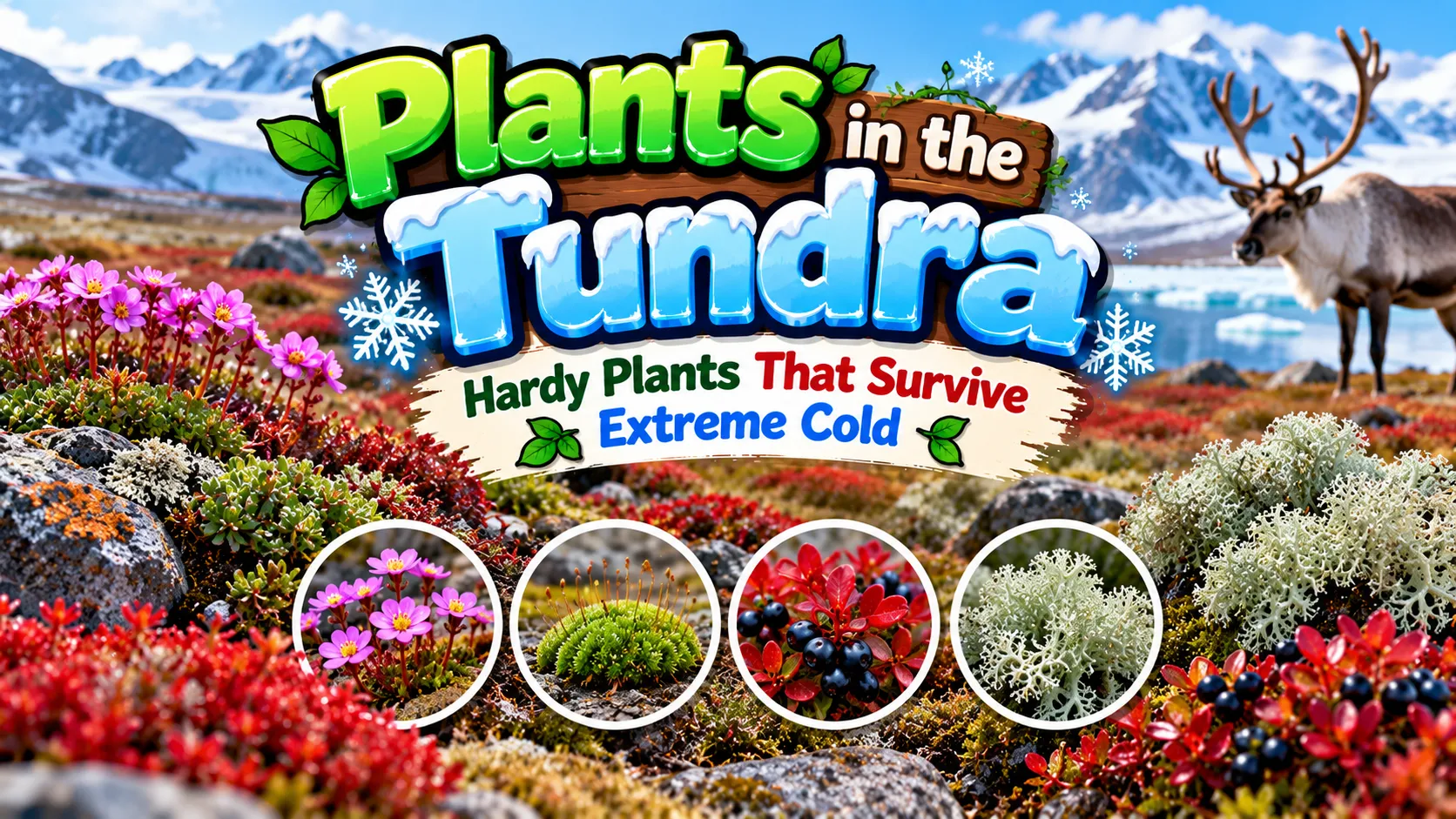
Plants in the tundra have remarkable adaptations that help them survive freezing temperatures, strong winds, nutrient-poor soil, and extremely short growing seasons. Unlike plants in tropical forests or warm grasslands, tundra plants often grow close to the ground, develop shallow roots, and produce small leaves that help them conserve energy and moisture.
The tundra is one of the coldest environments on Earth, yet it supports a surprising variety of plant life. From colorful Arctic wildflowers and creeping shrubs to mosses, lichens, and hardy grasses, these plants create important habitats for wildlife and help protect the fragile soil. Whether you are learning about Arctic vegetation for a school project or exploring tundra ecosystems, understanding these plants reveals how life can thrive under challenging conditions.
🌿 What Are Tundra Plants?
Tundra plants are species adapted to cold, open landscapes where temperatures remain low and the growing season is short. They commonly grow in the Arctic tundra of North America, Europe, and Asia, as well as in alpine tundra found high in mountain ranges.
Most tundra plants are small, slow-growing, and able to tolerate strong winds. Many have shallow root systems because the ground beneath the surface may remain frozen for much of the year. During the brief summer, these plants grow, flower, and produce seeds as quickly as possible.
Common examples include Arctic willow, Arctic poppy, bearberry, cotton grass, moss campion, lichens, and several species of sedges.
❄️ 35+ Plants That Grow in the Tundra
Tundra vegetation includes flowering plants, grasses, sedges, dwarf shrubs, mosses, and lichens. Each group plays a role in supporting wildlife and maintaining the balance of this delicate ecosystem.
🌱 1. Arctic Willow
- Arctic willow is a low-growing woody shrub found across parts of the Arctic.
- Its creeping growth helps it avoid the strongest winds.
- Small, rounded leaves help the plant conserve resources.
- It provides food for animals such as Arctic hares and musk oxen.
🌼 2. Arctic Poppy
- Arctic poppy produces bright yellow flowers that stand out against rocky tundra landscapes.
- Its cup-shaped flowers can follow the sun, helping capture warmth and light.
- The plant is adapted to short summers and cold conditions.
- It commonly grows in rocky, well-drained areas.
🍃 3. Bearberry
- Bearberry is a low-growing evergreen shrub with small, leathery leaves.
- It produces berries that provide food for birds and mammals.
- Its spreading stems help it survive in exposed environments.
- Bearberry can grow in dry, acidic, and nutrient-poor soils.
🌾 4. Cotton Grass
- Cotton grass is a sedge known for its fluffy white seed heads.
- It often grows in wet tundra areas and boggy ground.
- Its seeds are dispersed by the wind.
- The plant provides food for grazing animals and helps contribute to tundra vegetation.
🌸 5. Moss Campion
- Moss campion forms dense, cushion-shaped growth close to the ground.
- Its compact shape helps protect it from cold winds.
- Pink flowers appear during the short growing season.
- It often grows in rocky alpine and Arctic habitats.
🌿 6. Purple Saxifrage
- Purple saxifrage is a small flowering plant that grows in cold Arctic and alpine regions.
- Its vivid purple flowers may bloom soon after snow melts.
- It can grow in cracks between rocks and in shallow soil.
- Its early flowering helps it take advantage of the brief summer.
🌼 7. Mountain Avens
- Mountain avens produces white or pale yellow flowers, depending on the species.
- Its low growth form helps it withstand exposed conditions.
- It grows in rocky, well-drained tundra habitats.
- Its flowers support insects during the short summer.
🍀 8. Reindeer Lichen
- Reindeer lichen is a lichen commonly found in Arctic and subarctic environments.
- It forms pale, branching mats on the ground.
- It is an important food source for reindeer and caribou, particularly in winter.
- Like other lichens, it consists of a fungus living in partnership with a photosynthetic organism.
🌳 9. Dwarf Birch
- Dwarf birch is a small, spreading shrub that grows in cold northern regions.
- Its short stems reduce exposure to strong winds.
- Small leaves help it function during a limited growing season.
- It provides shelter and food for some tundra animals.
🌾 10. Arctic Moss
- Arctic moss is a slow-growing moss found in cold, moist environments.
- It can survive long periods under snow and ice.
- Mosses help retain moisture and contribute to soil formation.
- They also provide tiny habitats for insects and other small organisms.
🌿 11. Labrador Tea
- Labrador tea is an evergreen shrub found in many northern wetlands and boreal-tundra transition zones.
- Its leaves are often leathery and adapted to cold climates.
- It grows particularly well in acidic, moist soils.
- Its distribution varies by species and region.
🌸 12. Alpine Forget-Me-Not
- Alpine forget-me-not produces delicate blue flowers.
- It grows in high-elevation environments where summers are short.
- Its small size helps it survive in exposed habitats.
- It is more characteristic of alpine environments than the Arctic tundra.
🌾 13. Tufted Saxifrage
- Tufted saxifrage forms compact clusters of leaves.
- It produces small flowers during the growing season.
- Its dense growth helps it withstand cold and wind.
- It can grow in rocky, nutrient-poor soil.
🍃 14. Crowberry
- Crowberry is a low-growing evergreen shrub found in Arctic and subarctic regions.
- It produces dark berries eaten by birds and mammals.
- Its creeping branches help it survive in exposed landscapes.
- Crowberry can be an important part of tundra and heath vegetation.
🌱 15. Alpine Bluegrass
- Alpine bluegrass is a cold-tolerant grass found in mountain and Arctic environments.
- Its narrow leaves help reduce water loss.
- It grows in open areas where few tall plants can survive.
- It contributes to the ground cover that protects tundra soil.
🌼 16. Arctic Buttercup
- Arctic buttercups produce bright yellow flowers.
- Some species grow in moist tundra and snowmelt areas.
- Their flowers attract insects during the short summer.
- They are adapted to cold climates and brief periods of active growth.
🌿 17. Alpine Bearberry
- Alpine bearberry is a low-growing shrub related to other bearberries.
- Its small, thick leaves help it tolerate exposed conditions.
- It can grow in rocky, well-drained soils.
- Its berries may provide food for wildlife.
🌾 18. Sedge
- Sedges are grass-like plants common in wet and dry tundra habitats.
- Many species tolerate cold soil and seasonal flooding.
- Their roots help stabilize the ground.
- Sedges are an important food source for grazing animals.
🌱 19. Arctic Dryad
- Arctic dryad, also known as mountain avens in some regions, is a low-growing flowering plant.
- It commonly grows in open, rocky habitats.
- Its leaves can remain green for much of the year.
- Its flowers and seed heads contribute to the seasonal appearance of tundra landscapes.
🌸 20. Alpine Chickweed
- Alpine chickweed is a small herb found in cold mountain habitats and some northern regions.
- It can grow in gravelly or rocky soil.
- Its low-growing stems tolerate exposure better than taller plants.
- It takes advantage of the short period when temperatures permit growth.
🌿 21. Cloudberry
- Cloudberry is a low-growing perennial plant that produces golden-orange berries.
- It commonly grows in moist, acidic areas of northern regions.
- Its berries are eaten by birds, mammals, and people.
- Cloudberry is especially associated with Arctic and subarctic wetlands.
🌱 22. Alpine Azalea
- Alpine azalea is a compact shrub found in some Arctic and alpine habitats.
- Its small leaves help it tolerate cold and wind.
- It grows close to the ground.
- Its flowers add color to the short summer growing season.
🌾 23. Hair Grass
- Hair grasses are fine-leaved grasses that grow in cold regions.
- Certain species are common in Arctic and alpine vegetation.
- Their roots help hold loose soil in place.
- They provide cover and food for small animals.
🌸 24. Arctic Bellflower
- Arctic bellflowers are small flowering plants found in some northern and alpine habitats.
- Their bell-shaped flowers attract pollinating insects.
- They grow in open spaces with limited competition from taller vegetation.
- Their exact distribution depends on the species.
🌿 25. Willow Herb
- Some willow herbs grow in Arctic and alpine environments.
- They produce flowers that provide nectar and pollen for insects.
- Their seeds may spread through the wind.
- They can colonize open ground during favorable growing conditions.
🌱 26. Snow Buttercup
- Snow buttercup is associated with cold, high-elevation or northern habitats, depending on the species.
- It may grow near melting snowfields.
- Its short life cycle helps it take advantage of a brief growing season.
- Its yellow flowers provide seasonal color.
🌾 27. Arctic Fescue
- Arctic fescue is a grass adapted to cold northern environments.
- It can grow in exposed locations where taller plants struggle.
- Its narrow leaves reduce exposure to harsh weather.
- It helps create ground cover and supports grazing animals.
🌿 28. Mountain Cranberry
- Mountain cranberry is a low-growing evergreen shrub found in northern and alpine regions.
- It produces red berries eaten by wildlife.
- Its small, tough leaves help it survive cold conditions.
- It often grows in acidic soils.
🌱 29. Clubmoss
- Clubmosses are ancient, non-flowering vascular plants.
- Some species occur in cold northern and alpine habitats.
- They reproduce using spores rather than flowers and seeds.
- Their low growth form helps them persist in exposed environments.
🌾 30. Tundra Mosses
- Several moss species grow across Arctic and alpine tundra.
- They can absorb and retain water from their surroundings.
- Mosses often grow in cushions or mats.
- They contribute to insulation, moisture retention, and soil development.
🌿 31. Rock Lichen
- Rock lichens grow directly on stones and exposed rock surfaces.
- They can survive where ordinary plants cannot establish roots.
- Their slow growth allows them to persist in harsh environments.
- They contribute to the gradual breakdown of rock and the development of soil.
🌱 32. Alpine Wormwood
- Alpine wormwood is a hardy herb found in some high-elevation environments.
- Its low growth form helps it tolerate wind.
- It can grow in dry, rocky ground.
- It is more typical of certain alpine habitats than all Arctic tundra regions.
🌸 33. Alpine Cinquefoil
- Alpine cinquefoil is a flowering plant found in cold mountain environments.
- Its low-growing stems tolerate exposed locations.
- The flowers provide resources for insects.
- It is one example of the flowering diversity found in alpine tundra.
🌿 34. Mountain Heath
- Mountain heath refers to low-growing heath shrubs found in cold northern or high-elevation habitats.
- Small leaves help these plants withstand harsh conditions.
- Some species grow in acidic, nutrient-poor soils.
- Their flowers and foliage add variety to tundra vegetation.
🌾 35. Arctic Rush
- Rushes are grass-like plants that often grow in wet environments.
- Some species tolerate cold, saturated tundra soils.
- Their roots help stabilize wet ground.
- They provide cover and contribute to the structure of tundra wetlands.
🌱 36. Alpine Avens
- Alpine avens are low-growing flowering plants found in cold mountain regions.
- They can survive in shallow, rocky soils.
- Their flowers bloom during the short summer.
- They are important examples of plant adaptation in alpine tundra.
🌍 Where Do Tundra Plants Grow?
Tundra plants grow in regions where low temperatures, limited growing seasons, and challenging soil conditions prevent most trees from thriving. There are two main types of tundra: Arctic tundra and alpine tundra.
❄️ Arctic Tundra
The Arctic tundra lies across northern parts of Alaska, Canada, Greenland, Scandinavia, and Russia. Winters are long and extremely cold, while summers are short and cool.
Common vegetation includes Arctic willow, cotton grass, sedges, dwarf birch, mosses, lichens, and flowering plants such as Arctic poppies. Many areas have permafrost, meaning the ground remains frozen for at least two consecutive years.
🏔️ Alpine Tundra
Alpine tundra occurs high in mountains above the elevation where trees can grow. It can be found in mountain ranges such as the Rocky Mountains, the Alps, and the Himalayas.
Plants in alpine tundra face cold temperatures, intense sunlight, thin soil, and strong winds. Moss campion, alpine grasses, saxifrages, and cushion plants are examples of vegetation found in these environments.
Unlike Arctic tundra, alpine tundra is defined primarily by elevation rather than its distance from the North Pole.
🌱 How Do Plants Survive in the Tundra?
Tundra plants use several adaptations to survive cold temperatures, limited nutrients, and harsh weather. These characteristics allow them to grow and reproduce during a very short favorable period.
- Low-growing shapes: Plants stay close to the ground, where they may receive protection from wind and benefit from slightly warmer conditions.
- Shallow roots: Many plants spread their roots through the active soil layer above permafrost.
- Small leaves: Small or leathery leaves help some species reduce water loss and withstand exposure.
- Fast seasonal growth: Some plants grow, flower, and produce seeds rapidly during summer.
- Dark pigments: Certain flowers and leaves contain pigments that may help absorb solar energy or protect tissues.
- Cushion growth: Compact cushions trap relatively still air and reduce exposure to strong winds.
- Perennial growth: Many tundra plants live for several years, storing resources instead of depending entirely on new growth each spring.
- Cold tolerance: Some plants can tolerate freezing temperatures by protecting their cells from damage.
Not every tundra plant uses all these adaptations. Their survival strategies depend on the species, soil moisture, and local climate.
🌾 What Types of Plants Grow in the Tundra?
Tundra vegetation can be grouped into several major categories. Each category contributes to the ecosystem in a different way.
🌿 Dwarf Shrubs
Dwarf shrubs are woody plants that grow close to the ground. Arctic willow, dwarf birch, bearberry, and crowberry are examples. Their compact growth helps them tolerate cold, wind, and snow.
🌱 Grasses and Sedges
Grasses and sedges are common in open tundra areas, particularly where moisture is available. They help stabilize soil and provide food for grazing animals.
🍃 Mosses
Mosses are non-flowering plants that grow in mats or cushions. They are particularly common in moist tundra environments and can help retain water while insulating the soil.
🌼 Flowering Plants
Flowering plants add color to tundra landscapes during summer. Arctic poppies, purple saxifrage, mountain avens, and Arctic buttercups are examples of species adapted to cold climates.
🪨 Lichens
Lichens are partnerships between fungi and photosynthetic organisms, such as algae or cyanobacteria. They grow on soil, stones, and rocks, and some species are important food for reindeer and caribou.
🐾 Why Are Tundra Plants Important?
Although tundra plants may look small and widely scattered, they are essential to the survival of northern ecosystems. Their ecological roles extend far beyond providing green ground cover.
- Food for wildlife: Reindeer, caribou, musk oxen, Arctic hares, and other animals feed on tundra vegetation.
- Wildlife shelter: Low shrubs and dense plant mats provide hiding places for insects and small animals.
- Soil protection: Plant roots help stabilize soil and reduce erosion caused by wind and water.
- Carbon storage: Tundra vegetation and soils store carbon, particularly in regions with extensive organic matter and permafrost.
- Nutrient cycling: When plant material decomposes, nutrients can return to the soil and support future growth.
- Habitat creation: Mosses, lichens, and flowering plants provide microhabitats for insects and other small organisms.
- Support for pollinators: Summer flowers provide nectar and pollen for insects active during the short growing season.
Tundra plants are also important indicators of environmental change. Changes in shrub growth, flowering times, and plant distribution can reveal shifts in temperature and moisture.
🧊 What Is Permafrost, and How Does It Affect Tundra Plants?
Permafrost is ground that remains at or below freezing for at least two consecutive years. It occurs across many Arctic tundra regions and strongly influences how plants grow.
During summer, the upper layer of soil may thaw. This layer is called the active layer, and it is where most tundra plant roots develop. Because deeper soil may remain frozen, roots often cannot grow as deeply as those of many plants in warmer climates.
Permafrost also affects drainage. In some places, water collects above the frozen ground, creating wet soils and small ponds. Other tundra areas have better drainage and support shrubs, grasses, and plants adapted to drier conditions.
As the climate warms, changes in permafrost can alter soil moisture, nutrient availability, and the types of plants that can survive in a particular location.
🌞 When Do Tundra Plants Grow?
Most tundra plants experience their main growing season during summer. In the Arctic, this period may last only a few weeks to a few months, depending on the location.
As temperatures rise and snow melts, plants begin producing new leaves and stems. Flowering may occur quickly, allowing plants to reproduce before cold weather returns. Some species also take advantage of long summer daylight hours to carry out photosynthesis.
During winter, many tundra plants remain dormant beneath snow or survive as protected roots, stems, or other plant structures. Mosses and lichens may continue to survive in a dormant state and resume activity when moisture and temperatures become favorable.
The timing of growth varies with elevation, latitude, snow cover, and local weather conditions.
🌡️ How Is Climate Change Affecting Tundra Plants?
Climate change is changing the conditions in many tundra regions. Rising temperatures can lengthen the growing season and allow some shrubs to grow taller or spread into areas previously dominated by mosses, lichens, and low-growing plants.
However, these changes do not benefit every species equally. Some cold-adapted plants may lose suitable habitat as temperatures rise. Changes in snow cover, soil moisture, wildfires, and permafrost can also affect plant communities.
Potential effects include:
- Shrub expansion: Some woody plants are spreading into areas where low vegetation was previously dominant.
- Changing flowering times: Warmer springs can alter when plants produce flowers and seeds.
- Habitat shifts: Species may move toward cooler areas or higher elevations when suitable habitat is available.
- Permafrost thaw: Thawing ground can change drainage and release nutrients, affecting plant growth.
- Wildlife food changes: Shifts in vegetation can influence the availability and quality of food for animals.
- Disrupted ecological relationships: Changes in plant timing may not match the seasonal activity of pollinators or herbivores.
The effects vary considerably by region. Some plants may initially benefit from warmer conditions, while others face increasing stress.
🌼 Can Flowers Grow in the Tundra?
Yes, many flowering plants grow in the tundra. Although the environment is cold and the growing season is short, summer provides enough light and warmth for hardy wildflowers to bloom.
Examples include Arctic poppies, purple saxifrage, mountain avens, moss campion, and Arctic buttercups. Their flowers can be yellow, purple, pink, or white, creating colorful displays across otherwise rocky or grassy landscapes.
Some tundra flowers grow close to the ground, where they receive shelter from wind. Others flower soon after snow melts so they can complete reproduction before autumn arrives.
The presence of flowers also benefits pollinating insects, which take advantage of the short summer to gather nectar and pollen.
🌳 Why Don’t Trees Usually Grow in the Tundra?
Trees generally struggle to grow in tundra environments because temperatures are low, the growing season is short, and the soil may be shallow or frozen beneath the surface.
In Arctic tundra, permafrost can restrict root development. Strong winds, limited nutrients, and repeated freezing can also make it difficult for tree seedlings to establish themselves.
However, the boundary between tundra and forest is not always sharp. Dwarf trees and shrubs may grow in sheltered locations, and scattered trees can occur near the forest-tundra transition.
Alpine tundra forms above the tree line, where elevation creates conditions too cold or harsh for most trees to survive.
🪴 Can You Grow Tundra Plants in a Garden?
Some plants associated with tundra and alpine environments can be grown in gardens, but their needs differ by species. Alpine plants often prefer excellent drainage, while many Arctic wetland plants need consistently moist soil and cooler conditions.
If you want to grow suitable alpine plants, consider the following:
- Choose species that are appropriate for your local climate.
- Use well-drained soil for plants adapted to rocky alpine habitats.
- Provide consistent moisture for species that naturally grow in wetlands.
- Avoid excessive fertilizer, since many alpine plants are adapted to nutrient-poor soils.
- Give plants the amount of sunlight they need.
- Protect delicate plants from excessive heat in climates with hot summers.
- Purchase plants from reputable nurseries rather than removing them from wild habitats.
A rock garden can suit certain alpine species, but not every plant found in Arctic tundra will thrive in a typical backyard. Always check the specific growing requirements before planting.
❓ Frequently Asked Questions About Plants in the Tundra
🌿 What are five common tundra plants?
Five examples are Arctic willow, Arctic poppy, cotton grass, bearberry, and reindeer lichen. They represent different types of tundra vegetation, including shrubs, flowering plants, sedges, and lichens.
❄️ What is the most common type of tundra vegetation?
There is no single type that dominates every tundra region. Mosses, lichens, sedges, grasses, dwarf shrubs, and flowering plants occur in different proportions depending on soil moisture, temperature, and location.
🌱 Do tundra plants have deep roots?
Most tundra plants have relatively shallow roots because the soil may remain frozen beneath the active layer. These roots spread through the ground that thaws during summer.
🌼 Are there flowering plants in the tundra?
Yes. Arctic poppies, purple saxifrage, mountain avens, and moss campion are examples of flowering plants that can survive in tundra environments.
🌾 Do grasses grow in the tundra?
Yes. Several grasses and sedges grow in Arctic and alpine tundra. They provide food for herbivores and help stabilize the soil.
🧊 How do tundra plants survive winter?
Many tundra plants survive winter through dormancy, protected roots or stems, compact growth, and tolerance to freezing conditions. Mosses and lichens can also withstand long periods of cold and resume activity when conditions improve.
🐾 What animals eat tundra plants?
Reindeer, caribou, musk oxen, Arctic hares, lemmings, and various insects feed on different types of tundra vegetation. Their diets vary by season and location.
🌍 Why are tundra plants important to the environment?
Tundra plants provide food and shelter for wildlife, protect soil from erosion, support nutrient cycling, and contribute to carbon storage in northern ecosystems.
🌿 Conclusion
Plants in the tundra demonstrate how life can adapt to some of Earth’s harshest environments. From Arctic willow and dwarf birch to colorful wildflowers, mosses, sedges, and lichens, these plants survive freezing temperatures, strong winds, shallow soils, and short growing seasons through specialized adaptations.
Beyond their ability to withstand cold, tundra plants support wildlife, stabilize soil, and contribute to the storage of carbon in northern ecosystems. Understanding their diversity also helps scientists recognize how climate change is reshaping Arctic and alpine landscapes.
Whether you are studying tundra vegetation for a school assignment or exploring the natural world, these hardy plants offer a fascinating example of how organisms thrive under challenging conditions.

Ethan Carter is a nature enthusiast and content writer with a passion for flowers and botanical knowledge. He is the author behind FlowerNamez, where he shares simple and informative content about flower names, types, and meanings.
With a focus on clarity and accuracy, Ethan aims to help readers explore the beauty of flowers and understand their significance in everyday life.