
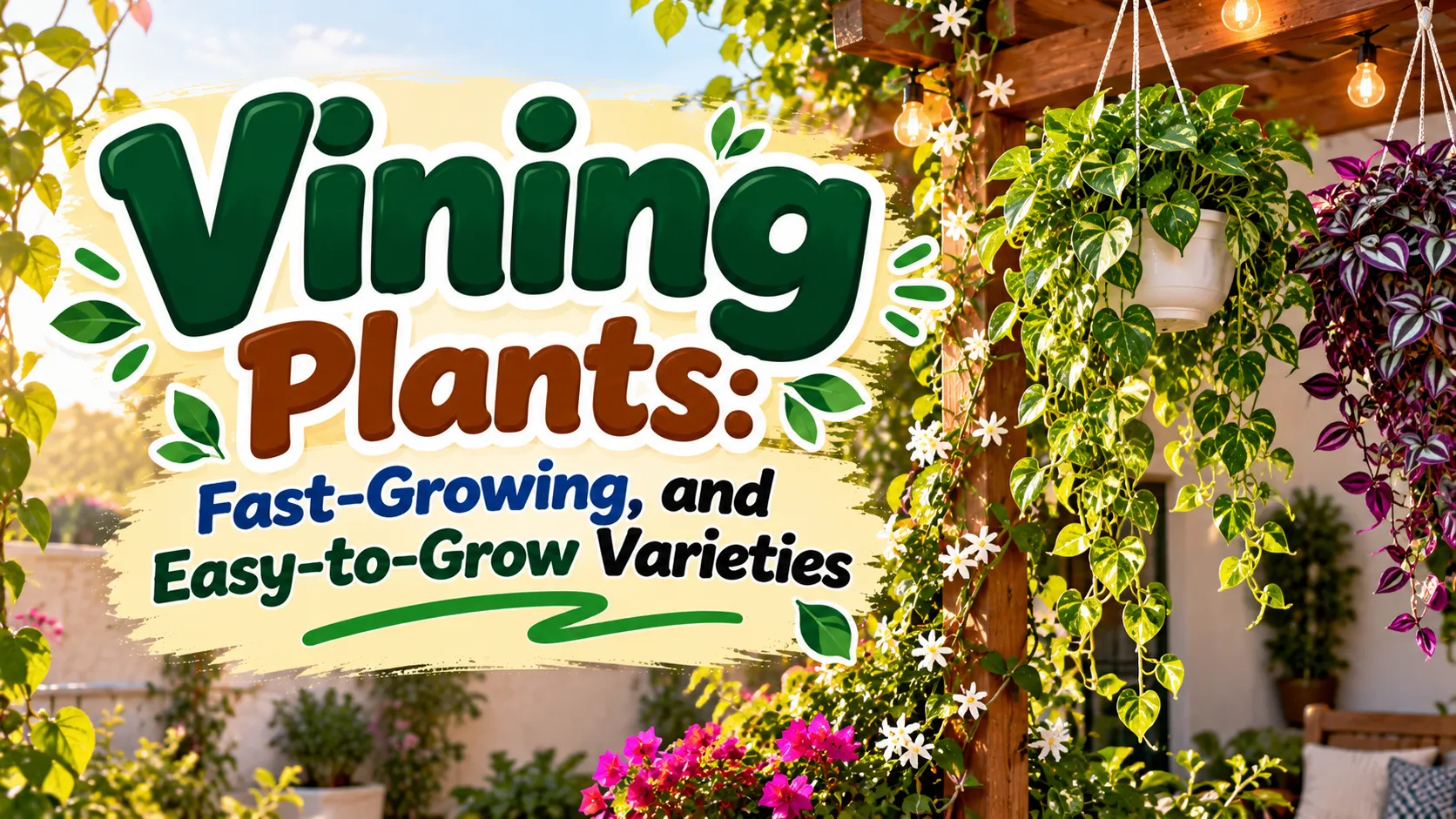
Vining plants are a wonderful way to bring natural beauty, greenery, and texture into your home or garden. These plants grow by climbing, trailing, or spreading along surfaces, making them perfect for decorating walls, covering fences, creating privacy, and adding a lush touch to indoor spaces. From delicate flowering vines to leafy houseplants, there is a variety for almost every growing environment.
Whether you want indoor vining plants for hanging baskets, outdoor climbing plants for a garden trellis, or fast-growing vines to cover an empty wall, choosing the right variety makes a big difference. Some vining plants thrive in bright sunlight, while others prefer shade and indirect light. This guide explores popular vining plants, their growing habits, care requirements, and practical tips to help you find the best options for your space.
🌿 What Are Vining Plants?
Vining plants are plants with long, flexible stems that grow along the ground, climb nearby structures, or trail downward from containers. Some use tendrils or twining stems to climb, while others attach themselves to surfaces with specialized roots. Many varieties can grow quickly when they receive suitable light, water, and support.
Vining plants are popular because they make use of vertical space and can create a fuller appearance without requiring a large planting area.
- Climbing vines: Grow upward along trellises, fences, poles, or walls.
- Trailing vines: Hang down from pots, shelves, window boxes, and hanging baskets.
- Ground-covering vines: Spread horizontally to cover soil and help fill empty garden spaces.
- Flowering vines: Produce colorful blooms that can attract pollinators.
- Foliage vines: Are grown primarily for their attractive leaves and decorative growth patterns.
Before choosing a vine, consider whether it will grow indoors or outdoors, how much room it needs, and whether it requires a support structure.
🪴 Best Indoor Vining Plants
Indoor vining plants add greenery to shelves, desks, windows, and hanging planters. Many popular houseplants have trailing stems that look attractive even in small apartments or offices. The best choice depends on your available light, watering habits, and how much space you have.
- Golden Pothos: A forgiving houseplant with heart-shaped green leaves marked with golden-yellow patterns.
- Heartleaf Philodendron: Known for its soft, heart-shaped foliage and flexible trailing stems.
- English Ivy: A classic vine with small, lobed leaves that can trail or climb with support.
- String of Hearts: Features delicate, heart-shaped leaves on thin cascading stems.
- Spider Plant: Produces arching leaves and hanging plantlets, making it attractive in elevated containers.
- Tradescantia Zebrina: Has striped purple, silver, and green leaves that create a colorful trailing display.
- Scindapsus Pictus: Also called satin pothos, this plant has green leaves with silvery markings.
- Hoya Carnosa: A climbing or trailing plant with thick leaves and clusters of waxy flowers when mature.
- Monstera Adansonii: Recognized for its distinctive holes in the leaves and climbing growth habit.
- Creeping Fig: A small-leaved climber that can attach itself to suitable surfaces.
- Philodendron Micans: Features velvety leaves with green and bronze tones.
- String of Pearls: Has rounded, bead-like leaves that cascade over the sides of containers.
- Peperomia Hope: A compact trailing plant with rounded, fleshy leaves.
- Burro’s Tail: A succulent with plump leaves arranged along hanging stems.
- Grape Ivy: Produces attractive green foliage and can climb with suitable support.
Most indoor vining plants benefit from containers with drainage holes and a potting mix suited to their roots. Avoid watering automatically on a fixed schedule; check the soil first because indoor conditions can vary considerably.
☀️ Outdoor Vining Plants for Sunny Gardens
Sunny garden vines can transform fences, pergolas, arches, and trellises into colorful features. Many flowering varieties produce their best blooms when they receive several hours of direct sunlight, although their exact requirements depend on the species and local climate.
- Bougainvillea: A colorful, thorny climber known for bright pink, purple, red, orange, or white bracts.
- Clematis: A flowering vine with varieties that produce large, star-shaped blooms in different colors.
- Mandevilla: A tropical climbing vine with trumpet-shaped flowers.
- Passionflower: Produces striking, intricate flowers and may develop edible fruit in some species.
- Black-Eyed Susan Vine: A twining climber with bright flowers, often featuring dark centers.
- Morning Glory: A fast-growing annual vine with trumpet-shaped flowers.
- Sweet Pea: A flowering annual vine valued for colorful blooms and fragrance.
- Canary Creeper: An ornamental vine with unusual yellow flowers and attractive foliage.
- Hyacinth Bean Vine: A vigorous climber with decorative leaves and colorful pods.
- Climbing Roses: Certain rose varieties grow on long canes that can be trained over arches and trellises.
- Scarlet Runner Bean: A climbing bean with red flowers and edible pods when harvested and prepared appropriately.
- Cup-and-Saucer Vine: A vigorous climber with distinctive bell-shaped flowers.
- Cypress Vine: A delicate annual vine with finely divided foliage and small star-shaped flowers.
- Moonflower: A climbing vine with large, fragrant white flowers that generally open in the evening.
- Flame Vine: A vigorous tropical or subtropical climber known for clusters of orange flowers.
Choose sun-loving vines according to your local growing conditions. In very hot climates, even plants that enjoy sunlight may benefit from protection during the hottest part of the afternoon.
🌳 Fast-Growing Vining Plants
Fast-growing vines are useful when you want to cover a trellis, soften a fence, or create a green backdrop in a relatively short time. However, rapid growth can also mean frequent pruning and a greater need for space.
- Morning Glory: An annual climber that can grow rapidly in warm weather.
- Sweet Potato Vine: A trailing ornamental plant with green, lime, purple, or bronze foliage.
- Golden Pothos: Can produce long trailing stems indoors in suitable conditions.
- English Ivy: Spreads and climbs steadily, though it can become invasive in some regions.
- Virginia Creeper: A vigorous outdoor climber known for its attractive autumn foliage.
- Japanese Honeysuckle: Grows quickly but is invasive in many areas and should generally be avoided where it is considered a problem.
- Wisteria: A powerful woody climber that can grow vigorously once established.
- Kudzu: An extremely aggressive vine that can smother other plants and is invasive in parts of the United States.
- Passionflower: Some species grow vigorously in warm conditions.
- Scarlet Runner Bean: A quick-growing annual climber that produces flowers and pods.
- Hyacinth Bean Vine: A vigorous ornamental climber in warm weather.
- Creeping Jenny: A low-growing plant that can trail over container edges and spread along moist ground.
- Climbing Hydrangea: A slower starter that can eventually cover a wall or sturdy support.
- Hops: A fast-growing perennial vine that produces long annual shoots.
- Coral Vine: A vigorous flowering vine in warm climates that can spread rapidly.
Fast-growing does not always mean easy to manage. Before planting a vigorous species, check whether it is invasive in your region and whether its mature size suits your garden.
🌺 Flowering Vining Plants
Flowering vines combine vertical growth with seasonal color, fragrance, or distinctive blooms. They can decorate pergolas, fences, arches, and garden entrances while creating habitats for pollinators.
- Clematis: Offers a wide range of flower shapes and colors.
- Bougainvillea: Produces colorful bracts that can create a bright display in warm climates.
- Jasmine: Certain species produce fragrant white or yellow flowers.
- Wisteria: Known for hanging clusters of purple, blue, pink, or white flowers.
- Honeysuckle: Many varieties produce tubular flowers that attract pollinators.
- Mandevilla: Produces trumpet-shaped flowers in tropical and subtropical settings.
- Passionflower: Has intricate flowers that look almost architectural.
- Morning Glory: Offers colorful blooms that often open in the morning.
- Moonflower: Produces large white flowers that generally open at night.
- Black-Eyed Susan Vine: Often blooms in warm weather with yellow or orange flowers.
- Sweet Pea: Popular for fragrant flowers in cool-season gardens.
- Climbing Roses: Add classic flowers to garden structures.
- Coral Honeysuckle: A North American native vine with tubular red flowers.
- Carolina Jessamine: An evergreen vine with bright yellow flowers; all parts are poisonous if ingested.
- Trumpet Vine: Produces orange or red trumpet-shaped flowers and attracts hummingbirds, but can spread aggressively.
- Dutchman’s Pipe: A climbing plant with unusual pipe-shaped flowers, though some species are toxic.
- Chocolate Vine: Produces distinctive flowers and may become invasive in some areas.
- Climbing Snapdragon: A delicate climber with colorful flowers.
- Firecracker Vine: A flowering vine with slender, tubular blooms.
- Climbing Fuchsia: Certain species and cultivars can grow as trailing or climbing plants.
When choosing a flowering vine, consider its bloom season, mature size, pruning requirements, and whether it needs a sunny or partially shaded location.
🌱 Easy-to-Grow Vining Plants for Beginners
If you are new to gardening, start with plants that tolerate ordinary growing conditions and do not require constant attention. Even beginner-friendly vines need appropriate light, drainage, and watering, but many adapt well once their basic needs are met.
- Golden Pothos: Tolerates a range of indoor light conditions, although growth is usually stronger in bright, indirect light.
- Heartleaf Philodendron: An adaptable houseplant with attractive trailing foliage.
- Spider Plant: Grows well in bright, indirect light and produces plantlets.
- Tradescantia Zebrina: Grows readily and can be propagated from stem cuttings.
- Sweet Potato Vine: A vigorous ornamental trailer for containers and seasonal displays.
- Morning Glory: A straightforward annual climber for sunny gardens.
- Sweet Pea: A manageable seasonal vine in suitable cool weather.
- Scindapsus Pictus: Offers decorative foliage and can trail or climb.
- String of Hearts: Works well in bright, indirect light and well-draining soil.
- Creeping Jenny: A useful trailer for containers and some garden settings.
Beginners should avoid choosing a plant solely because it is labeled easy-care. A succulent vine may prefer dry soil, while a tropical foliage vine may need more consistent moisture.
🌿 Low-Light Vining Plants for Indoor Spaces
Some indoor vines tolerate lower light better than others, making them useful for rooms that do not receive strong direct sunlight. However, low-light tolerance does not mean a plant can thrive indefinitely in a dark corner without natural or artificial light.
- Golden Pothos: Adapts to lower light, though its variegation may become less pronounced.
- Heartleaf Philodendron: Can grow in moderate or lower indirect light.
- Scindapsus Pictus: Often tolerates moderate indoor light, with growth slowing in dim conditions.
- English Ivy: Can grow indoors in bright, indirect light and some moderate-light settings.
- Creeping Fig: Can be grown indoors with suitable indirect light and humidity.
- Philodendron Micans: Prefers indirect light but can adapt to less intense conditions.
- Monstera Adansonii: Usually performs best in bright, indirect light but may tolerate moderate light.
- Hoya Carnosa: Can tolerate some moderate indoor light, although flowering is generally better with brighter conditions.
- Spider Plant: Adapts to a range of indoor light conditions.
- Tradescantia Zebrina: Usually grows best with bright indirect light, as its colors can fade in dim spaces.
If a plant develops long, weak stems or small leaves, it may need more light. Moving it gradually to a brighter location can help it grow more compactly.
🪴 Trailing Vining Plants for Hanging Baskets
Trailing vines are especially attractive in hanging baskets, elevated planters, and shelves. Their stems spill over the container, adding layers of greenery without taking up much floor space.
- String of Pearls: Features round, bead-like succulent leaves.
- String of Hearts: Has delicate heart-shaped leaves along slender stems.
- Golden Pothos: Produces long, leafy trails.
- Heartleaf Philodendron: Creates a lush cascade of heart-shaped leaves.
- Burro’s Tail: A succulent with thick, trailing stems.
- Spider Plant: Produces arching leaves and hanging plantlets.
- Tradescantia Zebrina: Offers colorful foliage and vigorous trailing growth.
- Peperomia Hope: Has rounded leaves on trailing stems.
- English Ivy: Creates a classic cascade of lobed leaves.
- Creeping Jenny: Forms a carpet of foliage that spills over container edges.
- Hoya Curtisii: A small-leaved trailing hoya with attractive patterned foliage.
- Dischidia Nummularia: Often called string of nickels, it has small, rounded leaves.
- Purple Heart: Features purple foliage and trailing stems.
- Callisia Repens: A compact trailing plant with small, colorful leaves.
- Grape Ivy: Offers lush green foliage for hanging displays.
Check the weight of the pot, use a secure hanging fixture, and make sure excess water can drain safely. Place plants where their stems have room to grow without blocking walkways or windows.
🧱 Vining Plants for Walls and Fences
Climbing vines can soften hard surfaces, add privacy, and make a garden feel more established. The best species depends on the material of the wall or fence, the available support, and whether you want a permanent or seasonal covering.
- Clematis: Climbs using leaf stalks that wrap around suitable supports.
- Climbing Roses: Need ties or a trellis to guide their canes.
- Honeysuckle: Many varieties twine around supports.
- Wisteria: A strong woody climber that needs a sturdy structure.
- Virginia Creeper: Attaches to surfaces with adhesive-tipped tendrils.
- Boston Ivy: Uses adhesive pads to attach to walls.
- Climbing Hydrangea: Can attach to suitable surfaces with aerial roots.
- Star Jasmine: A fragrant evergreen climber in warm climates.
- Passionflower: Often needs a trellis or wires to support its tendrils.
- Trumpet Vine: Climbs using aerial rootlets and can become vigorous.
- English Ivy: Attaches to surfaces with aerial rootlets.
- Bougainvillea: Usually benefits from being tied to a suitable support.
- Mandevilla: Twines around supports as it grows.
- Sweet Pea: Climbs using tendrils that grasp thin supports.
- Morning Glory: Twines around a trellis or similar structure.
Do not allow a vigorous vine to grow unchecked over a building. Some climbing plants can damage mortar, enter gaps, obscure gutters, or become difficult to remove. For buildings, select a suitable support system and inspect the growth regularly.
🌳 Evergreen Vining Plants
Evergreen vines retain their leaves through much or all of the year in suitable climates. They are useful for maintaining greenery during winter or creating a consistent backdrop for a garden.
- English Ivy: Evergreen in many climates, although it can be invasive.
- Star Jasmine: An evergreen flowering vine in warm regions.
- Carolina Jessamine: An evergreen climber with yellow flowers.
- Honeysuckle: Some species retain their leaves in mild climates.
- Climbing Hydrangea: Can be deciduous or evergreen depending on the species.
- Hoya Carnosa: An evergreen tropical vine commonly grown indoors.
- Golden Pothos: An evergreen tropical houseplant.
- Heartleaf Philodendron: Maintains foliage throughout the year indoors.
- Scindapsus Pictus: An evergreen tropical foliage vine.
- Creeping Fig: An evergreen climber in suitable warm conditions.
- Bougainvillea: Often evergreen in frost-free climates but may lose leaves in cold conditions.
- Passionflower: Some species remain evergreen in mild climates.
- Climbing Asparagus Fern: A trailing or climbing plant grown for fine-textured foliage, though it is not a true fern.
- Coral Honeysuckle: A North American native vine that may remain partly evergreen in warmer regions.
- Evergreen Clematis: Certain species retain their leaves in mild climates.
Evergreen behavior depends on species and climate. A plant that remains leafy in a warm region may lose foliage or suffer damage in a cold winter.
🌵 Succulent Vining Plants
Succulent vines store water in their fleshy leaves or stems. Many are suitable for hanging baskets and bright indoor spaces, but they generally need excellent drainage and careful watering to prevent root rot.
- String of Pearls: Has round, bead-like leaves along trailing stems.
- String of Hearts: Produces heart-shaped leaves on thin vines.
- String of Bananas: Features curved leaves resembling tiny bananas.
- String of Dolphins: Has distinctive dolphin-shaped leaves.
- Burro’s Tail: Forms thick, trailing stems covered in plump leaves.
- Ruby Necklace: A trailing succulent with narrow leaves that can develop reddish-purple tones in bright light.
- Dischidia Nummularia: A trailing plant with rounded leaves that can be grown in airy conditions.
- Hoya Curtisii: A small-leaved trailing plant with succulent-like foliage.
- Crassula Pellucida: A low-growing or trailing succulent with colorful leaves.
- Othonna Capensis: Commonly called ruby necklace, it has slender stems and succulent leaves.
- Sedum Morganianum: Another name associated with burro’s tail.
- String of Needles: A trailing succulent with slender, needle-like leaves.
Most succulent vines prefer bright light and a potting mix that drains quickly. Let the soil dry appropriately between waterings, and avoid leaving the container sitting in water.
🌸 Fragrant Vining Plants
Fragrant vines can make outdoor seating areas, patios, and garden entrances more inviting. Some release their scent during the day, while others are especially fragrant in the evening.
- Star Jasmine: Produces fragrant white flowers in warm climates.
- Common Jasmine: Many varieties are known for sweet-smelling blooms.
- Honeysuckle: Certain species produce fragrant flowers that attract pollinators.
- Wisteria: Some varieties have a noticeable floral fragrance.
- Sweet Pea: Popular for its delicate, sweet scent.
- Moonflower: Its large evening-opening flowers may be fragrant.
- Chocolate Vine: Some varieties produce flowers with a chocolate-like scent.
- Carolina Jessamine: Has fragrant yellow flowers but is poisonous if ingested.
- Climbing Roses: Many varieties produce fragrant flowers.
- Passionflower: Some species have noticeable floral scents.
- Jasmine Sambac: A fragrant tropical climber or shrub that can be trained with support.
- Akebia Quinata: Also called chocolate vine, it produces distinctive flowers and may spread aggressively.
- Climbing Vanilla Orchid: A tropical climbing orchid with fragrant flowers under suitable conditions.
- Clematis Armandii: An evergreen clematis with fragrant white flowers.
- Mandevilla: Certain varieties have lightly fragrant blooms.
Choose fragrant vines according to your climate and the time you spend in the area. If anyone in your household is sensitive to strong scents, consider planting fragrant species farther from windows or seating areas.
🏡 Vining Plants for Small Gardens and Apartments
Small spaces benefit from plants that grow vertically or trail from shelves rather than spreading across the floor. Compact vines can add texture without requiring a large garden bed.
- Golden Pothos: Works well in hanging baskets and on shelves.
- Heartleaf Philodendron: Produces long stems that can be trained along a small support.
- String of Hearts: Offers delicate trailing foliage.
- Peperomia Hope: A compact choice for smaller containers.
- Scindapsus Pictus: Adds patterned foliage to shelves and desks.
- Hoya Carnosa: Can be trained around a small hoop or trellis.
- Clematis: Some compact varieties can grow in containers with support.
- Sweet Pea: Can grow vertically in a seasonal container garden.
- Morning Glory: Can climb a compact trellis in a sunny spot.
- Creeping Jenny: Works well as a trailing plant in container arrangements.
- Spider Plant: Can be displayed in a hanging planter.
- Tradescantia Zebrina: Adds colorful foliage to small spaces.
- Monstera Adansonii: Can be trained upward on a small moss pole or trellis.
- Creeping Fig: Can be grown in containers with appropriate pruning.
- Jasmine: Compact species or varieties can be trained on a small support.
For apartment gardening, consider light from your windows, the size of the mature plant, and whether you can provide a safe support. Use trays or waterproof saucers to protect shelves and floors from excess water.
🌱 Vining Plants That Grow in Shade
Shady gardens can still support attractive vines, although the right plant depends on how much light the area receives. Deep shade is different from partial shade, and many flowering vines need more sunlight to bloom well.
- Climbing Hydrangea: Tolerates partial shade and is useful for suitable walls or supports.
- English Ivy: Can grow in shade but may become invasive.
- Creeping Fig: Can tolerate partial shade in warm conditions.
- Virginia Creeper: Grows in different light conditions, including partial shade.
- Boston Ivy: Can grow in partial shade and produces colorful autumn foliage.
- Akebia Quinata: Tolerates partial shade but may be invasive in some regions.
- Climbing Euonymus: Some species grow as evergreen climbers in shaded conditions.
- Honeysuckle: Shade tolerance varies considerably by species.
- Japanese Hydrangea Vine: A shade-tolerant climbing plant in suitable climates.
- Clematis: Some varieties tolerate partial shade, although their light needs differ.
- Star Jasmine: Generally flowers better with adequate sunlight, but may tolerate some partial shade in warm areas.
- Chocolate Vine: Can grow in partial shade but should be checked for invasive potential.
- Virginia Creeper: Offers seasonal color and can cover large surfaces.
- Climbing Ficus: Some species are suited to warm, partially shaded settings.
- Hoya Carnosa: An indoor option for bright to moderate indirect light.
Before planting a shade-loving vine, determine whether the location receives filtered sunlight, morning sun, or almost no direct light. That distinction can help you choose a plant that will thrive rather than merely survive.
🌿 How to Grow and Care for Vining Plants
Vining plants vary in their needs, but good planting practices help most varieties establish strong roots and healthy growth. The main factors are light, water, soil, temperature, support, and regular maintenance.
- Choose the right location. Match the plant to the available sunlight, climate, and growing space.
- Use suitable soil. Most garden vines need soil that drains well, while indoor plants benefit from a potting mix suited to their species.
- Water according to the plant’s needs. Check the soil before watering instead of following a rigid schedule.
- Provide support. Use trellises, wires, poles, or hanging baskets depending on whether the vine climbs or trails.
- Prune when necessary. Remove dead growth and trim stems that become tangled or exceed the available space.
- Feed selectively. Use fertilizer appropriate to the plant and season, following the product instructions.
- Inspect for pests. Watch for aphids, spider mites, mealybugs, and other common garden or houseplant pests.
- Allow enough space. Fast-growing vines may spread beyond their original planting area.
- Protect against unsuitable weather. Tropical species may need protection from cold, while some cool-season vines struggle in intense heat.
- Check drainage. Containers should have drainage holes, and garden soil should not remain waterlogged.
Regular observation is more useful than a one-size-fits-all care routine. Yellow leaves, weak growth, and dry or damaged stems can indicate different problems depending on the species and growing conditions.
⚠️ Vining Plants to Handle With Care
Some vines can be invasive, toxic, thorny, or difficult to remove. A plant may be attractive while still being unsuitable for a particular garden or household.
- Kudzu: Highly invasive in parts of the United States and capable of smothering other vegetation.
- Japanese Honeysuckle: Invasive in many areas and capable of crowding out native plants.
- English Ivy: Can spread aggressively and damage trees or structures when unmanaged.
- Trumpet Vine: Vigorous and capable of spreading beyond its intended location.
- Wisteria: Strong woody stems can damage weak supports, and some species are invasive outside their native range.
- Carolina Jessamine: All parts are poisonous if ingested.
- English Ivy: Can cause skin irritation in some people and is harmful if ingested.
- Oleander: Sometimes trained or grown in climbing forms in suitable settings; all parts are highly toxic.
- Virginia Creeper: Can cause skin irritation in some people, and its berries should not be eaten.
- Poison Ivy: A climbing or trailing vine that causes an allergic skin reaction in susceptible people.
Always identify a plant before handling or planting it, especially if children or pets may have access to it. Check local invasive-species guidance before buying vigorous outdoor vines, and never eat ornamental plant parts unless their identity and safety are confirmed.
❓ Frequently Asked Questions About Vining Plants
Here are answers to common questions about choosing, growing, and maintaining vining plants indoors and outdoors.
What are the easiest vining plants to grow?
Golden pothos, heartleaf philodendron, spider plants, and Tradescantia zebrina are popular indoor options for beginners. Outdoors, morning glory and sweet potato vine can be straightforward choices in suitable conditions.
Which vining plants grow the fastest?
Morning glory, sweet potato vine, hyacinth bean vine, and some passionflowers can grow quickly in favorable conditions. Growth depends on temperature, sunlight, water, soil, and the particular species.
What are the best indoor vining plants?
Golden pothos, heartleaf philodendron, string of hearts, Scindapsus pictus, Hoya carnosa, and Monstera adansonii are popular indoor choices. Select a plant based on the light and humidity available in your home.
Which vining plants produce flowers?
Clematis, jasmine, honeysuckle, bougainvillea, wisteria, morning glory, passionflower, and mandevilla are well-known flowering vines. Their blooming seasons and sunlight needs vary.
Are vining plants good for small spaces?
Yes. Trailing plants such as pothos, string of hearts, and philodendron use vertical space effectively. Compact climbing vines can also grow in containers with a small trellis.
Do vining plants need a trellis?
Not all vines need a trellis. Climbing species may require support, while trailing plants can grow over the sides of pots and hanging baskets. The best setup depends on the plant’s natural growth habit.
Can vining plants grow indoors without direct sunlight?
Many houseplant vines can grow in bright, indirect light without direct sun. However, very dark rooms usually do not provide enough light for healthy long-term growth. Supplemental grow lights may help.
Which vining plants are evergreen?
English ivy, star jasmine, and several tropical houseplant vines can remain evergreen in suitable conditions. Evergreen behavior depends on the species, temperature, and climate.
Are all vining plants safe for pets?
No. Some common vines can be toxic to cats, dogs, or other animals. Check the exact plant species against a reliable veterinary plant-safety resource before bringing it into a pet-accessible space.
How do I stop a vining plant from growing out of control?
Choose a suitable species, provide a defined support, and prune regularly. Avoid invasive vines in regions where they are prohibited or known to threaten native vegetation.
🌼 Conclusion
Vining plants offer a versatile way to add greenery, flowers, fragrance, and texture to indoor and outdoor spaces. Whether you want a trailing houseplant for a shelf, a flowering climber for a pergola, or a leafy vine for a garden trellis, there are many varieties to explore.
For indoor spaces, golden pothos, heartleaf philodendron, and string of hearts are attractive options. For sunny outdoor gardens, consider clematis, morning glory, passionflower, or bougainvillea, depending on your climate. If you want year-round greenery, investigate suitable evergreen species for your region.
The key is to match the vine to your growing conditions, provide appropriate support, and keep its mature size in mind. With the right choice and consistent care, vining plants can turn an ordinary corner, fence, or garden structure into a beautiful living feature.

Ethan Carter is a nature enthusiast and content writer with a passion for flowers and botanical knowledge. He is the author behind FlowerNamez, where he shares simple and informative content about flower names, types, and meanings.
With a focus on clarity and accuracy, Ethan aims to help readers explore the beauty of flowers and understand their significance in everyday life.