
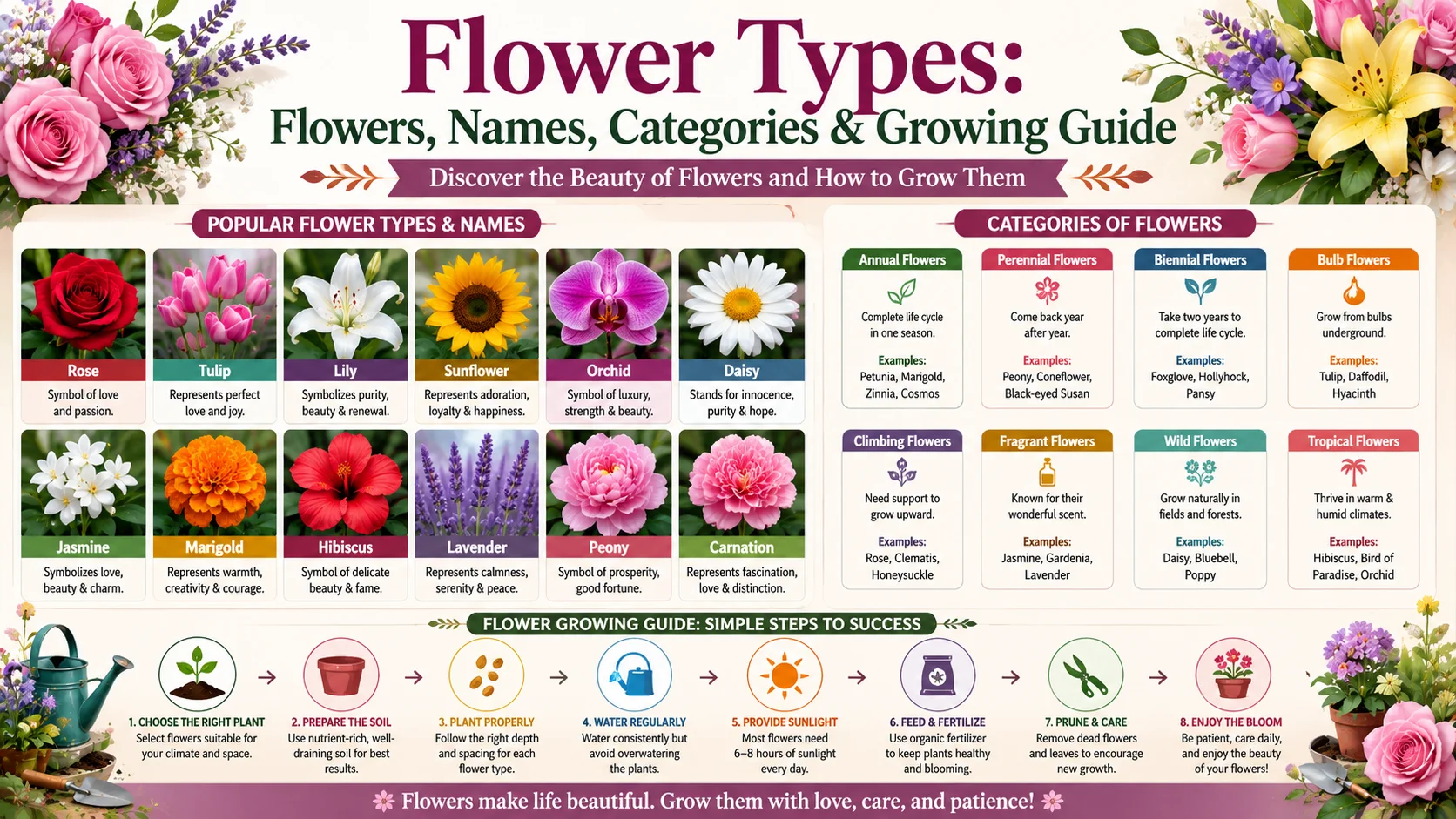
Flowers add color, fragrance, character, and life to gardens, homes, bouquets, weddings, and outdoor spaces. But when you start exploring flower types, the sheer variety can feel overwhelming. Roses, tulips, lilies, orchids, daisies, peonies, marigolds, hydrangeas, and hundreds of other blooms differ in appearance, growing habits, bloom seasons, colors, fragrance, and care needs.
This complete guide brings the most useful flower information together in one place. You’ll discover popular flower types, common flower names, annual and perennial flowers, spring and summer blooms, wildflowers, tropical flowers, fragrant flowers, flowers for gardens, cut flowers, colorful varieties, and unusual blooms.
Whether you are choosing flowers for a garden, bouquet, wedding, gift, landscape, or simply want to learn their names, this guide makes it easier to find the right bloom.
What Are Flower Types?
Flower types are different kinds of flowering plants classified by characteristics such as plant family, life cycle, growth habit, flower shape, bloom season, habitat, color, and use. Common categories include annual flowers, perennial flowers, biennial flowers, bulbs, wildflowers, shrubs, vines, tropical flowers, and flowering trees.
There are hundreds of thousands of flowering plant species, so no single list can include every flower. Instead, the most useful approach is to organize flowers into practical groups that make identification and selection easier.
Popular Flower Types
Some flowers have become especially popular because they are beautiful, widely available, easy to recognize, or useful for gardens and floral arrangements.
Here are some of the best-known flower types:
- Rose
- Tulip
- Lily
- Sunflower
- Daisy
- Orchid
- Carnation
- Chrysanthemum
- Peony
- Hydrangea
- Daffodil
- Marigold
- Lavender
- Iris
- Jasmine
- Gardenia
- Hibiscus
- Dahlia
- Zinnia
- Petunia
- Geranium
- Begonia
- Poppy
- Violet
- Freesia
- Anemone
- Aster
- Camellia
- Cosmos
- Snapdragon
These flowers cover a wide range of colors, shapes, growing conditions, and uses. Some work especially well in gardens, while others are better known as cut flowers, wedding flowers, fragrant flowers, or indoor flowering plants.
Flower Types by Life Cycle
One of the easiest ways to understand different flowers is to look at how long the plant lives.
Annual Flowers
Annual flowers complete their life cycle within one growing season. They usually grow, flower, produce seeds, and finish their life cycle within a year.
Popular annual flowers include:
- Marigold
- Zinnia
- Petunia
- Cosmos
- Sunflower
- Calendula
- Celosia
- Sweet Alyssum
- Nasturtium
- Morning Glory
- Impatiens
- Ageratum
- Portulaca
- Cornflower
- Tithonia
- Nicotiana
Annuals are excellent for gardeners who want quick color, seasonal displays, containers, hanging baskets, and flower beds.
Perennial Flowers
Perennial flowers live for several years. Depending on the climate and species, the foliage may die back during part of the year while the roots or crowns survive and produce new growth.
Popular perennial flowers include:
- Rose
- Peony
- Lavender
- Iris
- Coneflower
- Black-Eyed Susan
- Daylily
- Shasta Daisy
- Yarrow
- Salvia
- Delphinium
- Astilbe
- Hosta
- Coreopsis
- Garden Phlox
- Chrysanthemum
Perennials are popular with gardeners who want flowers to return year after year.
Biennial Flowers
Biennial plants generally complete their life cycle over two growing seasons. They often produce leaves during the first year and flowers and seeds during the second.
Examples include:
- Foxglove
- Hollyhock
- Canterbury Bells
- Sweet William
- Forget-Me-Not
- Honesty
- Wallflower
Biennials can add a distinctive seasonal rhythm to cottage gardens and naturalistic landscapes.
Flower Types by Growing Habit
Flowers can also be grouped by the way their plants grow.
Bulb Flowers
Bulb flowers grow from specialized underground storage structures and often provide some of the earliest seasonal color.
Popular bulb and bulb-like flowers include:
- Tulip
- Daffodil
- Hyacinth
- Crocus
- Allium
- Amaryllis
- Lily
- Gladiolus
- Freesia
- Snowdrop
- Ranunculus
- Tuberose
Tulips and daffodils are especially popular for spring gardens, while some bulbs and related plants flower during summer or indoors.
Climbing and Vine Flowers
Flowering vines are useful when you want to cover fences, trellises, arches, walls, or pergolas.
Examples include:
- Clematis
- Wisteria
- Morning Glory
- Honeysuckle
- Jasmine
- Passion Flower
- Trumpet Vine
- Sweet Pea
- Mandevilla
- Bougainvillea
These flowers can provide both vertical interest and privacy when grown in suitable conditions.
Flowering Shrubs
Flowering shrubs combine flowers with substantial foliage and structure, making them useful for borders and landscape design.
Examples include:
- Hydrangea
- Azalea
- Rhododendron
- Gardenia
- Camellia
- Lilac
- Forsythia
- Rose
- Hibiscus
- Butterfly Bush
- Weigela
- Mock Orange
Flower Types by Season
Choosing flowers according to their bloom season can help keep a garden colorful throughout the year.
Spring Flowers
Spring is associated with fresh growth and some of the year’s most recognizable blooms.
Popular spring flowers include:
- Tulip
- Daffodil
- Hyacinth
- Crocus
- Peony
- Iris
- Cherry Blossom
- Magnolia
- Lilac
- Primrose
- Pansy
- Forget-Me-Not
- Sweet Pea
- Anemone
Spring flowers are particularly popular for gardens, Easter arrangements, Mother’s Day bouquets, and seasonal decorations.
Summer Flowers
Summer brings many heat-loving flowers into bloom.
Popular summer flower types include:
- Sunflower
- Zinnia
- Marigold
- Dahlia
- Cosmos
- Coneflower
- Black-Eyed Susan
- Lavender
- Hibiscus
- Petunia
- Geranium
- Lantana
- Bougainvillea
- Hydrangea
- Daylily
Many summer flowers attract butterflies, bees, hummingbirds, and other pollinators.
Fall Flowers
Some flowers continue blooming into autumn, while others are particularly associated with the fall season.
Popular choices include:
- Chrysanthemum
- Aster
- Dahlia
- Japanese Anemone
- Goldenrod
- Marigold
- Sedum
- Celosia
- Sunflower
- Tithonia
Fall-blooming flowers can keep gardens colorful after many summer plants begin to fade.
Winter Flowers
Winter flower availability depends heavily on climate, but several plants can provide blooms or seasonal color during cooler months.
Examples include:
- Pansy
- Hellebore
- Camellia
- Winter Jasmine
- Snowdrop
- Cyclamen
- Witch Hazel
- Primrose
In warmer climates, additional flowering plants may bloom throughout winter.
Flower Types by Color
Color is one of the most popular ways to choose flowers. Different shades can create very different moods in gardens and bouquets.
Red Flowers
Red flowers often create a bold and dramatic effect.
- Red Rose
- Red Tulip
- Red Poppy
- Red Carnation
- Red Dahlia
- Red Geranium
- Red Amaryllis
- Red Hibiscus
Pink Flowers
Pink blooms can create a soft, romantic, cheerful, or elegant look.
- Pink Peony
- Pink Rose
- Pink Tulip
- Pink Carnation
- Pink Cherry Blossom
- Pink Azalea
- Pink Dahlia
- Pink Hydrangea
- Pink Camellia
White Flowers
White flowers are popular for weddings, formal gardens, sympathy arrangements, and minimalist floral designs.
- White Rose
- White Lily
- Gardenia
- Jasmine
- White Orchid
- Baby’s Breath
- Magnolia
- White Hydrangea
- Moonflower
- Tuberose
Yellow Flowers
Yellow blooms bring warmth and brightness to gardens.
- Sunflower
- Daffodil
- Yellow Rose
- Marigold
- Coreopsis
- Black-Eyed Susan
- Yellow Tulip
- Goldenrod
- Forsythia
Purple Flowers
Purple flowers can add depth, elegance, and visual contrast.
- Lavender
- Iris
- Violet
- Purple Petunia
- Aster
- Clematis
- Wisteria
- Salvia
- Verbena
- Purple Orchid
Blue Flowers
Naturally blue flowers are less common than many other colors, which makes them especially desirable.
- Bluebell
- Hydrangea
- Delphinium
- Cornflower
- Forget-Me-Not
- Blue Salvia
- Plumbago
- Morning Glory
- Gentian
Fragrant Flower Types
If fragrance matters as much as appearance, consider flowers known for their pleasant scent.
Some popular fragrant flowers include:
- Jasmine
- Gardenia
- Rose
- Lavender
- Honeysuckle
- Lilac
- Tuberose
- Freesia
- Hyacinth
- Sweet Pea
- Sweet Alyssum
- Mock Orange
- Lily of the Valley
- Garden Phlox
- Night-Blooming Jasmine
Fragrant flowers work especially well near patios, entrances, windows, seating areas, and walkways where their scent can be enjoyed.
Flower Types for Gardens
The best garden flowers depend on your climate, soil, sunlight, available space, and maintenance preferences.
For sunny flower beds, popular choices include:
- Sunflowers
- Zinnias
- Marigolds
- Coneflowers
- Black-Eyed Susans
- Lavender
- Salvia
- Cosmos
- Dahlias
- Coreopsis
For partly shaded gardens, consider:
- Begonias
- Impatiens
- Astilbe
- Foxglove
- Hellebores
- Hostas
- Columbine
- Bleeding Heart
Always check the plant’s recommended growing conditions before choosing a flower. A beautiful flower may struggle if its light, temperature, soil, or moisture requirements do not match your garden.
Flower Types for Containers and Pots
Not everyone has a large garden. Many flowers grow successfully in containers when provided with appropriate light, drainage, water, and space.
Good container choices include:
- Petunia
- Geranium
- Begonia
- Marigold
- Zinnia
- Pansy
- Impatiens
- Calibrachoa
- Verbena
- Portulaca
- Sweet Alyssum
- Dwarf Dahlia
Trailing varieties can look particularly attractive in hanging baskets and window boxes.
Flower Types for Bouquets and Cut Arrangements
Some flowers are especially valuable as cut flowers because of their appearance, stem length, vase life, or popularity in floral design.
Common cut flowers include:
- Rose
- Lily
- Tulip
- Carnation
- Chrysanthemum
- Gerbera Daisy
- Sunflower
- Peony
- Hydrangea
- Alstroemeria
- Snapdragon
- Delphinium
- Freesia
- Lisianthus
- Orchid
- Baby’s Breath
Florists often combine flowers with different shapes and textures to create balanced arrangements. A bouquet may include focal flowers, secondary blooms, filler flowers, and greenery.
Flower Types for Weddings
Flowers play an important role in wedding bouquets, centerpieces, arches, ceremony decorations, and boutonnieres.
Popular wedding flowers include:
- Rose
- Peony
- Hydrangea
- Lily
- Orchid
- Ranunculus
- Anemone
- Baby’s Breath
- Sweet Pea
- Dahlia
- Carnation
- Lisianthus
- Gardenia
- Tulip
When choosing wedding flowers, consider the season, wedding color palette, venue, availability, budget, and the overall style of the event.
Wildflower Types
Wildflowers grow naturally or are cultivated to create a naturalistic appearance. They can provide important resources for pollinators and add a relaxed look to landscapes.
Examples include:
- Poppy
- Coneflower
- Black-Eyed Susan
- Cornflower
- Lupine
- Coreopsis
- Yarrow
- Goldenrod
- Aster
- Columbine
- Bee Balm
- Blanket Flower
- California Poppy
- Queen Anne’s Lace
Native wildflowers can be particularly valuable because they may be adapted to local environmental conditions and support local wildlife.
Tropical Flower Types
Tropical flowers are known for dramatic shapes, vivid colors and rare appearances.
Popular tropical flowers include:
- Hibiscus
- Bird of Paradise
- Plumeria
- Bougainvillea
- Anthurium
- Heliconia
- Ginger
- Orchid
- Passion Flower
- Bougainvillea
- Ixora
- Frangipani
Many tropical plants require warmth, sunlight, and protection from cold temperatures. Some can grow outdoors year-round only in suitable climates.
Flower Types That Attract Pollinators
A pollinator-friendly garden can provide food for bees, butterflies, hummingbirds, and other beneficial wildlife.
Popular pollinator-friendly flowers include:
- Lavender
- Sunflower
- Coneflower
- Bee Balm
- Aster
- Salvia
- Zinnia
- Black-Eyed Susan
- Yarrow
- Cosmos
- Goldenrod
- Catmint
- Coreopsis
- Marigold
Planting several flower types with different bloom periods can help provide food throughout a longer portion of the growing season.
Flower Types for Beginners
If you are planting flowers for the first time, choose varieties that match your local growing conditions and have manageable care requirements.
Beginner-friendly choices often include:
- Marigold
- Zinnia
- Sunflower
- Cosmos
- Nasturtium
- Petunia
- Calendula
- Pansy
- Lavender
- Black-Eyed Susan
- Coneflower
The easiest flower is not necessarily the same for every gardener. Climate, sunlight, soil, watering habits, and container size all affect how well a plant performs.
Flower Types by Plant Family
Botanical families provide another way to understand relationships among flowers.
Asteraceae
The daisy family, Asteraceae, includes many familiar flowers such as:
- Sunflower
- Daisy
- Dahlia
- Chrysanthemum
- Marigold
- Zinnia
- Aster
- Coneflower
- Coreopsis
- Black-Eyed Susan
Rosaceae
The rose family includes:
- Rose
- Strawberry
- Apple blossom
- Cherry blossom
- Peach blossom
- Pear blossom
- Potentilla
Liliaceae and Related Lily Groups
The broader lily group includes many familiar ornamental plants, although modern botanical classification places some former lily relatives into separate families.
Commonly recognized lily-related garden flowers include:
- Lily
- Tulip
- Fritillaria
- Lily of the Valley
- Trillium
Because botanical classification changes as scientists study plant relationships, common names and botanical families do not always align perfectly.
200+ Flower Names at a Glance
Here is a broader flower name list for quick reference:
- Ageratum
- Agapanthus
- Allium
- Alstroemeria
- Amaranth
- Amaryllis
- Anemone
- Angelonia
- Anthurium
- Aster
- Astilbe
- Azalea
- Baby’s Breath
- Bachelor’s Button
- Balsam
- Begonia
- Bee Balm
- Bird of Paradise
- Black-Eyed Susan
- Bleeding Heart
- Bluebell
- Bougainvillea
- Buttercup
- Butterfly Bush
- Calendula
- California Poppy
- Calla Lily
- Camellia
- Campanula
- Candytuft
- Carnation
- Celosia
- Chrysanthemum
- Clematis
- Clover
- Columbine
- Coneflower
- Coreopsis
- Cosmos
- Crocus
- Cyclamen
- Daffodil
- Dahlia
- Daisy
- Daylily
- Delphinium
- Dianthus
- Dusty Miller
- Echinacea
- Edelweiss
- Elderflower
- Evening Primrose
- Fennel Flower
- Fireweed
- Forget-Me-Not
- Forsythia
- Foxglove
- Freesia
- Fuchsia
- Gardenia
- Geranium
- Gerbera Daisy
- Gladiolus
- Goldenrod
- Gomphrena
- Hibiscus
- Hollyhock
- Honeysuckle
- Hyacinth
- Hydrangea
- Impatiens
- Iris
- Jasmine
- Jonquil
- Lantana
- Larkspur
- Lavender
- Lilac
- Lily
- Lily of the Valley
- Lisianthus
- Lobelia
- Lupine
- Magnolia
- Marigold
- Mimosa
- Morning Glory
- Nasturtium
- Nemesia
- Nicotiana
- Oleander
- Orchid
- Pansy
- Passion Flower
- Peony
- Petunia
- Phlox
- Plumeria
- Poinsettia
- Poppy
- Primrose
- Queen Anne’s Lace
- Ranunculus
- Rhododendron
- Rose
- Rudbeckia
- Salvia
- Scabiosa
- Snapdragon
- Snowdrop
- Statice
- Stock
- Sunflower
- Sweet Pea
- Sweet William
- Tansy
- Thistle
- Tithonia
- Trillium
- Tulip
- Tuberose
- Verbena
- Violet
- Wisteria
- Yarrow
- Zinnia
- African Violet
- African Daisy
- African Lily
- Autumn Crocus
- Balloon Flower
- Bee Orchid
- Bellflower
- Bird’s Foot Trefoil
- Blanket Flower
- Blazing Star
- Bloodroot
- Blue Star Flower
- Borage
- Brugmansia
- Canna Lily
- Caper Flower
- Cardinal Flower
- Catchfly
- Celandine
- Chinese Lantern
- Clarkia
- Cockscomb
- Coral Bells
- Cornflower
- Crown Imperial
- Cuphea
- Dandelion
- Dutchman’s Pipe
- Dutch Iris
- Egyptian Star Flower
- Evening Stock
- Everlasting Daisy
- Fairy Duster
- Flax
- Flowering Tobacco
- Four O’Clock
- Gazania
- Globe Amaranth
- Globe Thistle
- Gloxinia
- Hellebore
- Heliotrope
- Heather
- Heliopsis
- Jacob’s Ladder
- Japanese Anemone
- Kangaroo Paw
- Kalanchoe
- Lady’s Slipper Orchid
- Liatris
- Lilyturf
- Love-in-a-Mist
- Maltese Cross
- Mexican Hat Flower
- Moonflower
- Moss Rose
- Nierembergia
- Osteospermum
- Oxalis
- Persian Buttercup
- Prairie Rose
- Protea
- Primula
- Queen of the Night
- Red Hot Poker
- Sea Holly
- Shooting Star
- Spider Lily
- Star Jasmine
- Wishbone Flower
- Blue Lace Flower
- Cape Daisy
- Globe Flower
- Mexican Sunflower
- Scarlet Sage
- Strawflower
- Torch Lily
- Wallflower
- Waxflower
- Wild Bergamot
- Zantedeschia
- Zephyr Lily
How to Choose the Right Flower Type
The prettiest flower is not always the best choice for your situation. Before buying seeds, bulbs, or plants, consider these factors:
1. Check Sunlight
Some flowers need full sun, while others perform better in partial shade or filtered light.
2. Consider Your Climate
Temperature and seasonal conditions influence flowering, growth, and winter survival.
3. Match the Soil
Some plants prefer rich, moist soil, while others tolerate dry or poor soil.
4. Think About Maintenance
If you want low-maintenance flowers, look for plants that tolerate your conditions and do not require frequent pruning or special care.
5. Consider Bloom Time
Choose flowers with different flowering periods if you want color across multiple seasons.
6. Decide the Main Purpose
Your ideal flower may differ depending on whether you want:
- Garden color
- Cut flowers
- Fragrance
- Pollinator support
- Wedding arrangements
- Containers
- Privacy
- Ground cover
- Indoor decoration
- Landscaping
How to Identify an Unknown Flower
If you find a flower you do not recognize, examine more than its color.
Look at:
- Petal shape
- Number of petals
- Flower size
- Leaf shape
- Leaf arrangement
- Stem structure
- Flowering season
- Plant height
- Fragrance
- Growing location
- Whether the flower grows singly or in clusters
A photograph can also help with identification, especially when you capture the flower, leaves, stem, and entire plant.
Flower Names vs. Flower Types: What Is the Difference?
The terms flower names and flower types often overlap, but they do not always mean exactly the same thing.
A flower name identifies a particular flower, such as rose, tulip, orchid, or daisy.
A flower type can describe a broader category based on characteristics such as:
- Life cycle
- Growth habit
- Color
- Season
- Habitat
- Botanical family
- Garden use
- Flower structure
For example, a rose is a flower name, while perennial flowers, fragrant flowers, wildflowers, and climbing flowers are broader categories.
What Is the Most Popular Flower Type?
The rose is one of the world’s best-known and most widely used flowers. Its popularity comes from its variety of colors, forms, fragrance, cultural symbolism, garden uses, and importance in the floral industry.
Other extremely popular flowers include tulips, lilies, sunflowers, daisies, orchids, carnations, chrysanthemums, peonies, and hydrangeas.
Which Flower Types Bloom for a Long Time?
Long-blooming choices vary by climate and growing conditions, but several popular flowers can provide extended color.
Examples include:
- Petunias
- Zinnias
- Marigolds
- Coneflowers
- Black-Eyed Susans
- Coreopsis
- Salvia
- Geraniums
- Cosmos
- Some varieties of roses
Regular watering, appropriate feeding, adequate sunlight, and removing spent flowers when appropriate can help many plants maintain flowering.
Which Flower Types Are Best for Bees and Butterflies?
Flowers rich in nectar and pollen can help support pollinators.
Good choices include:
- Lavender
- Bee Balm
- Coneflower
- Aster
- Sunflower
- Salvia
- Zinnia
- Yarrow
- Goldenrod
- Coreopsis
- Catmint
- Black-Eyed Susan
For the strongest pollinator garden, consider planting several species that flower at different times rather than relying on one flower type.
Which Flower Types Are Best for Small Gardens?
Small spaces can still support beautiful flowers. Compact varieties and container-friendly plants can make good choices.
Consider:
- Marigolds
- Zinnias
- Petunias
- Pansies
- Begonias
- Impatiens
- Lavender
- Nasturtiums
- Alyssum
- Dwarf Dahlias
Vertical flowers and climbing plants can also make use of limited space.
Frequently Asked Questions About Flower Types
How many types of flowers are there?
There are hundreds of thousands of flowering plant species worldwide. The exact number changes as botanists describe new species and revise plant classification, so it is better to think of flower diversity as an enormous and continually studied group rather than one fixed number.
What are the main types of flowers?
Flowers can be grouped in many ways. Common practical categories include annuals, perennials, biennials, bulbs, wildflowers, flowering shrubs, vines, tropical flowers, garden flowers, cut flowers, and flowering trees.
What are the most common flower types?
Some of the most familiar flowers include roses, tulips, lilies, daisies, sunflowers, orchids, carnations, chrysanthemums, peonies, hydrangeas, marigolds, lavender, and dahlias.
What are the easiest flowers to grow?
Many beginners start with flowers such as marigolds, zinnias, sunflowers, cosmos, nasturtiums, calendula, and petunias. However, growing difficulty depends on local climate, sunlight, soil, watering, and plant variety.
What flowers bloom in spring?
Common spring flowers include tulips, daffodils, hyacinths, crocuses, peonies, irises, primroses, pansies, lilacs, and many flowering trees and shrubs.
What flowers bloom in summer?
Popular summer flowers include sunflowers, zinnias, marigolds, dahlias, cosmos, petunias, lavender, coneflowers, black-eyed Susans, hibiscus, and many varieties of hydrangeas.
Which flowers have the strongest fragrance?
Jasmine, gardenia, rose, lavender, honeysuckle, lilac, tuberose, hyacinth, freesia, and mock orange are well known for their fragrance.
Which flowers are best for bouquets?
Roses, lilies, tulips, carnations, peonies, chrysanthemums, gerbera daisies, hydrangeas, orchids, alstroemeria, snapdragons, ranunculus, and lisianthus are popular choices for floral arrangements.
Are roses annual or perennial flowers?
Most garden roses are perennial plants. With suitable care and climate, they can live and flower for many years.
What is the difference between annual and perennial flowers?
Annual flowers generally complete their life cycle within one growing season, while perennial plants survive for multiple years and can return after seasonal dormancy.
Which flower types attract butterflies?
Butterflies are attracted to many nectar-producing flowers, including coneflowers, zinnias, asters, lavender, bee balm, salvia, black-eyed Susans, cosmos, and butterfly bush.
Which flower types are good for containers?
Petunias, geraniums, begonias, marigolds, zinnias, pansies, impatiens, calibrachoa, verbena, and dwarf dahlias can work well in containers when their growing requirements are met.
Can the same flower have different meanings?
Yes. Flower symbolism can vary according to culture, historical tradition, color, occasion, and context. Even reputable flower guides may give different meanings for the same flower.
What is the best way to learn flower names?
Start with common flowers and learn them by visual features such as petal shape, color, leaves, plant height, bloom season, and growing habit. Grouping flowers into categories can make memorizing names easier than studying a random list.
Final Thoughts on Flower Types
The world of flower types is much larger than a simple list of names. Every bloom has its own combination of color, shape, fragrance, growing habit, season, habitat, and practical use. Once you understand these differences, choosing flowers becomes much easier.
For a sunny garden, you might choose sunflowers, zinnias, marigolds, or coneflowers. For fragrance, jasmine, gardenia, lavender, or roses can be excellent choices. If you want flowers for bouquets, roses, lilies, tulips, peonies, carnations, and chrysanthemums are popular options. For pollinators, bee balm, salvia, asters, coneflowers, and other nectar-rich blooms can help create a welcoming garden.
The best flower is ultimately the one that fits your climate, growing space, sunlight, soil, maintenance level, and purpose. With hundreds of beautiful varieties to explore, there is almost always a flower that can fit your garden and style.

Ethan Carter is a nature enthusiast and content writer with a passion for flowers and botanical knowledge. He is the author behind FlowerNamez, where he shares simple and informative content about flower names, types, and meanings.
With a focus on clarity and accuracy, Ethan aims to help readers explore the beauty of flowers and understand their significance in everyday life.