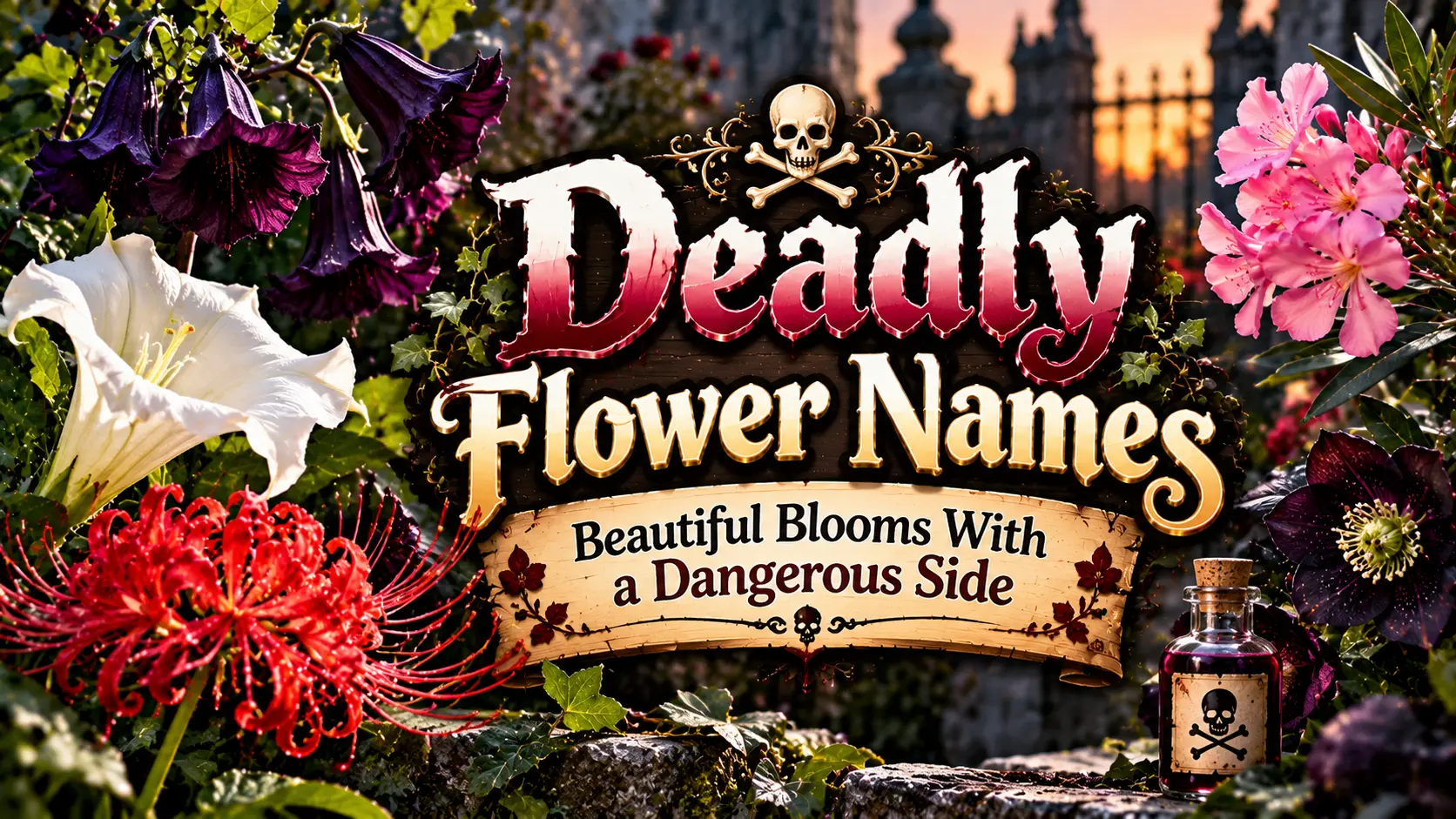
Some of the world’s most beautiful flowers hide a fascinating secret: certain species or parts of the plant can be poisonous to people or animals. That contrast between delicate petals and dangerous chemistry makes deadly flower names especially intriguing for gardeners, writers, fantasy characters, usernames, pet names, and anyone drawn to mysterious botanical themes.
Names inspired by poisonous flowers can sound elegant, gothic, dramatic, or otherworldly. Oleander, Belladonna, Foxglove, Aconite, Hemlock, and Brugmansia are just a few examples with striking names and fascinating histories.
However, “deadly” is not a precise botanical category. Toxicity can vary by species, plant part, dose, preparation, and the person or animal exposed. Some plants commonly described as deadly are highly toxic, while others mainly cause irritation or illness. Never consume an unfamiliar flower or plant based on its appearance or name.
☠️ Famous Deadly Flower Names
Several flowers and flowering plants are well known for containing toxic compounds. Their names have also become popular sources of inspiration for dark botanical themes, fantasy characters, stories, and mysterious naming ideas.
- Belladonna
- Oleander
- Foxglove
- Aconite
- Monkshood
- Hemlock
- Water Hemlock
- Brugmansia
- Datura
- Lily of the Valley
- Autumn Crocus
- Oleander Rose
- Castor Bean
- Angel’s Trumpet
- Rosary Pea
- Deadly Nightshade
- White Hellebore
- Bloodroot
- Jimsonweed
- Wolfsbane
🌹 Deadly Flower Names That Sound Beautiful
Some toxic plant names have surprisingly graceful sounds. Their elegant syllables make them useful for fictional characters, usernames, fantasy worlds, dark aesthetics, and other creative naming projects.
- Belladonna
- Amaryllis
- Oleander
- Aconite
- Azalea
- Nerium
- Brugmansia
- Datura
- Digitalis
- Calypso
- Atropa
- Hellebore
- Lunaria
- Daphne
- Hyacinth
- Nerine
- Cassia
- Tansy
- Arum
- Veratrum
🖤 Dark and Deadly Flower Names
Dark floral names combine poisonous botanical inspiration with a mysterious aesthetic. They can work particularly well for gothic characters, dark fantasy stories, usernames, artwork, and moody garden themes.
- Deadly Nightshade
- Black Belladonna
- Wolfsbane
- Nightshade
- Black Hellebore
- Dark Datura
- Midnight Aconite
- Shadow Lily
- Poison Rose
- Black Oleander
- Raven Bloom
- Death Lily
- Thornflower
- Night Bloom
- Venom Vine
- Dark Foxglove
- Moonshade
- Black Petal
- Grave Blossom
- Crimson Nightshade
🌙 Mysterious Poison Flower Names
Mysterious flower names often sound like something from a forgotten forest, enchanted garden, or fantasy kingdom. These ideas blend real toxic plants with atmospheric botanical words.
- Nightshade
- Belladonna
- Wolfsbane
- Aconite
- Moonflower
- Shadowbloom
- Hellebore
- Datura
- Foxglove
- Blackthorn
- Thornbloom
- Nightbloom
- Duskwort
- Ravenflower
- Moonshade
- Darkroot
- Ghostflower
- Witchflower
- Venombloom
- Midnight Rose
🧙 Witchy Flower Names
Poisonous plants have long appeared in folklore, herbal traditions, legends, and fictional stories about witches and magic. These names create an instantly mystical atmosphere without requiring the name to be literally associated with witchcraft.
- Belladonna
- Wolfsbane
- Mandrake
- Hellebore
- Aconite
- Nightshade
- Datura
- Foxglove
- Henbane
- Mugwort
- Rue
- Wormwood
- Yarrow
- Elderflower
- Hawthorn
- Hemlock
- Vervain
- Mandragora
- Thornapple
- Nightshade
☠️ Poisonous Flower Names for Fantasy Characters
Toxic flowers make memorable character names because they combine beauty, danger, mystery, and symbolism. These ideas can suit villains, antiheroes, magical characters, assassins in fictional worlds, or mysterious heroines.
- Belladonna
- Aconite
- Oleander
- Digitalis
- Datura
- Hellebore
- Atropa
- Nerium
- Wolfsbane
- Nightshade
- Brugmansia
- Veratrum
- Henbane
- Mandrake
- Arum
- Hemlock
- Daphne
- Tansy
- Bryony
- Calotropis
🌺 Poison Flower Names for Girls
Many toxic botanical names have an elegant or feminine quality. They can inspire fictional names, character names, fantasy identities, and dark floral naming themes.
- Belladonna
- Aconite
- Datura
- Oleander
- Digitalis
- Atropa
- Daphne
- Hellebore
- Azalea
- Nerine
- Brugmansia
- Calypso
- Tansy
- Cassia
- Vervain
- Rue
- Flora
- Magnolia
- Nightshade
- Amaryllis
🌿 Deadly Plant Names for Boys
Botanical names can also have a strong, rugged, or mysterious quality. These options draw from toxic plants, herbs, trees, and traditional botanical names.
- Aconite
- Wolfsbane
- Oleander
- Hemlock
- Mandrake
- Basil
- Hawthorn
- Thorn
- Briar
- Rowan
- Arum
- Datura
- Foxglove
- Henbane
- Nightshade
- Veratrum
- Sorrel
- Yew
- Elder
- Monkshood
🕯️ Gothic Flower Names
Gothic flower names tend to combine dark colors, poisonous plants, old-fashioned botanical terms, and mysterious imagery. They are popular for fictional characters, creative projects, usernames, and alternative aesthetics.
- Belladonna
- Nightshade
- Black Dahlia
- Wolfsbane
- Black Hellebore
- Datura
- Aconite
- Oleander
- Foxglove
- Thornrose
- Ravenbloom
- Bloodroot
- Moonshade
- Dark Lily
- Graveflower
- Shadow Rose
- Blackthorn
- Crimson Bloom
- Midnight Petal
- Ghost Orchid
🌹 Poisonous Flower Names Inspired by Roses
Roses themselves are not generally considered deadly flowers, but their thorns and dark symbolism make them useful for creative combinations with poisonous botanical names. These names are fictional or aesthetic combinations rather than botanical classifications.
- Poison Rose
- Night Rose
- Black Rose
- Thorn Rose
- Belladonna Rose
- Wolfsbane Rose
- Midnight Rose
- Crimson Rose
- Shadow Rose
- Grave Rose
- Venom Rose
- Datura Rose
- Darkthorn Rose
- Raven Rose
- Moonlit Rose
- Blood Rose
- Gothic Rose
- Witch Rose
- Phantom Rose
- Widow’s Rose
🌸 Beautiful Flowers With Toxic Parts
Not every poisonous plant looks threatening. Some have delicate, colorful, or highly ornamental flowers, which is part of what makes them so fascinating.
| Flower or Plant | Notable Concern |
|---|---|
| Foxglove | Contains cardiac glycosides |
| Oleander | Highly toxic cardiac compounds |
| Lily of the Valley | Contains cardiac glycosides |
| Monkshood | Contains highly toxic alkaloids |
| Datura | Contains tropane alkaloids |
| Angel’s Trumpet | Contains toxic tropane alkaloids |
| Autumn Crocus | Contains colchicine |
| Deadly Nightshade | Contains tropane alkaloids |
| Water Hemlock | Contains extremely toxic compounds |
| White Hellebore | Contains toxic alkaloids |
| Castor Bean | Seeds contain ricin |
| Rosary Pea | Seeds contain abrin |
🪻 Purple Poison Flower Names
Purple is naturally associated with mystery, magic, and elegance, so purple toxic flowers make especially memorable names. Several poisonous or potentially harmful plants produce purple or violet-colored blooms.
- Aconite
- Monkshood
- Foxglove
- Belladonna
- Datura
- Nightshade
- Hellebore
- Purple Loosestrife
- Wisteria
- Lupine
- Larkspur
- Delphinium
- Clematis
- Iris
- Hyacinth
- Vervain
- Verbena
- Violet
- Heliotrope
- Henbane
🤍 White Poison Flower Names
White blooms can look pure and innocent while belonging to plants that contain toxic compounds. This contrast makes white poisonous flower names particularly interesting for dark fantasy and mysterious aesthetics.
- White Oleander
- Lily of the Valley
- White Hellebore
- Angel’s Trumpet
- Datura
- White Foxglove
- Moonflower
- Water Hemlock
- White Snakeroot
- White Baneberry
- Snowdrop
- Calla Lily
- White Narcissus
- White Azalea
- Star of Bethlehem
- White Rhododendron
- Poison Hemlock
- White Cyclamen
- White Brugmansia
- White Nightshade
🔥 Red and Crimson Poison Flower Names
Red flowers naturally create a dramatic visual impression. Combining crimson imagery with toxic botanical names can produce striking fictional and aesthetic names.
- Crimson Nightshade
- Red Oleander
- Bloodroot
- Scarlet Foxglove
- Crimson Datura
- Blood Lily
- Red Hellebore
- Poison Poppy
- Scarlet Aconite
- Blood Rose
- Crimson Thorn
- Red Belladonna
- Scarlet Nightshade
- Blood Blossom
- Crimson Wolfsbane
- Ruby Datura
- Red Henbane
- Scarlet Oleander
- Crimson Petal
- Bloodflower
🌑 Black Flower Names With a Dangerous Feel
True black flowers are uncommon; many flowers described as black are actually extremely deep purple, burgundy, maroon, red, or brown. Still, dark-colored blooms provide excellent inspiration for mysterious flower names.
- Black Dahlia
- Black Petunia
- Queen of Night Tulip
- Black Hollyhock
- Black Pansy
- Black Calla Lily
- Black Bat Flower
- Black Rose
- Black Iris
- Black Orchid
- Midnight Dahlia
- Night Petal
- Shadow Bloom
- Raven Flower
- Dark Tulip
- Midnight Rose
- Blackthorn
- Ebony Bloom
- Onyx Petal
- Nightshade
🌿 Deadly Flower Names From Folklore
Toxic plants have appeared in folklore and traditional stories for centuries. Their historical associations have helped give names such as belladonna, wolfsbane, mandrake, and nightshade their mysterious reputations.
- Belladonna
- Wolfsbane
- Nightshade
- Mandrake
- Henbane
- Hemlock
- Hellebore
- Aconite
- Datura
- Mugwort
- Wormwood
- Rue
- Vervain
- Yew
- Hawthorn
- Elder
- Thornapple
- Bloodroot
- Foxglove
- Deadly Nightshade
🧪 Scientific-Sounding Poison Flower Names
Scientific botanical names can sound sophisticated and unusual. They are excellent inspiration when you want a character or creative name that feels mysterious without sounding obviously like a common flower.
- Atropa
- Atropa belladonna
- Nerium
- Nerium oleander
- Digitalis
- Digitalis purpurea
- Aconitum
- Datura
- Brugmansia
- Colchicum
- Veratrum
- Conium
- Cicuta
- Ricinus
- Abrus
- Hyoscyamus
- Mandragora
- Daphne
- Calotropis
- Taxus
🌹 One-Word Deadly Flower Names
One-word names are especially useful for usernames, characters, fantasy identities, pets, fictional locations, and creative projects. These options are short enough to be memorable while retaining a dark botanical feeling.
- Belladonna
- Aconite
- Datura
- Oleander
- Nightshade
- Wolfsbane
- Hellebore
- Foxglove
- Mandrake
- Henbane
- Digitalis
- Atropa
- Nerium
- Brugmansia
- Veratrum
- Colchicum
- Hemlock
- Bloodroot
- Bryony
- Yew
✨ Short Deadly Flower Names
Short botanical names are easy to remember and can have a strong visual impact. They work particularly well when you need a mysterious name that does not feel overly complicated.
- Rue
- Yew
- Aconite
- Arum
- Datura
- Ivy
- Sage
- Thorn
- Briar
- Flora
- Aster
- Lotus
- Hemlock
- Daphne
- Tansy
- Hazel
- Oleander
- Atropa
- Nerium
- Vervain
🖤 Deadly Flower Names for Dark Aesthetics
Dark botanical aesthetics often combine flowers with moonlight, shadows, ravens, thorns, velvet, old gardens, and mysterious forests. These names are designed around that atmosphere rather than being botanical classifications.
- Midnight Bloom
- Shadow Petal
- Raven Rose
- Thornflower
- Moonshade
- Black Blossom
- Crimson Bloom
- Night Garden
- Dark Dahlia
- Velvet Rose
- Poison Petal
- Ghostflower
- Grave Blossom
- Moonlit Aconite
- Ravenbloom
- Blackthorn
- Widow’s Bloom
- Night Rose
- Shadow Lily
- Midnight Petunia
⚠️ What Makes a Flower “Deadly”?
The term “deadly flower” is commonly used in popular culture, but botanically, toxicity is more complicated. A plant may contain toxic compounds in its leaves, flowers, berries, roots, seeds, or sap, and different parts can have very different levels of risk.
Some plants can cause serious poisoning if ingested, while others primarily cause skin or eye irritation. Risk also depends on the species, amount consumed, method of exposure, and individual sensitivity.
For that reason, a flower should never be considered safe simply because it is attractive, familiar, or sold as an ornamental plant. Keep unfamiliar plants away from children and pets, and seek professional poison or medical guidance after a suspected exposure.
🌺 How to Choose a Deadly Flower Name
If you are choosing a deadly flower name for a character, username, story, artwork, or aesthetic project, focus on the mood you want the name to create. A real botanical name can make the result feel authentic, while a fictional combination can create a more dramatic atmosphere.
- Choose a real toxic plant for authenticity.
- Pick Belladonna for an elegant dark feeling.
- Choose Aconite for a sharper botanical sound.
- Use Nightshade for mystery.
- Try Wolfsbane for a fantasy atmosphere.
- Choose Oleander for an exotic feel.
- Use Foxglove for a softer contrast.
- Pick Datura for something unusual.
- Choose Hellebore for an old-world feeling.
- Combine flowers with moon imagery.
- Use thorn-related words for a gothic tone.
- Consider a one-word name.
- Look at botanical Latin names.
- Match the name to your character.
- Avoid confusing fictional names with edible plants.
- Check the real plant meaning before using it.
- Consider how easy the name is to pronounce.
- Choose a name that fits your aesthetic.
- Use color-inspired combinations.
- Let the sound of the name guide your choice.
🌸 Frequently Asked Questions About Deadly Flower Names
What is the most famous deadly flower name?
Belladonna, commonly called deadly nightshade, is one of the most famous toxic plant names. Other well-known examples include foxglove, oleander, monkshood, and water hemlock.
What flower is associated with poison?
Several flowers and flowering plants are associated with toxicity, including belladonna, oleander, foxglove, aconite, monkshood, and certain species of datura and brugmansia.
What is a beautiful name that means poisonous flower?
Belladonna is one of the most recognizable names associated with a poisonous plant. For fictional naming, combinations such as Poison Rose or Nightshade Bloom can create a similar theme.
What is a good gothic flower name?
Belladonna, Nightshade, Wolfsbane, Aconite, Hellebore, Datura, Dahlia, and Blackthorn all have a dark botanical quality that works well for gothic naming themes.
Are all deadly flower names actually deadly?
No. Some names are inspired by plants that are genuinely toxic, while others are fictional combinations created for stories, aesthetics, usernames, or characters. The word “deadly” is often used creatively rather than as a precise botanical classification.
Are poisonous flowers dangerous to pets?
Some toxic plants can be dangerous to pets if eaten. Because toxicity varies considerably between plant species, always identify a plant accurately and consult a veterinarian or an appropriate poison-control resource if exposure is suspected.
🌹 Final Thoughts
Deadly flower names are fascinating because they combine two contrasting ideas: beauty and danger. Names such as Belladonna, Aconite, Oleander, Foxglove, Nightshade, and Wolfsbane have strong botanical identities while also carrying the mysterious atmosphere that makes them popular in fantasy, gothic art, literature, and creative naming.
If you want a real botanical name, research the plant and its toxicity carefully before using it around people or animals. If your goal is purely creative, fictional combinations such as Moonshade, Ravenbloom, Shadow Petal, or Midnight Rose can give you the dark floral atmosphere without representing an actual plant.

Ethan Carter is a nature enthusiast and content writer with a passion for flowers and botanical knowledge. He is the author behind FlowerNamez, where he shares simple and informative content about flower names, types, and meanings.
With a focus on clarity and accuracy, Ethan aims to help readers explore the beauty of flowers and understand their significance in everyday life.