
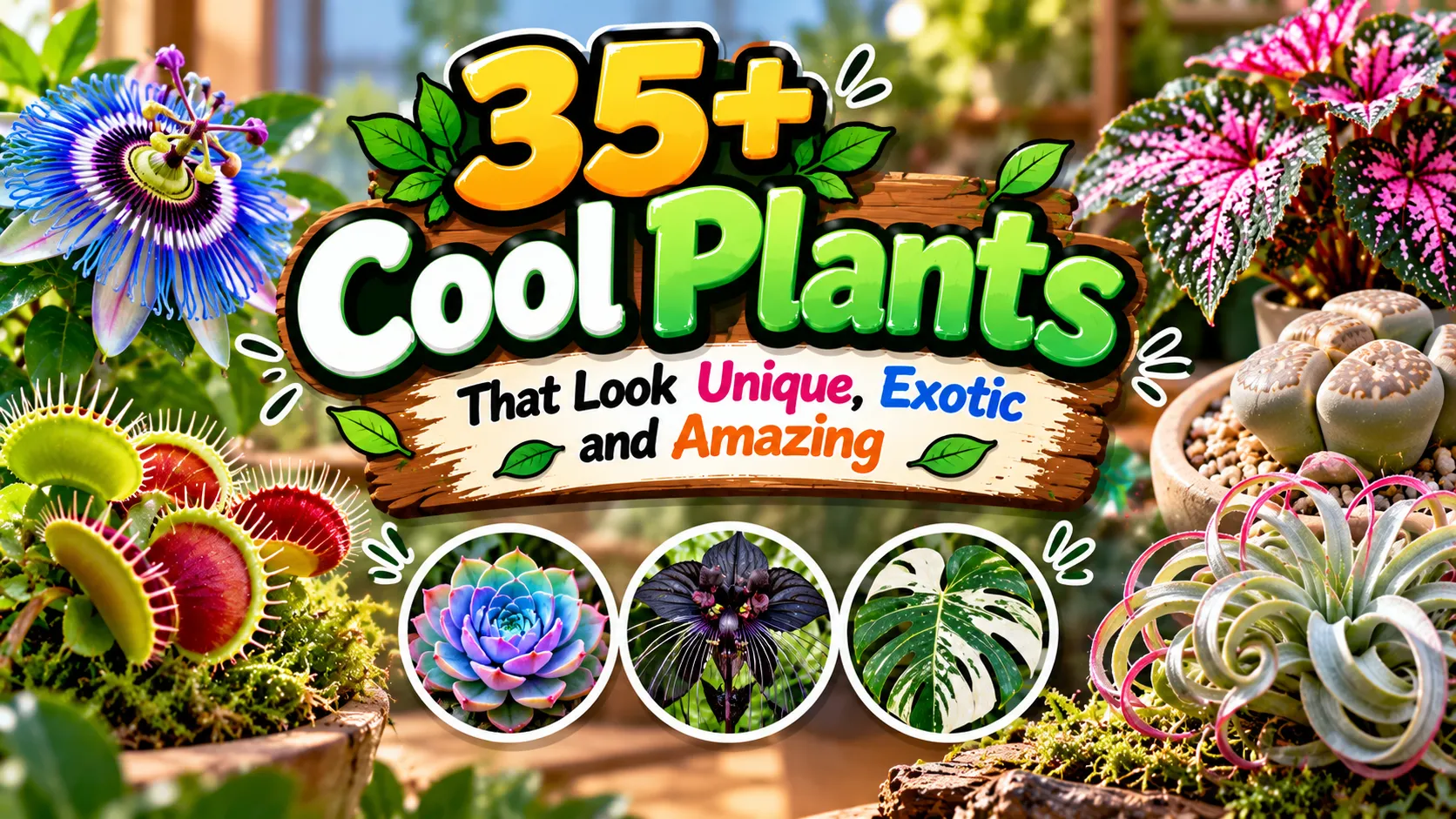
Cool plants can transform an ordinary room, garden, or balcony into a fascinating green space. From carnivorous plants that trap insects to succulents shaped like tiny stones, nature offers an incredible variety of plants with unusual colors, strange shapes, and eye-catching growth patterns. Some look like they belong in a science-fiction movie, while others have beautiful leaves that make them stand out among traditional houseplants.
Whether you are a beginner looking for an easy indoor plant or a plant enthusiast searching for something unusual, there are plenty of cool plants worth exploring. Popular choices include the Venus flytrap, string of pearls, monstera, lithops, living stones, and sensitive plant. Each has distinctive features that make it interesting to grow and display.
In this guide, you will discover more than 35 cool plants, including rare-looking houseplants, colorful succulents, carnivorous varieties, tropical favorites, and unusual outdoor plants. You will also learn which plants are easy to care for, which work best indoors, and how to choose the right plant for your space.
🌿 What Makes a Plant Cool and Unique?
A plant can be considered cool for many reasons. Some have unusual leaf shapes, while others produce colorful flowers, move when touched, or use surprising methods to survive in nature.
The most interesting plants often combine distinctive appearances with fascinating adaptations.
Here are some features that make plants stand out:
- Unusual shapes: Curled leaves, geometric patterns, and sculptural stems create visual interest.
- Striking colors: Purple, pink, silver, and variegated foliage can make a plant look extraordinary.
- Interesting behavior: Some plants fold their leaves or capture insects.
- Rare-looking textures: Fuzzy leaves, waxy surfaces, and stone-like appearances add character.
- Unusual flowers: Certain species produce flowers with remarkable shapes or fragrances.
- Unique growth habits: Trailing vines, climbing stems, and compact rosettes offer different display possibilities.
You do not need a rare or expensive plant to create an interesting collection. Many cool plants are widely available and relatively easy to grow.
🪴 1. Monstera Deliciosa
<PRIVATE_PERSON> monstera deliciosa is one of the coolest indoor plants for anyone who loves dramatic tropical foliage. Its large green leaves develop distinctive splits and holes as they mature, giving the plant a bold, architectural appearance.
Native to tropical regions of Central America, this climbing plant naturally grows toward light and uses aerial roots to support itself. Indoors, it can become a striking centerpiece in a living room or bright corner.
Why it is cool:
- Large leaves with natural splits and holes.
- A dramatic tropical appearance.
- Climbing growth that responds well to support.
- A strong visual presence in modern interiors.
- Several related varieties with distinctive leaf patterns.
Care tips:
- Provide bright, indirect light.
- Water when the upper portion of the soil begins to dry.
- Use an airy, well-draining potting mix.
- Add a moss pole or sturdy support as it grows.
- Allow enough room for its mature size.
Monstera deliciosa is best for people who have space for a larger plant. Its leaves and stems contain irritating calcium oxalate crystals, so keep it away from pets and children who might chew it.
🌵 2. Lithops (Living Stones)
Lithops are among the strangest-looking succulents in the plant world. Their thick, rounded bodies resemble small stones, allowing them to blend into the rocky environments where they naturally grow.
Often called living stones, these plants are native to parts of southern Africa. Their unusual appearance makes them popular among succulent collectors.
Why it is cool:
- Looks remarkably like a pebble.
- Comes in different patterns and earthy colors.
- Produces flowers that emerge from the center.
- Requires very little space.
- Offers a fascinating example of plant camouflage.
Care tips:
- Provide abundant light, with gradual acclimation to stronger sunshine.
- Use a gritty, exceptionally well-draining growing medium.
- Water sparingly according to the plant’s seasonal growth cycle.
- Avoid frequent watering while old leaves are being replaced.
- Use a small pot with drainage holes.
Lithops are not ideal for people who water plants frequently. Their specialized growth cycle means that excessive moisture can cause serious problems.
🪰 3. Venus Flytrap
The Venus flytrap (Dionaea muscipula) is one of the most famous carnivorous plants. Its leaves form hinged traps that close when suitable prey stimulates their sensitive trigger hairs.
Native to a limited area of the southeastern United States, this plant captures small insects as a supplement to the nutrients it obtains from its environment.
Why it is cool:
- Has moving traps that capture insects.
- Responds to specific mechanical stimulation.
- Produces unusual flowers on tall stalks.
- Demonstrates a remarkable adaptation to nutrient-poor soils.
Care tips:
- Provide several hours of direct sunlight or suitable strong grow lighting.
- Use nutrient-poor carnivorous-plant growing media.
- Water with rainwater, distilled water, or suitable low-mineral water.
- Keep the growing medium consistently moist without waterlogging unsuitable containers.
- Never fertilize it like an ordinary houseplant.
- Provide an appropriate winter dormancy period when required.
Avoid repeatedly triggering the traps for entertainment. Closing a trap uses energy, and unnecessary stimulation can weaken the plant.
🌱 4. String of Pearls
String of pearls (Curio rowleyanus, formerly Senecio rowleyanus) is a trailing succulent with small, round leaves that resemble green beads.
Its cascading stems look beautiful spilling over a shelf or hanging basket. The unusual leaf shape also helps reduce exposed surface area, an adaptation associated with its native dry environments.
Why it is cool:
- Round, bead-like leaves.
- Long, cascading stems.
- A distinctive appearance in hanging planters.
- A compact root system suited to smaller containers.
- A sculptural look that differs from ordinary foliage plants.
Care tips:
- Provide bright indirect light and some gentle direct sunlight if acclimated.
- Use a well-draining succulent mix.
- Let the soil dry substantially between waterings.
- Avoid keeping the roots wet.
- Trim stems if they become too long or sparse.
String of pearls is best suited to people who understand succulent watering. It is toxic if eaten, so keep it away from pets and small children.
🌸 5. Purple Shamrock
Purple shamrock (Oxalis triangularis) is known for its triangular purple leaves and delicate pinkish-white flowers. Its foliage can fold or lower in response to changing light conditions, creating a subtle movement throughout the day.
This plant adds rich color to indoor displays without relying on flowers alone.
Why it is cool:
- Deep purple, triangular leaflets.
- Delicate flowers above the foliage.
- Leaves that change position with light conditions.
- A compact shape suitable for shelves and tables.
- Strong contrast with green houseplants.
Care tips:
- Provide bright, indirect light.
- Water when the upper soil begins to dry.
- Use a well-draining potting mix.
- Allow for possible periods of dormancy.
- Avoid leaving the pot continuously wet.
Purple shamrock is an excellent option for plant lovers who want colorful foliage. It contains compounds that can be harmful if eaten in significant amounts, so prevent pets from chewing it.
🌿 6. String of Hearts
String of hearts (Ceropegia woodii) is a delicate trailing plant with small, heart-shaped leaves. The leaves are often green with silver patterns and purple undersides, making the plant especially attractive in hanging baskets.
Its thin stems can grow quite long, creating a flowing curtain of foliage.
Why it is cool:
- Tiny heart-shaped leaves.
- Silver markings and purple leaf undersides.
- Long, trailing stems.
- Small, unusual flowers.
- A lightweight appearance that works well in compact spaces.
Care tips:
- Provide bright, indirect light.
- Allow the soil to dry between waterings.
- Use a well-draining succulent-style mix.
- Avoid heavy, water-retentive soil.
- Trim or propagate long stems when needed.
String of hearts is a good choice for people who want an unusual trailing plant without the bulk of larger tropical vines.
🌳 7. Japanese Maple
Japanese maple (Acer palmatum) is a beautiful outdoor tree known for its delicate, deeply divided leaves. Depending on the variety, the foliage can be green, red, burgundy, orange, or golden.
Its changing colors make it especially popular in ornamental gardens.
Why it is cool:
- Distinctive, hand-shaped leaves.
- Colorful foliage in different seasons.
- Elegant branching patterns.
- Many compact cultivars.
- A graceful appearance in Japanese-inspired gardens.
Care tips:
- Choose a variety suited to your climate.
- Provide well-drained soil.
- Protect many varieties from harsh afternoon sun in hot climates.
- Water consistently while young.
- Give the mature tree enough space.
Japanese maples are primarily outdoor plants. Although certain compact varieties can be grown in containers, they generally need suitable seasonal conditions and should not be treated as ordinary permanent indoor houseplants.
🌺 8. Hoya Kerrii
Hoya kerrii is often sold as a single, thick heart-shaped leaf in a small pot. A rooted, growing plant can eventually develop long vines with multiple heart-shaped leaves.
Its distinctive appearance makes it a popular gift for plant enthusiasts.
Why it is cool:
- Thick, heart-shaped leaves.
- Attractive trailing growth as the plant matures.
- Some cultivars have cream or yellow variegation.
- Unusual clusters of star-shaped flowers under suitable conditions.
- A compact starting size.
Care tips:
- Provide bright, indirect light.
- Use a chunky, well-draining potting mix.
- Allow the soil to dry partly between waterings.
- Avoid keeping the roots saturated.
- Be patient because growth can be slow.
A single heart-shaped leaf without a viable stem or growth point may survive for a long time without developing into a full vine. Choose a plant with a stem and growing node if you want a climbing Hoya.
🌿 9. Begonia Maculata
Begonia maculata, commonly called the polka dot begonia, has elongated green leaves decorated with contrasting silver-white spots. The undersides are often reddish, creating an eye-catching combination.
Its upright stems and spotted foliage make it a standout among indoor plants.
Why it is cool:
- Silver polka-dot leaf markings.
- Red or burgundy undersides.
- Upright, cane-like stems.
- Clusters of delicate flowers.
- A distinctive tropical appearance.
Care tips:
- Provide bright, indirect light.
- Water when the upper soil begins to dry.
- Use a well-draining potting mix.
- Maintain moderate humidity with good airflow.
- Avoid soaking the leaves repeatedly.
Begonia maculata prefers more consistent moisture than many succulents. Its leaves can suffer in extremely dry air, but poor airflow and constantly wet foliage can encourage disease.
🌿 10. Calathea Orbifolia
Calathea orbifolia, now often classified as Goeppertia orbifolia, is admired for its large, rounded leaves with silvery-green stripes.
Its foliage creates a soft, luxurious appearance, making it a popular choice for bright living rooms and indoor plant collections.
Why it is cool:
- Large, rounded leaves.
- Silver and green striped patterns.
- A lush tropical appearance.
- Attractive foliage without needing flowers.
- Strong visual impact in decorative pots.
Care tips:
- Provide medium to bright indirect light.
- Keep the soil lightly and evenly moist.
- Avoid direct, harsh sunshine.
- Provide moderate to high humidity.
- Use a well-draining mix that retains some moisture.
This plant is more demanding than a ZZ plant or snake plant. If your room is very dry or you frequently forget to water, consider an easier alternative.
🌵 11. Moon Cactus
The moon cactus is a colorful grafted cactus commonly sold with a bright red, orange, yellow, or pink top attached to a green cactus base.
The vivid top is usually a form of Gymnocalycium mihanovichii that lacks enough chlorophyll to grow independently. It relies on the green rootstock for support and nutrients.
Why it is cool:
- Brightly colored top growth.
- A striking contrast between two cactus parts.
- A compact shape suited to small pots.
- A playful appearance for desks and windowsills.
Care tips:
- Provide bright light suited to the particular grafted plant.
- Use a fast-draining cactus mix.
- Water only after the soil has dried appropriately.
- Avoid leaving the pot in standing water.
- Inspect the graft for signs of rot or separation.
Moon cacti are often shorter-lived than many ordinary cacti because the grafted parts may have different growth rates and requirements.
🌿 12. Fiddle-Leaf Fig
The fiddle-leaf fig (Ficus lyrata) has large, leathery leaves shaped somewhat like violins. Its upright form makes it a popular statement plant in modern interiors.
It generally needs brighter conditions than the most shade-tolerant houseplants, so it is best for rooms with good indirect light.
Why it is cool:
- Large, sculptural leaves.
- A tall, tree-like appearance indoors.
- Strong visual impact in minimalist rooms.
- A distinctive shape unlike smaller foliage plants.
Care tips:
- Provide bright, indirect light.
- Allow the upper soil to dry between waterings.
- Use a well-draining potting mix.
- Avoid frequent changes in location.
- Wipe dust from the broad leaves.
This plant is not a great choice for a dark corner. Insufficient light can cause leaf drop and weak growth.
🌱 13. Sensitive Plant
The sensitive plant (Mimosa pudica) is famous for folding its leaves when touched or disturbed. Its leaflets can also close in response to darkness and other stimuli.
This movement makes it one of the most fascinating plants to observe, especially for children learning about plant behavior.
Why it is cool:
- Leaves fold when stimulated.
- Fine, fern-like foliage.
- Small pink or purple, fluffy flowers.
- Demonstrates rapid plant movement.
- Offers an engaging educational experience.
Care tips:
- Provide bright light.
- Keep the soil moderately moist.
- Use a well-draining growing medium.
- Maintain warm conditions.
- Avoid repeatedly stimulating the leaves.
The plant uses energy to move its leaves, so repeated touching is unnecessary. In some climates, it may also spread outside cultivation, so check local growing guidance.
🌿 14. Alocasia Black Velvet
Alocasia reginula, commonly known as Black Velvet, has dark, velvety leaves with contrasting pale veins. Its compact size makes it particularly appealing to collectors.
The leaves can look almost black under certain lighting, giving the plant a dramatic appearance.
Why it is cool:
- Dark, velvety foliage.
- Contrasting silver-white veins.
- Compact growth.
- A striking texture.
- A collectible appearance.
Care tips:
- Provide medium to bright indirect light.
- Keep the soil lightly moist but never waterlogged.
- Use an airy potting mix.
- Provide warmth and suitable humidity.
- Avoid cold drafts.
Alocasia plants contain calcium oxalate crystals and are toxic if chewed. Black Velvet is better suited to people who can maintain consistent conditions and keep it away from pets.
🌵 15. Burro’s Tail
Burro’s tail (Sedum morganianum) is a trailing succulent with thick, overlapping leaves that create long, rope-like stems.
Its cascading form looks especially attractive in hanging pots, where the stems can grow downward without being disturbed.
Why it is cool:
- Plump, overlapping leaves.
- Long, trailing stems.
- A blue-green or silvery appearance.
- A distinctive succulent texture.
- A dramatic look in hanging planters.
Care tips:
- Provide bright light.
- Use a well-draining succulent mix.
- Allow the soil to dry between waterings.
- Handle the stems gently because the leaves break off easily.
- Avoid frequently moving the plant.
Burro’s tail is ideal for a sunny windowsill or bright patio. It may not perform well in a dark room.
🌿 16. Staghorn Fern
Staghorn ferns (Platycerium species) have fronds that resemble the branching antlers of a deer. Some produce rounded basal fronds that attach to a growing surface.
Many are mounted on wood or grown in hanging displays, creating a living sculpture rather than a conventional potted plant.
Why it is cool:
- Antler-shaped fronds.
- Unusual growth form.
- Can be mounted on wood or boards.
- Strong sculptural appearance.
- A striking option for tropical plant displays.
Care tips:
- Provide bright, indirect light.
- Maintain appropriate humidity and airflow.
- Water according to the mounting medium or potting mix.
- Avoid allowing the roots to remain constantly wet.
- Research the needs of the particular species.
Staghorn ferns require a little more attention than common beginner plants, but their distinctive form makes them worth considering.
🌸 17. African Violet
African violets (Streptocarpus ionanthus, formerly Saintpaulia species) are compact flowering plants with soft, rounded leaves and colorful blooms.
Flowers may be purple, pink, white, blue-violet, or combinations of these colors. Their small size makes them excellent for windowsills and indoor displays.
Why it is cool:
- Colorful flowers in compact plants.
- Soft, fuzzy leaves.
- Many flower colors and cultivars.
- Suitable for small indoor spaces.
- Potential to flower repeatedly under favorable conditions.
Care tips:
- Provide bright, indirect light.
- Use a light, well-draining potting mix.
- Water when needed without keeping the roots saturated.
- Avoid harsh direct sunshine.
- Maintain reasonable indoor humidity.
African violets are generally considered non-toxic to cats and dogs, making them a useful option for pet-friendly homes.
🌿 18. Corkscrew Albuca
Corkscrew albuca (Albuca spiralis) is a bulb-forming plant known for its narrow, curly leaves. The degree of curling can vary with the plant’s growing conditions.
Its twisted foliage gives it a playful appearance that stands out among ordinary indoor plants.
Why it is cool:
- Curled, corkscrew-shaped leaves.
- Unusual bulb-forming growth.
- A compact, sculptural shape.
- Potentially fragrant flowers in some conditions.
- A distinctive choice for succulent collectors.
Care tips:
- Provide bright light.
- Use a well-draining growing medium.
- Adjust watering to its active growth and dormancy cycle.
- Avoid keeping the bulb continuously wet.
- Check the variety’s seasonal requirements.
Albuca spiralis is a good option for plant lovers who enjoy unusual growth patterns and are comfortable learning a plant’s seasonal cycle.
🌿 19. Rex Begonia
Rex begonias are grown mainly for their decorative foliage. Their leaves can feature intricate combinations of silver, purple, burgundy, green, pink, and dark markings.
The patterns vary widely among cultivars, making them popular among people who enjoy colorful houseplants.
Why it is cool:
- Bold, multicolored leaves.
- Swirling or patterned foliage.
- Different leaf shapes and textures.
- Compact growth.
- Strong decorative value even when not flowering.
Care tips:
- Provide bright, indirect light.
- Keep the soil lightly moist.
- Avoid waterlogging.
- Maintain suitable humidity and airflow.
- Protect the leaves from harsh sunlight.
Rex begonias can be sensitive to environmental changes, so avoid placing them near heating vents or cold drafts.
🌵 20. Pencil Cactus
The pencil cactus (Euphorbia tirucalli) has slender, branching green stems that resemble pencils. In bright conditions, some varieties develop orange or reddish coloration.
Its unusual branching form gives it a modern, sculptural appearance.
Why it is cool:
- Thin, pencil-like stems.
- Branching, architectural growth.
- A distinctive silhouette.
- Potentially colorful stem tips.
- A striking appearance in large containers.
Care tips:
- Provide bright light and some direct sunlight when acclimated.
- Use a well-draining succulent mix.
- Allow the soil to dry between waterings.
- Avoid overwatering.
- Provide enough room for its eventual size.
Important safety warning: Pencil cactus contains a milky sap that can severely irritate the skin and eyes. It is toxic if swallowed. Wear suitable protective gloves when pruning and keep the plant away from children and pets.
🌿 21. Rabbit’s Foot Fern
Rabbit’s foot fern (Davallia fejeensis and related species) has delicate fronds and fuzzy rhizomes that spread over the surface of its pot. These furry structures resemble small animal feet, giving the plant its common name.
The exposed rhizomes are part of its natural growth habit and should not be buried deeply.
Why it is cool:
- Fuzzy, visible rhizomes.
- Fine, fern-like leaves.
- A distinctive appearance in shallow containers.
- Attractive trailing growth.
- A natural fit for woodland-inspired displays.
Care tips:
- Provide indirect light.
- Keep the growing medium lightly moist.
- Maintain moderate humidity.
- Use an airy, well-draining mix.
- Leave the rhizomes exposed at the surface.
Rabbit’s foot fern is generally considered non-toxic to cats and dogs and can be a good option for a humid indoor space.
🌱 22. Chinese Money Plant
The Chinese money plant (Pilea peperomioides) is known for its round, coin-shaped leaves attached to slender stems. Its simple form makes it popular in modern homes and offices.
Under suitable conditions, mature plants may produce small offsets around the base that can be separated and grown into new plants.
Why it is cool:
- Round, coin-like leaves.
- A clean, minimalist shape.
- Compact size.
- Potential to produce baby plants.
- Attractive in simple ceramic pots.
Care tips:
- Provide bright, indirect light.
- Water when the upper soil begins to dry.
- Use a well-draining potting mix.
- Rotate the pot occasionally for balanced growth.
- Separate offsets when they are large enough to establish.
The Chinese money plant is generally considered non-toxic to cats and dogs, making it a practical option for many homes.
🌿 23. Trachyandra
Trachyandra is a group of unusual plants, some of which have narrow, curling leaves that resemble ribbons or twisted strands.
Their unusual growth patterns make them especially interesting to collectors who enjoy plants that look unlike typical houseplants.
Why it is cool:
- Curled or twisted foliage in some species.
- An unusual sculptural appearance.
- Distinctive seasonal growth.
- A collectible look.
- An example of the diversity found among succulent and bulb-like plants.
Care tips:
- Research the exact species before buying.
- Provide appropriate light for its growth habit.
- Use a well-draining growing medium.
- Adjust watering to the plant’s seasonal cycle.
- Avoid assuming that all species need identical care.
Trachyandra plants may be harder to find than pothos or snake plants. Purchase from reputable growers who can identify the species and explain its growing requirements.
🌸 24. Bird of Paradise
The bird of paradise (Strelitzia species) is known for dramatic foliage and flowers that resemble a colorful bird in flight.
Its large leaves create a tropical look, while mature plants can produce striking orange and blue flowers under suitable conditions.
Why it is cool:
- Large, tropical leaves.
- Distinctive bird-shaped flowers.
- An architectural growth habit.
- Strong visual impact in bright rooms.
- Excellent potential as a statement plant.
Care tips:
- Provide bright light, often including some direct sun after acclimation.
- Water when the upper soil begins to dry.
- Use a well-draining potting mix.
- Allow enough space for the mature plant.
- Be patient because indoor flowering can take time.
Bird of paradise is not ideal for very low-light rooms. It needs substantial light to grow well and is best suited to bright interiors or appropriate outdoor climates.
🌿 25. Dolphin Plant
The dolphin plant, often sold as Curio × peregrinus, is a succulent hybrid with curved leaves that can resemble tiny jumping dolphins.
Its distinctive foliage makes it a popular choice for hanging baskets and succulent collections.
Why it is cool:
- Leaves that may resemble small dolphins.
- A trailing growth habit.
- A playful appearance.
- Compact stems suited to hanging planters.
- An unusual conversation-starting plant.
Care tips:
- Provide bright light.
- Use a well-draining succulent mix.
- Let the soil dry between waterings.
- Avoid waterlogged roots.
- Handle trailing stems carefully.
The dolphin-like shape is often more pronounced under favorable growing conditions, but individual plants can vary. It is generally not a good choice for dark rooms.
🌿 26. Albino or Variegated Plants
Variegated plants have leaves with contrasting colors or patterns, such as green and white, green and yellow, or pink and green. Some highly variegated plants contain relatively little chlorophyll in their pale leaf sections.
Examples include variegated monstera, variegated pothos, and certain philodendrons.
Why they are cool:
- Unusual leaf patterns.
- Contrasting colors.
- Different appearances even within the same cultivar.
- Strong decorative appeal.
- A wide range of growth habits and sizes.
Care tips:
- Research the specific cultivar’s light needs.
- Provide enough light to support healthy growth.
- Avoid assuming that white or pale sections produce as much energy as green tissue.
- Monitor watering carefully.
- Buy from reputable growers to avoid mislabeled plants.
Highly variegated plants can be more demanding than ordinary green varieties. They may grow slowly and can be expensive, so beginners may prefer a common, robust plant first.
🌱 27. Monkey Cup Plant
Monkey cup plants are commonly known as tropical pitcher plants in the genus Nepenthes. Their leaves form distinctive pitcher-shaped structures that can capture insects and other small prey.
These plants are especially interesting because their pitchers are part of a specialized nutrient-acquisition strategy.
Why it is cool:
- Hanging or upright pitcher-shaped traps.
- Often colorful pitcher rims and patterns.
- Unusual tropical growth habits.
- A fascinating carnivorous adaptation.
- Many different species and hybrids.
Care tips:
- Research the species or hybrid before purchasing.
- Provide the light level it requires.
- Use an appropriate nutrient-poor carnivorous-plant mix.
- Maintain suitable humidity and airflow.
- Use low-mineral water when recommended.
- Avoid ordinary fertilizer in the pitchers unless a specialist growing guide recommends a specific approach.
Different Nepenthes species prefer different temperature ranges, so not every variety is suitable for the same indoor environment.
🌿 28. Watermelon Peperomia
Watermelon peperomia (Peperomia argyreia) has rounded leaves with silver and green stripes that resemble the markings on a watermelon rind.
Its compact growth makes it suitable for small tables, desks, and shelves.
Why it is cool:
- Watermelon-like leaf patterns.
- Rounded, glossy foliage.
- Compact size.
- Attractive colors without needing flowers.
- A useful option for smaller spaces.
Care tips:
- Provide bright, indirect light.
- Allow the upper soil to dry between waterings.
- Use a well-draining potting mix.
- Avoid keeping the roots saturated.
- Protect it from intense direct sunshine.
Watermelon peperomia is generally considered non-toxic to cats and dogs, making it a useful choice for homes with pets.
🌵 29. Rose Succulent
The rosette-forming succulent commonly sold as a rose succulent is often Greenovia or a related rosette-forming aeonium. Its tightly layered leaves can resemble a rosebud.
The exact plant may vary depending on the nursery label, so check the botanical name before buying.
Why it is cool:
- A rosette shaped like a flower.
- Layered succulent leaves.
- A compact, sculptural form.
- Attractive in succulent arrangements.
- An unusual appearance without needing colorful blooms.
Care tips:
- Identify the exact species.
- Provide bright light suited to its needs.
- Use very well-draining soil.
- Water according to its growth cycle.
- Protect sensitive species from unsuitable temperatures.
Some rosette succulents grow actively in cooler seasons and rest during summer, so their care requirements may differ from common desert cacti.
🌿 30. Corkscrew Rush
Corkscrew rush (Juncus effusus ‘Spiralis’) is an ornamental plant with long, twisted stems that curl and spiral in unusual directions.
Unlike many plants in this list, it prefers consistently moist conditions and can be grown in suitable wet containers or water-garden settings.
Why it is cool:
- Naturally twisted stems.
- A sculptural, curly appearance.
- Strong texture in containers.
- Suitable for water-feature designs.
- An unusual alternative to traditional foliage plants.
Care tips:
- Provide bright light.
- Keep the growing medium consistently moist.
- Use a container suitable for moisture-loving plants.
- Protect it from inappropriate indoor dryness.
- Check the variety’s temperature requirements.
Corkscrew rush is a good choice for gardeners who enjoy unusual forms and can provide more moisture than a typical succulent requires.
🌿 31. String of Bananas
String of bananas (Curio radicans, formerly Senecio radicans) is a trailing succulent with curved, banana-shaped leaves.
Its long stems create a cascading appearance similar to string of pearls, but the leaves are longer and more elongated.
Why it is cool:
- Banana-shaped leaves.
- Long, trailing stems.
- A distinctive succulent texture.
- Suitable for hanging containers.
- A visually interesting alternative to ordinary vines.
Care tips:
- Provide bright light.
- Use a well-draining succulent mix.
- Allow the soil to dry between waterings.
- Avoid overwatering.
- Handle stems gently during repotting.
Like several related trailing succulents, it should be kept away from pets and children who might chew it.
🌸 32. Crown of Thorns
Crown of thorns (Euphorbia milii) is a succulent shrub with thorny stems and colorful flower-like bracts. The bracts may be red, pink, yellow, or other shades depending on the cultivar.
It is an interesting choice for sunny windowsills and warm outdoor gardens.
Why it is cool:
- Thorn-covered stems.
- Colorful flower-like bracts.
- A sculptural, branching form.
- Good tolerance for dry conditions.
- A long flowering period in favorable conditions.
Care tips:
- Provide bright light and some direct sun.
- Use a well-draining succulent mix.
- Allow the soil to dry between waterings.
- Avoid cold, wet conditions.
- Handle carefully when pruning.
Important: Crown of thorns contains irritating milky sap and has sharp spines. It is toxic if swallowed, so keep it away from pets and children.
🌿 33. Air Plants
Air plants belong to the genus Tillandsia. They are epiphytes, meaning they naturally grow on other surfaces rather than depending on soil for their roots to obtain nutrients.
They are often displayed on pieces of wood, in glass holders, or in decorative arrangements.
Why they are cool:
- Can grow without conventional potting soil.
- Come in unusual shapes and textures.
- Suit minimalist displays.
- Some produce colorful flowers.
- Offer creative decorating possibilities.
Care tips:
- Provide bright, indirect light.
- Supply water through appropriate soaking or thorough wetting.
- Allow plants to dry adequately afterward.
- Ensure good airflow.
- Follow species-specific watering guidance.
Air plants still need regular moisture. They are not maintenance-free decorations, and a plant kept in a sealed container without airflow may rot.
🌿 34. Rex Begonia Vine
Rex begonia vine is a common name sometimes used for trailing plants sold under different botanical identities. If you encounter one at a nursery, check its scientific name before relying on care instructions.
Trailing plants with decorative foliage can be especially attractive because they combine unusual leaf patterns with cascading growth.
Why it is cool:
- Colorful or patterned foliage in many varieties.
- Trailing growth.
- A decorative look in hanging planters.
- Potentially compact growth.
- Strong visual interest on shelves.
Care tips:
- Identify the plant correctly.
- Match the light level to the species.
- Use a well-draining potting mix.
- Avoid excessive watering.
- Prune as needed to maintain its shape.
A reliable botanical name is especially important for plants sold under inconsistent common names.
🌵 35. Agave
Agave plants have thick, pointed leaves arranged in bold rosettes. Some species remain relatively compact, while others become large landscape plants.
Their geometric shapes and strong leaf patterns make them stand out in succulent gardens.
Why it is cool:
- Sculptural rosette shapes.
- Strong geometric leaf patterns.
- Blue-green, gray, or green foliage.
- Good drought tolerance in suitable conditions.
- A dramatic appearance in gravel gardens.
Care tips:
- Provide bright light and suitable sun exposure.
- Use well-draining soil.
- Water sparingly once established.
- Avoid water collecting in the crown.
- Choose a species appropriate for the available space and climate.
Many agaves have sharp leaf tips or marginal teeth, so position them away from narrow paths and areas where children or pets might brush against them.
🌿 Best Cool Plants for Indoor Spaces
Not every unusual plant is suited to indoor growing. Some need strong sunlight, high humidity, or a particular seasonal cycle.
Here are several useful choices for different indoor spaces:
- For small desks: Chinese money plant, watermelon peperomia, or a compact African violet.
- For hanging baskets: String of hearts, string of pearls, or string of bananas.
- For dramatic foliage: Monstera deliciosa, polka dot begonia, or Alocasia Black Velvet.
- For beginners: Snake plant, ZZ plant, or pothos.
- For bright windowsills: Moon cactus, burro’s tail, or selected lithops.
- For humid rooms: Bird’s nest fern or certain tropical ferns.
- For unusual behavior: Sensitive plant or Venus flytrap, if you can meet its specialized needs.
- For pet-friendly homes: African violets, Chinese money plants, and selected peperomias.
Before purchasing, compare the plant’s light, humidity, watering, and safety requirements with the conditions in your home.
☀️ How to Care for Cool Plants
Unusual plants often have specialized needs, but many follow the same basic principles as other houseplants. Providing the right environment is more important than using expensive fertilizers or complicated products.
🌞 Give Each Plant the Right Light
Some cool plants, such as lithops and many succulents, need abundant light. Others, such as certain ferns and prayer plants, prefer indirect light.
Check the requirements of the exact species rather than assuming that every indoor plant likes a shady corner.
💧 Water According to the Plant
Succulents usually need the soil to dry between waterings, while many ferns prefer more consistent moisture.
Check soil moisture before watering and ensure that pots have adequate drainage.
🌱 Choose Suitable Soil
A standard indoor potting mix works for many foliage plants, but cacti, lithops, and carnivorous plants often need specialized growing media.
Using the right soil helps balance drainage, moisture retention, and root health.
🪴 Select the Right Container
Choose a pot with drainage holes for most potted plants. Decorative outer pots can be used, but do not leave the plant sitting in collected water.
The container should also provide enough space for the roots without being excessively large.
🌿 Watch for Pests
Inspect leaves, stems, and the soil surface for pests such as spider mites, mealybugs, and fungus gnats.
Treat problems early with an appropriate method, and isolate affected plants when necessary.
🌡️ Maintain Suitable Temperatures
Tropical plants may suffer from cold drafts, while some outdoor plants need a seasonal rest or winter dormancy.
Research the requirements of each plant before moving it between indoor and outdoor environments.
🌱 Are Cool Plants Good for Beginners?
Yes, many cool plants are suitable for beginners. However, some unusual-looking species are much more demanding than their appearance suggests.
If you are just starting, choose plants that tolerate ordinary indoor conditions and have straightforward watering requirements.
Beginner-friendly options include:
- Snake plant: Upright leaves and relatively low watering needs.
- ZZ plant: Glossy foliage and tolerance for low indirect light.
- Pothos: Easy trailing growth and simple propagation.
- Chinese money plant: Distinctive round leaves and potential offsets.
- Watermelon peperomia: Compact growth and attractive leaf patterns.
- String of hearts: An unusual trailing form for a bright location.
- African violet: Colorful flowers in a compact plant, with moderate care.
- Spider plant: Arching foliage and easy propagation.
Plants such as lithops, Venus flytraps, sensitive plants, and some rare tropical species can be fascinating, but they may require more precise conditions. Learn the basic care routine before building a collection of demanding plants.
🐾 Are Cool Plants Safe for Pets?
Not all cool plants are pet-friendly. Some common decorative plants can cause irritation or poisoning if chewed, so safety should be part of your selection process.
For example, monstera, pothos, philodendrons, alocasias, and dieffenbachias contain irritating calcium oxalate crystals. Pencil cactus and crown of thorns produce irritating sap. Several trailing succulents can also be unsafe if eaten.
Plants commonly considered non-toxic to cats and dogs include African violets, Chinese money plants, many peperomias, and several true ferns. Nevertheless, confirm the exact botanical identity because common names can be confusing.
To make your plant collection safer:
- Check the scientific name before buying.
- Keep toxic plants out of reach.
- Do not assume a plant is safe because it is natural.
- Prevent pets from chewing leaves or stems.
- Contact a veterinarian if a pet eats a potentially toxic plant and develops symptoms.
If your pets regularly chew greenery, choosing verified non-toxic plants is often easier than trying to keep every plant inaccessible.
❓ Frequently Asked Questions About Cool Plants
🌿 What is the coolest plant in the world?
There is no single answer, but the Venus flytrap, lithops, sensitive plant, and monkey cup plants are among the most fascinating. They stand out because of their unusual appearance or specialized adaptations.
🪴 What are some cool plants to grow indoors?
Monstera deliciosa, string of hearts, polka dot begonia, Chinese money plant, watermelon peperomia, and ZZ plants are popular indoor choices. The best option depends on the light and space available.
🌱 Which plants look like stones?
Lithops are famous for their stone-like appearance. Their rounded bodies blend into rocky environments, and some produce flowers from the center of the plant.
🪰 Which plants eat insects?
Carnivorous plants include Venus flytraps, tropical pitcher plants (Nepenthes), sundews (Drosera), and bladderworts (Utricularia). Each group captures prey differently and has specialized growing requirements.
🌿 What is a good unusual plant for beginners?
A Chinese money plant, watermelon peperomia, pothos, or snake plant can be a good starting point. These plants are generally easier to maintain than many specialized carnivorous plants or rare succulents.
🌸 Which cool plants have colorful leaves?
Polka dot begonias, Rex begonias, purple shamrocks, Chinese evergreens, and certain variegated pothos varieties offer striking foliage colors and patterns.
🪴 Can unusual plants grow in small apartments?
Yes. Compact peperomias, Chinese money plants, string of hearts, and small succulents can work well in apartments. Consider mature size, light requirements, and whether the plant needs a special growing environment.
☀️ Do cool plants need direct sunlight?
Some do, especially many succulents and desert-adapted plants. Others prefer bright indirect light. Always check the needs of the specific species and acclimate plants gradually when changing their exposure.
💧 Are rare plants harder to care for?
Not necessarily. Some rare plants are relatively easy, while common species such as maidenhair ferns can be demanding. Difficulty depends more on the plant’s environmental needs than its price or rarity.
🐾 Which cool plants are safe for cats?
African violets, Chinese money plants, and certain peperomias are commonly considered non-toxic to cats. Verify the exact plant species before purchasing and prevent pets from eating large amounts of any plant.
🌵 Are succulents considered cool plants?
Yes. Succulents such as lithops, string of pearls, burro’s tail, and moon cactus are popular because of their unusual shapes, textures, and water-storage adaptations.
🌿 How can I make my plant collection look more interesting?
Combine plants with different leaf shapes, colors, textures, and growth habits. For example, pair an upright snake plant with a trailing string of hearts and a compact peperomia. Make sure each plant still receives the light and care it needs.
🌿 Conclusion: Find the Coolest Plants for Your Collection
Cool plants offer a fun way to explore the incredible diversity of the plant world. From the stone-like appearance of lithops to the moving leaves of the sensitive plant and the striking foliage of monstera, these varieties can add personality to almost any suitable growing space.
You do not need an expensive or rare plant to create an impressive collection. Start with an unusual but manageable variety, learn its watering and lighting needs, and add more plants as your confidence grows. If you have pets, check plant safety before bringing anything home.
Whether you prefer tropical leaves, colorful succulents, carnivorous plants, or unusual trailing vines, the best cool plant is one that matches your space and care routine. With thoughtful selection, your collection can become a beautiful display of nature’s most fascinating designs.

Ethan Carter is a nature enthusiast and content writer with a passion for flowers and botanical knowledge. He is the author behind FlowerNamez, where he shares simple and informative content about flower names, types, and meanings.
With a focus on clarity and accuracy, Ethan aims to help readers explore the beauty of flowers and understand their significance in everyday life.