
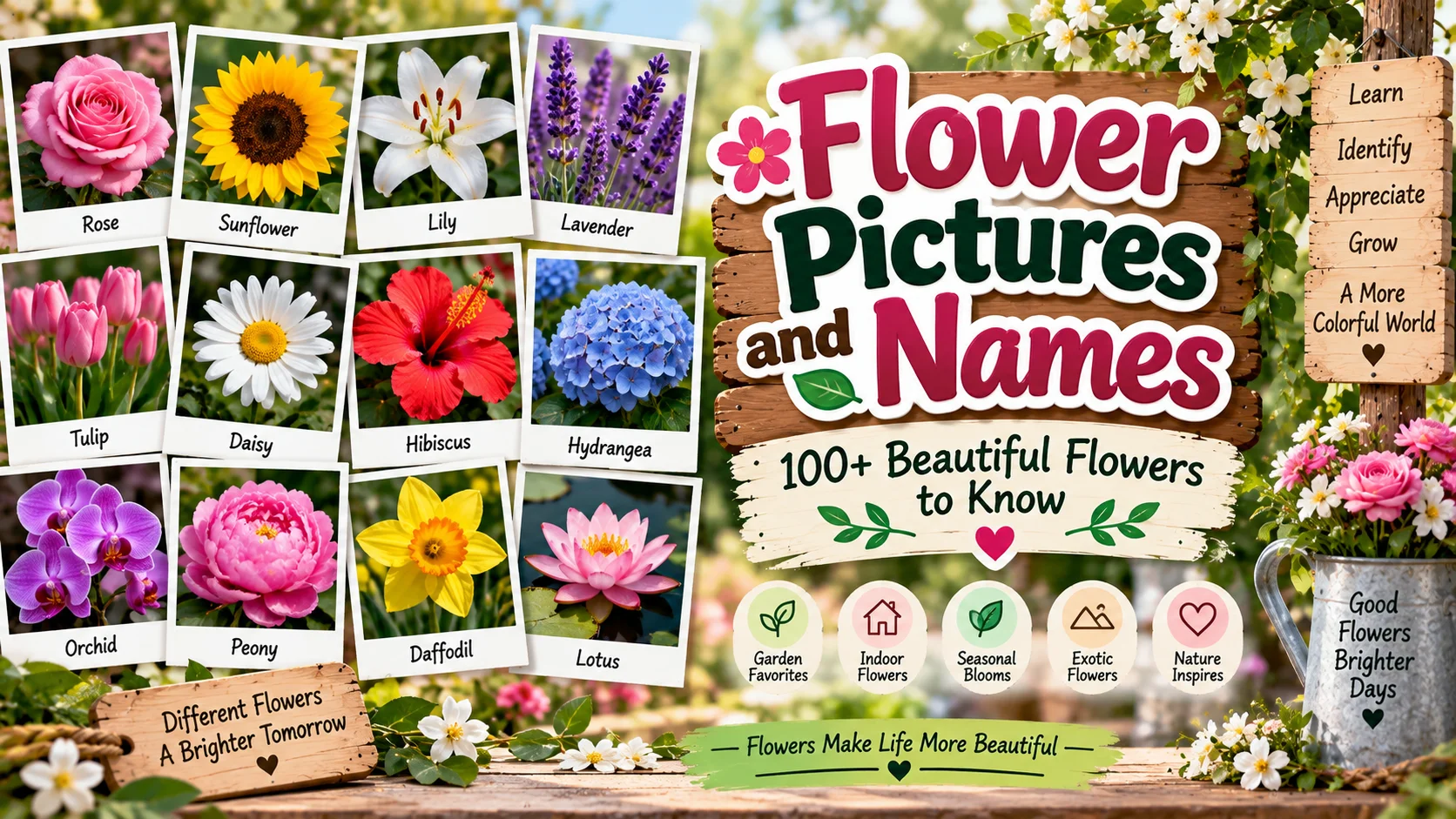
Looking for flower pictures and names to identify beautiful blooms, choose plants for your garden, or simply learn more about different types of flowers? This guide brings together more than 100 popular, colorful, fragrant, wild, tropical, and garden flowers with their names and descriptions.
Flowers come in an incredible range of shapes, colors, sizes, and growing habits. Some, such as roses and tulips, are familiar garden favorites, while others, including proteas, anthuriums, and passion flowers, have striking shapes that make them instantly recognizable.
Whether you are searching for flower names with pictures, types of flowers with names, beautiful flowers and their names, common garden flowers, wildflowers, indoor flowers, or flowers by color, this collection gives you an easy starting point.
Picture tip: For the best visual identification, pair each flower name below with a clear close-up photo showing the bloom, leaves, and overall plant shape. This is especially useful because many flowers have similar colors but very different forms.
🌹 Popular Flower Names and Pictures
Some flowers have become popular around the world because of their beauty, versatility, fragrance, or cultural significance. These are great starting points if you want to recognize common flowers.
- Rose — A classic flowering plant available in countless colors and forms.
- Tulip — A spring favorite known for its simple cup-shaped flowers.
- Daisy — A cheerful flower with a central disk surrounded by petals.
- Sunflower — A tall, bright flower famous for its large golden flower heads.
- Lily — Elegant flowers available in many colors and shapes.
- Daffodil — A spring bulb recognized by its trumpet-like central corona.
- Carnation — Frilly flowers often grown for bouquets and cut-flower arrangements.
- Hydrangea — Known for large clusters of small individual flowers.
- Peony — A lush, full flower with layered petals.
- Marigold — Bright orange or yellow flowers commonly grown in gardens.
- Lavender — Fragrant purple flower spikes with silvery foliage.
- Chrysanthemum — A diverse group with many flower forms and colors.
- Hibiscus — Large, showy flowers often associated with warm climates.
- Iris — Distinctive flowers with upright and cascading petals.
- Jasmine — Fragrant flowers valued for their sweet scent.
- Petunia — Trumpet-shaped flowers popular in containers and beds.
- Geranium — Colorful flowering plants widely used in gardens and containers.
- Begonia — Decorative flowering plants available in many colors.
- Zinnia — Bright summer flowers with a wide range of colors.
🌸 Flower Names With Pictures for Beginners
If you’re learning to identify flowers, start with recognizable plants that have distinctive blooms. Looking at the flower, leaves, stem, and growth habit together can make identification easier.
1. Rose 🌹
Rose is one of the most recognizable flowers in the world. Roses come in shades such as red, pink, white, yellow, orange, and lavender, depending on the variety.
Picture idea: Show a close-up of a fully opened rose alongside a bud and green foliage.
2. Sunflower 🌻
The sunflower is easily recognized by its large flower head and bright yellow ray flowers surrounding a darker center.
Picture idea: Use a photograph showing the entire tall plant as well as a close-up of the flower head.
3. Tulip 🌷
Tulips are spring-blooming bulbs with cup-shaped flowers. They come in many colors and can have single, double, fringed, or other forms.
Picture idea: Show several tulips together so visitors can compare colors and shapes.
4. Daisy 🌼
Daisies are known for their simple flower structure, typically featuring white petals around a yellow center.
Picture idea: A close-up against green grass or a meadow background works well.
5. Lily 🌸
True lilies belong to the genus Lilium and produce elegant flowers with prominent stamens. They should not be confused with plants that merely have “lily” in their common name.
Picture idea: Show the flower from the front with the stamens clearly visible.
🌺 Beautiful Flower Names and Pictures
Some flowers are particularly popular for their visual appeal. Their colors, petal arrangements, and unusual shapes make them excellent subjects for photography.
- Rose 🌹
- Peony 🌸
- Dahlia 🌺
- Orchid 🌸
- Ranunculus 🌼
- Hydrangea 💠
- Camellia 🌺
- Gardenia 🤍
- Magnolia 🌸
- Lotus 🪷
- Plumeria 🌼
- Bird of Paradise 🧡
- Protea 🌺
- Anemone 🌸
- Freesia 🌼
- Cosmos 🌸
- Delphinium 💙
- Foxglove 🌷
- Sweet Pea 🌸
- Lisianthus 🌸
- Amaryllis 🌺
- Calla Lily 🌷
- Clematis 🌸
- Wisteria 💜
- Passion Flower 🌸
🌹 Red Flower Names and Pictures
Red flowers often create a bold focal point in gardens and bouquets. They range from classic roses to tropical flowers and seasonal garden plants.
- Red Rose 🌹
- Red Tulip 🌷
- Red Dahlia 🌺
- Red Poppy 🌺
- Red Carnation 🌸
- Red Geranium 🌺
- Red Zinnia 🌸
- Red Begonia 🌺
- Red Petunia 🌺
- Red Hibiscus 🌺
- Red Camellia 🌺
- Red Amaryllis 🌺
- Red Salvia 🌺
- Red Celosia 🌺
- Red Ranunculus 🌸
- Red Peony 🌸
- Red Chrysanthemum 🌼
- Red Columbine 🌺
- Red Snapdragon 🌸
- Red Coneflower 🌺
For an identification article, make sure the photograph represents the actual species or cultivar being named rather than using a generic red flower image.
💗 Pink Flower Names and Pictures
Pink flowers range from delicate pastel shades to vivid magenta tones. They are especially popular in cottage gardens, bouquets, wedding arrangements, and ornamental landscapes.
- Pink Rose 🌹
- Pink Peony 🌸
- Pink Tulip 🌷
- Pink Dahlia 🌺
- Pink Carnation 🌸
- Pink Hydrangea 💗
- Pink Cherry Blossom 🌸
- Pink Cosmos 🌸
- Pink Zinnia 🌺
- Pink Azalea 🌸
- Pink Camellia 🌺
- Pink Begonia 🌸
- Pink Petunia 🌺
- Pink Dianthus 🌸
- Pink Geranium 🌺
- Pink Hibiscus 🌺
- Pink Sweet Pea 🌸
- Pink Foxglove 🌷
- Pink Snapdragon 🌸
- Pink Lotus 🪷
💜 Purple Flower Names and Pictures
Purple flowers are popular for their rich color and often romantic or dramatic appearance.
- Lavender 💜
- Violet 💜
- Purple Iris 🌸
- Purple Orchid 🌺
- Purple Petunia 🌺
- Purple Clematis 🌸
- Wisteria 💜
- Purple Lupine 💜
- Purple Aster 🌼
- Purple Salvia 🌺
- Purple Verbena 🌸
- Purple Coneflower 🌺
- Purple Allium 💜
- Purple Hyacinth 🌷
- Purple Pansy 🌸
- Purple Crocus 🌷
- Purple Morning Glory 🌸
- Purple Phlox 🌸
- Purple Columbine 🌺
- Purple Passion Flower 🌸
💙 Blue Flower Names and Pictures
Naturally blue flowers are less common than white, yellow, pink, or red flowers, which makes them especially attractive in gardens and photographs.
- Blue Hydrangea 💙
- Blue Delphinium 💙
- Bluebell 🔔
- Forget-Me-Not 💙
- Cornflower 💙
- Blue Iris 🌸
- Gentian 💙
- Blue Salvia 💙
- Plumbago 💙
- Blue Star Flower 💙
- Morning Glory 💙
- Globe Thistle 💙
- Bachelor’s Button 💙
- Blue Flax 💙
- Brunnera 💙
- Blue Lupine 💙
- Jacob’s Ladder 💙
- Scilla 💙
- Blue Columbine 💙
- Borage 💙
💛 Yellow Flower Names and Pictures
Yellow flowers can brighten a garden and create a sunny, cheerful appearance. Some are compact annuals, while others grow into larger perennial plants or shrubs.
- Sunflower 🌻
- Daffodil 🌼
- Yellow Rose 🌹
- Marigold 🌼
- Yellow Tulip 🌷
- Coreopsis 🌼
- Black-Eyed Susan 🌻
- Goldenrod 🌼
- Buttercup 🌼
- Yellow Iris 🌸
- Yellow Zinnia 🌼
- Forsythia 🌿
- Yarrow 🌼
- Calendula 🌼
- Yellow Cosmos 🌼
- Evening Primrose 🌼
- Pot Marigold 🌼
- Golden Poppy 🌼
- Yellow Daylily 🌸
- Blanket Flower 🌺
🤍 White Flower Names and Pictures
White flowers can create a clean, peaceful appearance and are often used in formal gardens, bouquets, weddings, and moon gardens.
- White Rose 🤍
- Gardenia 🤍
- Jasmine 🤍
- White Lily 🤍
- Daisy 🌼
- Baby’s Breath 🤍
- Magnolia 🤍
- White Peony 🤍
- White Hydrangea 🤍
- Lily of the Valley 🤍
- Moonflower 🤍
- Sweet Alyssum 🤍
- White Carnation 🤍
- White Orchid 🤍
- White Camellia 🤍
- Star Jasmine 🤍
- White Cosmos 🤍
- Queen Anne’s Lace 🤍
- Snowdrop 🤍
- White Freesia 🤍
🧡 Orange Flower Names and Pictures
Orange flowers add warmth and energy to landscapes. They can range from soft apricot shades to vivid orange.
- Orange Rose 🌹
- Orange Lily 🌸
- Tiger Lily 🌺
- Orange Marigold 🌼
- Orange Dahlia 🌺
- Orange Tulip 🌷
- California Poppy 🌼
- Orange Zinnia 🌺
- Crocosmia 🌺
- Orange Cosmos 🌼
- Orange Hibiscus 🌺
- Bird of Paradise 🧡
- Orange Begonia 🌺
- Butterfly Weed 🧡
- Crossandra 🌺
- Lantana 🌺
- Orange Nasturtium 🌺
- Torch Lily 🌺
- Orange Daylily 🌸
- Orange Calendula 🌼
🌷 Spring Flower Names and Pictures
Spring brings many of the most recognizable garden flowers. Bulbs and early-blooming perennials can provide some of the first color after winter.
- Tulip 🌷
- Daffodil 🌼
- Crocus 🌷
- Hyacinth 🌸
- Primrose 🌼
- Pansy 🌸
- Peony 🌸
- Bleeding Heart 🌸
- Cherry Blossom 🌸
- Magnolia 🌸
- Forsythia 🌿
- Iris 🌸
- Columbine 🌺
- Lily of the Valley 🤍
- Sweet Pea 🌸
- Allium 💜
- Anemone 🌸
- Ranunculus 🌸
- Forget-Me-Not 💙
- Flowering Almond 🌸
☀️ Summer Flower Names and Pictures
Summer gardens can contain an enormous variety of annuals, perennials, shrubs, and flowering vines.
- Sunflower 🌻
- Zinnia 🌺
- Coneflower 🌸
- Cosmos 🌸
- Marigold 🌼
- Petunia 🌺
- Dahlia 🌺
- Lavender 💜
- Black-Eyed Susan 🌻
- Bee Balm 🌺
- Hydrangea 💠
- Phlox 🌸
- Coreopsis 🌼
- Daylily 🌸
- Salvia 🌺
- Hollyhock 🌸
- Yarrow 🌼
- Lantana 🌺
- Verbena 🌸
- Gardenia 🤍
🍂 Fall Flower Names and Pictures
Many gardens continue blooming into fall. Chrysanthemums and asters are particularly familiar autumn flowers, while other plants can provide late-season color.
- Chrysanthemum 🌼
- Aster 💜
- Marigold 🌼
- Dahlia 🌺
- Goldenrod 💛
- Japanese Anemone 🌸
- Sedum 🌸
- Sunflower 🌻
- Calendula 🌼
- Toad Lily 🌸
- Helenium 🌼
- Rudbeckia 🌻
- Mexican Bush Sage 💜
- Saffron Crocus 🌸
- Autumn Crocus 🌸
- Cosmos 🌸
- Zinnia 🌺
- Begonia 🌺
- Celosia 🌺
- Salvia 🌺
🌲 Winter Flower Names and Pictures
Winter flowering plants depend heavily on climate. In mild regions, some flowers can bloom outdoors during the colder months, while others are grown indoors or in protected spaces.
- Winter Jasmine 🌼
- Hellebore 🌸
- Snowdrop 🤍
- Winter Heath 💜
- Camellia 🌺
- Witch Hazel 🌼
- Mahonia 🌼
- Cyclamen 🌸
- Poinsettia ❤️
- Christmas Cactus 🌸
- Winter Aconite 🌼
- Primrose 🌼
- Paperwhite 🤍
- Amaryllis 🌺
- Sweet Box 🤍
🌺 Tropical Flower Names and Pictures
Tropical flowers often have bold colors, unusual shapes, and large blooms. Many are associated with warm climates but can also be grown indoors or in containers outside their native environments.
- Hibiscus 🌺
- Plumeria 🌸
- Bird of Paradise 🧡
- Bougainvillea 🌺
- Anthurium ❤️
- Heliconia 🌺
- Passion Flower 🌸
- Orchids 🌸
- Ginger Lily 🌺
- Ixora 🌺
- Frangipani 🌸
- Gardenia 🤍
- Bromeliad 🌺
- Torch Ginger 🌺
- Canna Lily 🌺
- Mandevilla 🌸
- Jasmine 🤍
- Ylang-Ylang 🌼
- Protea 🌺
- Bougainvillea 🌸
🌿 Wildflower Names and Pictures
Wildflowers can bring a natural, informal character to meadows, native plant gardens, and pollinator-friendly landscapes.
- Black-Eyed Susan 🌻
- Coneflower 🌸
- California Poppy 🌼
- Lupine 💜
- Bluebell 💙
- Cornflower 💙
- Yarrow 🌼
- Goldenrod 💛
- Aster 💜
- Indian Blanket 🌺
- Coreopsis 🌼
- Bee Balm 🌺
- Queen Anne’s Lace 🤍
- Fireweed 🌺
- Columbine 🌸
- Milkweed 🌸
- Chicory 💙
- Joe-Pye Weed 🌸
- Wild Bergamot 🌸
- Shooting Star 🌟
🌱 Garden Flower Names and Pictures
Garden flowers can be annuals, perennials, bulbs, shrubs, or vines. Choosing several types with different blooming seasons can keep a garden colorful for longer.
- Rose 🌹
- Peony 🌸
- Dahlia 🌺
- Zinnia 🌸
- Marigold 🌼
- Petunia 🌺
- Geranium 🌺
- Coneflower 🌸
- Daylily 🌸
- Iris 🌸
- Lavender 💜
- Salvia 🌺
- Cosmos 🌸
- Chrysanthemum 🌼
- Hydrangea 💠
- Begonia 🌺
- Snapdragon 🌸
- Foxglove 🌷
- Hollyhock 🌸
- Delphinium 💙
🪴 Indoor Flower Names and Pictures
Not every flowering plant is suited to the same indoor conditions. Light, humidity, temperature, and watering habits all influence success.
- African Violet 💜
- Orchid 🌸
- Anthurium ❤️
- Peace Lily 🤍
- Begonia 🌺
- Bromeliad 🌺
- Kalanchoe 🌺
- Christmas Cactus 🌸
- Cyclamen 🌸
- Amaryllis 🌺
- Gerbera Daisy 🌼
- Flowering Jasmine 🤍
- Gloxinia 🌸
- Oxalis 💜
- Crown of Thorns 🌺
🦋 Flowers That Attract Pollinators
Flowering plants can provide nectar and pollen for bees, butterflies, hummingbirds, and other visitors. A diverse planting with flowers appearing across different seasons can be particularly useful.
Popular garden choices include:
- Coneflower 🌸
- Bee Balm 🌺
- Lavender 💜
- Sunflower 🌻
- Zinnia 🌸
- Salvia 🌺
- Aster 💜
- Black-Eyed Susan 🌻
- Milkweed 🌸
- Coreopsis 🌼
- Goldenrod 💛
- Phlox 🌸
- Catmint 💜
- Yarrow 🌼
- Borage 💙
For the best ecological value, consider including native plants suited to your region rather than relying only on ornamental species.
🌼 Flower Names by Plant Type
Understanding plant type can make flower identification and garden planning easier.
Annual Flowers 🌱
Annuals generally complete their life cycle within one growing season.
Examples include:
- Zinnia
- Marigold
- Cosmos
- Petunia
- Sunflower
- Celosia
- Nasturtium
Perennial Flowers 🌿
Perennials live for multiple growing seasons, although their foliage may die back during part of the year.
Examples include:
- Coneflower
- Peony
- Iris
- Daylily
- Lavender
- Yarrow
- Salvia
Bulb Flowers 🌷
Bulbs and bulb-like underground storage structures support many familiar flowering plants.
Examples include:
- Tulip
- Daffodil
- Crocus
- Hyacinth
- Allium
- Lily
Flowering Shrubs 🌳
Some flowers grow on woody shrubs rather than herbaceous plants.
Examples include:
- Hydrangea
- Rose
- Gardenia
- Camellia
- Azalea
- Forsythia
📸 How to Identify Flowers From Pictures
Flower identification is easier when you examine more than color. Two flowers can have nearly identical colors while belonging to completely different plant families.
When looking at flower pictures, pay attention to:
- Petal number and shape
- Flower size
- Flower arrangement
- Leaf shape
- Leaf texture
- Stem structure
- Plant height
- Blooming season
- Fragrance
- Growing location
- Presence of berries or seed heads
A clear photograph of the entire plant can be more useful than an extreme close-up because it shows the plant’s overall growth habit.
🌸 How to Take Better Flower Pictures
If you’re creating a flower identification collection or simply photographing your garden, a few simple techniques can make the images much more useful.
Photograph the Entire Plant
Show the flower along with its leaves, stem, and surrounding growth.
Take a Close-Up
A close-up can reveal important details such as petal arrangement, stamens, flower centers, and texture.
Capture Different Growth Stages
Photograph buds, partially opened flowers, and mature blooms when possible.
Use Natural Light
Soft daylight can reveal the flower’s true color and fine details without harsh shadows.
Photograph Multiple Angles
A side view can reveal the shape of a bloom that isn’t obvious from the front.
🌺 How Many Types of Flowers Are There?
There are an enormous number of flowering plant species around the world, so no single online list can provide every flower name. Botanists classify flowering plants into many families, genera, and species.
For everyday gardening and identification, it is more useful to organize flowers by categories such as color, season, growing habit, climate, garden use, and plant type.
That approach makes it easier to find the right flower rather than attempting to memorize an enormous list.
🌿 Flower Names for a Beginner’s Garden
If you’re new to gardening, start with plants whose growing requirements match your location rather than choosing solely based on appearance.
Depending on your climate, beginner-friendly options may include:
- Marigolds 🌼
- Zinnias 🌸
- Sunflowers 🌻
- Cosmos 🌸
- Nasturtiums 🌺
- Lavender 💜
- Coneflowers 🌸
- Daylilies 🌸
- Daffodils 🌼
- Tulips 🌷
Always check the recommended hardiness zone, sunlight, soil, watering, and planting season for the specific variety.
🌷 Flower Pictures and Names for Kids
Learning flower names can be a fun way for children to explore nature. Choose flowers with distinctive shapes and colors so they are easier to recognize.
Good examples include:
- Sunflower 🌻
- Rose 🌹
- Daisy 🌼
- Tulip 🌷
- Daffodil 🌼
- Lily 🌸
- Poppy 🌺
- Violet 💜
- Lavender 💜
- Marigold 🌼
- Dandelion 🌼
- Hibiscus 🌺
- Bluebell 💙
- Iris 🌸
- Lotus 🪷
A simple activity is to photograph flowers during a walk, then make a small picture-and-name chart at home.
🏡 How to Use Flower Pictures and Names in a Garden Guide
A useful flower identification guide should combine photographs with concise information. Instead of showing only a flower head, include the plant’s overall appearance whenever possible.
A helpful format is:
Flower Name: Rose
Color: Red, pink, white, yellow, orange, and more
Plant Type: Shrub or climbing plant, depending on variety
Typical Use: Gardens, borders, bouquets
Picture: Clear image of the flower and foliage
This format makes an online flower guide easier to browse and more useful for readers who are trying to identify an unfamiliar plant.
❓ Frequently Asked Questions About Flower Pictures and Names
What are the most common flower names?
Some widely recognized flower names include rose, tulip, daisy, sunflower, lily, daffodil, carnation, orchid, marigold, lavender, iris, petunia, hydrangea, peony, and chrysanthemum.
What are the most beautiful flowers?
Beauty is subjective, but flowers frequently admired for their appearance include roses, peonies, orchids, dahlias, tulips, ranunculus, hydrangeas, lotuses, magnolias, and bird of paradise.
What are the easiest flowers to identify from pictures?
Sunflowers, roses, daisies, tulips, daffodils, lavender, marigolds, and poppies have distinctive characteristics that often make them relatively easy to recognize.
How can I identify a flower from a picture?
Look at the flower’s shape and color, then examine the leaves, stem, overall plant structure, blooming season, and growing environment. Comparing several photographs of the same plant can make identification more reliable.
What are the different flower colors?
Common flower colors include red, pink, purple, blue, yellow, orange, white, green, and combinations of multiple colors. Some flowers also have gradients, spots, stripes, or contrasting centers.
What are the most popular garden flowers?
Popular garden flowers include roses, tulips, daffodils, marigolds, zinnias, petunias, sunflowers, dahlias, peonies, lavender, coneflowers, and hydrangeas.
What are some common wildflowers?
Commonly recognized wildflowers include black-eyed Susan, coneflower, lupine, yarrow, goldenrod, asters, California poppy, cornflower, bee balm, milkweed, and columbine.
What flowers bloom in spring?
Spring flowers include tulips, daffodils, crocuses, hyacinths, peonies, magnolias, flowering cherries, primroses, pansies, and bleeding hearts.
What flowers bloom in summer?
Common summer bloomers include sunflowers, zinnias, cosmos, marigolds, dahlias, coneflowers, petunias, lavender, daylilies, and bee balm.
What flowers bloom in fall?
Fall gardens can feature chrysanthemums, asters, goldenrod, sedum, Japanese anemones, dahlias, helenium, and some salvias, depending on climate and variety.
What are some white flower names?
Popular white flowers include white roses, gardenias, jasmine, lilies, daisies, baby’s breath, magnolias, white peonies, sweet alyssum, white orchids, and snowdrops.
What are some pink flower names?
Pink flowers include roses, peonies, tulips, dahlias, carnations, hydrangeas, cherry blossoms, cosmos, azaleas, camellias, and foxgloves.
What are some purple flower names?
Popular purple flowers include lavender, violets, irises, lupines, asters, clematis, wisteria, salvia, verbena, alliums, and purple coneflowers.
What are some blue flower names?
Examples include bluebells, forget-me-nots, cornflowers, delphiniums, gentians, blue irises, plumbago, borage, blue flax, and blue salvia.
What are some yellow flower names?
Yellow flowers include sunflowers, daffodils, marigolds, coreopsis, black-eyed Susans, goldenrod, buttercups, calendula, yellow roses, and yellow tulips.
What flowers are good for beginners?
Depending on the local climate, beginners often start with marigolds, zinnias, sunflowers, cosmos, nasturtiums, coneflowers, lavender, daylilies, and daffodils because many are relatively straightforward when planted in suitable conditions.
What are the most fragrant flowers?
Fragrant flowers include gardenia, jasmine, roses, lavender, honeysuckle, sweet pea, hyacinth, lilac, and some varieties of lilies and citrus blossoms. Fragrance varies by species and cultivar.
What are good flowers for a bouquet?
Common cut flowers include roses, tulips, carnations, peonies, dahlias, chrysanthemums, lilies, hydrangeas, lisianthus, sunflowers, and orchids. Vase life varies among species and varieties.
What flowers attract bees and butterflies?
Flowers that can provide resources for pollinators include coneflowers, bee balm, lavender, sunflowers, zinnias, asters, salvia, milkweed, goldenrod, and yarrow. Native plants can be particularly valuable for local pollinators.
What is the difference between a flower name and a plant name?
A flower name generally refers to the flowering plant or its common name, while a plant can include flowering and non-flowering species. For example, a rose is a flowering plant, while ferns are plants that do not produce flowers.
Why do flower pictures look different from one another?
Flowers can vary because of species, cultivar, age, growing conditions, season, lighting, camera settings, and natural variation. Even flowers from the same plant can look slightly different at different stages of blooming.
🌸 Final Thoughts
Exploring flower pictures and names is a simple way to learn about the extraordinary variety of flowering plants. From familiar roses, tulips, daisies, and sunflowers to less common orchids, proteas, passion flowers, and alpine blooms, each flower has its own combination of shape, color, season, and growing habit.
When identifying a flower, don’t rely on color alone. Look at the complete plant, including its leaves, stem, flower structure, and growth pattern. For gardening, also consider sunlight, soil, moisture, climate, and mature size before choosing a plant.
Whether you’re creating a flower identification guide, planning a garden, studying plants, looking for flower names with pictures, or simply enjoying beautiful blooms, organizing flowers by color, season, plant type, and growing environment makes the information much easier to explore.
The world of flowers is enormous, but starting with familiar names and gradually exploring less common varieties can make learning both enjoyable and rewarding.

Ethan Carter is a nature enthusiast and content writer with a passion for flowers and botanical knowledge. He is the author behind FlowerNamez, where he shares simple and informative content about flower names, types, and meanings.
With a focus on clarity and accuracy, Ethan aims to help readers explore the beauty of flowers and understand their significance in everyday life.