
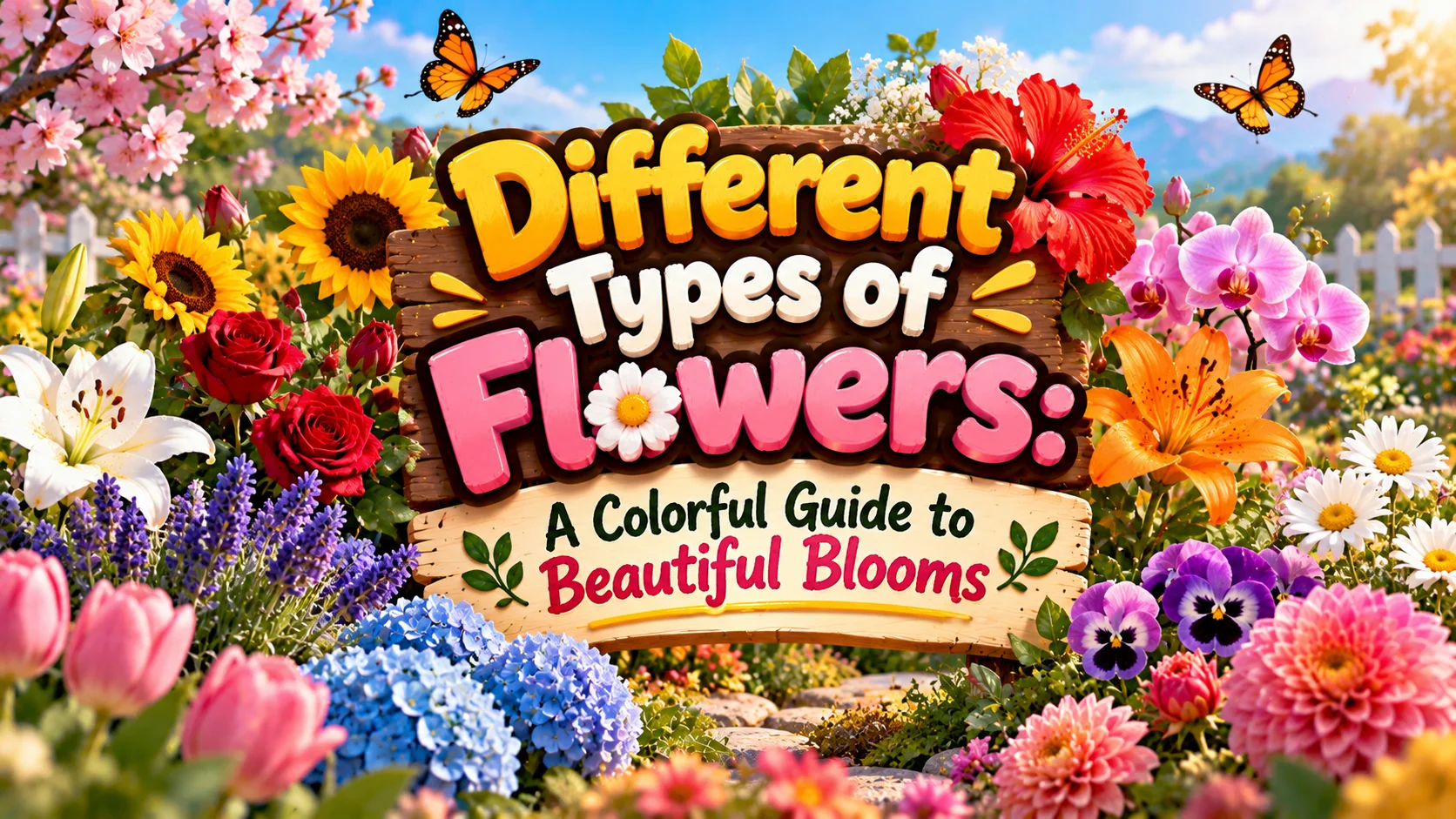
Flowers bring color, fragrance, beauty, and personality to gardens, homes, celebrations, and special occasions. From classic roses and cheerful daisies to exotic orchids and elegant lilies, there are countless different types of flowers to discover. Each bloom has its own shape, color, growing habit, season, fragrance, and symbolism.
Whether you are choosing flowers for a garden, bouquet, wedding, gift, photography, or simply exploring the world of plants, learning about different flower types makes it easier to find the perfect bloom. Some flowers thrive in sunny gardens, while others prefer shade, moisture, or tropical climates.
In this guide, you will discover popular flowering plants, seasonal blooms, colorful flowers, tropical varieties, wildflowers, fragrant blossoms, perennial and annual flowers, and many unique floral choices. 🌸
🌹 Popular Types of Flowers Everyone Knows
Popular flowers have earned their place in gardens, bouquets, celebrations, and floral arrangements because of their recognizable beauty and versatility. These common flower varieties include familiar garden favorites that are easy to identify and widely loved.
- Rose
- Tulip
- Daisy
- Sunflower
- Lily
- Orchid
- Carnation
- Marigold
- Lavender
- Peony
- Daffodil
- Chrysanthemum
- Hydrangea
- Iris
- Gerbera
- Zinnia
- Poppy
- Petunia
- Begonia
- Camellia
🌷 Different Types of Spring Flowers
Spring flowers bring fresh color after winter and are often associated with renewal, growth, sunshine, and new beginnings. Popular spring-blooming flowers include bulbs, garden perennials, and cheerful seasonal plants.
- Tulip
- Daffodil
- Crocus
- Hyacinth
- Primrose
- Pansy
- Cherry Blossom
- Magnolia
- Forsythia
- Bleeding Heart
- Sweet Pea
- Columbine
- Anemone
- Lilac
- Peony
- Lily of the Valley
- Iris
- Freesia
- Ranunculus
- Hellebore
☀️ Beautiful Summer Flowers
Summer flowers are known for vibrant colors, long blooming periods, and their ability to brighten outdoor spaces. Many summer flower varieties attract butterflies, bees, hummingbirds, and other helpful pollinators.
- Sunflower
- Zinnia
- Marigold
- Cosmos
- Coneflower
- Dahlia
- Hibiscus
- Lavender
- Petunia
- Geranium
- Black-Eyed Susan
- Coreopsis
- Snapdragon
- Salvia
- Bee Balm
- Gardenia
- Jasmine
- Lantana
- Morning Glory
- Portulaca
🍂 Gorgeous Fall Flowers
Fall flowers add rich colors and texture to gardens as summer begins to fade. Autumn blooms often feature warm shades such as orange, burgundy, gold, red, bronze, and deep purple.
- Chrysanthemum
- Dahlia
- Aster
- Goldenrod
- Japanese Anemone
- Marigold
- Sedum
- Helenium
- Toad Lily
- Russian Sage
- Calendula
- Sneezeweed
- Montbretia
- Pansy
- Viola
- Cyclamen
- Autumn Crocus
- Sunflower
- Celosia
- Ornamental Kale Flowers
❄️ Winter-Blooming Flowers
Winter flowers can bring unexpected beauty during the colder months. Depending on the climate, several flowering plants can bloom in winter or remain colorful when many other garden plants are dormant.
- Winter Jasmine
- Christmas Rose
- Winter Aconite
- Snowdrop
- Camellia
- Witch Hazel
- Hellebore
- Cyclamen
- Pansy
- Violas
- Mahonia
- Winter Heath
- Primrose
- Daphne
- Sweet Box
- Calendula
- Flowering Quince
- Algerian Iris
- Winter Honeysuckle
- Glory of the Snow
🌈 Different Flower Colors and Their Names
Flower color is one of the easiest ways to categorize blooms and create a specific garden or bouquet aesthetic. From soft pastels to dramatic jewel tones, flowers appear in an incredible range of natural shades.
- Red: Roses, poppies, tulips, geraniums
- Pink: Peonies, cherry blossoms, carnations, cosmos
- White: Lilies, daisies, gardenias, jasmine
- Yellow: Sunflowers, daffodils, marigolds, buttercups
- Orange: Tiger lilies, calendula, zinnias, poppies
- Purple: Lavender, violets, irises, alliums
- Blue: Hydrangeas, delphiniums, cornflowers, forget-me-nots
- Green: Green roses, bells of Ireland, green chrysanthemums
- Black: Black hollyhocks, dark dahlias, black pansies
- Peach: Peach roses, ranunculus, dahlias
- Coral: Coral bells, zinnias, roses
- Burgundy: Dahlias, roses, chrysanthemums
- Magenta: Cosmos, petunias, bougainvillea
- Cream: Roses, dahlias, gardenias
- Lavender: Lavender, lilacs, certain irises
- Bicolor: Tulips, roses, petunias, orchids
🌹 Different Types of Roses
Roses are among the most recognizable flowering plants in the world. They come in numerous forms, colors, fragrances, and growth habits, making them suitable for gardens, bouquets, weddings, gifts, and landscaping.
- Hybrid Tea Rose
- Floribunda Rose
- Grandiflora Rose
- Climbing Rose
- Rambling Rose
- Miniature Rose
- Shrub Rose
- English Rose
- Damask Rose
- Bourbon Rose
- Tea Rose
- Polyantha Rose
- Alba Rose
- Gallica Rose
- Rugosa Rose
- Musk Rose
- China Rose
- Wild Rose
- Groundcover Rose
- Patio Rose
🌻 Cheerful Yellow Flowers
Yellow flowers create a warm, sunny appearance and can make gardens feel brighter and more energetic. These golden blooms work beautifully in flower beds, containers, bouquets, and pollinator gardens.
- Sunflower
- Daffodil
- Yellow Rose
- Marigold
- Coreopsis
- Black-Eyed Susan
- Buttercup
- Goldenrod
- Yellow Tulip
- Yellow Iris
- Calendula
- Yarrow
- Daylily
- Primrose
- Evening Primrose
- Golden Poppy
- Yellow Zinnia
- Yellow Cosmos
- Yellow Dahlia
- Forsythia
💜 Purple and Lavender Flowers
Purple flowers are often chosen for their elegant, dreamy, romantic, and sophisticated appearance. Lavender, violet, plum, and deep purple blooms can add dramatic contrast to gardens and floral arrangements.
- Lavender
- Violet
- Purple Iris
- Lilac
- Wisteria
- Purple Petunia
- Verbena
- Allium
- Salvia
- Aster
- Clematis
- Bellflower
- Lupine
- Foxglove
- Purple Coneflower
- Hyacinth
- Pansy
- Morning Glory
- Phlox
- Verbascum
🌸 Pink Flowers for Gardens and Bouquets
Pink flowers range from delicate blush tones to vibrant hot pink shades. They are especially popular for romantic gardens, spring arrangements, weddings, baby celebrations, and feminine floral themes.
- Pink Rose
- Pink Peony
- Pink Tulip
- Pink Carnation
- Pink Lily
- Cherry Blossom
- Pink Hydrangea
- Pink Dahlia
- Pink Cosmos
- Pink Zinnia
- Pink Geranium
- Pink Petunia
- Pink Camellia
- Pink Azalea
- Pink Begonia
- Pink Hibiscus
- Pink Lotus
- Pink Ranunculus
- Pink Snapdragon
- Pink Sweet Pea
🌺 Tropical Flowers With Exotic Beauty
Tropical flowers are known for bold colors, unusual shapes, dramatic foliage, and warm-climate growing conditions. Many tropical blooms create an exotic garden atmosphere or a vacation-inspired floral aesthetic.
- Hibiscus
- Bird of Paradise
- Plumeria
- Bougainvillea
- Heliconia
- Anthurium
- Orchid
- Ginger Flower
- Passion Flower
- Protea
- Bromeliad
- Ixora
- Gardenia
- Jasmine
- Frangipani
- Torch Ginger
- Canna Lily
- Mandevilla
- Oleander
- Lotus
🌼 Wildflowers Found in Nature
Wildflowers create a natural, relaxed appearance and are commonly associated with meadows, forests, roadsides, prairies, and open landscapes. Many native wildflowers also provide valuable resources for pollinators.
- Cornflower
- Poppy
- Coneflower
- Black-Eyed Susan
- Lupine
- Bluebell
- Buttercup
- Goldenrod
- Yarrow
- Milkweed
- Aster
- Queen Anne’s Lace
- Indian Paintbrush
- Forget-Me-Not
- Blanket Flower
- Coreopsis
- Wild Violet
- Primrose
- Phlox
- Columbine
🌿 Fragrant Flowers That Fill the Air
Fragrant flowers are especially appealing when you want a garden that looks beautiful and smells wonderful. Their natural scents can range from sweet and floral to citrusy, spicy, earthy, or intensely rich.
- Jasmine
- Gardenia
- Rose
- Lavender
- Honeysuckle
- Lilac
- Freesia
- Sweet Pea
- Tuberose
- Hyacinth
- Daphne
- Lily of the Valley
- Gardenia
- Mock Orange
- Magnolia
- Stock
- Carnation
- Sweet Alyssum
- Plumeria
- Osmanthus
🪻 Perennial Flowers That Return Each Year
Perennial flowers can live for multiple growing seasons and are popular among gardeners who want long-term planting. Once established, many perennial varieties return year after year with appropriate care.
- Peony
- Coneflower
- Black-Eyed Susan
- Daylily
- Iris
- Lavender
- Salvia
- Yarrow
- Shasta Daisy
- Bee Balm
- Hosta Flowers
- Columbine
- Catmint
- Russian Sage
- Astilbe
- Coreopsis
- Delphinium
- Phlox
- Lupine
- Sedum
🌱 Annual Flowers for Seasonal Color
Annual flowers generally complete their life cycle within one growing season, making them useful for adding temporary color to containers, borders, flower beds, and seasonal displays.
- Marigold
- Zinnia
- Cosmos
- Petunia
- Sunflower
- Celosia
- Impatiens
- Begonia
- Snapdragons
- Nasturtium
- Calendula
- Sweet Alyssum
- Cleome
- Portulaca
- Ageratum
- Nicotiana
- Verbena
- Pansy
- Geranium
- Morning Glory
🌺 Exotic and Unusual Flowers to Explore
Some flowers stand out because of their unusual shapes, dramatic colors, rare appearances, or fascinating natural structures. These unique blooms can make a garden or floral collection especially memorable.
| Flower | What Makes It Interesting |
|---|---|
| Bird of Paradise | Resembles a tropical bird |
| Passion Flower | Intricate, unusual structure |
| Protea | Bold and sculptural appearance |
| Bleeding Heart | Heart-shaped blooms |
| Bat Flower | Dark, dramatic flower shape |
| Monkey Face Orchid | Unusual facial-like markings |
| Parrot Tulip | Frilled, feathered petals |
| Jade Vine | Unusual green-blue flowers |
| Corpse Flower | Famous for its enormous bloom |
| Chocolate Cosmos | Distinctive chocolate-like fragrance |
| Black Bat Flower | Dramatic dark appearance |
| Snapdragon | Flowers resemble open mouths |
| Lady’s Slipper Orchid | Slipper-shaped flower |
| Crown Imperial | Bell-shaped hanging flowers |
| Torch Ginger | Tall, dramatic tropical blooms |
| Dutchman’s Pipe | Unusual curved flower shape |
| Bleeding Tooth Flower | Distinctive decorative appearance |
| Fritillaria | Checkered or unusual petals |
| Sea Holly | Spiky blue-gray appearance |
| Angel’s Trumpet | Large hanging trumpet-shaped blooms |
🌳 Flowering Trees With Stunning Blooms
Flowering trees combine the beauty of blossoms with the structure and presence of a tree. They can transform landscapes during their blooming season and provide shade, habitat, and visual interest.
- Cherry Blossom
- Magnolia
- Dogwood
- Crabapple
- Eastern Redbud
- Flowering Pear
- Jacaranda
- Golden Chain Tree
- Crape Myrtle
- Apple Blossom
- Hawthorn
- Catalpa
- Royal Poinciana
- Flamboyant Tree
- Bottlebrush Tree
- Silk Tree
- Frangipani Tree
- Orchid Tree
- Tabebuia
- Flowering Quince
🌿 Flowering Shrubs for Gardens
Flowering shrubs are useful for borders, hedges, foundation planting, privacy screens, and landscape design. They offer both structure and seasonal blooms without requiring the space of a large tree.
- Hydrangea
- Azalea
- Rhododendron
- Butterfly Bush
- Rose
- Weigela
- Lilac
- Forsythia
- Camellia
- Gardenia
- Hibiscus
- Spirea
- Viburnum
- Potentilla
- Mock Orange
- Beautyberry
- Abelia
- Daphne
- Rose of Sharon
- Flowering Quince
🦋 Flowers That Attract Butterflies and Pollinators
Pollinator-friendly flowers provide nectar and pollen for butterflies, bees, hummingbirds, and other beneficial insects. Choosing a mixture of native and flowering plants can create a more lively garden ecosystem.
- Coneflower
- Milkweed
- Bee Balm
- Lavender
- Butterfly Bush
- Zinnia
- Aster
- Black-Eyed Susan
- Goldenrod
- Salvia
- Sunflower
- Coreopsis
- Phlox
- Lantana
- Marigold
- Cosmos
- Yarrow
- Catmint
- Joe-Pye Weed
- Verbena
🪴 Best Flowers for Containers and Small Spaces
You do not need a huge garden to enjoy flowering plants. Many compact varieties perform beautifully in pots, window boxes, hanging baskets, balconies, patios, and small urban gardens.
- Petunia
- Geranium
- Marigold
- Begonia
- Pansy
- Viola
- Calibrachoa
- Impatiens
- Lobelia
- Alyssum
- Zinnia
- Dwarf Sunflower
- Portulaca
- Nasturtium
- Verbena
- Fuchsia
- Chrysanthemum
- Miniature Rose
- Dahlia
- Sweet Pea
💐 Best Flowers for Bouquets and Floral Arrangements
Some flowers are especially popular in bouquets because of their attractive forms, long stems, colors, fragrance, or ability to complement other blooms. Combining focal flowers with filler flowers and greenery creates balanced arrangements.
- Rose
- Peony
- Tulip
- Lily
- Hydrangea
- Sunflower
- Carnation
- Gerbera
- Ranunculus
- Anemone
- Dahlia
- Freesia
- Snapdragon
- Delphinium
- Lisianthus
- Chrysanthemum
- Baby’s Breath
- Statice
- Eucalyptus
- Wax Flower
💕 Flowers Commonly Associated With Love and Romance
Flowers have long been used to express affection, celebration, admiration, and romance. While meanings can vary by culture and context, certain blooms are especially common in romantic bouquets and gifts.
| Flower | Common Association |
|---|---|
| Red Rose | Love and romance |
| Pink Rose | Affection and appreciation |
| Peony | Romance and prosperity |
| Tulip | Affection and elegance |
| Carnation | Admiration |
| Orchid | Beauty and refinement |
| Gardenia | Grace and admiration |
| Lily | Beauty and purity |
| Daisy | Innocence and cheerfulness |
| Lavender | Calm and devotion |
🌙 Flowers With a Dark and Mysterious Aesthetic
Dark flowers can create a dramatic garden or floral arrangement using deep burgundy, wine, plum, maroon, chocolate, and nearly black shades. These blooms are popular for gothic, moody, celestial, and mysterious aesthetics.
- Black Rose
- Black Dahlia
- Black Hollyhock
- Black Pansy
- Queen of Night Tulip
- Chocolate Cosmos
- Burgundy Dahlia
- Dark Red Rose
- Deep Purple Iris
- Burgundy Chrysanthemum
- Black Petunia
- Dark Snapdragon
- Wine-Colored Calla Lily
- Deep Plum Clematis
- Black Scabiosa
- Dark Maroon Carnation
- Burgundy Peony
- Deep Purple Petunia
- Chocolate Lily
- Dark Amaranth
🌼 Small Flowers With Delicate Beauty
Small flowers may be tiny, but they can have a major impact when planted in groups or used as fillers in bouquets. Their delicate appearance works especially well in cottage gardens and natural floral arrangements.
- Baby’s Breath
- Forget-Me-Not
- Sweet Alyssum
- Violet
- Lily of the Valley
- Clover
- Primrose
- Chamomile
- Lobelia
- Creeping Thyme
- Johnny-Jump-Up
- Scabiosa
- Flax
- Nemesia
- Snowdrop
- Bluets
- Dianthus
- Phlox
- Candytuft
- Bluestar
🌺 Large Flowers That Make a Statement
Large blooms instantly attract attention and often become the focal point of a garden or bouquet. Their impressive flower heads, bold petals, or unusual structures make them ideal for dramatic landscaping and floral photography.
- Sunflower
- Dinnerplate Dahlia
- Peony
- Hydrangea
- Hibiscus
- Magnolia
- Dinnerplate Hibiscus
- Protea
- Giant Allium
- Oriental Lily
- Bird of Paradise
- Lotus
- Canna Lily
- Dinnerplate Dahlia
- Amaryllis
- Dinnerplate Rose
- Giant Zinnia
- Angel’s Trumpet
- Chrysanthemum
- King Protea
🏡 Easy Flowers for Beginner Gardeners
If you are new to gardening, choosing adaptable flowers can make the experience easier and more enjoyable. Many beginner-friendly blooms tolerate a range of conditions and provide noticeable color with relatively simple care.
- Marigold
- Zinnia
- Sunflower
- Cosmos
- Petunia
- Nasturtium
- Calendula
- Pansy
- Geranium
- Coneflower
- Black-Eyed Susan
- Daylily
- Lavender
- Salvia
- Coreopsis
- Portulaca
- Sweet Alyssum
- Begonia
- Impatiens
- Yarrow
🌸 Quick Guide to Different Flower Types
| Flower Type | Examples | Common Use |
|---|---|---|
| Annuals | Zinnia, Marigold | Seasonal color |
| Perennials | Peony, Coneflower | Long-term gardens |
| Bulbs | Tulip, Daffodil | Spring displays |
| Tropical | Hibiscus, Plumeria | Exotic gardens |
| Wildflowers | Poppy, Lupine | Natural landscapes |
| Shrubs | Hydrangea, Azalea | Borders and hedges |
| Flowering Trees | Magnolia, Dogwood | Landscape focal points |
| Climbers | Wisteria, Clematis | Walls and trellises |
| Groundcovers | Creeping Phlox | Low garden areas |
| Aquatic | Lotus, Water Lily | Ponds and water gardens |
🌿 How to Choose the Right Flower for Your Garden
Choosing among the many different types of flowers becomes easier when you consider sunlight, soil, climate, available space, watering needs, and blooming season. A flower that thrives in one garden may struggle in another environment.
- Check how much sunlight the location receives.
- Choose flowers suited to your climate.
- Consider soil drainage.
- Check mature plant size.
- Think about bloom season.
- Mix early, mid-season, and late bloomers.
- Consider watering requirements.
- Choose containers for limited spaces.
- Select native flowers when appropriate.
- Think about pollinators.
- Consider fragrance preferences.
- Match flower colors to your landscape.
- Check whether plants are annual or perennial.
- Consider maintenance requirements.
- Leave enough room for growth.
- Look at mature height and width.
- Choose flowers that fit your garden style.
- Consider pet and child safety when relevant.
- Read the plant’s care requirements.
- Start with a manageable number of varieties.
🌺 Frequently Asked Questions About Different Types of Flowers
What are the most popular types of flowers?
Roses, tulips, daisies, sunflowers, lilies, orchids, carnations, marigolds, peonies, and chrysanthemums are among the most familiar and widely grown or used flowers.
How many different types of flowers are there?
There are hundreds of thousands of known flowering plant species worldwide. The exact number depends on how botanical species and classifications are counted, and new species continue to be described.
What are the main types of flowers?
Flowers can be categorized in many ways, including annuals, perennials, bulbs, wildflowers, tropical flowers, flowering shrubs, flowering trees, aquatic flowers, and climbing plants.
What flowers bloom in spring?
Common spring flowers include tulips, daffodils, crocuses, hyacinths, magnolias, cherry blossoms, pansies, primroses, and irises.
What flowers bloom in summer?
Popular summer flowers include sunflowers, zinnias, marigolds, dahlias, cosmos, hibiscus, petunias, coneflowers, lavender, and black-eyed Susans.
What are some fragrant flowers?
Jasmine, gardenia, rose, lavender, honeysuckle, lilac, freesia, tuberose, hyacinth, and sweet pea are well known for their fragrance.
Which flowers are good for beginners?
Marigolds, zinnias, sunflowers, cosmos, nasturtiums, pansies, petunias, and coneflowers are commonly considered approachable choices for beginner gardeners, depending on local growing conditions.
What flowers attract butterflies?
Coneflowers, milkweed, zinnias, butterfly bush, asters, lavender, bee balm, lantana, goldenrod, and black-eyed Susans can attract butterflies and other pollinators.
🌷 Final Thoughts on Different Types of Flowers
The world of flowers is incredibly diverse, with blooms suited to almost every garden style, season, color palette, and personal preference. From cheerful sunflowers and daisies to elegant roses and lilies, exotic orchids and hibiscus, and natural wildflowers, every type brings something special.
Understanding the different categories of flowering plants can help you choose varieties based on climate, garden size, bloom time, fragrance, color, maintenance, and purpose. Whether you want a pollinator garden, romantic flower bed, colorful container garden, tropical landscape, or simple backyard display, there is a flower variety waiting to brighten the space.

Ethan Carter is a nature enthusiast and content writer with a passion for flowers and botanical knowledge. He is the author behind FlowerNamez, where he shares simple and informative content about flower names, types, and meanings.
With a focus on clarity and accuracy, Ethan aims to help readers explore the beauty of flowers and understand their significance in everyday life.