
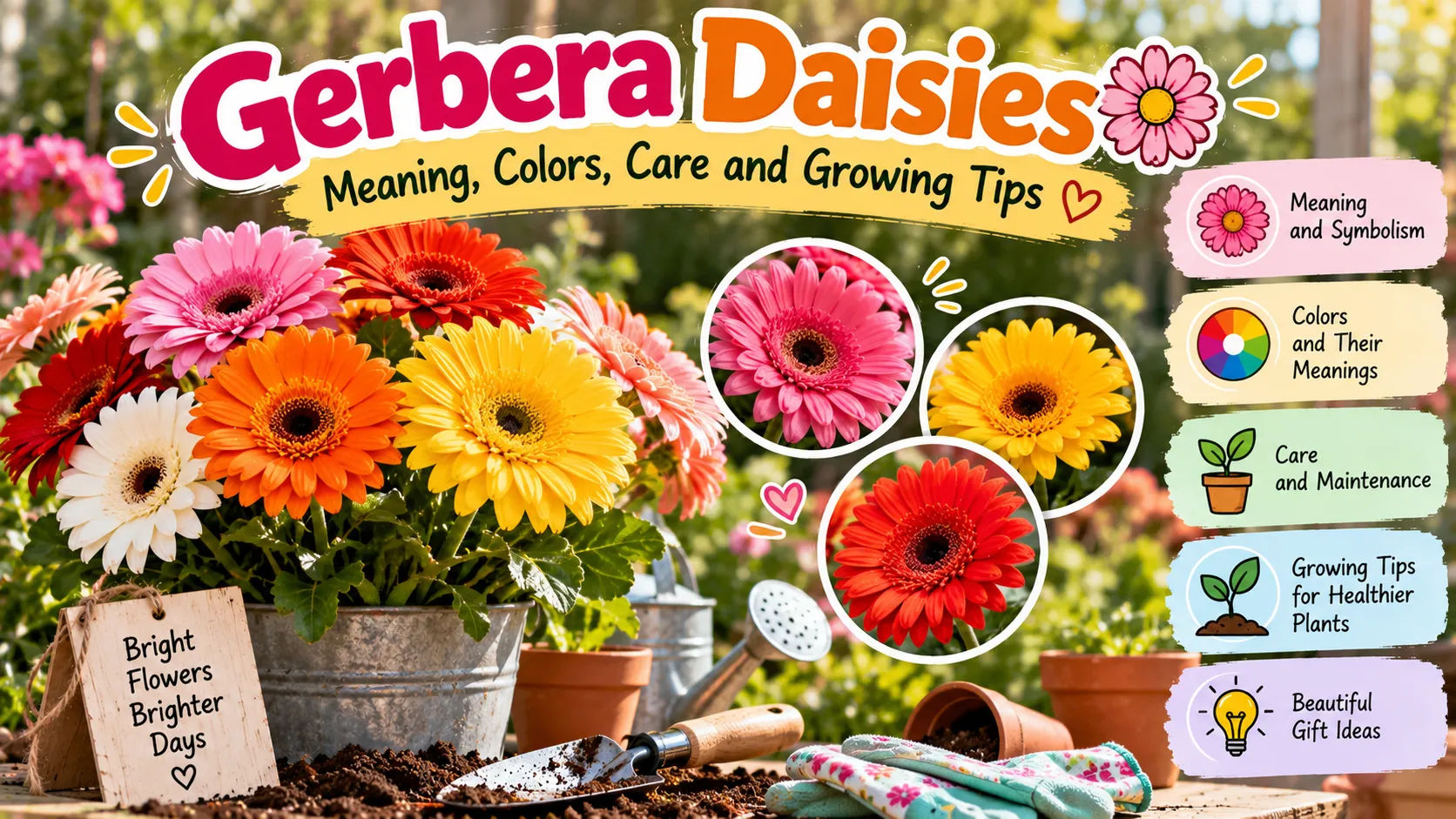
Gerbera daisies are among the most cheerful and eye-catching flowers in the world. Known for their large, colorful blooms and bright green leaves, these flowers bring beauty and happiness to gardens, homes, bouquets, and special celebrations. Their vibrant petals come in shades of pink, red, orange, yellow, white, and purple, making them a popular choice for birthdays, weddings, anniversaries, and thoughtful gifts.
Whether you want to grow gerbera daisies in your garden, decorate your home with fresh flowers, or learn what these beautiful blooms symbolize, understanding their characteristics and care requirements can help you enjoy them for longer. Gerbera daisies belong to the sunflower family and produce striking flower heads that attract attention wherever they grow.
In this guide, you’ll discover what gerbera daisies are, what their colors mean, how to grow and care for them, when they bloom, and how to use them in floral arrangements. You’ll also find practical answers to common questions about these beautiful flowers.
🌸 What Are Gerbera Daisies?
Gerbera daisies are flowering plants known for their large, colorful blooms and distinctive central disks. They belong to the genus Gerbera within the Asteraceae family, which also includes sunflowers, asters, and chrysanthemums. Gardeners and florists value these flowers for their cheerful appearance, variety of colors, and long-lasting beauty when properly cared for.
The plants originally come from parts of Africa and other regions of the world, and modern garden varieties offer a wide range of flower sizes, colors, and petal shapes. Some gerbera daisies have a single row of petals, while others feature fuller, double blooms.
Gerbera daisies grow well in sunny locations with suitable soil and good drainage. Gardeners often grow them in flower beds, containers, and borders, while florists use their sturdy stems and vivid colors in bouquets and decorative arrangements.
🌼 Gerbera Daisy Meaning and Symbolism
Gerbera daisies commonly symbolize happiness, innocence, friendship, and positive energy. Their bright colors and open flower faces make them a popular choice for expressing warm feelings and celebrating joyful occasions.
Many people associate gerbera daisies with optimism because their cheerful appearance can brighten a room or garden. They also make thoughtful gifts when you want to encourage someone, celebrate a milestone, or show appreciation.
The meaning of a gerbera daisy can vary depending on its color and the occasion. For example, pink blooms often suggest admiration and affection, while yellow flowers commonly represent happiness and friendship.
Gerbera daisies can communicate several positive messages:
- Happiness and joy
- Friendship and appreciation
- Innocence and purity
- New beginnings and optimism
- Love and admiration
- Encouragement and positivity
Although flower symbolism varies across cultures and traditions, gerbera daisies remain a popular choice for expressing cheerful and uplifting emotions.
🎨 Gerbera Daisy Colors and Their Meanings
Gerbera daisies come in a wide range of colors, and each shade can create a different mood in a bouquet or garden. Choosing a color based on its symbolism can make your floral gift more personal.
| Gerbera daisy color | Common meaning | Suitable occasions |
|---|---|---|
| Pink | Admiration, affection, and appreciation | Birthdays, thank-you gifts, and friendship |
| Red | Love, passion, and deep affection | Anniversaries and romantic gifts |
| Yellow | Happiness, warmth, and friendship | Celebrations and get-well gifts |
| Orange | Enthusiasm, energy, and excitement | Congratulations and achievements |
| White | Innocence, purity, and fresh beginnings | Weddings and welcoming a newborn |
| Purple | Elegance, admiration, and charm | Special celebrations and thoughtful gifts |
| Peach | Gratitude, warmth, and sincerity | Appreciation gifts and family occasions |
| Cream | Softness, elegance, and simplicity | Weddings and understated arrangements |
These meanings provide general guidance rather than fixed rules. You can choose any color you love or combine several shades to create an arrangement that reflects your personality and the occasion.
🌺 Popular Types of Gerbera Daisies
Gerbera daisies include many cultivated varieties that differ in color, size, petal shape, and overall appearance. Garden centers and florists often group them according to their bloom style and growing characteristics.
Single Gerbera Daisies
Single gerbera daisies feature one main row of petals surrounding a prominent central disk. Their simple, classic shape resembles a traditional daisy, making them ideal for natural-looking bouquets and garden displays.
Double Gerbera Daisies
Double varieties have additional rows of petals that create a fuller flower head. Their layered appearance adds texture and volume to floral arrangements.
Spider Gerbera Daisies
Spider-type gerberas feature narrow, elongated petals that give the blooms a distinctive, slightly spiky appearance. These varieties add visual interest to mixed bouquets.
Mini Gerbera Daisies
Mini gerberas produce smaller flower heads than many standard varieties. Their compact size makes them useful for small arrangements, tabletop decorations, and container gardens.
Large-Flowered Gerbera Daisies
Some varieties produce broad, impressive flower heads that stand out in gardens and floral displays. They work especially well as focal flowers in bouquets.
When selecting a variety, consider your growing conditions, the available space, and whether you want to grow the flowers outdoors or primarily enjoy them as cut blooms.
☀️ How to Grow Gerbera Daisies
Gerbera daisies can grow beautifully when you provide the right balance of sunlight, moisture, warmth, and drainage. Although their exact needs depend on the variety and climate, a few basic practices help most gardeners achieve healthy plants.
Choose the Right Location
Select a location with plenty of bright light. Gerbera daisies generally prefer full sun in cooler climates, but they may benefit from afternoon shade in areas with intense summer heat.
If you’re growing them indoors, place the pot near a bright window where the plant receives plenty of light without excessive heat buildup.
Prepare Well-Drained Soil
Gerbera daisies prefer soil that drains efficiently and allows their roots to receive oxygen. Heavy, waterlogged soil can increase the risk of root and crown rot.
For container growing, choose a potting mix designed for flowering plants and use a container with drainage holes. In garden beds, improve drainage before planting if the soil holds too much water.
Plant at the Correct Depth
Plant gerbera daisies so that the crown, where the leaves meet the roots, sits at or slightly above the soil surface. Burying the crown too deeply can encourage rot.
Space plants according to the variety’s mature size and the instructions on the plant label. Proper spacing allows air to circulate around the foliage.
Water Carefully
Water the soil when the upper layer begins to dry, adjusting the frequency according to temperature, sunlight, and container size. And Water thoroughly, then allow excess water to drain.
Avoid leaving the soil constantly saturated. Whenever possible, direct water toward the soil rather than repeatedly soaking the crown and foliage.
Feed During Active Growth
A balanced fertilizer formulated for flowering plants can support healthy growth during the growing season. Follow the product label for dosage and frequency, and avoid excessive feeding.
Too much fertilizer may encourage leafy growth at the expense of flowers or cause other plant problems.
💧 How to Care for Gerbera Daisies
Consistent care helps gerbera daisies maintain healthy foliage and produce attractive blooms. Their needs change with the weather, growing location, and stage of development, so check the plants regularly rather than following a rigid schedule.
Water consistently. Keep the soil lightly moist during active growth, but never leave the roots sitting in standing water.
Provide adequate sunlight. Give the plants bright light and protect them from excessive heat when necessary.
Remove spent flowers. Cut off faded flower stems near their base to keep plants tidy and encourage continued flowering when conditions support it.
Maintain good air circulation. Avoid overcrowding plants and remove dead or damaged foliage. Good airflow can help reduce fungal problems.
Check for pests. Inspect the leaves and flower stems for aphids, spider mites, and other common garden pests. Address problems early with an appropriate treatment.
Protect plants from cold. Many gerbera varieties are sensitive to frost. In colder climates, grow them in containers that you can move indoors or treat them as seasonal plants.
🌱 Growing Gerbera Daisies in Pots
Container gardening is a convenient way to grow gerbera daisies on patios, balconies, and sunny windowsills. It also makes it easier to control soil drainage and move plants when temperatures change.
Choose a pot with drainage holes that provides enough room for the roots without being excessively large. Fill it with a well-draining potting mix, and plant the gerbera with its crown slightly above the soil.
Place the pot in a bright location and monitor moisture carefully. Containers often dry out faster than garden beds during warm weather, but frequent watering can still cause problems if the pot drains poorly.
Rotate indoor containers occasionally to encourage balanced growth. Remove faded blooms and damaged leaves to maintain a neat appearance.
If your area experiences cold winters, move container-grown gerberas to a protected location before frost arrives. Keep the plant in bright light and adjust watering to its slower growth during cooler periods.
🌷 When Do Gerbera Daisies Bloom?
Gerbera daisies typically bloom during warm growing conditions, with flowering periods varying by variety, climate, and care. In suitable conditions, garden plants may produce repeated flushes of flowers throughout the growing season.
Many outdoor gerberas bloom from spring into fall in climates with favorable temperatures. In mild regions, they may flower for much of the year. Greenhouse-grown and florist varieties can bloom at different times depending on how growers manage light and temperature.
To encourage flowering, provide adequate light, use well-drained soil, water consistently, and remove faded blooms. Avoid excessive nitrogen fertilizer, which can promote leaf growth without supporting the same level of flowering.
If your plant produces plenty of leaves but few flowers, review its sunlight, watering, feeding, and temperature conditions.
✂️ How to Deadhead Gerbera Daisies
Deadheading means removing flowers that have faded or finished blooming. This simple task keeps gerbera daisies looking tidy and helps the plant direct its energy toward healthy growth.
Follow these steps:
- Identify a flower that has wilted, faded, or started producing seeds.
- Use clean, sharp garden scissors or pruning snips.
- Follow the flower stem down toward the base of the plant.
- Cut the stem near its base without damaging nearby leaves or the crown.
- Remove fallen petals and damaged plant material from around the plant.
Check your gerbera daisies regularly during their flowering season. Deadheading will not guarantee new flowers, but it can support a neat plant and may encourage continued blooming when the growing conditions are favorable.
💐 How to Use Gerbera Daisies in Flower Arrangements
Gerbera daisies are popular cut flowers because their large blooms create an immediate focal point. Their bright colors work well in both simple arrangements and elaborate bouquets.
Birthday Bouquets
Combine colorful gerbera daisies with seasonal flowers to create a cheerful birthday bouquet. Pink, orange, and yellow varieties are especially suitable for a bright, celebratory look.
Wedding Flowers
White, blush, and peach gerberas can complement a romantic wedding theme. Pair them with roses, lisianthus, or delicate greenery for a balanced arrangement.
Thank-You Gifts
Pink or yellow gerbera daisies make thoughtful gifts when you want to express gratitude. Their cheerful appearance communicates appreciation without requiring an elaborate arrangement.
New Baby Celebrations
Soft pink, white, and peach gerbera daisies can help celebrate the arrival of a baby. Add a handwritten congratulations card and choose a compact bouquet that is easy to display.
Get-Well Bouquets
Bright yellow, orange, and pink gerberas can bring a cheerful touch to a gift for someone recovering from an illness. Check the recipient’s preferences and any hospital restrictions before sending flowers.
🏡 How to Keep Cut Gerbera Daisies Fresh
With proper handling, cut gerbera daisies can remain attractive for several days or longer, depending on their freshness and storage conditions.
Start with a clean vase and fresh water. Trim the stems with a clean, sharp tool and remove any leaves that would sit below the waterline.
Use a floral preservative according to the product instructions. Change the water regularly and trim the stems again if they become soft or discolored.
Keep the arrangement away from direct sunlight, heaters, and strong drafts. Gerbera stems can bend under the weight of their flower heads, so a clean vase with suitable support can help maintain their shape.
Remove flowers that begin to wilt so they do not detract from the rest of the arrangement.
🐛 Common Problems When Growing Gerbera Daisies
Gerbera daisies may experience problems when their growing conditions do not suit their needs. Recognizing common symptoms can help you respond before the plant suffers more serious damage.
| Problem | Possible cause | What to do |
|---|---|---|
| Yellowing leaves | Overwatering, poor drainage, or nutrient issues | Check soil moisture and drainage before adjusting fertilizer |
| Few flowers | Insufficient light, unsuitable temperatures, or excessive nitrogen | Review sunlight, temperature, and feeding practices |
| Wilting leaves | Dry soil, heat stress, or root damage | Check soil moisture and inspect roots if symptoms persist |
| Crown rot | Waterlogged soil or a buried crown | Improve drainage and keep the crown at the soil surface |
| Powdery mildew | Poor airflow and favorable conditions for fungal growth | Improve spacing and remove affected plant material |
| Aphids | Insect activity on tender growth | Inspect plants and use an appropriate control method if needed |
| Bent flower stems | Heavy blooms or inadequate support | Use a suitable vase or gentle plant support |
Avoid treating every symptom with more water or fertilizer. Check the plant’s growing conditions first, because the same symptom can have several causes.
🌼 Are Gerbera Daisies Safe for Pets?
Gerbera daisies are generally considered non-toxic to cats and dogs, which makes them a popular choice for households with pets. However, pets can still experience stomach upset if they chew or swallow plant material.
Place bouquets and potted plants where pets cannot knock them over or chew them excessively. Also check any greenery, filler flowers, floral preservatives, and decorative materials included in the arrangement, since these may present separate risks.
If your pet eats a plant and develops concerning symptoms, contact a veterinarian for advice.
❓ Frequently Asked Questions About Gerbera Daisies
What do gerbera daisies symbolize?
Gerbera daisies commonly symbolize happiness, friendship, innocence, admiration, and positive energy. Their meaning can vary by color and cultural tradition, but people often choose them to express cheerful and uplifting feelings.
Do gerbera daisies need full sun?
Gerbera daisies need plenty of bright light. They generally grow well in full sun in cooler climates, while afternoon shade can help protect them from intense heat in warmer regions.
How often should I water gerbera daisies?
Water when the upper layer of soil begins to dry, adjusting the schedule to the weather and growing conditions. Keep the soil from becoming waterlogged, and make sure containers drain freely.
Are gerbera daisies annuals or perennials?
Gerbera daisies can grow as perennials in suitable warm climates. In regions with cold winters, gardeners often grow them as annuals or protect them indoors because many varieties cannot tolerate frost.
How long do gerbera daisies last in a vase?
Cut gerbera daisies often last several days to around two weeks with good care, although their lifespan depends on freshness, variety, and conditions. Clean water, a clean vase, and appropriate stem trimming can help extend their display life.
Can gerbera daisies grow indoors?
Yes. Gerbera daisies can grow indoors when they receive plenty of bright light, suitable temperatures, and well-drained soil. Avoid keeping the roots constantly wet, and provide enough airflow around the foliage.
Why are my gerbera daisies not flowering?
Common reasons include insufficient sunlight, unsuitable temperatures, excessive nitrogen fertilizer, or general plant stress. Review the plant’s light, watering, and feeding conditions to identify the likely cause.
Should I deadhead gerbera daisies?
Yes, removing faded flower stems keeps plants tidy and may support continued flowering under favorable conditions. Use clean tools and cut the spent stem near the plant’s base.
Are gerbera daisies safe for cats and dogs?
Gerbera daisies are generally considered non-toxic to cats and dogs. However, chewing plant material can still cause stomach upset, and other flowers or materials in a mixed bouquet may be hazardous.
Can I grow gerbera daisies from seed?
Yes. You can grow some gerbera varieties from seed, although germination and flower color may vary. Fresh seed, suitable warmth, adequate light, and a well-draining growing medium can improve your chances of success.
🌻 Final Thoughts
Gerbera daisies are beautiful, versatile flowers that bring color and happiness to gardens, homes, and special occasions. Their vibrant blooms symbolize friendship, joy, admiration, and new beginnings, making them suitable for birthdays, weddings, thank-you gifts, and newborn celebrations.
With bright light, well-drained soil, careful watering, and regular removal of faded blooms, you can enjoy healthy gerbera daisies throughout their growing season. Whether you grow them in containers, plant them in your garden, or display them in a vase, these cheerful flowers offer a simple way to add natural beauty to everyday life.
Choose your favorite gerbera daisy colors, follow the care practices that suit your climate, and enjoy the lasting charm of these wonderful blooms.

Ethan Carter is a nature enthusiast and content writer with a passion for flowers and botanical knowledge. He is the author behind FlowerNamez, where he shares simple and informative content about flower names, types, and meanings.
With a focus on clarity and accuracy, Ethan aims to help readers explore the beauty of flowers and understand their significance in everyday life.