
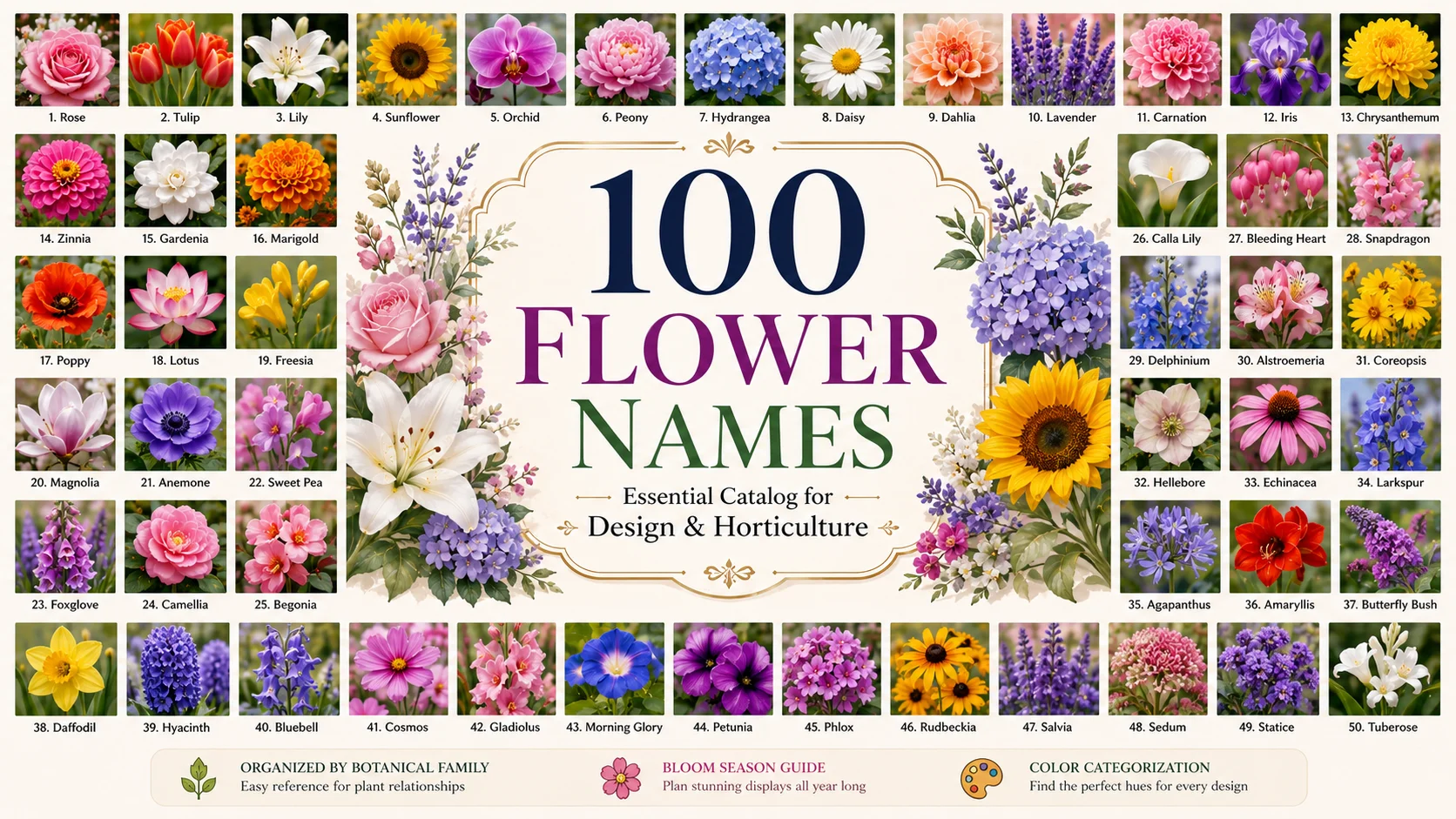
This professional reference guide presents 100 flower names organized for easy identification in horticulture, floral design, gardening, and botanical education. Each entry includes the flower’s common name, typical color range, and key identifying characteristic. The flowers listed represent widely cultivated species from diverse botanical families including Rosaceae (roses), Asteraceae (daisies and sunflowers), Liliaceae (lilies and tulips), Orchidaceae (orchids), and Lamiaceae (lavender).
These 100 species have been selected based on ornamental value, cultural significance, commercial availability, and frequency of use in residential and public landscapes. Understanding these flower names provides a solid foundation for garden planning, floral arrangement work, botanical study, or simply more informed appreciation of the plant kingdom.
Common Flowers by Botanical Family
This section organizes 100 flower names by their botanical families for scientific reference and professional use.
Rosaceae (Rose Family)
- Rose
- Spirea
- Potentilla
- Hawthorn
- Flowering Almond
- Cherry Blossom
- Apple Blossom
- Pear Blossom
- Plum Blossom
- Quince
Asteraceae (Daisy Family)
- Sunflower
- Daisy
- Marigold
- Zinnia
- Aster
- Coneflower
- Black-Eyed Susan
- Cosmos
- Dahlia
- Chrysanthemum
- Liatris
- Coreopsis
- Gaillardia
- Yarrow
- Goldenrod
- Joe Pye Weed
- Ironweed
- Globe Thistle
- Bachelor Button
- Calendula
Liliaceae (Lily Family)
- Tulip
- Lily
- Fritillaria
- Erythronium (Trout Lily)
- Cardiocrinum
- Clintonia
- Medeola
- Streptopus
- Prosartes
- Scoliopus
Orchidaceae (Orchid Family)
- Phalaenopsis (Moth Orchid)
- Cattleya
- Dendrobium
- Vanda
- Cymbidium
- Oncidium
- Paphiopedilum
- Miltonia
- Cypripedium (Lady Slipper)
- Epidendrum
Lamiaceae (Mint Family)
- Lavender
- Salvia
- Mint
- Bee Balm (Monarda)
- Catmint (Nepeta)
- Russian Sage (Perovskia)
- Hyssop (Agastache)
- Oregano (ornamental)
- Thyme (ornamental)
- Rosemary (ornamental)
Asparagaceae (Asparagus Family)
- Hyacinth
- Grape Hyacinth (Muscari)
- Lily of the Valley
- Scilla
- Chionodoxa (Glory of the Snow)
- Puschkinia (Striped Squill)
- Leucojum (Snowflake)
- Asparagus (ornamental)
- Hostas (foliage with flowers)
- Camassia
Iridaceae (Iris Family)
- Iris
- Gladiolus
- Crocus
- Freesia
- Tigridia (Tiger Flower)
- Sparaxis (Harlequin Flower)
- Ixia (African Corn Lily)
- Watsonia
- Babiana (Baboon Flower)
- Dierama (Fairy Bells)
Ranunculaceae (Buttercup Family)
- Delphinium
- Columbine (Aquilegia)
- Ranunculus
- Anemone
- Clematis
- Bleeding Heart (Lamprocapnos)
- Buttercup
- Hellebore (Lenten Rose)
- Monkshood (Aconitum)
- Marsh Marigold (Caltha)
Fabaceae (Pea Family)
- Sweet Pea (Lathyrus)
- Lupine (Lupinus)
- Wisteria
- Clover (Trifolium)
- Vetch
- Redbud (Cercis)
- Baptisia (False Indigo)
- Thermopsis
- Caragana (Pea Tree)
- Indigofera
Solanaceae (Nightshade Family)
- Petunia
- Calibrachoa (Million Bells)
- Nicotiana (Flowering Tobacco)
- Brugmansia (Angel’s Trumpet)
- Datura (Devil’s Trumpet)
- Brunfelsia (Yesterday-Today-Tomorrow)
- Solanum (Potato Vine)
- Lycianthes
- Nierembergia (Cupflower)
- Salpiglossis (Painted Tongue)
Ericaceae (Heath Family)
- Rhododendron
- Azalea
- Heather (Calluna)
- Heath (Erica)
- Mountain Laurel (Kalmia)
- Blueberry (ornamental)
- Cranberry (ornamental)
- Leucothoe
- Pieris (Andromeda)
- Enkianthus
Oleaceae (Olive Family)
- Lilac (Syringa)
- Jasmine (Jasminum)
- Forsythia
- Osmanthus (Sweet Olive)
- Privet (Ligustrum – ornamental)
- Ash (Fraxinus – flowers)
- Olive (Olea – flowers)
- Chionanthus (Fringe Tree)
- Forestiera
- Phillyrea
Malvaceae (Mallow Family)
- Hibiscus
- Hollyhock (Alcea)
- Rose Mallow
- Abutilon (Flowering Maple)
- Malva (Mallow)
- Lavatera (Tree Mallow)
- Callirhoe (Poppy Mallow)
- Sidalcea
- Pavonia
- Althaea (Marsh Mallow)
Saxifragaceae (Saxifrage Family)
- Heuchera (Coral Bells)
- Astilbe
- Bergenia
- Saxifraga
- Tiarella (Foamflower)
- Rodgersia
- Tellima (Fringe Cups)
- Darmera (Umbrella Plant)
- Boykinia
- Leptarrhena
Plantaginaceae (Plantain Family)
- Snapdragon (Antirrhinum)
- Foxglove (Digitalis)
- Angelonia
- Penstemon (Beardtongue)
- Plantain (ornamental)
- Veronica (Speedwell)
- Linaria (Toadflax)
- Chelone (Turtlehead)
- Collinsia
- Digitalis
Amaryllidaceae (Amaryllis Family)
- Snowdrop (Galanthus)
- Allium (Ornamental Onion)
- Narcissus (Daffodil)
- Amaryllis (Hippeastrum)
- Leucojum (Snowflake)
- Lycoris (Spider Lily)
- Nerine
- Crinum
- Zephyranthes (Rain Lily)
- Sternbergia
Apocynaceae (Dogbane Family)
- Milkweed (Asclepias)
- Butterfly Weed (Asclepias tuberosa)
- Periwinkle (Vinca)
- Plumeria (Frangipani)
- Oleander (Nerium)
- Hoya (Wax Plant)
- Allamanda
- Carissa
- Catharanthus (Madagascar Periwinkle)
- Trachelospermum (Star Jasmine)
Boraginaceae (Borage Family)
- Forget-Me-Not (Myosotis)
- Brunnera (Siberian Bugloss)
- Pulmonaria (Lungwort)
- Borage
- Heliotropium (Heliotrope)
- Echium
- Cynoglossum
- Mertensia (Bluebells)
- Phacelia
- Cerinthe
Common Flowers by Bloom Season
Early Spring Flowers (February – April)
- Snowdrop
- Crocus
- Scilla
- Chionodoxa
- Puschkinia
- Hellebore
- Early Tulip
- Daffodil
- Hyacinth
- Grape Hyacinth
Spring Flowers (April – June)
- Tulip
- Lilac
- Bleeding Heart
- Columbine
- Peony
- Iris
- Allium
- Fritillaria
- Lily of the Valley
- Lungwort
Early Summer Flowers (May – July)
- Rose
- Delphinium
- Foxglove
- Lupine
- Sweet Pea
- Poppy
- Clematis
- Honeysuckle
- Rhododendron
- Azalea
Summer Flowers (June – August)
- Hydrangea
- Daylily
- Lily
- Lavender
- Sunflower
- Zinnia
- Marigold
- Cosmos
- Dahlia
- Hibiscus
Late Summer Flowers (August – October)
- Gladiolus
- Liatris
- Joe Pye Weed
- Ironweed
- Goldenrod
- Sedum
- Aster (early varieties)
- Toad Lily
- Japanese Anemone
- Turtlehead
Fall Flowers (September – November)
- Chrysanthemum
- Aster (late varieties)
- Sedum ‘Autumn Joy’
- Ornamental Kale
- Flowering Cabbage
- Chelone
- Boltonia
- Tricyrtis
- Gentian
- Colchicum
Winter Flowers (December – February)
- Camellia
- Hellebore (Lenten Rose)
- Winter Jasmine
- Snowdrop
- Witch Hazel
- Paperwhite Narcissus
- Christmas Cactus (indoor)
- Poinsettia (indoor)
- Cyclamen (indoor and hardy)
- Daphne
Common Flowers by Color
Red Flowers
- Rose
- Tulip
- Peony
- Carnation
- Poppy
- Geranium
- Begonia
- Zinnia
- Dahlia
- Hibiscus
- Gladiolus
- Lily
- Anemone
- Ranunculus
- Salvia
Pink Flowers
- Rose
- Peony
- Camellia
- Azalea
- Bleeding Heart
- Cosmos
- Petunia
- Phlox
- Dianthus
- Sweet Pea
- Hydrangea
- Lilac
- Astilbe
- Heuchera
- Dahlia
Yellow Flowers
- Sunflower
- Daffodil
- Marigold
- Tulip
- Goldenrod
- Coreopsis
- Black-Eyed Susan
- Buttercup
- Evening Primrose
- Forsythia
- Lily
- Daylily
- Sedum
- Zinnia
- Yarrow
Purple Flowers
- Lavender
- Lilac
- Iris
- Allium
- Coneflower
- Aster
- Clematis
- Wisteria
- Liatris
- Verbena
- Salvia
- Delphinium
- Campanula
- Veronica
- Catmint
Blue Flowers
- Hydrangea (blue varieties)
- Morning Glory
- Delphinium
- Forget-Me-Not
- Lobelia
- Brunnera
- Scilla
- Gentian
- Bluebell
- Plumbago
- Eryngium
- Ceanothus
- Borage
- Nigella (Love-in-a-Mist)
- Salvia (blue varieties)
White Flowers
- Lily
- Gardenia
- Jasmine
- Snowdrop
- Baby’s Breath
- Moonflower
- Lily of the Valley
- Stephanotis
- White Rose
- White Tulip
- White Peony
- White Hydrangea
- White Iris
- White Daisy
- White Chrysanthemum
Orange Flowers
- Marigold
- Poppy
- Tulip
- Zinnia
- Canna Lily
- Butterfly Weed
- Helenium
- Gaillardia
- California Poppy
- Tithonia (Mexican Sunflower)
- Lily (orange varieties)
- Dahlia
- Nasturtium
- Trumpet Vine
- Crossandra
Frequently Asked Questions About Flower Names
What is the most commercially valuable flower globally?
The rose dominates the global cut flower trade, with over 250 million stems traded annually. Major producers include the Netherlands, Ecuador, Kenya, and Colombia.
Which flower family contains the most species?
Orchidaceae (orchid family) contains approximately 28,000 accepted species, making it the largest family of flowering plants. Asteraceae ranks second with approximately 23,000 species.
What is the difference between annual and perennial flowers?
Annuals complete their entire life cycle in one growing season and must be replanted each year. Perennials live for three or more growing seasons, returning from the same root system annually.
Which flowers have the longest vase life as cut flowers?
Carnation (14-21 days), Chrysanthemum (14-21 days), Alstroemeria (14 days), Orchid (14 days), and Statice (14 days dried) offer the longest commercial vase life.
Which flowers are toxic to pets?
Lilies are highly toxic to cats. Tulip bulbs, daffodil bulbs, azalea, rhododendron, oleander, sago palm, autumn crocus, and lily of the valley are also toxic to companion animals.
What flower name is most commonly misspelled?
Chrysanthemum is frequently misspelled. Common errors include dropping the first ‘h’ or spelling it as “crysanthemum.” Lavender and hydrangea are also frequently misspelled.
Which flowers bloom in full shade?
Impatiens, begonias, hostas, foxglove, bleeding heart, astilbe, hellebore, columbine, and lungwort thrive in partial to full shade conditions.
What flowers attract butterflies to a garden?
Butterfly bush, coneflower, black-eyed susan, aster, goldenrod, milkweed, lavender, salvia, verbena, lantana, and pentas are excellent for attracting butterflies.
Conclusion
This professional reference to 100 flower names provides a comprehensive catalog for horticultural practice, floral design, botanical education, and garden planning. From the widely cultivated Rosa to the ecologically significant Asclepias, each species serves an important role in ornamental horticulture or natural ecosystems. Mastery of these 100 flower names establishes foundational botanical literacy, enabling informed decisions in plant selection, landscape design, and wildlife habitat creation. Bookmark this reference for practical professional use.

Ethan Carter is a nature enthusiast and content writer with a passion for flowers and botanical knowledge. He is the author behind FlowerNamez, where he shares simple and informative content about flower names, types, and meanings.
With a focus on clarity and accuracy, Ethan aims to help readers explore the beauty of flowers and understand their significance in everyday life.