
Flowers bring joy, color, and life into any space. But their beauty is temporary. Understanding how long flowers last can help you enjoy them longer and make better choices when buying or receiving bouquets.
How Long Do Cut Flowers Typically Last?
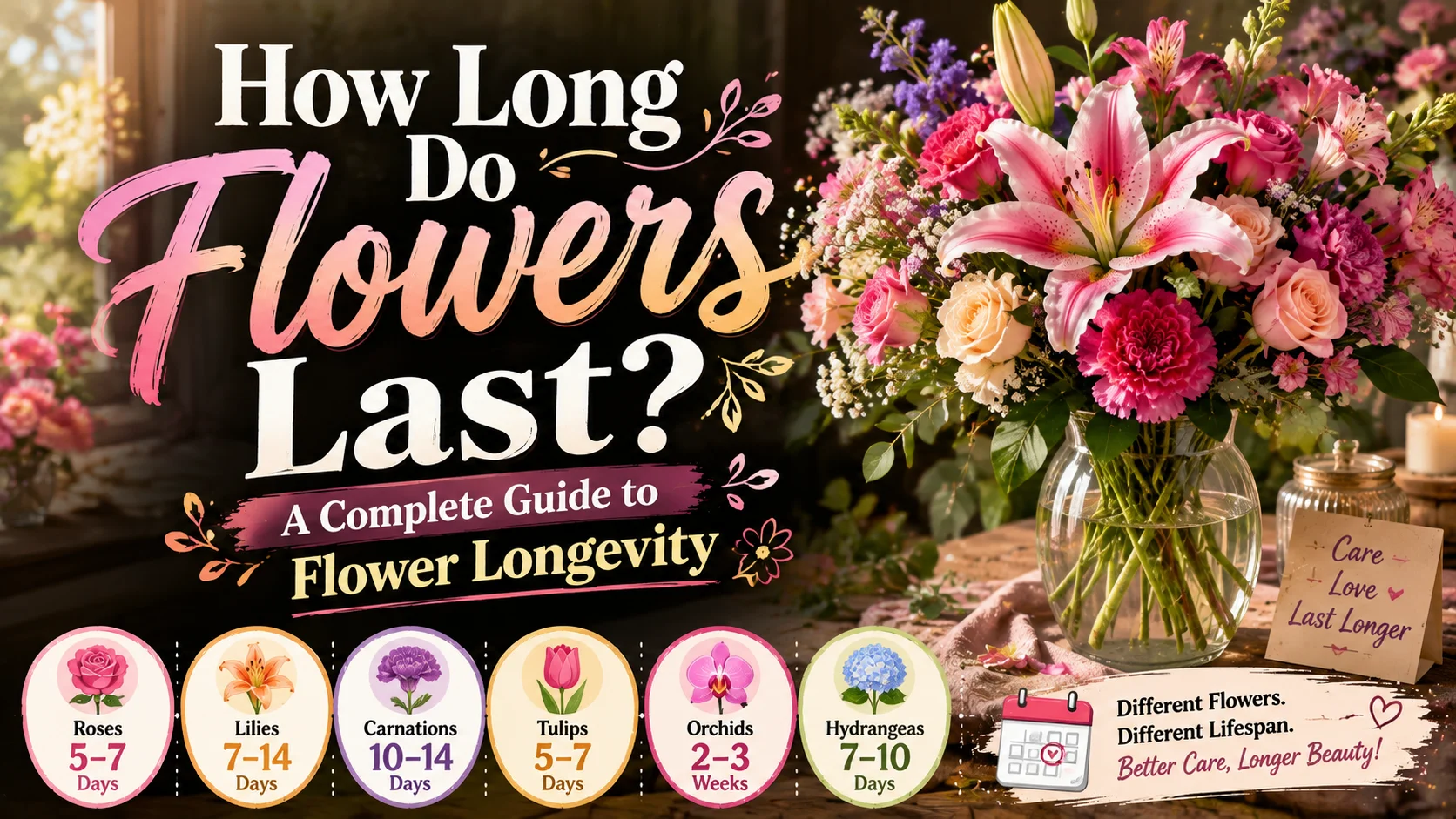
The vase life of cut flowers varies widely depending on the type of flower. Under normal conditions, most cut flowers last about 7 days. However, some can last 2 to 3 weeks, while others may fade in just 3 to 5 days. Proper care can significantly extend their lifespan.
Vase Life by Flower Type
Here is a breakdown of how long different flowers typically last in a vase.
Long-Lasting Flowers (10+ Days)
These flowers are excellent choices for long-lasting arrangements.
- Orchids: 14 to 21 days. Some Cymbidium orchids can last up to a month.
- Protea / Pincushion: 14 to 21 days. These exotic blooms are exceptionally long-lasting.
- Carnations: 14 to 21 days. They are durable and reliable for any arrangement.
- Chrysanthemums: 7 to 30 days. Florist mums average 7-14 days.
- Lilies: Up to 14 days. Their large blooms unfold slowly.
- Gladiolus: Up to 14 days. Flowers open gradually from the bottom up.
- Anthurium: 2 to 3 weeks. Their waxy texture prevents moisture loss.
- Alstroemeria: 14 days. These are among the longest-lasting cut flowers.
- Heliconia: 14 to 20 days. Tropical flowers are naturally long-lasting.
- Gingers (Globba): 1 to 3 months. They can last for weeks without water.
Mid-Range Flowers (7-10 Days)
These are the most common cut flowers and will last a week or more with good care.
- Roses: 7 to 10 days. Some varieties can last up to 14 days.
- Sunflowers: 7 to 10 days.
- Peonies: 7 to 10 days. They have a short natural season but good vase life.
- Zinnias: 7 to 14 days.
- Daisies: 7 to 14 days. Gerbera daisies are a popular, long-lasting variety.
- Anemones: 7 to 10 days.
- Ranunculus: 7 to 10 days.
- Hydrangeas: 7 to 10 days. They need consistent water to avoid wilting.
- Snapdragons: 7 to 10 days.
- Delphiniums: 7 to 10 days.
Short-Lived Flowers (Under 7 Days)
These flowers are beautiful but require extra attention to last.
- Tulips: 3 to 7 days. They continue to grow in the vase.
- Irises: 2 to 4 days. They are among the shortest-lived cut flowers.
- Lilacs: 3 to 5 days. Their strong fragrance is lovely but short-lived.
- Daffodils: 3 to 6 days. They can release sap that harms other flowers.
- Hyacinths: 3 to 5 days. These fragrant spring bulbs are fleeting.
- Poppies: 3 to 5 days. They drop their petals quickly.
- Sweet Peas: 3 to 5 days. They are very delicate.
- Larkspur: 4 to 6 days.
What Factors Affect Flower Lifespan?
The longevity of a cut flower is influenced by several factors, ranging from its genetics to how you care for it.
1. The Flower’s Genetics
Every flower species has a natural vase life. Some are simply programmed to last longer than others. Orchids and proteas have evolved to last weeks, while poppies and irises are naturally short-lived.
2. Water Quality and Availability
A cut flower’s ability to drink water is critical. When a flower is cut, an air bubble can enter the stem and block water flow. This is known as an air embolism. It can also happen when flowers sit out of water for too long.
Bacteria in the vase water are also a major problem. They can grow quickly and clog the stem’s vascular system, preventing water from reaching the flower head.
3. Ethylene Gas
Ethylene is a plant hormone that triggers aging and wilting. It is produced by ripening fruits like apples, bananas, and tomatoes. Even the flowers themselves can produce ethylene as they age. Ethylene causes petals to drop, colors to fade, and stems to bend.
4. Temperature and Light
Heat causes flowers to use up their energy faster. Light, especially direct sunlight, can stress the blooms. Extreme temperature fluctuations, such as near heating vents or air conditioners, can also shorten vase life.
5. Cut and Prep Technique
How you cut the stem matters. Using dull scissors or shears crushes the stem, blocking water uptake. An incorrect cut angle can also cause the stem to sit flat against the bottom of the vase, preventing water from entering the cut surface.
Removing leaves below the waterline is also critical. Leaves that sit in water rot quickly and promote bacterial growth.
6. Freshness at Purchase
The age of the flower when you buy it impacts its lifespan. Flowers that are not yet fully open will last much longer than those already in full bloom.
Tips for Longer-Lasting Cut Flowers
You can significantly extend the life of your flowers by following these simple steps.
Start with a Clean Vase
Bacteria are the leading cause of flower wilting. Always use a vase that has been thoroughly washed with hot, soapy water. Rinse it well to remove any soap residue.
Prepare the Stems Properly
- Use sharp shears: A clean cut allows the stem to drink water effectively. Never use dull scissors.
- Cut at a 45-degree angle: This prevents the stem from sitting flat on the bottom of the vase.
- Remove lower leaves: Strip all leaves that would be below the waterline.
- Cut underwater: For roses and woody stems, cutting underwater can help prevent air bubbles from entering.
Use Flower Food
The little packet that comes with your bouquet is important. It contains sugar (food), an acidifier, and a biocide (bacteria killer). Use it as instructed.
DIY Flower Food Recipe:
- 1 teaspoon sugar
- A few drops of bleach
- 1 teaspoon lemon juice or vinegar
- Mix with 1 quart of lukewarm water
Change the Water Regularly
Flower need fresh water. Change the water every 2 to 4 days. Each time you change the water, re-cut the stems by about 1 inch. This removes any blockages that may have formed.
Keep Flower in a Cool Spot
Heat and direct sunlight are enemies. Place your arrangement away from:
- Direct sunlight
- Heating vents
- Radiators
- Drafts
- Ripening fruit (apples, bananas, tomatoes)
Remove Dying Flowers
As flower fade, remove them from the arrangement. Dying flower release ethylene gas that can accelerate the wilting of other flowers.
Mist Petals (For Some Flowers)
Some flowers, like roses and hydrangeas, benefit from light misting. However, avoid misting flowers that are prone to petal spots, such as Gerberas and lilies.
How Long Do Potted and Garden Flowers Last?
Potted flowers and garden plants follow different lifespans than cut flowers.
Potted Flowers
- Annuals: These live for one growing season. They bloom profusely and then die.
- Perennials: These come back year after year. With proper care, they can last for many years.
- Bulbs: Hyacinths, tulips, and daffodils in pots can bloom for 2 to 3 weeks indoors. After that, the bulbs need to be planted outdoors to rebloom.
Garden Flowers
Garden flowers bloom for a specific period each year.
- Spring Bulbs: 2 to 4 weeks
- Summer Perennials: 1 to 3 months
- Annuals: Continuously from spring until frost
- Long-Blooming Perennials: 3 to 4 months (e.g., coneflowers, black-eyed Susans)
How Long Do Dried and Preserved Flowers Last?
Dried flowers can last for years when properly cared for. Their lifespan depends on the preservation method used.
- Air Dried: 1 to 3 years
- Silica Gel Dried: 3 to 5 years with proper care
- Pressed Flowers: Decades if kept dry and out of sunlight
- Forever Roses: 1 to 3 years, sometimes longer
- Resin Encased: Essentially permanent
Frequently Asked Questions
What is the longest-lasting cut flower?
Carnations, alstroemeria, orchids, and tropical flower like proteas have some of the longest vase lives. Orchids can last up to 3 weeks, and carnations can last 2 to 3 weeks.
How long do roses last in a vase?
With proper care, roses typically last 7 to 10 days. Some varieties can last up to 14 days.
Why do cut flowers wilt so quickly?
The most common causes are bacterial growth in the vase, air bubbles in the stem, or dehydration. Changing the water regularly and recutting stems helps prevent this.
Can I make tulips last longer?
Tulips have short vase lives. Keep them cool, away from heat and sunlight, and re-cut their stems regularly. They will continue to grow, so re-cut them to keep them upright.
How long should I leave flowers out of water?
You should place cut flowers in water as soon as possible. Ideally, flowers should not be out of water for more than 15 minutes. If you are transporting flowers, wrap the stems in damp paper towels.
Do hydrangeas wilt quickly?
Yes, hydrangeas are known for wilting quickly. They absorb water through their petals and stems. Keep them hydrated by immersing the stem in water and cutting at an angle. They can wilt within hours, but often revive if fully hydrated.
Can flower last longer without flower food?
Flowers last longer with flower food, but they can still last with proper water changes. A DIY mix is an excellent alternative to commercial flower food.
Conclusion
Cut flowers typically last 7 to 10 days, but some can last 2 to 3 weeks, while others may last only 3 to 5 days. The lifespan depends on the flower type, its freshness, and, most importantly, the care it receives. By using a clean vase, cutting stems at an angle, using flower food, changing the water regularly, and keeping flowers cool, you can significantly extend their vase life. Whether you are buying flowers for yourself or receiving a bouquet, these care tips will help you enjoy them longer.

Ethan Carter is a nature enthusiast and content writer with a passion for flowers and botanical knowledge. He is the author behind FlowerNamez, where he shares simple and informative content about flower names, types, and meanings.
With a focus on clarity and accuracy, Ethan aims to help readers explore the beauty of flowers and understand their significance in everyday life.