
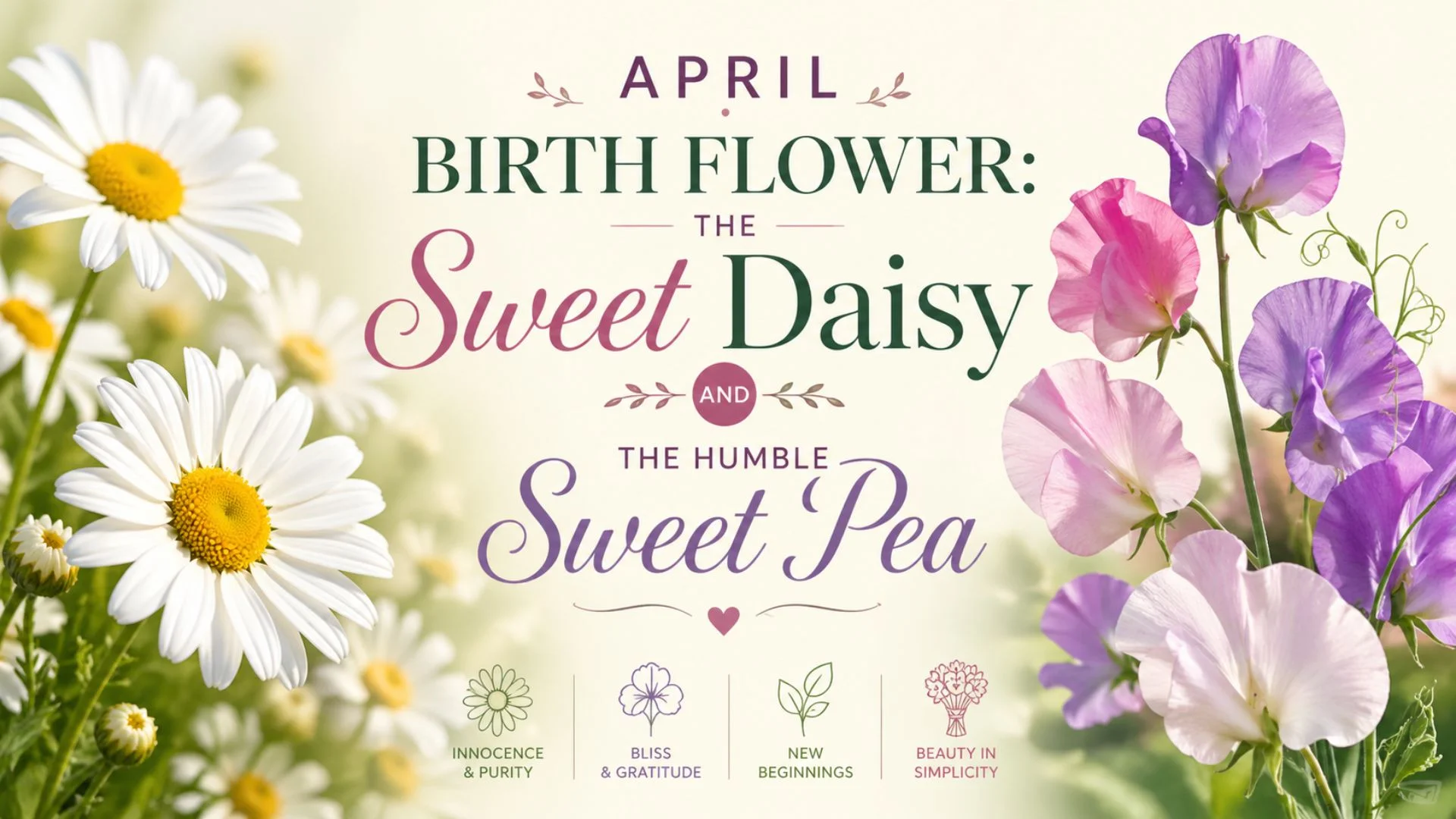
People born in April are lucky to have not one but two beautiful birth flowers. The April birth flower is the cheerful daisy and the fragrant sweet pea. Each flower carries its own unique meaning and symbolism. The daisy represents innocence, purity, and new beginnings. The sweet pea symbolizes blissful pleasure and goodbyes. Together, they capture the fresh, hopeful energy of spring.
Understanding your April birth flower connects you to centuries of tradition and meaning. Birth flowers, like birthstones, have been used for generations to celebrate birthdays and special occasions. Victorians gave flowers as secret messages. A bouquet of daisies said “I share your feelings.” Sweet peas said “Thank you for a lovely time.” This guide explores both April birth flowers in depth. You will learn their history, symbolism, growing tips, and how to use them in bouquets and gardens.
The Daisy: Primary April Birth Flower
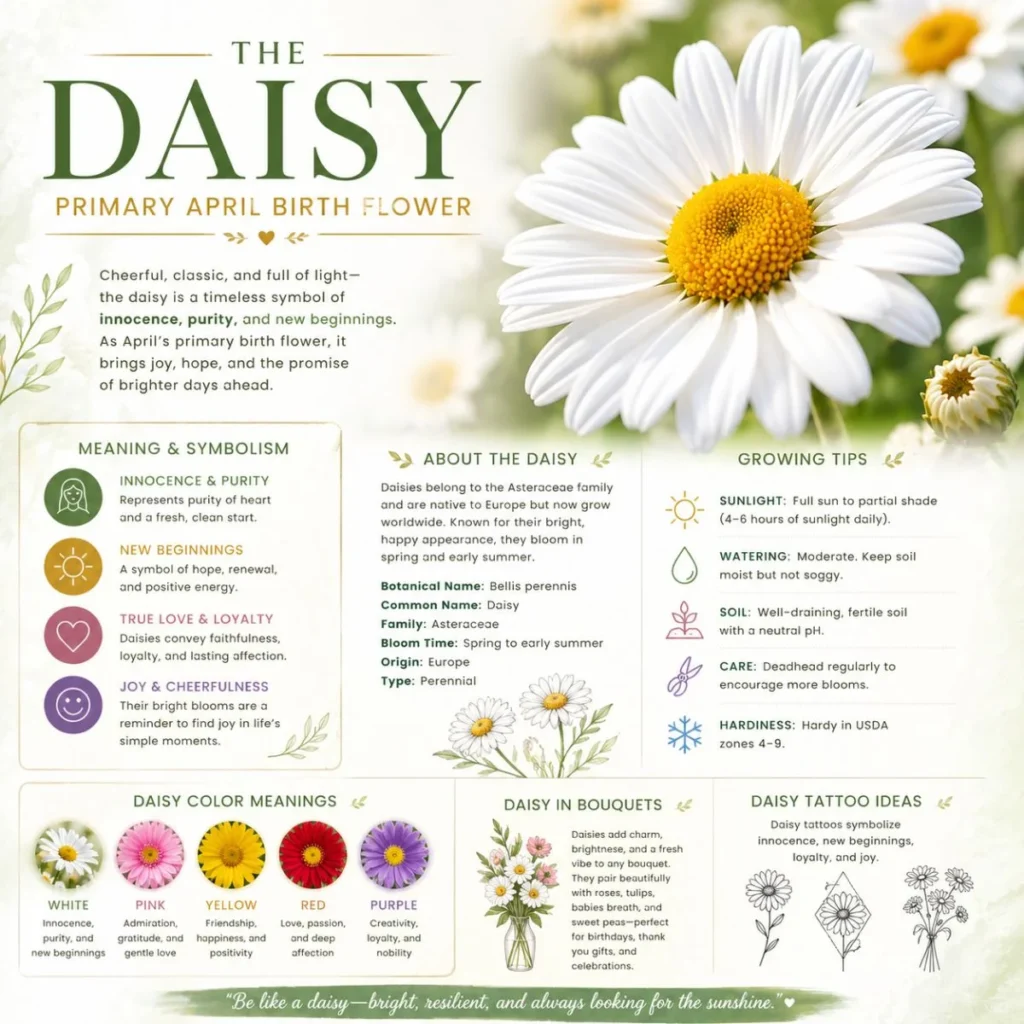
The daisy is the primary April birth flower for most of the month. Its name comes from the Old English phrase “day’s eye” because the flower opens at dawn and closes at dusk. Daisies are among the most recognized and beloved flowers in the world. Their simple, cheerful appearance brings smiles to faces of all ages.
- Common Daisy – innocence and simplicity
- English Daisy – childhood memories and purity
- Bellis Perennis – eternal beauty and patience
- Shasta Daisy – cheerfulness and optimism
- Leucanthemum – truth and loyal love
- Oxeye Daisy – patience and endurance
- Gerbera Daisy – happiness and celebration
- African Daisy – adventure and uniqueness
- Osteospermum – beauty in diversity
- Cape Daisy – resilience and strength
- Painted Daisy – passion and energy
- Tanacetum – protection and healing
- Marguerite Daisy – sweet innocence and grace
- Argyranthemum – joyful spirit and light
- Blue Daisy – calmness and tranquility
- Felicia – happiness and good luck
- Kingfisher Daisy – freedom and wild beauty
- Michaelmas Daisy – farewell and remembrance
- Aster – love and wisdom
- New York Aster – elegance and sophistication
- New England Aster – patience and charm
- Swan River Daisy – gentleness and kindness
- Brachycome – peaceful nature
- Paper Daisy – fragility and preciousness
- Rhodanthe – everlasting love
- Strawflower – eternity and immortality
- Helichrysum – eternal life and strength
- Everlasting Daisy – memories that never fade
- Rhodanthe – delicate beauty
- Swan Daisy – graceful movement
- Globe Daisy – wholeness and completeness
- Globularia – community and connection
- Seaside Daisy – adaptability and freedom
- Erigeron – new beginnings and fresh starts
- Beach Aster – survival and strength
- Fleabane – protection and healing
- Daisy Fleabane – wild beauty and freedom
- Robin’s Plantain – healing and comfort
- Horseweed – persistence and determination
- Marsh Daisy – hope in difficult places
- Swamp Daisy – thriving against odds
- Brown Eyed Susan – encouragement and motivation
- Black Eyed Susan – justice and fairness
- Gloriosa Daisy – glory and honor
The Sweet Pea: Secondary April Birth Flower
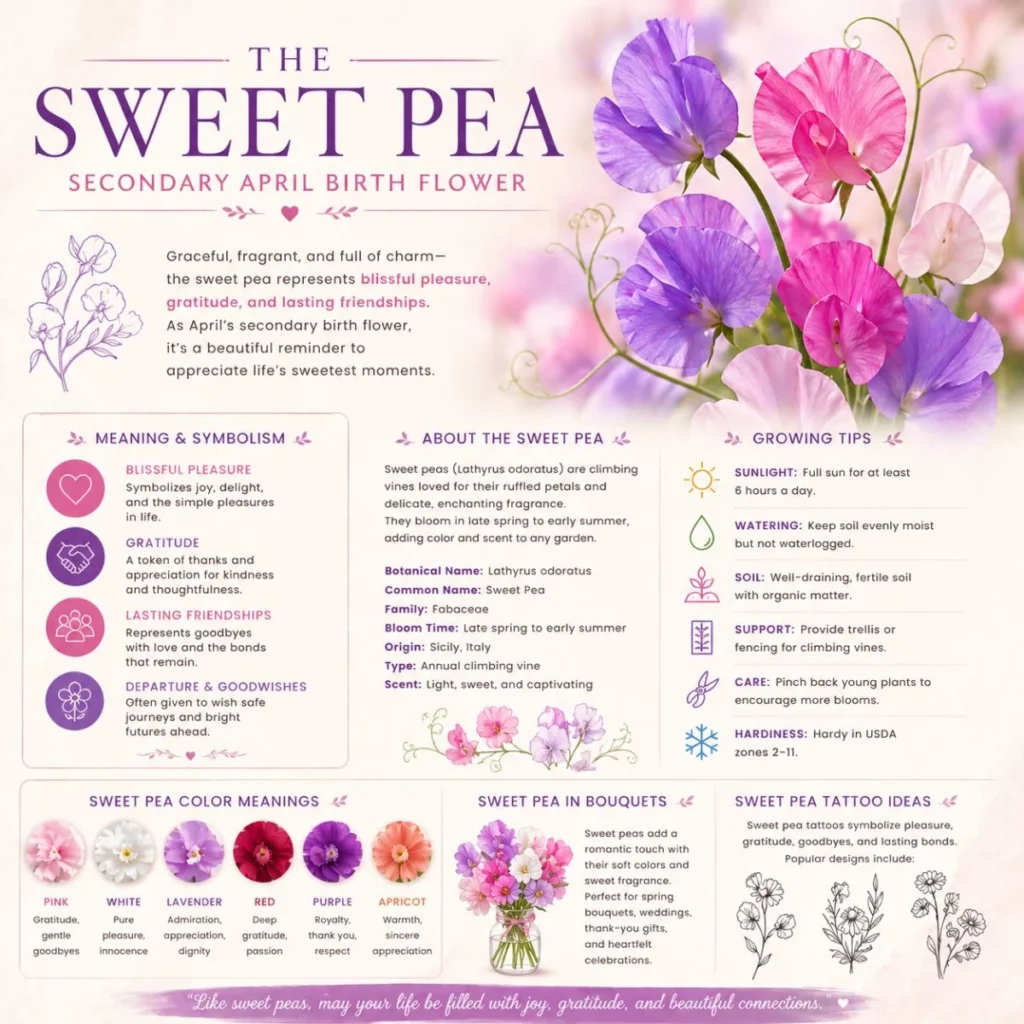
The sweet pea is the secondary April birth flower for those born later in the month. This climbing vine produces delicate, fragrant blossoms in a rainbow of colors. Sweet peas are beloved for their intoxicating scent and romantic, ruffled appearance. They symbolize blissful pleasure, delicate happiness, and goodbyes.
- Sweet Pea – blissful pleasure and delicate happiness
- Lathyrus Odoratus – fragrant beauty and sweet goodbyes
- Grandiflora Sweet Pea – grand gestures and big love
- Old Fashioned Sweet Pea – nostalgia and cherished memories
- Spencer Sweet Pea – elegance and refinement
- Multiflora Sweet Pea – abundance and generosity
- Dwarf Sweet Pea – humble beauty
- Knee High Sweet Pea – modesty and grace
- Cupid Sweet Pea – love and desire
- Little Sweetheart – small but precious love
- Bijou Sweet Pea – jewel like beauty and rarity
- Jet Set Sweet Pea – sophistication and travel
- Mammoth Sweet Pea – impressive strength
- Royal Sweet Pea – nobility and majesty
- Unwin Sweet Pea – tradition and heritage
- Countess Sweet Pea – dignity and class
- Duchess Sweet Pea – elegance and poise
- Empress Sweet Pea – power and beauty
- King Edward Sweet Pea – leadership and courage
- Queen Victoria Sweet Pea – strength and grace
- Prince of Wales Sweet Pea – youthful charm
- Princess of Wales Sweet Pea – kindness and compassion
- Lord Anson Sweet Pea – authority and respect
- Lady Griselda Sweet Pea – patience and endurance
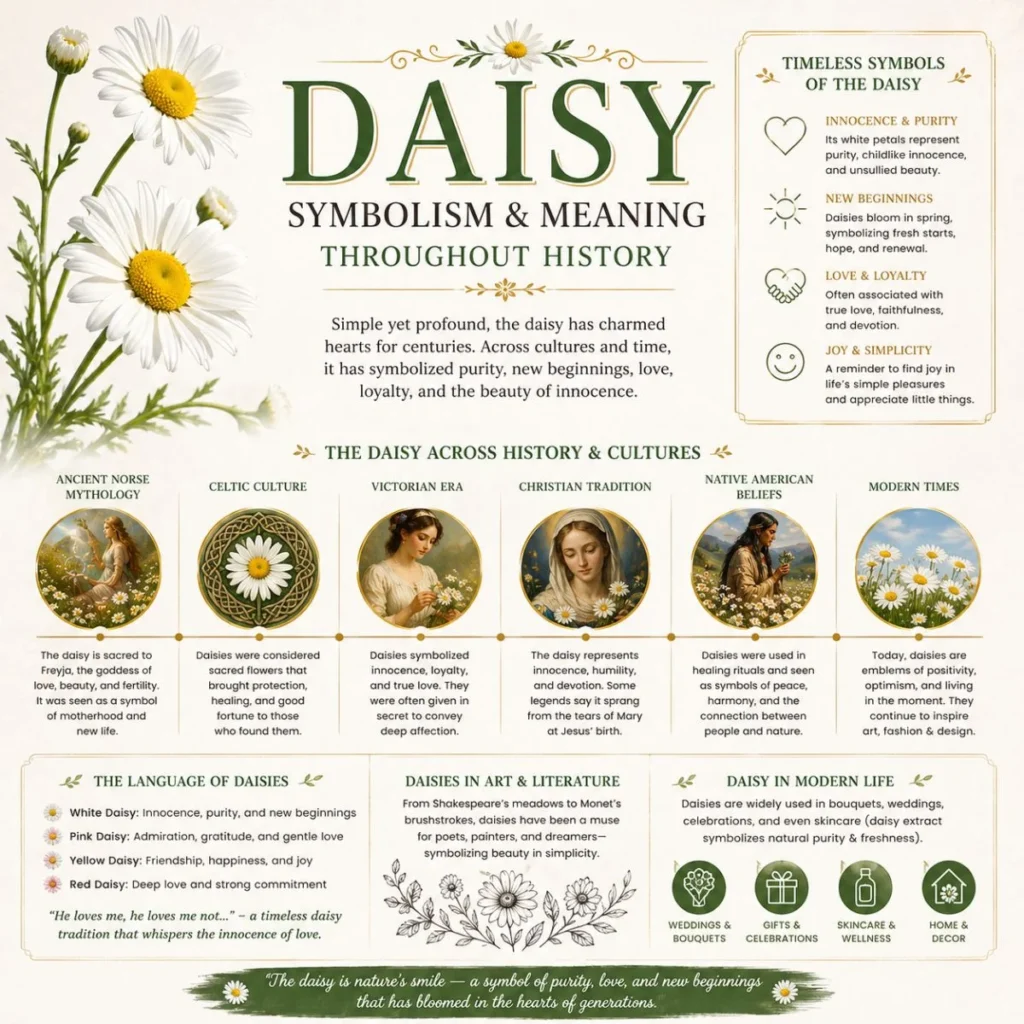
Daisy Symbolism and Meaning Throughout History
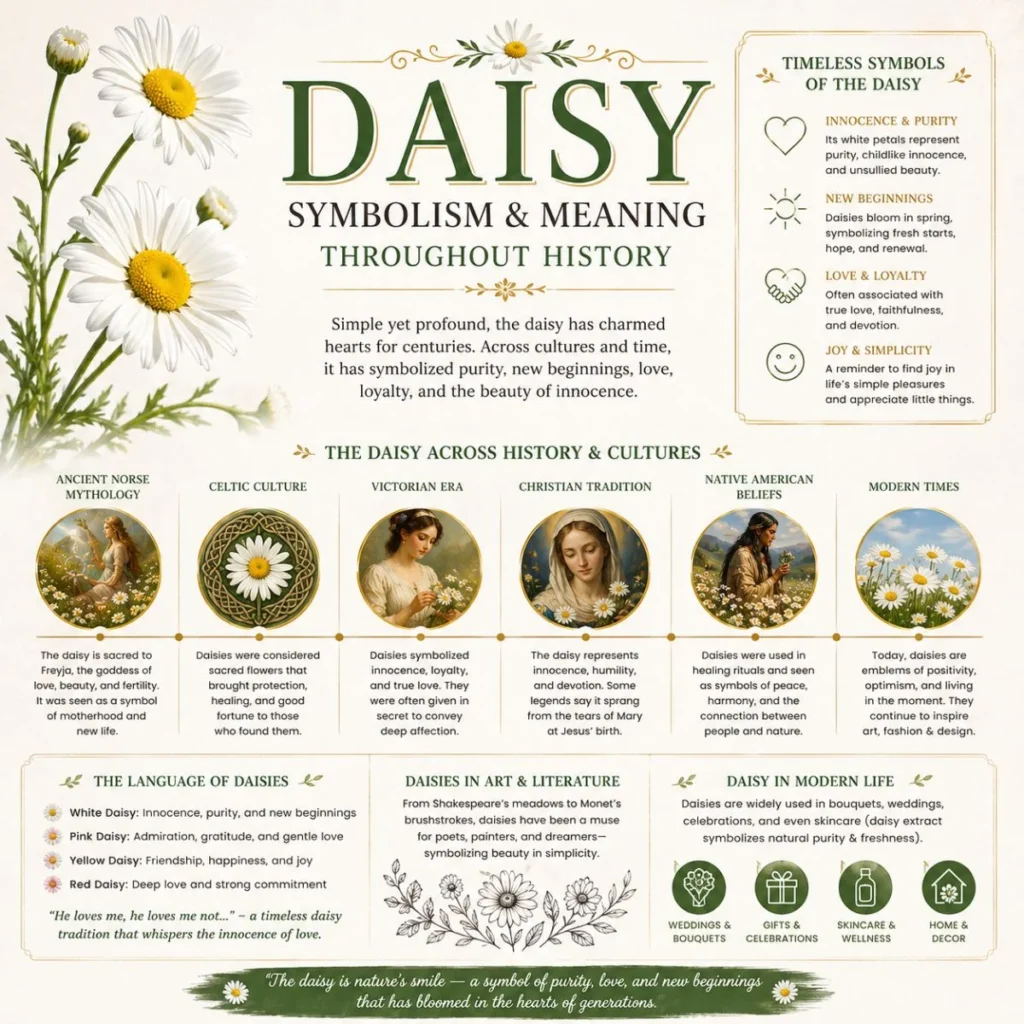
The daisy has carried rich symbolism for thousands of years. In Norse mythology, the daisy was the sacred flower of Freya, the goddess of love, beauty, and fertility. In Roman mythology, daisies came from nymphs who transformed into flowers to escape unwanted attention. Also In Christian tradition, the daisy represents the innocence of the Christ child.
- Innocence – pure and uncorrupted spirit
- Purity – clean heart and clear intentions
- New Beginnings – fresh starts and second chances
- Loyal Love – faithful and devoted affection
- True Love – genuine and sincere romance
- Simple Pleasures – finding joy in small things
- Childlike Joy – happiness without complication
- Cheerfulness – bright and positive attitude
- Optimism – looking at the bright side
- Hope – believing in better tomorrows
- Fresh Starts – leaving the past behind
- Morning Energy – waking up with purpose
- Daybreak – new opportunities at dawn
- Awakening – becoming aware and alive
- Rebirth – growing into something new
- Renewal – restoring what was lost
- Cleansing – washing away the old
- Clarity – seeing things clearly
- Honesty – speaking without deception
- Transparency – being open and genuine
- Sincerity – meaning what you say
- Faithfulness – staying true to promises
- Devotion – committing fully to love
- Constancy – never changing or faltering
- Endurance – lasting through hard times
- Patience – waiting without complaint
- Gentleness – soft and kind approach
- Kindness – caring for others
- Warmth – giving comfort to others
- Friendliness – open and welcoming nature
- Approachability – easy to talk to
- Openness – willing to share feelings
- Trustworthiness – deserving of confidence
- Reliability – always showing up
- Stability – steady and secure presence
- Peacefulness – calm and untroubled
- Calmness – not easily upset
- Serenity – peaceful and composed
- Tranquility – free from disturbance
- Harmony – balanced and agreeable
- Balance – equal and fair
- Simplicity – uncomplicated and straightforward
- Modesty – humble about achievements
- Humility – not proud or arrogant
- Grace – elegant and dignified
Sweet Pea Symbolism and Meaning Through the Ages
Sweet peas have their own rich symbolic language. Their name alone suggests sweetness and pleasure. In the language of flowers, sweet peas mean “blissful pleasure,” “delicate happiness,” and “goodbye.” The goodbye meaning comes from their short blooming season. Sweet peas flower for only a few weeks. Enjoy them while you can because they will soon be gone.
- Blissful Pleasure – pure enjoyment and delight
- Delicate Happiness – gentle and fragile joy
- Goodbye – farewell until we meet again
- Farewell – wishing someone well as they leave
- Thank You – expressing sincere gratitude
- Gratitude – appreciation for kindness shown
- Appreciation – recognizing value in others
- Thank You For A Lovely Time – gratitude for shared moments
- Enjoy The Moment – living in the present
- Carpe Diem – seizing the day
- Seize The Day – making the most of now
- Pleasure – feeling of enjoyment and satisfaction
- Joy – intense and happy emotion
- Delight – great pleasure and happiness
- Enjoyment – taking pleasure in something
- Sweetness – pleasant and kind nature
- Fragrance – pleasant and inviting scent
- Beauty – pleasing to the senses
- Elegance – graceful and stylish
- Grace – smooth and lovely movement
- Charm – attractive and likable quality
- Romance – feeling of excitement associated with love
- Tenderness – gentle and caring
- Gentleness – soft and mild nature
- Softness – not harsh or intense
- Delicacy – fine and fragile beauty
- Refinement – cultured and polished
- Sophistication – worldly and elegant
- Nobility – having high moral qualities
- Class – stylish and superior
- Poise – graceful and controlled
- Balance – harmonious arrangement
- Harmony – pleasing combination
- Peace – freedom from disturbance
- Calm – quiet and peaceful
- Serenity – state of being calm
- Tranquility – quality of being peaceful
- Contentment – state of happiness
- Satisfaction – fulfillment of one’s wishes
- Fulfillment – achievement of something desired
- Happiness – state of well being
- Cheerfulness – noticeable happiness
- Lightness – not heavy or serious
- Airiness – light and graceful
- Whimsy – playful and amusing
- Playfulness – fond of games and amusement
Daisy Colors and Their Unique Meanings
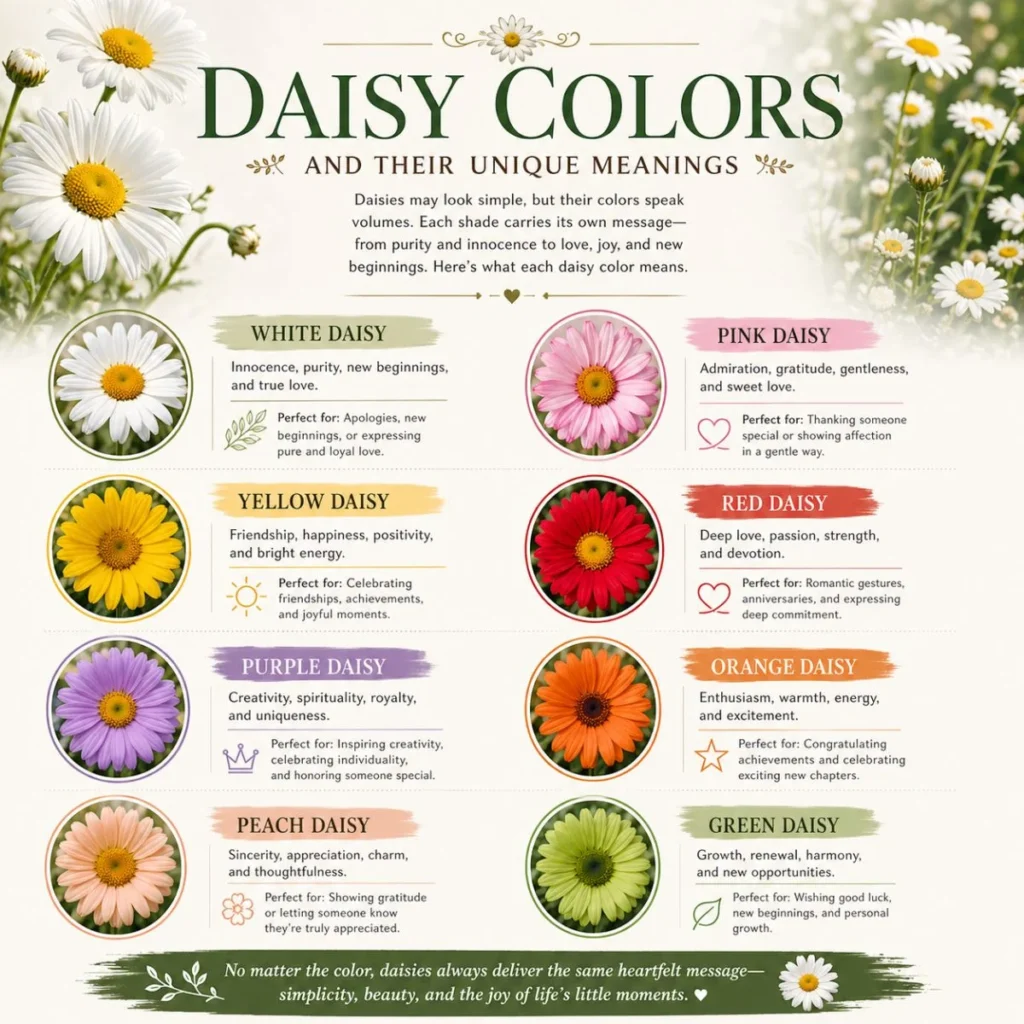
Daisies come in many colors beyond the classic white and yellow. Each color carries its own special meaning. Choosing the right color daisy makes your gift even more personal and meaningful.
- White Daisy – purity, innocence, and new beginnings
- Yellow Daisy – friendship, joy, and positive energy
- Pink Daisy – gentleness, love, and admiration
- Red Daisy – passionate love and deep emotion
- Orange Daisy – enthusiasm, excitement, and warmth
- Purple Daisy – royalty, dignity, and pride
- Blue Daisy – calmness, peace, and tranquility
- Green Daisy – renewal, growth, and good health
- White Center Yellow Petal – balance and harmony
- Yellow Center White Petal – hope and optimism
- Pink Center White Petal – gentle affection and care
- Red Center Yellow Petal – fiery love with bright joy
- Orange Center Purple Petal – creative passion and royalty
- Purple Center Pink Petal – noble gentleness
- Blue Center White Petal – peaceful purity
- Green Center Yellow Petal – healthy friendship
- White and Pink Daisy – pure admiration
- White and Red Daisy – innocent passion
- White and Purple Daisy – pure dignity
- White and Blue Daisy – peaceful innocence
- Yellow and Orange Daisy – joyful enthusiasm
- Yellow and Red Daisy – friendly passion
- Yellow and Pink Daisy – joyful gentleness
- Pink and Purple Daisy – gentle royalty
- Pink and Red Daisy – loving admiration
- Red and Orange Daisy – passionate excitement
- Purple and Blue Daisy – royal peace
- Striped Daisy – uniqueness and individuality
- Spotted Daisy – playful and fun loving
- Dotted Daisy – attention to detail
- Speckled Daisy – natural beauty
- Fringed Daisy – delicate and ornamental
- Ruffled Daisy – feminine and romantic
- Double Daisy – abundance and fullness
- Semi Double Daisy – balanced beauty
- Single Daisy – simplicity and honesty
- Miniature Daisy – small but precious
- Dwarf Daisy – humble beauty
- Giant Daisy – impressive and grand
- Jumbo Daisy – larger than life
- Full Daisy – complete and whole
- Open Daisy – welcoming and inviting
- Closed Daisy – mystery and anticipation
- Budding Daisy – potential and promise
- Wilting Daisy – fleeting beauty
- Pressed Daisy – preserved memories
Sweet Pea Colors and Their Special Meanings
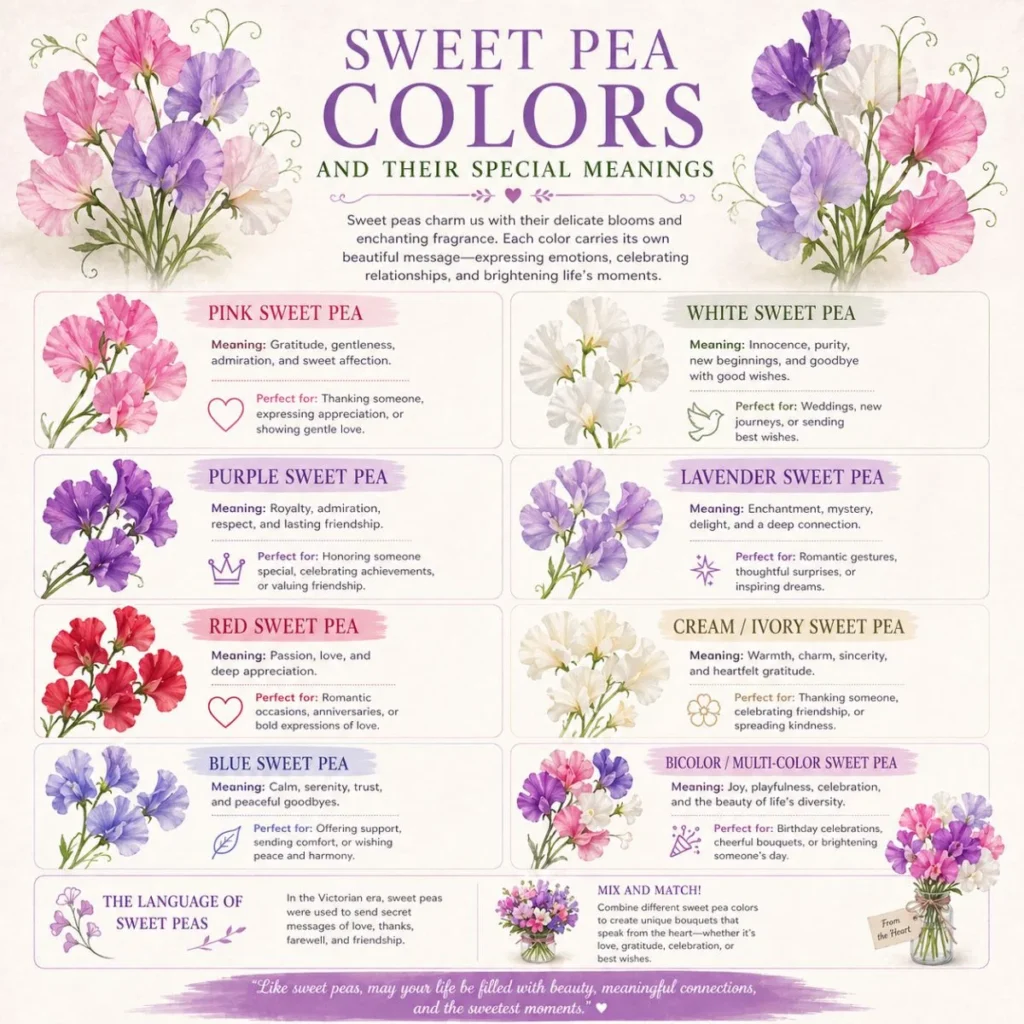
Sweet peas come in an even wider range of colors than daisies. Each shade sends a different message. Choose a color that matches the feeling you want to express.
- White Sweet Pea – purity, innocence, and new love
- Pink Sweet Pea – gentle affection and happiness
- Red Sweet Pea – passionate love and deep desire
- Orange Sweet Pea – enthusiasm and excitement
- Yellow Sweet Pea – friendship and joy
- Purple Sweet Pea – royalty and dignity
- Blue Sweet Pea – calmness and tranquility
- Lavender Sweet Pea – grace and elegance
- Lilac Sweet Pea – first love and youthful joy
- Mauve Sweet Pea – nostalgia and memories
- Magenta Sweet Pea – bold beauty and confidence
- Coral Sweet Pea – warmth and comfort
- Peach Sweet Pea – sincerity and gratitude
- Apricot Sweet Pea – sweetness and charm
- Salmon Sweet Pea – gentle warmth and kindness
- Rose Sweet Pea – love and appreciation
- Burgundy Sweet Pea – deep beauty and strength
- Maroon Sweet Pea – rich elegance and power
- Crimson Sweet Pea – bold love and courage
- Scarlet Sweet Pea – passion and intensity
- Ruby Sweet Pea – precious and valuable
- Cream Sweet Pea – soft elegance and grace
- Ivory Sweet Pea – purity with warmth
- Beige Sweet Pea – natural and understated
- Tan Sweet Pea – earthy and grounded
- Brown Sweet Pea – stability and reliability
- Chocolate Sweet Pea – sweet and comforting
- Coffee Sweet Pea – warmth and energy
- Mocha Sweet Pea – rich and satisfying
- Caramel Sweet Pea – sweet and smooth
- Butterscotch Sweet Pea – warm and nostalgic
- Honey Sweet Pea – sweet and golden
- Gold Sweet Pea – precious and valuable
- Bronze Sweet Pea – strength and endurance
- Copper Sweet Pea – warm and glowing
- Silver Sweet Pea – elegant and refined
- Platinum Sweet Pea – rare and precious
- Black Sweet Pea – mystery and power
- Icy Sweet Pea – crisp and clean
- Snowy Sweet Pea – pure white beauty
How to Grow Daisies in Your Garden
Daisies are among the easiest flowers to grow. They thrive in full sun and well drained soil. Plant them in spring after the last frost. Space them about 12 inches apart. Water them regularly until they are established. After that, they are quite drought tolerant.
- Plant in full sun – for maximum blooms and healthy growth
- Use well drained soil – to prevent root rot and disease
- Space 12 inches apart – for good air circulation and growth
- Water regularly until established – to help roots develop deeply
- Deadhead spent blooms – to encourage continuous flowering
- Fertilize once in spring – for healthy foliage and abundant blooms
- Mulch around plants – to retain moisture and suppress weeds
- Divide every 2 to 3 years – to prevent overcrowding and maintain vigor
- Cut back in late fall – to prepare for winter dormancy
- Protect from slugs and snails – using organic pest control methods
- Watch for aphids – and remove them with water spray
- Remove diseased leaves – to prevent spread of infection
- Stake tall varieties – to prevent flopping in wind and rain
- Harvest in morning – when blooms are freshest and fully hydrated
- Cut stems at an angle – to increase water absorption
- Remove lower leaves – to prevent bacterial growth in water
- Place in fresh water – immediately after cutting for longest life
- Change water every 2 days – to keep bacteria from forming
- Keep away from fruit – as ethylene gas causes early wilting
- Enjoy for 7 to 10 days – with proper care in a cool location
How to Grow Sweet Peas in Your Garden
Sweet peas need more care than daisies but are worth the effort. They prefer cool weather and rich, well drained soil. Plant seeds in early spring as soon as the ground can be worked. Soak seeds overnight before planting to speed germination.
- Plant in cool weather – sweet peas prefer temperatures below 70 degrees
- Soak seeds overnight – to soften hard seed coats for faster germination
- Use rich well drained soil – with plenty of compost for nutrients
- Plant in full sun – at least 6 hours of direct sunlight daily
- Provide climbing support – trellis, fence, or netting for vines to grasp
- Space 6 inches apart – for good air circulation and growth
- Pinch back young plants – to encourage bushier growth and more blooms
- Water deeply weekly – rather than shallow frequent watering
- Mulch to keep roots cool – helps plants survive warmer temperatures
- Fertilize every 4 weeks – with low nitrogen fertilizer for more flowers
- Watch for aphids and thrips – use insecticidal soap if needed
- Remove faded flowers – to prevent seed formation and encourage blooms
- Harvest frequently – cutting flowers stimulates more production
- Pick in morning – when sugar content is highest and blooms are fresh
- Cut stems when lower buds show color – for longest vase life
- Keep in cool water – immediately after cutting to prevent wilting
- Change water daily – sweet peas are sensitive to bacteria
- Last 3 to 5 days – in a cool location away from direct sun
- Enjoy fragrant blooms – place near seating areas to appreciate scent
- Save seeds for next year – let pods dry completely on the vine
How to Use April Birth Flowers in Bouquets
Daisies and sweet peas are wonderful together in arrangements. Their contrasting shapes and textures create visual interest. Daisies provide bold, round faces. Sweet peas add delicate, trailing vines. The combination is romantic, cheerful, and very spring-like.
- White daisies with pink sweet peas – purity mixed with gentle affection
- Yellow daisies with lavender sweet peas – friendship with grace
- Pink daisies with white sweet peas – gentle love with purity
- Red daisies with purple sweet peas – passionate love with royalty
- Orange daisies with peach sweet peas – enthusiasm with sincerity
- Purple daisies with coral sweet peas – dignity with warmth
- Blue daisies with cream sweet peas – peace with soft elegance
- Mixed daisies with mixed sweet peas – celebration of all colors
- Daisies alone in a mason jar – simple rustic charm
- Sweet peas alone in a narrow vase – elegant and delicate display
- Daisies as the focal flower – bold center of attention
- Sweet peas as the filler flower – soft background texture
- Daisies in a round bouquet – traditional and balanced
- Sweet peas in a cascading bouquet – romantic and flowing
- Daisies for centerpieces – bright and cheerful table decor
- Sweet peas for boutonnieres – delicate and fragrant
- Daisies for bridal bouquets – pure and innocent
- Sweet peas for bridesmaid bouquets – graceful and charming
- Daisies for birthday gifts – cheerful and happy
- Sweet peas for thank you gifts – grateful and appreciative
- Daisies for get well wishes – hopeful and bright
- Sweet peas for sympathy – delicate comfort
- Daisies for new babies – pure new beginnings
- Sweet peas for housewarming – sweet new home wishes
- Daisies for anniversaries – enduring love
- Sweet peas for weddings – blissful pleasure
- Daisies for Mother’s Day – pure motherly love
- Sweet peas for Father’s Day – gentle appreciation
- Daisies for Valentine’s Day – innocent love
- Sweet peas for Friendship Day – sweet companionship
April Birth Flower Tattoo Ideas
Many people choose to celebrate their birth month with a tattoo of their birth flower. April babies have two options. A single daisy is simple and elegant. A cluster of sweet peas is romantic and detailed. Some people get both flowers together in one design.
- Single daisy – symbolizes simplicity and purity
- Daisy cluster – represents friendship and community
- Daisy bouquet – celebrates abundance and joy
- Daisy wreath – symbolizes eternal love and remembrance
- Daisy chain – represents childhood memories and innocence
- Daisy with name – personalizes the meaning
- Daisy with date – marks a special birthday
- Daisy with birthstone – combines two birth symbols
- Daisy with butterfly – represents transformation and beauty
- Daisy with bee – symbolizes hard work and sweetness
- Daisy in a jar – captures preserved memories
- Daisy in a bottle – represents messages of love
- Daisy in a book – symbolizes knowledge and beauty
- Daisy line drawing – minimalist and elegant
- Daisy watercolor – soft and artistic
- Daisy black and grey – classic and timeless
- Daisy dotwork – detailed and textured
- Daisy minimalist – simple and modern
- Daisy traditional – bold and colorful
- Daisy neo traditional – detailed and decorative
- Single sweet pea – symbolizes delicate happiness
- Sweet pea vine – represents growth and connection
- Sweet pea wreath – symbolizes eternal sweetness
- Sweet pea bouquet – celebrates blissful pleasure
- Sweet pea with name – personalizes the meaning
- Sweet pea with date – marks a special occasion
- Sweet pea with birthstone – combines two symbols
- Sweet pea with hummingbird – represents joy and sweetness
- Sweet pea with butterfly – symbolizes transformation
- Sweet pea on trellis – represents support and growth
- Sweet pea line drawing – elegant and simple
- Sweet pea watercolor – soft and romantic
- Sweet pea traditional – bold and colorful
Frequently Asked Questions About April Birth Flower
What is the official April birth flower?
The official April birth flower is the daisy. The sweet pea is also recognized as a secondary birth flower for April. Both flowers represent different aspects of April born personalities and complement each other beautifully.
Why does April have two birth flowers?
April is one of several months with two birth flowers. The daisy is the primary flower for most of the month. The sweet pea was added later as another beautiful option for April birthdays. Together they offer more choices for gifts and celebrations.
What does the April birth flower symbolize?
The daisy symbolizes innocence, purity, and new beginnings. The sweet pea symbolizes blissful pleasure, delicate happiness, and goodbyes. Together they represent the fresh, joyful energy of spring and the complex nature of April born individuals.
What color are April birth flowers?
Daisies are most commonly white with yellow centers but also come in pink, red, purple, blue, and orange. Sweet peas come in nearly every color including pink, purple, red, white, blue, yellow, and even black. Choose the color that best fits your message and the recipient’s personality.
Can I grow April birth flowers in my garden?
Yes, both daisies and sweet peas are garden friendly. Daisies are easy perennials that come back every year. Sweet peas are annuals that need replanting each spring. Both need full sun and well drained soil for the best blooms and healthiest plants.
What is the difference between a daisy and a sweet pea?
Daisies are round, simple flowers with petals radiating around a center disc. Sweet peas are delicate, ruffled flowers that grow on climbing vines. Daisies have very little scent. Sweet peas are highly fragrant and smell like honey and flowers.
What gifts feature the April birth flower?
You can give fresh daisies or sweet peas in a beautiful bouquet. Dried flowers in a frame make a lasting gift that preserves memories. Jewelry featuring daisy or sweet pea designs is popular for birthdays. Tattoos, art prints, and garden plants are also great choices for celebrating an April birthday.
What famous people have April birthdays with the daisy birth flower?
William Shakespeare, Leonardo da Vinci, Queen Elizabeth II, and Thomas Jefferson were all born in April. Their birth flower is the cheerful daisy. The sweet pea is also associated with April celebrities like Emma Watson, Eddie Murphy, and Kirsten Dunst. Each of these famous April babies shares the sweet and cheerful spirit of their birth flowers.
Conclusion
The April birth flower offers two beautiful choices for celebrating spring birthdays. The cheerful daisy brings innocence, purity, and simple joy to any occasion. The fragrant sweet pea brings blissful pleasure, delicate happiness, and sweet gratitude. Together, they capture the fresh, hopeful spirit of April and everyone born in this special month. Whether you prefer the classic daisy with its bright, happy face or the romantic sweet pea with its intoxicating fragrance, both flowers make wonderful gifts, tattoos, and garden additions.
Plant them in your garden to enjoy year after year. Give them in bouquets to make someone’s birthday extra special. Wear them as jewelry or ink to carry your birth flower with you always. Let these beautiful blooms represent the special people born in April. Their bright faces and sweet scents will bring happiness all spring long and remind us of the simple, pure joys in life.

Ethan Carter is a nature enthusiast and content writer with a passion for flowers and botanical knowledge. He is the author behind FlowerNamez, where he shares simple and informative content about flower names, types, and meanings.
With a focus on clarity and accuracy, Ethan aims to help readers explore the beauty of flowers and understand their significance in everyday life.